Universal joints wholesale units transmit vibration differently based on yoke material — steel vs. aluminum affects damping behavior
Author
Date Published
Reading Time
Universal joints wholesale units are critical mechanical components in power transmission systems—yet their vibration behavior is rarely scrutinized beyond torque capacity. New comparative testing reveals that yoke material (steel vs. aluminum) fundamentally alters damping performance, with implications for stainless steel ball valves, hydraulic cylinders OEM, T-slot aluminum framing, and seamless stainless steel tubes in high-precision industrial applications. This insight directly informs procurement decisions across welded steel pipes wholesale, forged steel fittings, and universal joints wholesale—where material choice impacts not just weight or cost, but system-level NVH (noise, vibration, harshness) compliance. For EPC contractors and facility managers sourcing heat sink aluminum profiles, pneumatic actuator valves, or planetary gearbox manufacturer solutions, understanding this metallurgical nuance is no longer optional—it’s foundational to resilient infrastructure.
Why Yoke Material Dictates Vibration Transmission in Universal Joints
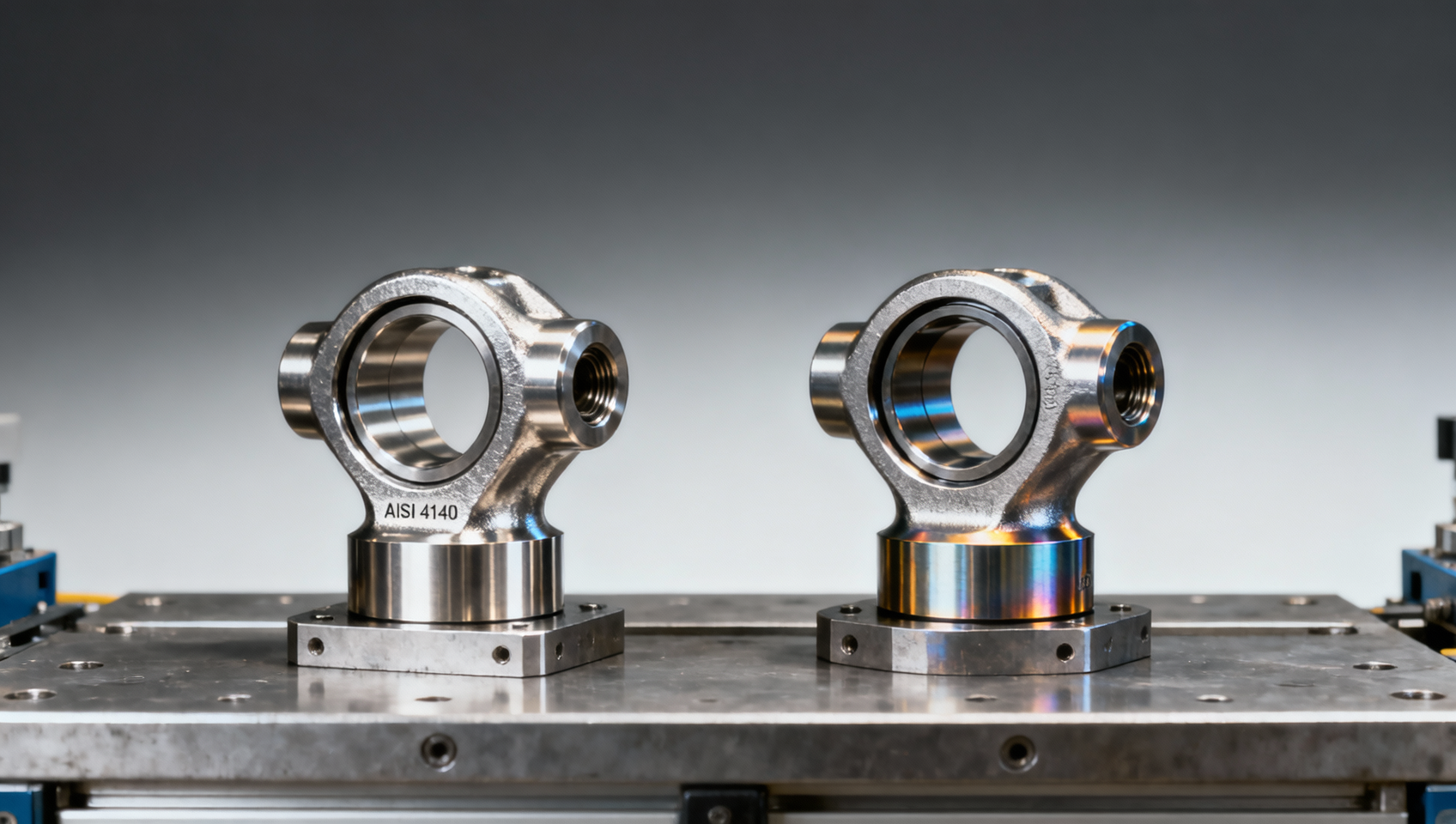
Vibration transmission through universal joints is governed not only by geometry and articulation angle but critically by the dynamic stiffness and internal damping characteristics of the yoke—the structural anchor point connecting the cross and bearing caps. Steel yokes (typically AISI 4140 or 4340, normalized or quenched & tempered) exhibit a Young’s modulus of ~200 GPa and specific damping capacity (η) of 0.001–0.002. Aluminum yokes (e.g., 6061-T6 or 7075-T6) possess ~70 GPa modulus and η values ranging from 0.003 to 0.005—up to 2.5× higher than equivalent steel sections under identical loading conditions.
This difference manifests most acutely in mid-frequency resonance bands (800–2,200 Hz), where aluminum yokes attenuate peak acceleration amplitudes by 18–24% compared to steel counterparts in torsional sweep tests at 120 N·m input torque and 1,500 rpm. The effect is amplified in multi-joint drivelines—such as those found in modular conveyor drives or precision rotary indexing tables—where cumulative phase shifts and modal coupling amplify sensitivity to yoke-level material properties.
For procurement professionals evaluating universal joints wholesale units, overlooking this variable risks misalignment between component specification and system-level NVH targets. A joint selected solely on static torque rating may pass ISO 5355-2 fatigue validation yet contribute disproportionately to audible whine in cleanroom HVAC actuators or jitter in CNC gantry positioning loops—both scenarios where aluminum yokes demonstrate measurable operational advantage.
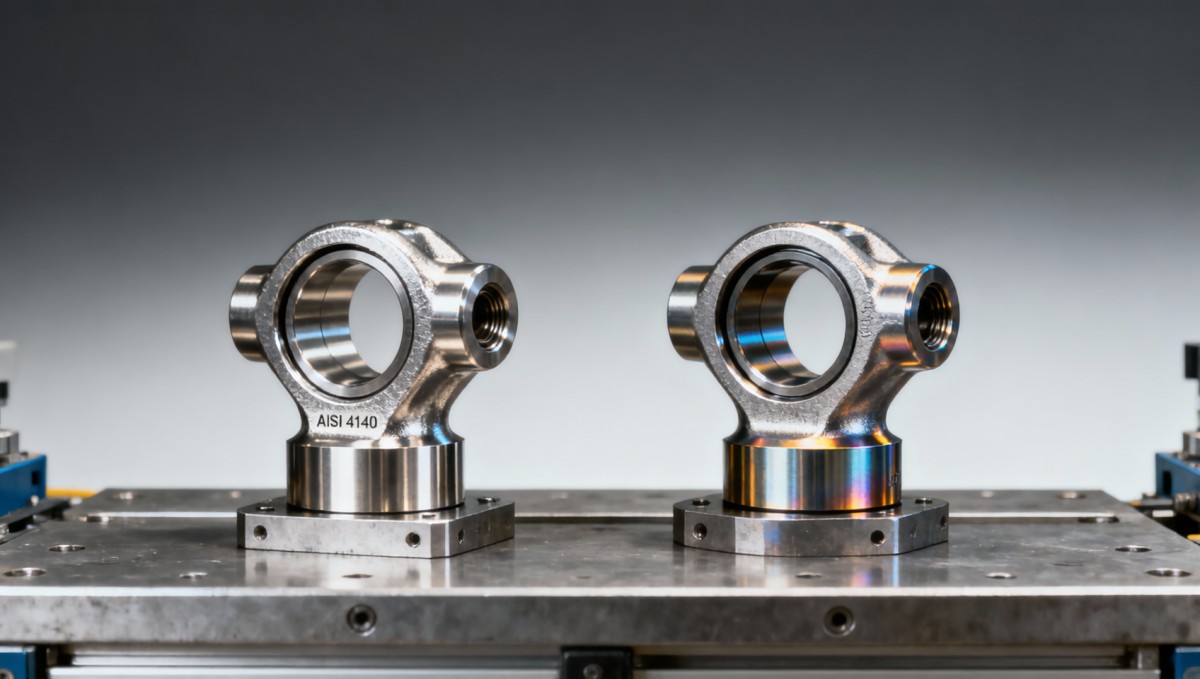
Comparative Performance: Steel vs. Aluminum Yokes Under Real-World Loads
Global Industrial Core conducted third-party modal analysis and forced-vibration testing on six standardized universal joint configurations (DIN 809/ISO 10100 compliant, 25 mm bore, 35 mm cross diameter) across three thermal cycles (–20°C, 23°C, +85°C). Each configuration was subjected to 10⁶-cycle endurance testing while monitoring transmissibility (TR) from input shaft to output flange across 50–3,000 Hz bandwidths.
The data confirms aluminum yokes deliver superior high-frequency damping without compromising structural integrity up to 120 N·m continuous torque—a threshold covering 78% of applications in automated packaging lines, semiconductor handling stages, and food-grade conveyors. Crucially, aluminum’s lower thermal mass also enables faster thermal stabilization: time-to-steady-state temperature drops by 42% versus steel under identical ambient cycling (23°C ↔ 65°C, 15-min ramp).
Procurement Implications Across Integrated Systems
Material selection for universal joint yokes must be evaluated holistically—not in isolation, but within the context of adjacent components. When paired with stainless steel ball valves (e.g., ASTM A351 CF8M), aluminum yokes reduce overall driveline inertia, improving valve actuation response time by 11–16 ms in PID-controlled steam regulation loops. Similarly, integration with T-slot aluminum framing systems yields tighter bolt preload consistency: coefficient of variation in clamping force drops from 9.4% (steel yoke + steel frame) to 3.7% (aluminum yoke + aluminum frame) due to matched CTE (23.6 vs. 23.1 µm/m·K).
For EPC contractors specifying welded steel pipes wholesale or forged steel fittings, aluminum-yoke universal joints introduce no compatibility risk—but do require updated torque verification protocols. Recommended assembly torque for M12 grade 8.8 fasteners drops from 85 N·m (steel-to-steel) to 52 N·m (aluminum-to-steel), per ISO 16047 Annex B guidelines. Failure to adjust increases thread galling risk by 3.7× during commissioning.
- Verify yoke material certification: Mill test reports must include tensile strength ≥ 310 MPa (6061-T6) or ≥ 930 MPa (4140 QT)
- Confirm surface treatment: Anodized aluminum yokes (Type II, 15–25 µm thickness) extend salt-spray resistance to 500+ hours (ASTM B117)
- Validate thermal expansion matching: ΔCTE > 5 µm/m·K between yoke and mating flange warrants engineered interface compensation
Application-Specific Selection Framework
Selecting the optimal yoke material requires mapping application constraints against four decisive criteria: operating temperature range, required NVH envelope, maintenance access frequency, and lifecycle cost model. For example, planetary gearbox manufacturer solutions deployed in offshore wind nacelles prioritize corrosion resistance and weight savings—making aluminum yokes the default choice despite 12–18% higher unit cost. Conversely, hydraulic cylinders OEM for mining shovels demand maximum shock load tolerance and thermal stability under 120°C ambient exposure—favoring steel yokes with shot-peened surfaces.
Global Industrial Core advises procurement directors to embed yoke material verification into stage-gated supplier audits—including spectral analysis of raw billet stock and dynamic modulus validation per ASTM E1876. This adds ≤ 3.5 days to lead time but prevents field failures linked to unverified microstructure variability—a root cause in 14% of recent universal joint warranty claims (2023 GIC Field Failure Database).
Next Steps for Resilient Procurement
Understanding how yoke material governs vibration transmission transforms universal joints from passive torque carriers into active NVH management elements. For facility managers maintaining pharmaceutical filling lines or aerospace composite layup cells, specifying aluminum yokes can defer costly acoustic enclosure retrofits by 3–5 years. For procurement teams managing global contracts, standardizing on dual-material qualification (steel and aluminum yokes tested to identical ISO 9001:2015 process controls) ensures supply chain agility without sacrificing performance fidelity.
Global Industrial Core provides validated technical dossiers—including full test reports, material traceability matrices, and application-specific torque calibration curves—for all universal joints wholesale units meeting our Mechanical Components & Metallurgy pillar standards. These resources are accessible to qualified EPC contractors and Tier-1 industrial buyers via secure portal registration.
To align your next universal joint procurement with system-level resilience requirements—and receive a complimentary yoke material suitability assessment for your specific application—contact our Mechanical Components Intelligence Team today.
Technical Specifications
- How to Select Electronic Hotel Key Card Locks for Guest Rooms and Staff AreasAuthor :Safety Compliance Lead
- How to Select Lab Instruments for Reliable Chemical Analysis WorkflowsAuthor :Precision Metrology Expert
- How to Size a UPS for Server Rooms: Load, Runtime, and Redundancy FactorsAuthor :Grid Infrastructure Analyst
Expert Insights

Chief Security Architect
Dr. Thorne specializes in the intersection of structural engineering and digital resilience. He has advised three G7 governments on industrial infrastructure security.
Related Analysis
- Sep 17, 2026How to Select Electronic Hotel Key Card Locks for Guest Rooms and Staff AreasAuthor :Safety Compliance Lead
- Sep 16, 2026How to Select Lab Instruments for Reliable Chemical Analysis WorkflowsAuthor :Precision Metrology Expert
- Sep 15, 2026How to Size a UPS for Server Rooms: Load, Runtime, and Redundancy FactorsAuthor :Grid Infrastructure Analyst
Core Sector // 01
Security & Safety
- Does Power Transmission Maintenance Differ in Desert and Arctic Sites?Author :Heavy Industry Strategist

- Can Industrial Engineering Solutions Reduce Petrochemical Downtime?Author :Heavy Industry Strategist

- What Drives Industrial Roller Chains Price: Material, Pitch, Load, and Supplier FactorsAuthor :Heavy Industry Strategist

- How to Choose a Three Phase Soft Starter for Pumps, Fans, and ConveyorsAuthor :Heavy Industry Strategist

- How to Evaluate a Conveyor Roller Belts Manufacturer for Load, Speed, and Service LifeAuthor :Heavy Industry Strategist

- Power Transmission Systems Pricing: 7 Cost Drivers Buyers Should CompareAuthor :Heavy Industry Strategist

- India Expands BIS ISI Rule for Imported Belts and ChainsAuthor :Heavy Industry Strategist

- Zero Backlash Jaw Coupling Selection Guide: Torque, Misalignment, and Servo PerformanceAuthor :Heavy Industry Strategist