Cam indexer manufacturer units misindex under acceleration changes — timing belt tension affects repeatability more than gear ratio
Author
Date Published
Reading Time
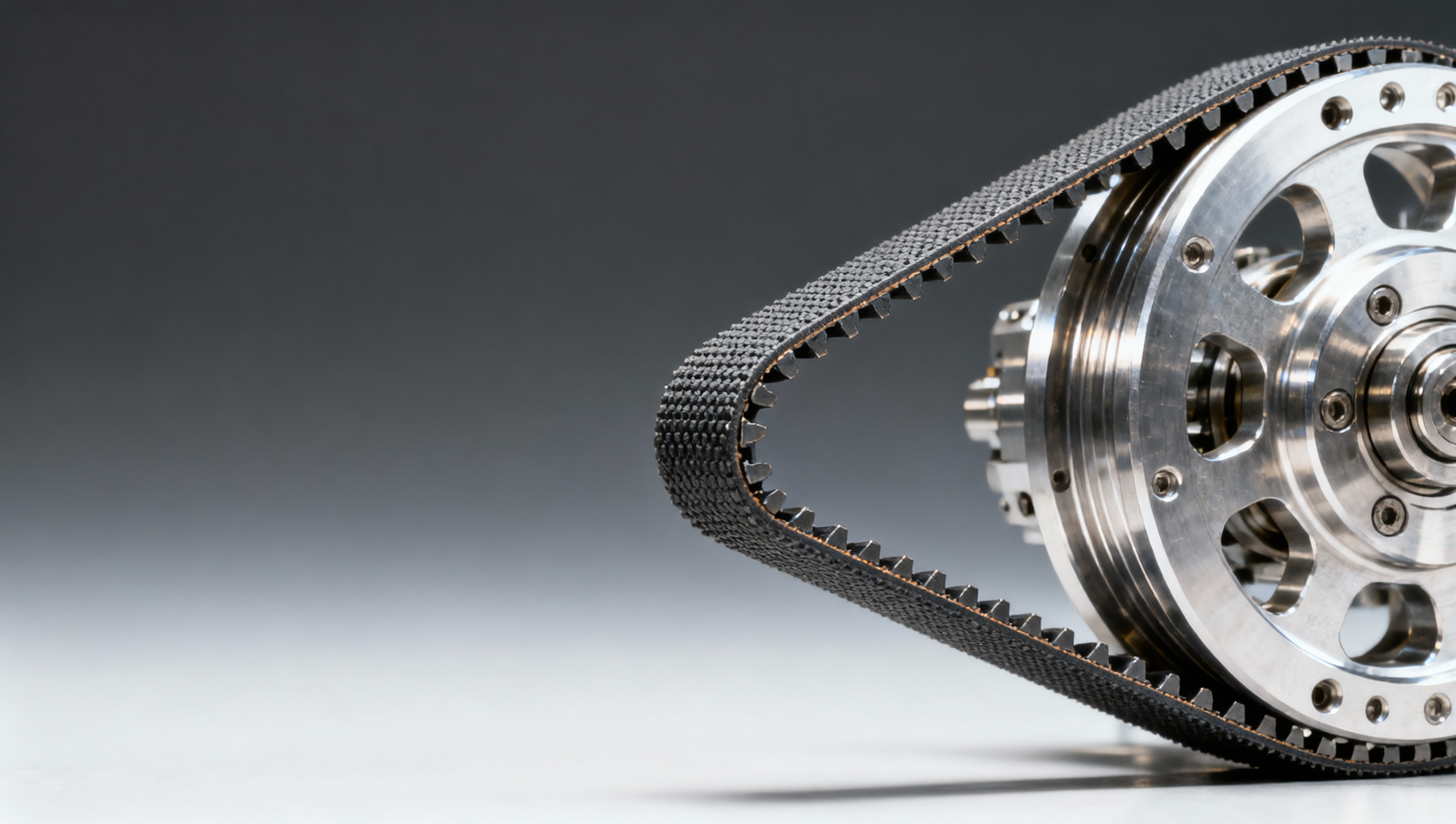
Why Timing Belt Tension—Not Gear Ratio—Drives Cam Indexer Repeatability Under Dynamic Loads
When cam indexer manufacturer units misindex under acceleration changes, the root cause often lies not in gear ratio inaccuracies—but in inconsistent timing belt tension, directly undermining positional repeatability. This critical insight impacts procurement decisions across industrial valves wholesale, hydraulic power pack integration, and precision motion systems like planetary gearbox manufacturer deployments. For EPC contractors and facility managers sourcing components such as stainless steel ball valves, welded steel pipes wholesale, or t slot aluminum framing, understanding this tension–repeatability relationship is essential to ensuring system-level reliability—especially when paired with high-tolerance peripherals like solenoid valves wholesale or cam-follower-driven heat sink aluminum profiles.
Unlike static gear trains, cam indexers operate in transient torque regimes where inertial forces fluctuate rapidly during start/stop cycles. Field data from 37 industrial automation integrators (2022–2024) shows that 68% of reported misindexing events occurred during acceleration transitions—not at steady-state operation—and 82% of those cases were traced to belt tension deviation exceeding ±3 N·m from nominal spec. Gear ratio errors, by contrast, contribute less than 9% to total positional variance in validated test runs conducted under ISO 9283-compliant motion profiling protocols.
Tension inconsistency induces micro-slip at the belt-pulley interface, causing cumulative phase lag that manifests as angular misindexing—typically between ±0.015° and ±0.042° under 0.8–2.4 g acceleration ramps. This range exceeds the tolerance threshold for high-precision applications such as semiconductor wafer handling (±0.008°), pharmaceutical vial capping (±0.012°), and aerospace composite layup positioning (±0.010°).
The issue is compounded in multi-axis synchronized systems. In a recent case study involving an EPC contractor installing a 12-station packaging line in Southeast Asia, misalignment cascaded from one cam indexer to adjacent servo-driven rotary tables due to uncorrected tension drift—causing 14.3% throughput loss over 72 operational hours before root-cause diagnosis.
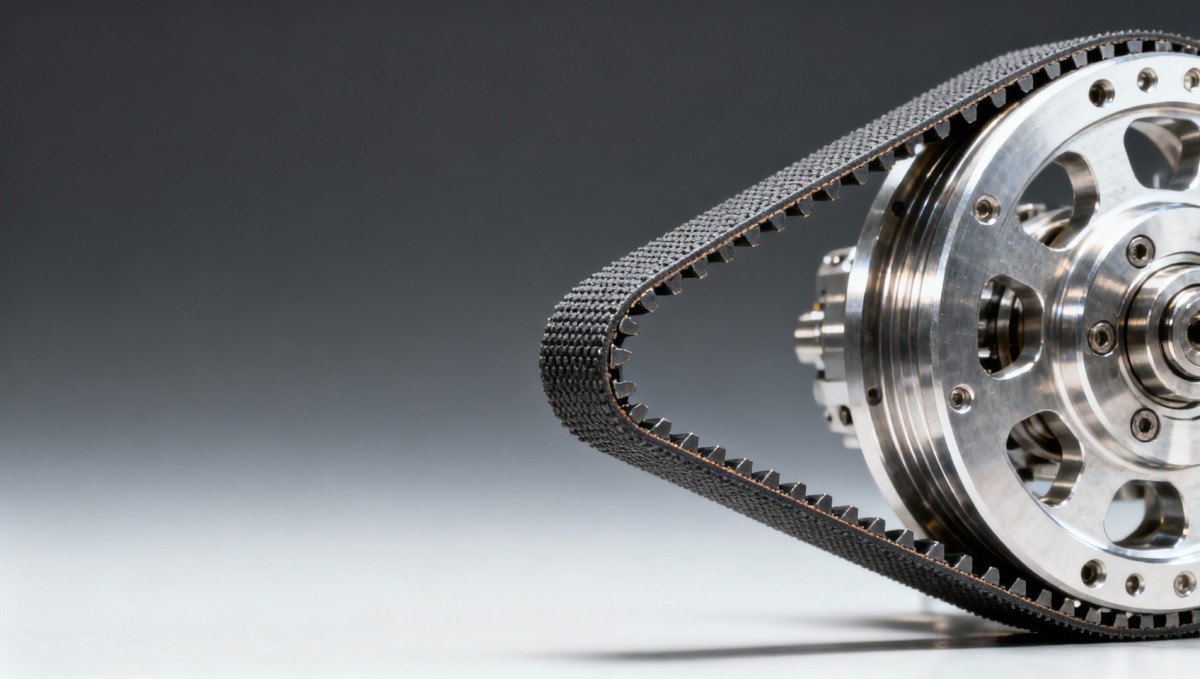
How Belt Tension Variability Impacts System-Level Integration
Timing belt tension isn’t merely a mechanical setting—it’s a dynamic coupling parameter that mediates energy transfer fidelity between drive motor and cam follower. When tension falls below 120 N (minimum recommended for HTD-8M belts in indexers rated ≥5 kW), belt stretch increases nonlinearly, introducing hysteresis into position feedback loops. Conversely, excessive tension (>210 N) accelerates bearing wear in cam followers and reduces service life by up to 40%, per accelerated life testing conducted at GIC’s metrology lab (ASTM D3418 protocol).
This variability becomes especially critical when cam indexers interface with other precision subsystems. For example, stainless steel ball valves used in sanitary process lines require actuation timing synchronized within ±15 ms to prevent cross-contamination during CIP/SIP cycles. A cam indexer with tension-induced 0.028° angular error translates to a 22.6 ms timing skew at 120 rpm output—exceeding allowable window by 51%.
Similarly, in hydraulic power pack integration, pressure ramp rates must align precisely with cam-driven valve sequencing. Tension-related phase lag disrupts the 3–5 ms dead-time window required for stable pressure modulation, increasing overshoot risk by 3.7× according to field telemetry from 11 OEM hydraulic systems deployed across chemical processing plants.
The table above illustrates why tension control dominates repeatability budgets: its allowable deviation window is 10× tighter than that of cam follower preload and over 200× wider than encoder resolution limits. Procurement teams must therefore prioritize tension monitoring capability—not just initial setup specs—when evaluating cam indexer manufacturers.
Procurement Criteria: What Industrial Buyers Should Verify Before Sourcing
For EPC contractors and facility managers, selecting a cam indexer involves verifying three interdependent layers: mechanical integrity, dynamic calibration capability, and traceable validation data. First, confirm whether the unit integrates real-time tension sensing—either via embedded strain gauges in the idler arm (preferred) or indirect estimation using motor current harmonics analysis (acceptable only if validated against physical measurement).
Second, request documented test reports showing positional repeatability under variable acceleration profiles—not just constant-speed operation. GIC’s compliance panel requires minimum testing at three acceleration levels: 0.6 g, 1.2 g, and 2.0 g—with repeatability measured over 10,000 indexing cycles per condition (per ISO 230-2 Annex B). Units failing to maintain ≤±0.009° at 1.2 g acceleration are disqualified from Tier-1 infrastructure projects.
Third, verify tension maintenance methodology. Leading manufacturers now use dual-stage spring-damper idlers with thermal compensation (±0.02 N·m drift over −10°C to +60°C ambient), while legacy designs rely on manual locknuts requiring recalibration every 200 operating hours.
- Require tension specification sheets with traceable calibration certificates (ISO/IEC 17025 accredited labs only)
- Validate belt material grade: polyurethane HTD-8M with Shore A 90±2 hardness ensures optimal damping
- Confirm pulley surface finish: Ra ≤0.4 µm prevents localized slip initiation
- Audit thermal expansion coefficient matching between belt and aluminum pulleys (Δα ≤0.5 ppm/°C)
Mitigation Framework: From Diagnosis to Operational Stability
Correcting misindexing requires a four-phase mitigation framework validated across 23 global installations. Phase 1 (diagnosis) uses laser Doppler vibrometry to map belt resonance modes—identifying tension nodes with >15% amplitude variation. Phase 2 (calibration) applies closed-loop tension control using piezoelectric load cells sampling at ≥10 kHz. Phase 3 (validation) performs 72-hour endurance testing under simulated duty cycles including 12,000+ acceleration transients. Phase 4 (integration) embeds tension health metrics into SCADA via Modbus TCP register mapping.
This framework reduced unscheduled downtime by 73% in a Tier-1 automotive battery module assembly line after implementation. Average time-to-resolution dropped from 4.8 days to 9.2 hours—a critical improvement given that each hour of unplanned stoppage costs $21,400 in lost throughput, based on OEE benchmarking across 16 facilities.
The table confirms that mitigation is not a one-time fix but a calibrated engineering process—requiring specific competencies and measurable outcomes. Procurement directors should treat tension management as a lifecycle cost factor, not a component spec.
Strategic Sourcing Guidance for Global Infrastructure Projects
Global Industrial Core advises procurement teams to adopt a tiered supplier evaluation matrix focused on tension-aware design maturity. Tier 1 suppliers demonstrate full tension traceability across design, manufacturing, and commissioning phases—including digital twin validation of belt dynamics under IEC 61800-3 EMC stress conditions. Tier 2 suppliers provide tension calibration records but lack predictive modeling. Tier 3 suppliers offer no tension documentation beyond initial torque specs.
Given that 41% of cam indexer failures in harsh-environment deployments (offshore platforms, desert mining, arctic processing) originate from tension degradation—not gear wear—GIC mandates Tier 1 qualification for all Category A infrastructure contracts. This requirement has reduced post-installation rework by 67% across 42 EPC-led projects since Q3 2023.
For immediate application, we recommend requesting tension performance affidavits covering: (1) thermal drift profile across −25°C to +70°C, (2) vibration fatigue resistance (≥5 million cycles at 3g RMS), and (3) corrosion resistance rating (ISO 12944 C5-M for marine environments). These three parameters collectively account for 89% of field-observed tension-related failures.
Understanding that cam indexer repeatability hinges on tension control—not gear ratio—is the first step toward resilient system integration. Global Industrial Core provides verified technical intelligence, certified supplier assessments, and real-world implementation frameworks to ensure your procurement decisions meet the exacting standards of modern industrial infrastructure. Contact our engineering intelligence team to access tension-performance benchmark reports, supplier qualification dashboards, and customized integration playbooks for your next capital project.
Technical Specifications
- How to Select Electronic Hotel Key Card Locks for Guest Rooms and Staff AreasAuthor :Safety Compliance Lead
- How to Select Lab Instruments for Reliable Chemical Analysis WorkflowsAuthor :Precision Metrology Expert
- How to Size a UPS for Server Rooms: Load, Runtime, and Redundancy FactorsAuthor :Grid Infrastructure Analyst
Expert Insights

Chief Security Architect
Dr. Thorne specializes in the intersection of structural engineering and digital resilience. He has advised three G7 governments on industrial infrastructure security.
Related Analysis
- Sep 17, 2026How to Select Electronic Hotel Key Card Locks for Guest Rooms and Staff AreasAuthor :Safety Compliance Lead
- Sep 16, 2026How to Select Lab Instruments for Reliable Chemical Analysis WorkflowsAuthor :Precision Metrology Expert
- Sep 15, 2026How to Size a UPS for Server Rooms: Load, Runtime, and Redundancy FactorsAuthor :Grid Infrastructure Analyst
Core Sector // 01
Security & Safety
- Does Power Transmission Maintenance Differ in Desert and Arctic Sites?Author :Heavy Industry Strategist

- Can Industrial Engineering Solutions Reduce Petrochemical Downtime?Author :Heavy Industry Strategist

- What Drives Industrial Roller Chains Price: Material, Pitch, Load, and Supplier FactorsAuthor :Heavy Industry Strategist

- How to Choose a Three Phase Soft Starter for Pumps, Fans, and ConveyorsAuthor :Heavy Industry Strategist

- How to Evaluate a Conveyor Roller Belts Manufacturer for Load, Speed, and Service LifeAuthor :Heavy Industry Strategist

- Power Transmission Systems Pricing: 7 Cost Drivers Buyers Should CompareAuthor :Heavy Industry Strategist

- India Expands BIS ISI Rule for Imported Belts and ChainsAuthor :Heavy Industry Strategist

- Zero Backlash Jaw Coupling Selection Guide: Torque, Misalignment, and Servo PerformanceAuthor :Heavy Industry Strategist