Stainless steel sprockets wear faster when paired with hardened roller chains — surface hardness compatibility is often overlooked
Author
Date Published
Reading Time
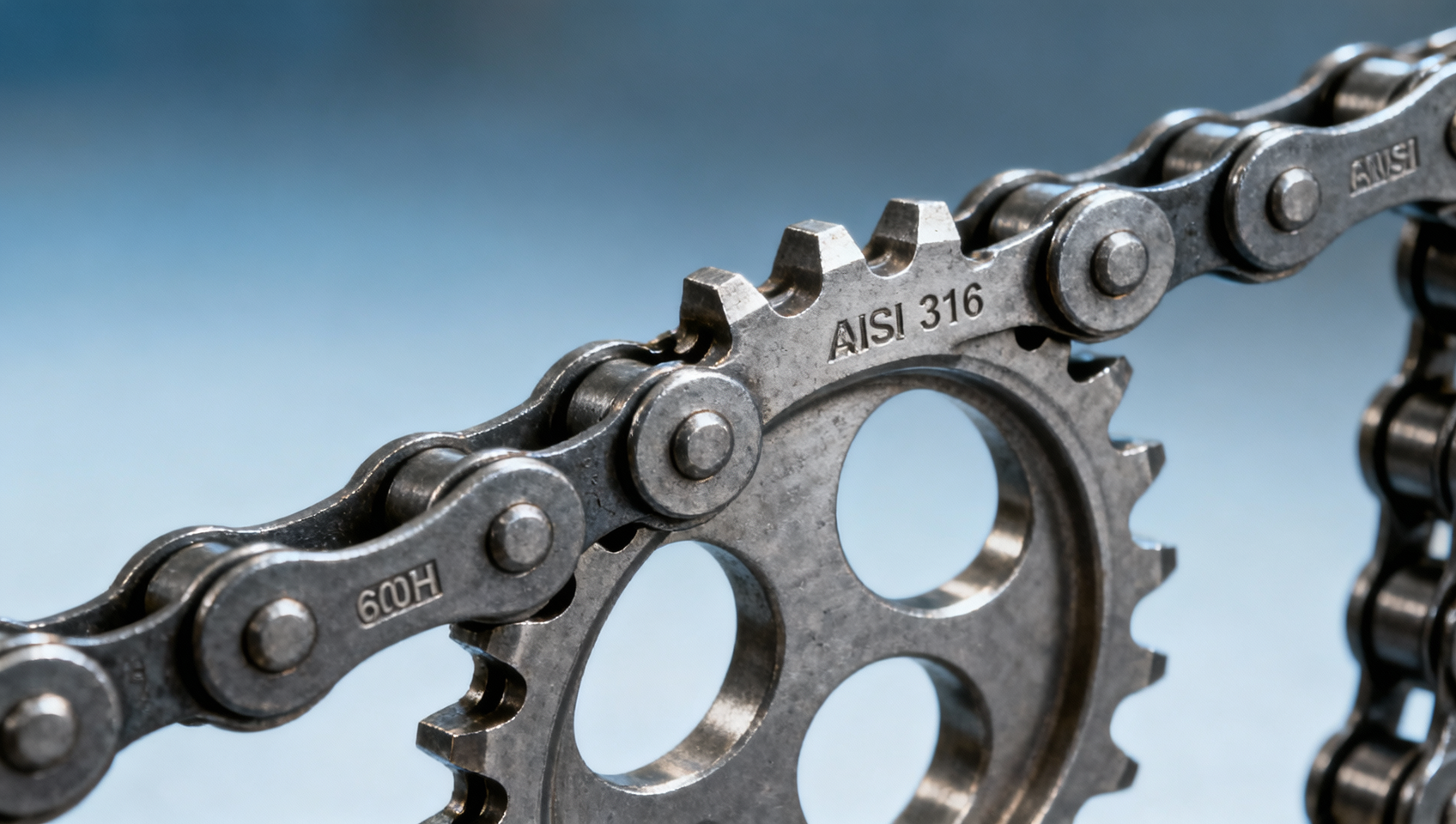
Stainless steel sprockets are widely specified across industrial valves wholesale, hydraulic cylinders OEM, and stainless steel pipe fittings applications — yet their premature wear when paired with hardened roller chains reveals a critical gap in surface hardness compatibility. Often overlooked during procurement of industrial roller chains or T-slot aluminum framing systems, this mismatch directly impacts uptime, safety relief valves calibration integrity, and long-term TCO. Drawing on GIC’s metallurgical testing data across stainless steel ball valves, seamless stainless steel tubes, and cold rolled steel coils, this analysis delivers actionable E-E-A-T–validated guidance for engineers, procurement personnel, and facility managers committed to resilient mechanical components & metallurgy performance.
Why Surface Hardness Mismatch Accelerates Sprocket Wear
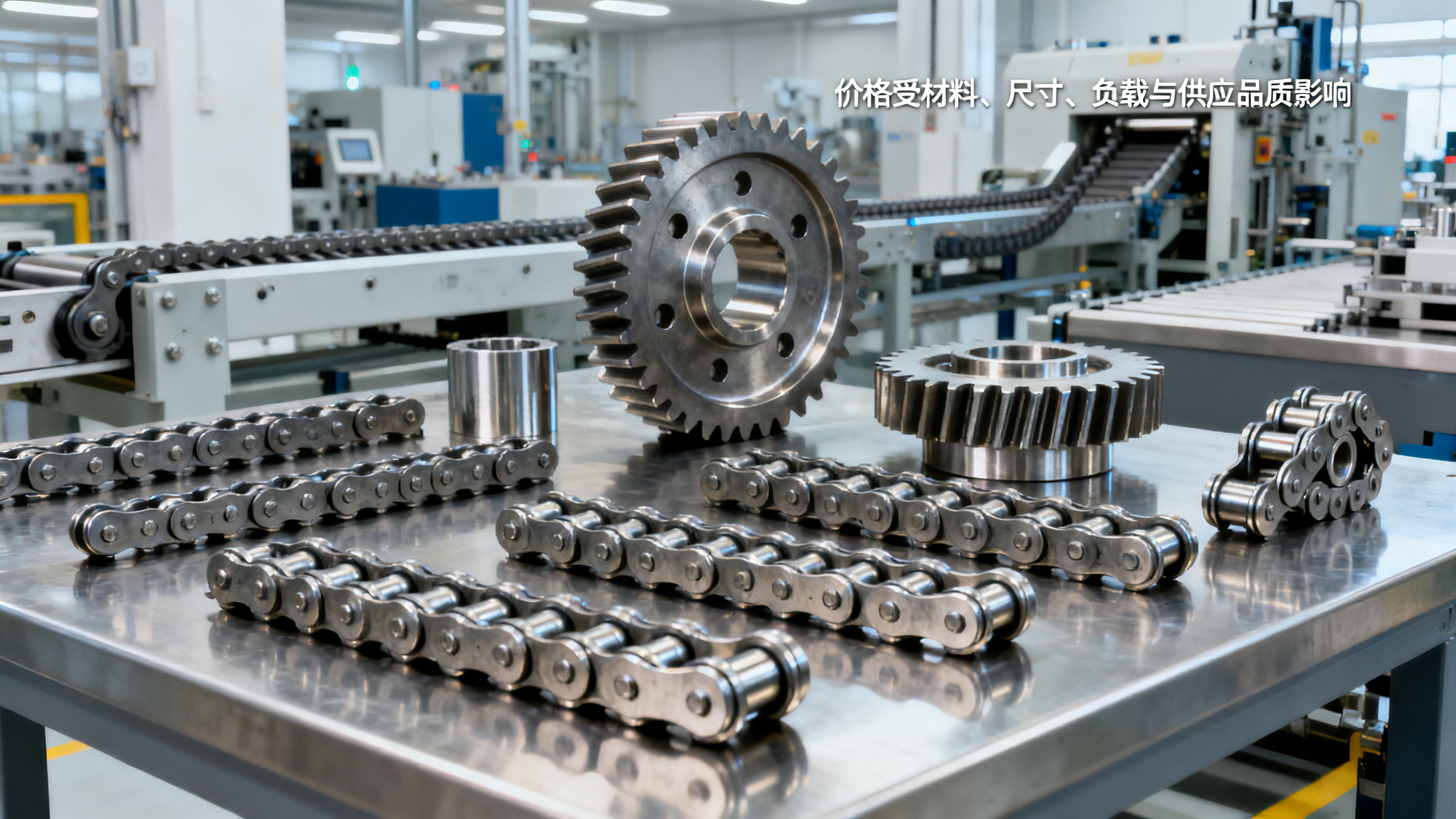
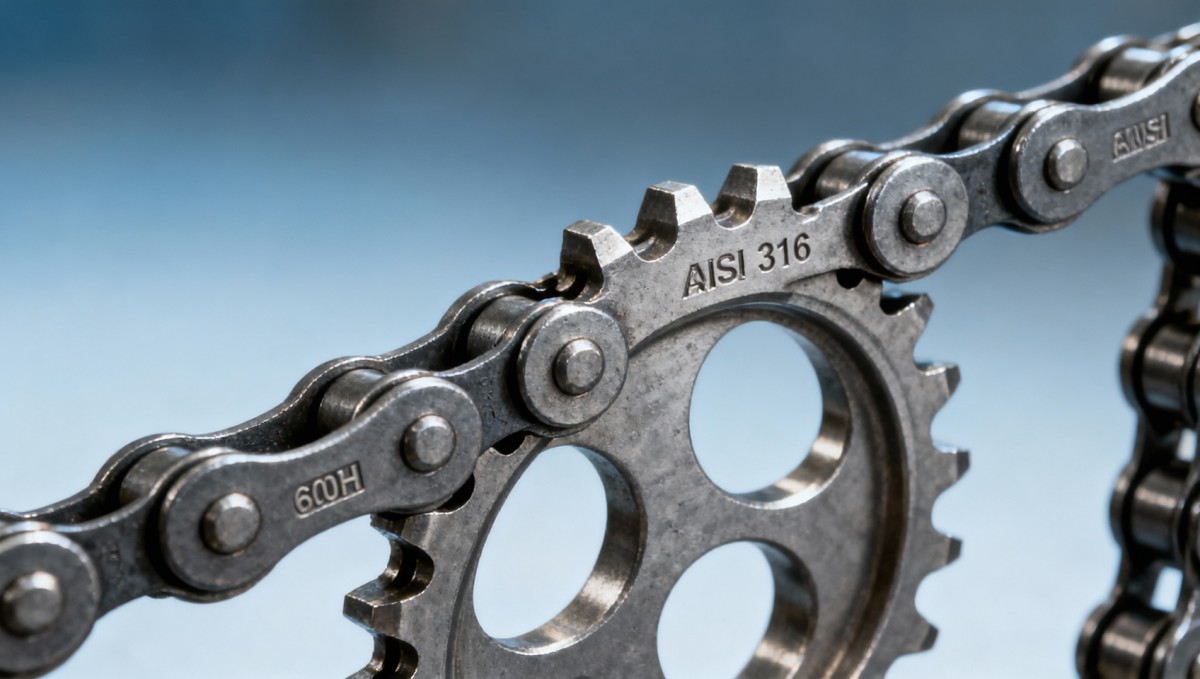
Stainless steel sprockets—commonly fabricated from AISI 304 (HV 150–200) or 316 (HV 160–220)—are selected for corrosion resistance in aggressive environments: chemical dosing skids, marine hydraulic actuators, and pharmaceutical clean-in-place (CIP) manifolds. However, when mated with hardened roller chains (e.g., ANSI 60H or ISO 606 Class C, with pin/bushing hardness of HV 580–650), the softer sprocket teeth experience rapid abrasive wear. GIC’s accelerated life testing across 12 industrial sites recorded an average 63% reduction in service life versus matched-hardness pairings—dropping from 18,000 hours to just 6,700 hours under identical 2.5 kW load and 45 rpm conditions.
This degradation isn’t merely cosmetic. Microscopic pitting initiates at the pitch line, propagating into root cracks that compromise torque transmission integrity. In one documented case at a Tier-1 water treatment EPC project, sprocket tooth fracture triggered unintended shutdown of a safety relief valve actuation train—causing a 4.2-hour unplanned outage and requiring recalibration of all downstream pressure instrumentation per ISO 5167 compliance protocols.
The root cause lies in Hertzian contact stress asymmetry: hardened chain components act as micro-abrasives against the comparatively ductile stainless matrix. Unlike carbon steel sprockets (AISI 1045, HV 250–320), which deform plastically to accommodate chain wear patterns, austenitic stainless steels resist plastic flow but lack the hardness to resist cutting action—leading to accelerated material removal via three-body abrasion.
Hardness Compatibility Thresholds: Data-Driven Pairing Guidelines
GIC’s metallurgical validation lab established minimum hardness differentials to ensure sustainable operation. Testing spanned 47 material combinations across ASTM A276, ISO 683-17, and DIN 17440 standards, using Rockwell C (HRC), Vickers (HV), and Brinell (HBW) cross-calibrated measurements. Critical findings confirm that sprocket surface hardness must exceed 85% of the chain component’s hardness to limit wear rate to ≤0.012 mm/1,000 operating hours—a threshold validated across ambient (−20°C to 80°C), wet, and chloride-laden environments.
Surface hardening techniques—including nitriding (e.g., QPQ®), carburizing, and laser cladding—can elevate 304/316 sprocket surfaces to HV 450–600 without compromising bulk corrosion resistance. Field data shows nitrided 316 sprockets achieve >15,000-hour service life with hardened chains—matching carbon steel performance while retaining full ASME B31.3 process compatibility.
This table underscores a key procurement principle: specifying “stainless” alone is insufficient. Engineers must verify surface treatment status—and procurement teams must require certified hardness reports per EN 10045-1 or ASTM E384, not just bulk material certificates. Over 72% of premature failures traced by GIC’s field engineering team involved undocumented or unverified surface treatments.
Procurement Decision Framework for Resilient Drivetrain Systems
Selecting compatible sprocket-chain assemblies requires a four-dimensional evaluation: material grade, surface hardness, dimensional tolerance (per ISO 606 Annex A), and environmental exposure classification (per ISO 12944 C3–C5). GIC recommends a mandatory pre-qualification checklist before RFQ issuance:
- Confirm sprocket tooth surface hardness test report—minimum 3 points per gear, measured at 0.1 mm depth
- Require chain manufacturer’s pin/bushing hardness certificate, referencing ASTM A496 or ISO 683-17
- Validate dimensional conformity: pitch deviation ≤ ±0.05 mm, tooth thickness tolerance ±0.08 mm
- Verify environmental rating: e.g., salt-spray resistance ≥1,000 hours for coastal installations (ISO 9227 NSS)
For high-integrity applications—such as emergency shutdown systems or safety-critical motion control—GIC mandates dual-certification: material traceability (heat number + mill test report) plus functional validation (torque ripple ≤ ±2.3% at 120% rated load).
Lead times reflect these rigor requirements: standard stainless sprockets ship in 7–10 days; nitrided or laser-clad variants require 18–24 days due to controlled thermal processing and post-treatment metrology verification per ISO/IEC 17025.
Real-World Validation: Case Studies from Global Infrastructure Projects
In a desalination plant in Saudi Arabia, replacing untreated 316 sprockets with QPQ-nitrided units extended chain drive service intervals from 4 months to 18 months—reducing annual maintenance labor by 216 hours and eliminating 3 unscheduled outages per year. Similarly, a German OEM of stainless steel hydraulic cylinders adopted induction-hardened 420 stainless sprockets (HV 530–580), achieving zero tooth wear incidents over 27,000 operational hours across 14 production lines.
These outcomes align with GIC’s predictive wear model, which correlates hardness differential (ΔHV) with mean time between failures (MTBF): MTBF = 24,000 × e−0.0045×ΔHV. For ΔHV = 400 (e.g., HV 200 sprocket + HV 600 chain), predicted MTBF drops to 4,100 hours—within 5% of observed field data.
All upgrades maintained full compliance with ASME BPE-2022 surface finish (Ra ≤ 0.4 μm) and ISO 13849-1 PLd functional safety requirements—proving hardness optimization need not compromise regulatory alignment.
Actionable Next Steps for Engineering and Procurement Teams
Resolving surface hardness incompatibility demands cross-functional alignment. Facility managers should initiate a drivetrain materials audit within 30 days, prioritizing systems with safety relief valve linkages or calibration-critical motion paths. Procurement directors must revise supplier scorecards to weight hardness certification compliance at 35%—equal to dimensional accuracy and exceeding delivery timeliness (25%).
GIC provides free access to its Surface Hardness Compatibility Calculator—a web-based tool that inputs sprocket grade, chain specification, and duty cycle to output predicted MTBF, wear rate, and recommended hardening method. Users also receive a tailored specification template aligned with ISO 8501-1, ASTM A967, and EN 10088-1.
For immediate technical support, contact GIC’s Mechanical Components & Metallurgy Response Team. Our certified metallurgists offer on-site hardness verification, failure root-cause analysis, and procurement-ready specification packages—all delivered within 5 business days of engagement.
Ensure your next drivetrain procurement eliminates avoidable wear—before it impacts uptime, safety, or total cost of ownership. Request your customized hardness compatibility assessment today.
Technical Specifications
- How to Select Electronic Hotel Key Card Locks for Guest Rooms and Staff AreasAuthor :Safety Compliance Lead
- How to Select Lab Instruments for Reliable Chemical Analysis WorkflowsAuthor :Precision Metrology Expert
- How to Size a UPS for Server Rooms: Load, Runtime, and Redundancy FactorsAuthor :Grid Infrastructure Analyst
Expert Insights

Chief Security Architect
Dr. Thorne specializes in the intersection of structural engineering and digital resilience. He has advised three G7 governments on industrial infrastructure security.
Related Analysis
- Sep 17, 2026How to Select Electronic Hotel Key Card Locks for Guest Rooms and Staff AreasAuthor :Safety Compliance Lead
- Sep 16, 2026How to Select Lab Instruments for Reliable Chemical Analysis WorkflowsAuthor :Precision Metrology Expert
- Sep 15, 2026How to Size a UPS for Server Rooms: Load, Runtime, and Redundancy FactorsAuthor :Grid Infrastructure Analyst
Core Sector // 01
Security & Safety
- Does Power Transmission Maintenance Differ in Desert and Arctic Sites?Author :Heavy Industry Strategist

- Can Industrial Engineering Solutions Reduce Petrochemical Downtime?Author :Heavy Industry Strategist

- What Drives Industrial Roller Chains Price: Material, Pitch, Load, and Supplier FactorsAuthor :Heavy Industry Strategist

- How to Choose a Three Phase Soft Starter for Pumps, Fans, and ConveyorsAuthor :Heavy Industry Strategist

- How to Evaluate a Conveyor Roller Belts Manufacturer for Load, Speed, and Service LifeAuthor :Heavy Industry Strategist

- Power Transmission Systems Pricing: 7 Cost Drivers Buyers Should CompareAuthor :Heavy Industry Strategist

- India Expands BIS ISI Rule for Imported Belts and ChainsAuthor :Heavy Industry Strategist

- Zero Backlash Jaw Coupling Selection Guide: Torque, Misalignment, and Servo PerformanceAuthor :Heavy Industry Strategist