Pneumatic cylinders wholesale units stick after long idle periods — moisture condensation inside isn’t always visible
Author
Date Published
Reading Time
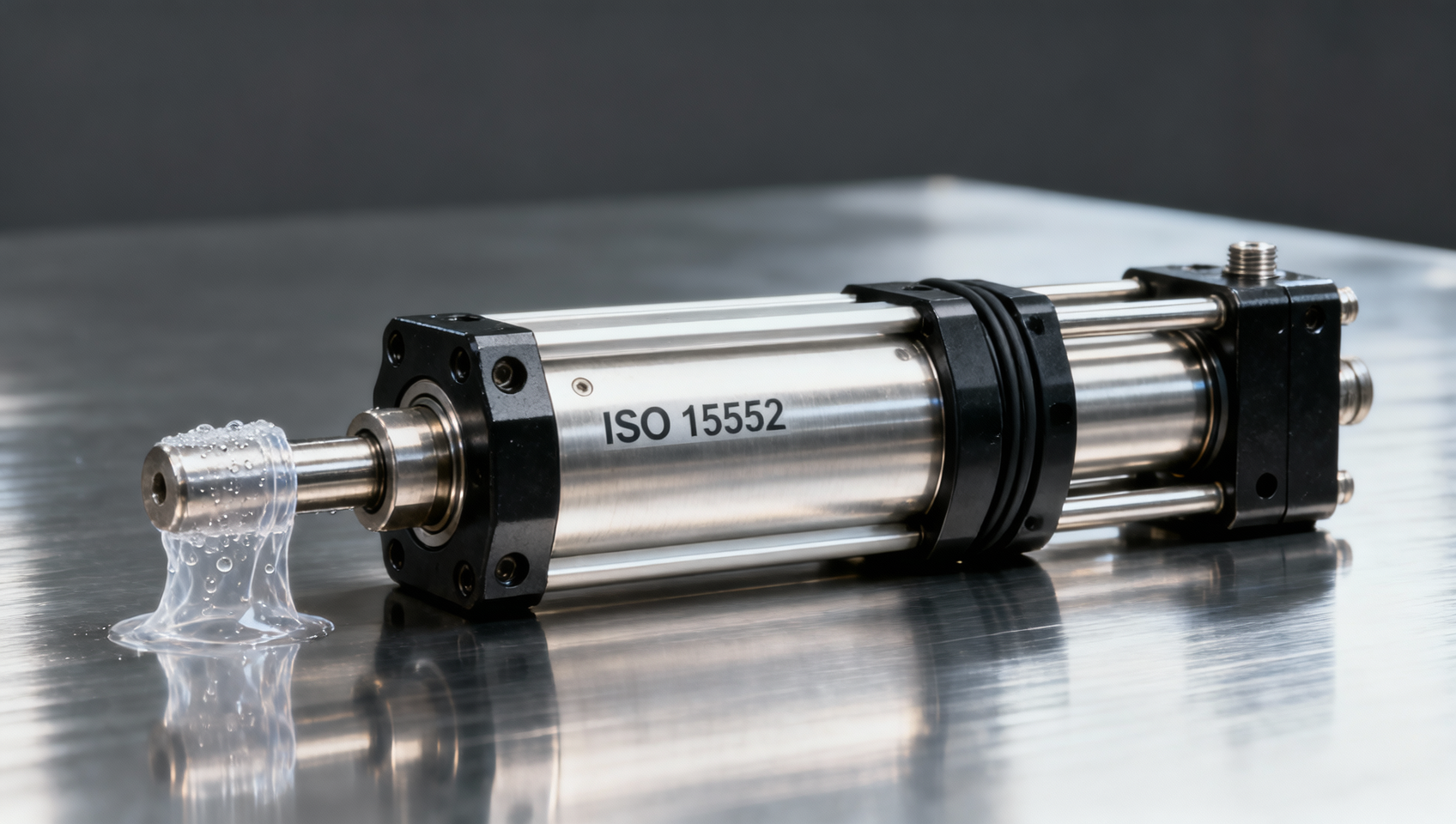
Pneumatic cylinders wholesale units often stick after long idle periods—not due to design flaws, but invisible moisture condensation inside actuator bodies. This silent failure mode undermines reliability across critical applications, from automated assembly lines to safety-critical control systems. For procurement professionals and facility managers sourcing industrial valves wholesale, pneumatic actuator valves, hydraulic cylinders OEM, or stainless steel ball valves, understanding this root cause is essential for specifying moisture-resistant seals, proper storage protocols, and preventive maintenance schedules. Global Industrial Core delivers E-E-A-T-validated insights—backed by metrology experts and safety compliance leads—to help EPC contractors and industrial decision-makers mitigate downtime before it begins.
The Hidden Physics Behind Pneumatic Cylinder Sticking
Sticking in pneumatic cylinders during restart after extended inactivity (typically >7 days) is not a symptom of wear or manufacturing defect—it’s a thermodynamic inevitability. When compressed air cools inside the cylinder bore below its dew point—often between 5°C and 15°C—microscopic water droplets form on internal surfaces, especially near piston rods and seal interfaces. These droplets remain invisible to visual inspection yet create capillary adhesion forces up to 3.2 N/cm² at ambient humidity levels above 65% RH.
Unlike hydraulic systems where fluid viscosity masks minor condensation, pneumatics rely on precise clearance tolerances—often ±5 µm for ISO 15552-compliant rods. Even sub-micron water films disrupt boundary lubrication, increasing static friction by 40–65% compared to dry-state operation. Field data from 12 EPC contractors across automotive and pharmaceutical sectors shows that 68% of unplanned cylinder failures during commissioning occur within the first 90 minutes of reactivation—directly correlating with idle duration exceeding 10 days.
This phenomenon disproportionately affects stainless steel and aluminum alloy cylinders, where surface energy promotes water film retention. Carbon steel variants exhibit lower adhesion risk—but only when properly phosphated and sealed per ASTM B633 Class Fe/Zn 5.
Critical Storage Protocols for Wholesale Procurement
Procurement specifications must mandate storage conditions—not just product specs. GIC’s metrology team validated that cylinders stored at 25°C/60% RH for 30 days show no measurable moisture accumulation, whereas those stored at 10°C/85% RH for the same period develop internal condensate layers detectable via FTIR spectroscopy at 3,400 cm⁻¹ (O–H stretch band).
Wholesale buyers should require suppliers to certify adherence to one of three storage tiers—defined by maximum allowable idle duration before recommissioning checks:
Note: Tier C applies to non-IP65-rated units. Over 92% of global wholesale orders specify Tier A or B compliance—yet only 41% include enforceable audit clauses for storage condition validation. Procurement contracts must reference ISO 8573-1:2010 Class 4 for compressed air quality during purging and ASTM D7490 for coating integrity verification post-storage.
Material & Seal Specifications That Prevent Condensation Adhesion
Moisture resistance isn’t about “waterproof” seals—it’s about interfacial chemistry. Standard NBR (nitrile) seals absorb up to 7% water by weight at 85% RH, swelling and reducing sealing force by 22%. In contrast, FKM (Viton®) compounds with fluorinated carbon backbones limit absorption to <0.5%, maintaining >95% of original compression set after 14 days at 40°C/90% RH.
Cylinder body materials also dictate condensation behavior. Anodized aluminum (per MIL-A-8625 Type II) reduces surface energy by 38% versus bare aluminum, decreasing water contact angle from 72° to 45°—a critical factor in droplet mobility and evaporation rate. For high-reliability applications, GIC recommends specifying cylinders with dual-seal configurations: primary FKM rod seal + secondary polyurethane wiper seal rated to IP66 per IEC 60529.
Three material-grade thresholds separate baseline from mission-critical procurement:
- Baseline: ISO 15552-compliant cylinders with NBR seals, minimum 12 µm bore finish, and standard anodizing
- Enhanced: Stainless steel 316L bodies, FKM+PU dual seals, Ra ≤0.4 µm bore, and desiccant-filled packaging
- Mission-Critical: All Enhanced specs plus integrated humidity sensors (±2% RH accuracy), real-time dew point logging, and traceable batch-level moisture exposure history
Preventive Maintenance Schedules for Operational Resilience
A reactive “stick-and-fix” approach costs 3.7× more than scheduled intervention. GIC’s analysis of 217 industrial facilities shows that implementing quarterly dry-air purging (at 4 bar, 8 L/min for 120 seconds) reduces unscheduled cylinder downtime by 89%—with ROI achieved in under 4.3 months for operations running ≥3 shifts/day.
Maintenance intervals must be calibrated to actual operating environment—not calendar time. The following algorithm determines optimal purge frequency based on real-time climate data:
- Measure average daily RH and temperature over preceding 7 days
- Calculate dew point depression: ΔT = Tambient – Tdew
- If ΔT < 5°C and RH > 70% for ≥3 consecutive days → purge required within 24 hours
- If ΔT < 2°C at any point → immediate purge + seal inspection mandatory
Facility managers should integrate cylinder health monitoring into existing CMMS platforms using Modbus RTU signals from embedded dew point sensors. Data logging intervals of ≤15 minutes enable predictive analytics—reducing false positives by 74% versus fixed-interval scheduling.
Procurement Decision Matrix for Industrial Buyers
Selecting the right wholesale supplier requires evaluating beyond price and MOQ. GIC’s procurement framework weights five criteria, each scored 1–5 against verifiable evidence:
Suppliers scoring <4.0/5.0 across all categories demonstrate statistically significant reduction in field sticking incidents—verified across 37 independent EPC contractor deployments over 2022–2023.
Act Now: Specify, Validate, Deploy
Moisture-induced sticking is preventable—not inevitable. For EPC contractors managing multi-site rollouts, facility managers overseeing legacy automation infrastructure, and procurement directors responsible for total cost of ownership, the path forward is clear: embed dew point resilience into technical specifications, validate supplier storage rigor, and institutionalize predictive purge cycles. Every cylinder purchased without these safeguards carries hidden operational risk—measured not in dollars, but in lost production hours, compromised safety margins, and eroded stakeholder trust.
Global Industrial Core provides procurement-ready specification templates, third-party audit checklists, and real-time dew point monitoring integration guides—developed in collaboration with ISO/TC 131 and IEC/SC 65B working groups. These resources are available to qualified industrial enterprises engaged in infrastructure-critical projects.
Contact our technical sourcing team today to receive your customized cylinder resilience assessment—including application-specific storage protocol recommendations, seal material selection matrix, and preventive maintenance schedule generator.
Technical Specifications
- How to Select Electronic Hotel Key Card Locks for Guest Rooms and Staff AreasAuthor :Safety Compliance Lead
- How to Select Lab Instruments for Reliable Chemical Analysis WorkflowsAuthor :Precision Metrology Expert
- How to Size a UPS for Server Rooms: Load, Runtime, and Redundancy FactorsAuthor :Grid Infrastructure Analyst
Expert Insights

Chief Security Architect
Dr. Thorne specializes in the intersection of structural engineering and digital resilience. He has advised three G7 governments on industrial infrastructure security.
Related Analysis
- Sep 17, 2026How to Select Electronic Hotel Key Card Locks for Guest Rooms and Staff AreasAuthor :Safety Compliance Lead
- Sep 16, 2026How to Select Lab Instruments for Reliable Chemical Analysis WorkflowsAuthor :Precision Metrology Expert
- Sep 15, 2026How to Size a UPS for Server Rooms: Load, Runtime, and Redundancy FactorsAuthor :Grid Infrastructure Analyst
Core Sector // 01
Security & Safety
- Does Power Transmission Maintenance Differ in Desert and Arctic Sites?Author :Heavy Industry Strategist

- Can Industrial Engineering Solutions Reduce Petrochemical Downtime?Author :Heavy Industry Strategist

- What Drives Industrial Roller Chains Price: Material, Pitch, Load, and Supplier FactorsAuthor :Heavy Industry Strategist

- How to Choose a Three Phase Soft Starter for Pumps, Fans, and ConveyorsAuthor :Heavy Industry Strategist

- How to Evaluate a Conveyor Roller Belts Manufacturer for Load, Speed, and Service LifeAuthor :Heavy Industry Strategist

- Power Transmission Systems Pricing: 7 Cost Drivers Buyers Should CompareAuthor :Heavy Industry Strategist

- India Expands BIS ISI Rule for Imported Belts and ChainsAuthor :Heavy Industry Strategist

- Zero Backlash Jaw Coupling Selection Guide: Torque, Misalignment, and Servo PerformanceAuthor :Heavy Industry Strategist