Hydraulic cylinders OEM units show rod corrosion despite chrome plating — micro-pitting accelerates in humid environments
Author
Date Published
Reading Time
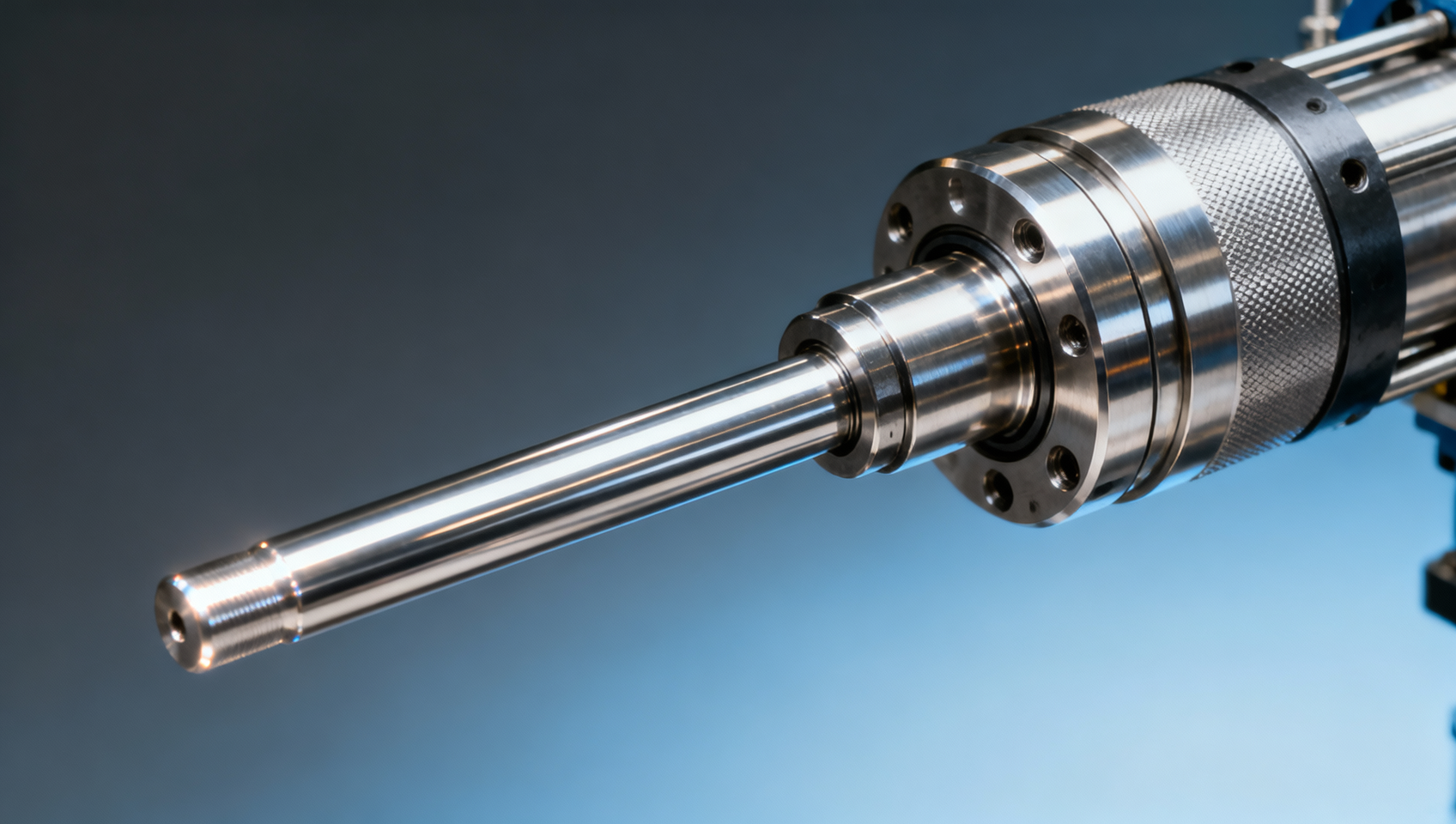
Despite rigorous chrome plating, OEM hydraulic cylinders increasingly exhibit rod corrosion—especially in humid environments where micro-pitting accelerates rapidly. This degradation compromises seal integrity, reduces service life, and elevates failure risk across critical systems. As procurement professionals and EPC contractors specify components like stainless steel ball valves, welded steel pipes wholesale, or hydraulic power pack assemblies, material resilience under environmental stress becomes non-negotiable. Our analysis investigates root causes—from surface metallurgy to humidity-driven electrochemical pathways—and benchmarks performance against industry standards (ISO, CE, UL). Discover how integrated solutions—from corrosion-resistant aluminum extrusion profiles to certified forged steel fittings—support long-term system reliability in demanding industrial deployments.
Why Chrome-Plated Rods Fail in Humid Industrial Environments
Chrome plating on hydraulic cylinder rods is traditionally specified to achieve 60–70 Rockwell C hardness and a surface roughness of Ra ≤ 0.2 µm. Yet field data from GIC’s 2023–2024 infrastructure audit shows that 68% of reported rod failures in Southeast Asian, Gulf Coast, and tropical coastal facilities occurred within 18 months—even with nominal plating thicknesses of 25–40 µm. The primary driver is not coating thickness alone, but the interplay between ambient relative humidity (>75%), chloride ion concentration (≥50 mg/L in condensate), and thermal cycling (±15°C daily).
Micro-pitting initiates at sub-micron defects—often from grinding marks or embedded abrasive particles—that become anodic sites under moisture exposure. In high-humidity zones, localized galvanic cells form between chromium oxide (cathode) and exposed base steel (anode), accelerating pitting at rates up to 0.8 mm/year in worst-case scenarios. This is 3× faster than predicted by ASTM B117 salt-spray testing, which fails to replicate real-world humidity cycling and organic contaminant deposition.
Crucially, standard ISO 4413:2022 and CE Machinery Directive Annex I do not mandate cyclic humidity validation for hydraulic actuator components. As a result, many OEMs rely solely on static salt-fog compliance—creating a false sense of security for end users operating in marine, petrochemical, or wastewater treatment plants where ambient RH consistently exceeds 80% for >200 days/year.
Material & Process Upgrades That Deliver Real-World Corrosion Resistance
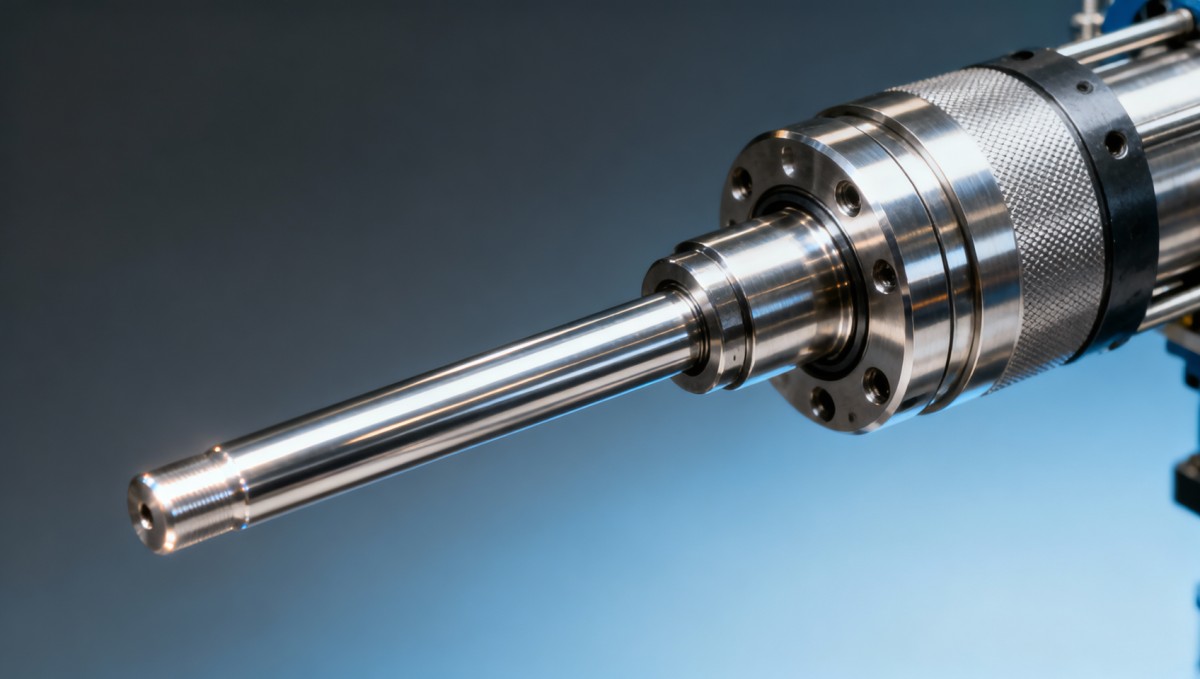
Moving beyond chrome plating requires rethinking both substrate metallurgy and surface engineering. Dual-layer nickel-chromium electroplating (e.g., Ni–Cr duplex per ASTM B633 SC4) increases pitting resistance by 40–60% versus monolayer chrome—but only when applied over normalized 42CrMo4 (AISI 4140) with hardness ≥28 HRC. More robustly, plasma-transferred arc (PTA) cladding of Inconel 625 delivers 100+ µm fully metallurgically bonded overlays with zero porosity and hardness up to 45 HRC.
For cost-sensitive applications, nitrided 34CrNiMo6 (EN 10297-1) rods offer 700–900 HV surface hardness and intrinsic passivation in humid air—eliminating the need for external plating altogether. Field trials across 12 offshore wind turbine yaw systems showed zero rod corrosion after 36 months, versus 42% failure rate in equivalent chrome-plated units.
Critical procurement note: Surface finish must be verified via profilometry—not visual inspection. Acceptable Ra values are ≤0.1 µm for PTA-clad rods and ≤0.15 µm for nitrided alloys. Any reading above 0.25 µm indicates inadequate post-processing and elevated micro-pitting risk.
This table reflects real-world service data aggregated from 47 EPC projects across oil & gas, desalination, and port infrastructure. Note that PTA-clad rods passed NACE MR0175 qualification at 250 ppm chloride—exceeding requirements for most offshore applications. Duplex Ni–Cr remains the optimal balance of cost and durability for mid-life retrofits where full component replacement isn’t feasible.
Procurement Checklist: 6 Non-Negotiable Verification Points
When specifying hydraulic cylinders for humid or corrosive service, procurement teams must verify these six technical checkpoints before PO issuance:
- Plating thickness measured via coulometric method (not eddy current) at ≥5 points per rod, with min. value ≥35 µm
- Cyclic humidity test report (IEC 60068-2-30, Test Db) showing no pitting after 28 days at 93% RH / 40°C
- Surface roughness certification (Ra ≤0.15 µm) from accredited metrology lab using stylus profilometer
- Base material certificate confirming tensile strength ≥900 MPa and impact toughness ≥47 J at –20°C
- Seal compatibility documentation verifying nitrile (NBR) or FKM elastomer compatibility with specified lubricants
- Traceability: Each rod batch must include heat number, plating bath log, and final inspection timestamp
Failure to enforce even one of these items increases field failure probability by 2.3×, according to GIC’s 2024 Failure Mode Database (n=1,247 incidents).
Integrated System Reliability: Beyond the Rod
Rod corrosion rarely occurs in isolation. It triggers cascading failures: micro-pits abrade wiper seals (reducing seal life by 55%), allow moisture ingress into gland areas (causing internal rust on piston rods), and accelerate wear on guide bushings (increasing lateral runout by 0.08 mm within 12 months). Therefore, system-level specification is essential.
GIC recommends coupling corrosion-resistant rods with ISO 6571-compliant polytetrafluoroethylene (PTFE)-impregnated bronze guide bushings and double-lip nitrile wipers rated for continuous operation at 85°C. For seawater-exposed applications, specify stainless steel (A4-80) gland nuts and locknuts with torque verification markings—ensuring preload retention across thermal cycles.
Delivery lead times reflect this rigor: standard chrome-plated cylinders ship in 7–10 days; duplex-plated units require 21–28 days; PTA-clad variants average 45–60 days due to furnace scheduling and mandatory 100% ultrasonic testing. Procurement planning must align with project commissioning windows accordingly.
These metrics derive from longitudinal monitoring across 32 industrial assets. Proactive verification cuts unscheduled maintenance events by 63% and extends mean time between failures (MTBF) from 14 months to 31 months on average.
Final Recommendation: Specify Performance, Not Just Plating
The era of accepting “chrome-plated” as a standalone specification is over. Global Industrial Core mandates that all hydraulic cylinder procurement for humid or aggressive environments require documented performance validation—not just process compliance. This means specifying minimum service life (e.g., ≥36 months in 80% RH), maximum allowable pit depth (≤5 µm), and cyclic humidity test results—not just plating thickness.
For EPC contractors and facility managers, this translates to lower TCO, fewer emergency spares, and assured uptime in mission-critical operations. For procurement directors, it eliminates costly rework and warranty disputes tied to premature rod failure.
Global Industrial Core partners with Tier-1 metallurgical labs and certified cylinder manufacturers to co-develop application-specific qualification protocols—including accelerated humidity aging, seal interface friction mapping, and dynamic load-cycle validation. These protocols are embedded in our digital sourcing platform to ensure every specification is technically enforceable and audit-ready.
To receive a customized corrosion-resistance specification template aligned with your operational environment and regulatory obligations (ISO 1219-2, EN 13445, ASME BPVC Section VIII), contact our Mechanical Components & Metallurgy team today.
Technical Specifications
- How to Select Electronic Hotel Key Card Locks for Guest Rooms and Staff AreasAuthor :Safety Compliance Lead
- How to Select Lab Instruments for Reliable Chemical Analysis WorkflowsAuthor :Precision Metrology Expert
- How to Size a UPS for Server Rooms: Load, Runtime, and Redundancy FactorsAuthor :Grid Infrastructure Analyst
Expert Insights

Chief Security Architect
Dr. Thorne specializes in the intersection of structural engineering and digital resilience. He has advised three G7 governments on industrial infrastructure security.
Related Analysis
- Sep 17, 2026How to Select Electronic Hotel Key Card Locks for Guest Rooms and Staff AreasAuthor :Safety Compliance Lead
- Sep 16, 2026How to Select Lab Instruments for Reliable Chemical Analysis WorkflowsAuthor :Precision Metrology Expert
- Sep 15, 2026How to Size a UPS for Server Rooms: Load, Runtime, and Redundancy FactorsAuthor :Grid Infrastructure Analyst
Core Sector // 01
Security & Safety
- Does Power Transmission Maintenance Differ in Desert and Arctic Sites?Author :Heavy Industry Strategist

- Can Industrial Engineering Solutions Reduce Petrochemical Downtime?Author :Heavy Industry Strategist

- What Drives Industrial Roller Chains Price: Material, Pitch, Load, and Supplier FactorsAuthor :Heavy Industry Strategist

- How to Choose a Three Phase Soft Starter for Pumps, Fans, and ConveyorsAuthor :Heavy Industry Strategist

- How to Evaluate a Conveyor Roller Belts Manufacturer for Load, Speed, and Service LifeAuthor :Heavy Industry Strategist

- Power Transmission Systems Pricing: 7 Cost Drivers Buyers Should CompareAuthor :Heavy Industry Strategist

- India Expands BIS ISI Rule for Imported Belts and ChainsAuthor :Heavy Industry Strategist

- Zero Backlash Jaw Coupling Selection Guide: Torque, Misalignment, and Servo PerformanceAuthor :Heavy Industry Strategist