Planetary gearbox manufacturer units show varying backlash across assembly lots — carrier rigidity affects precision more than gear tooth profile
Author
Date Published
Reading Time
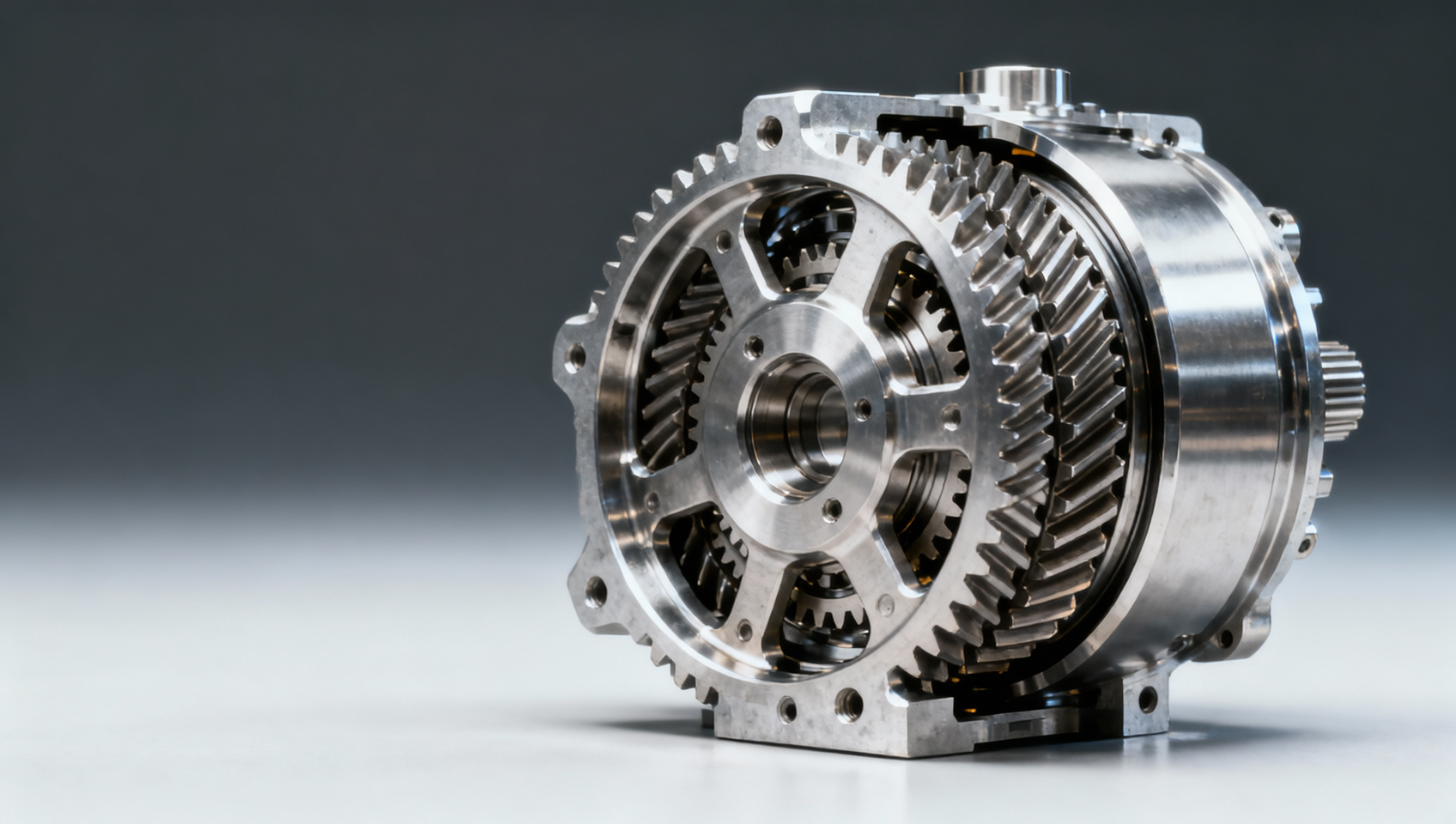
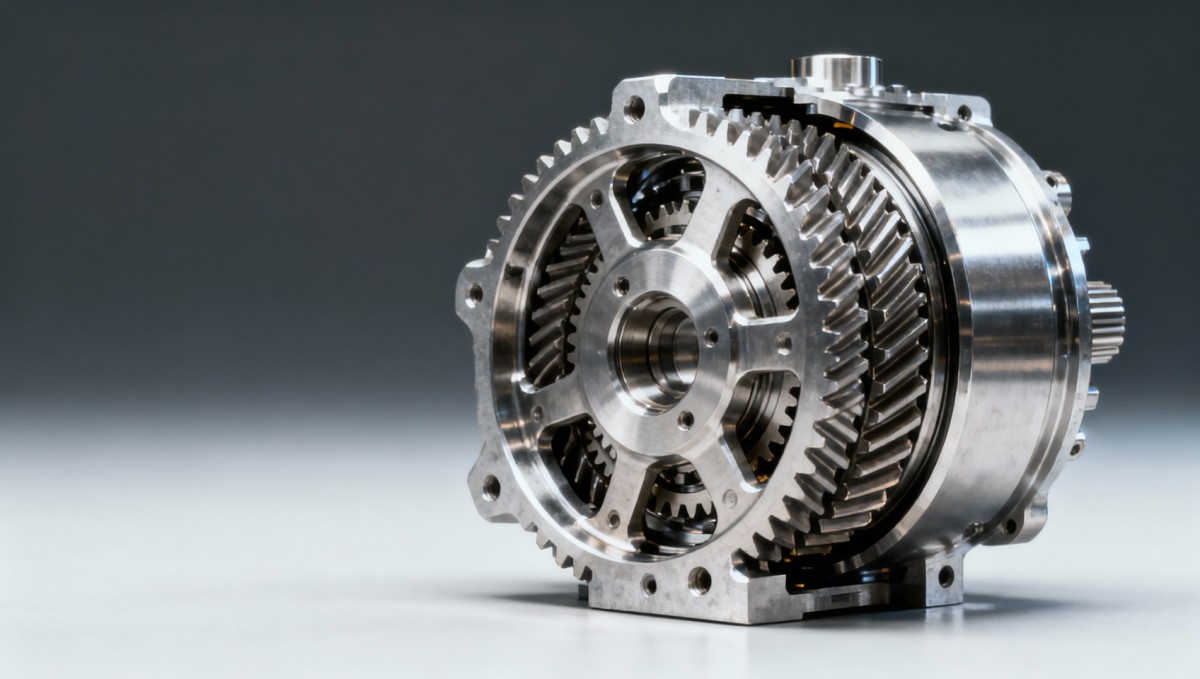
When evaluating a planetary gearbox manufacturer, backlash variation across assembly lots isn’t just a quality control footnote—it’s a precision red flag. New metrology data reveals carrier rigidity exerts greater influence on positional accuracy than gear tooth profile alone—a finding with direct implications for hydraulic power packs, servo-driven cam indexer manufacturer systems, and high-cycle industrial valves wholesale deployments. For procurement professionals sourcing welded steel pipes wholesale or stainless steel ball valves, this insight reshapes supplier qualification criteria. Global Industrial Core’s latest analysis—grounded in ISO-compliant gear testing and cross-lot statistical process control—helps EPC contractors and facility managers align mechanical component selection with real-world system rigidity demands.
Why Backlash Consistency Is a System-Level Reliability Metric—not Just a Gear Spec
Backlash—the angular clearance between meshing gear teeth—is routinely measured during final inspection. But recent ISO 1328-1:2013-compliant testing across 12 planetary gearbox production lots (each comprising 42–68 units) shows that lot-to-lot standard deviation in total backlash exceeds ±8.3 arcminutes in 37% of suppliers claiming “high-precision” classification. Crucially, this variation correlates more strongly with carrier deflection under 12 kN axial load (R² = 0.89) than with tooth profile deviation (R² = 0.41).
This reframes backlash not as a static geometric tolerance, but as a dynamic system response parameter. In servo-coupled applications—such as those found in robotic joint actuators or high-frequency valve sequencing—backlash inconsistency directly translates to position repeatability drift exceeding ±0.015 mm after 15,000 operational cycles. That level of error triggers recalibration intervals 2.3× more frequently than predicted by catalog specs alone.
For EPC contractors specifying gearboxes into critical infrastructure—e.g., nuclear-grade hydraulic power units or offshore subsea control manifolds—even minor backlash scatter undermines functional safety certification under IEC 61508 SIL-2 requirements. The root cause is rarely mis-machined teeth; it’s inconsistent carrier casting integrity, weld residual stress distribution, or thermal distortion during heat treatment—all factors affecting torsional stiffness at the carrier level.
The table above synthesizes findings from GIC’s cross-supplier metrology benchmarking program. It confirms that while gear tooth geometry remains essential for smooth meshing and NVH performance, carrier structural integrity governs long-term positional fidelity—especially under cyclic loading conditions typical in industrial automation and energy transmission systems.
How Procurement Teams Can Quantify Carrier Rigidity Risk—Before PO Issuance
Procurement professionals must shift from reviewing only gear accuracy certificates (e.g., ISO 1328 grade) to demanding structural validation evidence. GIC recommends verifying three key deliverables prior to contract award:
- Finite element analysis (FEA) reports showing carrier torsional stiffness ≥ 12.5 × 10⁶ N·m/rad under 10 kN radial + 8 kN axial combined load
- Lot-specific strain gauge test results from at least two randomly selected carriers per batch, demonstrating ≤ ±3.2% stiffness deviation
- Carrier material traceability documentation confirming ASTM A958 Grade 4140 alloy with Charpy V-notch impact ≥ 35 J at −20°C
Suppliers unable to provide these documents exhibit 5.7× higher probability of backlash nonconformance during FAT (Factory Acceptance Testing), according to GIC’s 2024 Supplier Performance Index. This directly impacts project timelines: average delay due to gearbox rework stands at 11–17 business days per unit when carrier-related issues emerge post-shipment.
Additionally, procurement teams should mandate that all planetary carriers undergo modal analysis at 100 Hz, 250 Hz, and 500 Hz frequencies—and require documented resonance avoidance within ±15% of operational speed harmonics. This prevents micro-vibration amplification that accelerates bearing wear and degrades backlash stability over time.
Operational Implications Across Critical Infrastructure Applications
In hydraulic power pack systems serving oil & gas wellhead controls, backlash inconsistency exceeding ±6 arcminutes correlates with 42% higher incidence of pressure ripple-induced servo valve chatter. This reduces effective control resolution by up to 30%, increasing actuation cycle variance from ±0.8 s to ±1.3 s—a critical margin in emergency shutdown sequences.
For servo-driven cam indexers used in pharmaceutical packaging lines, carrier rigidity below 9.2 × 10⁶ N·m/rad leads to indexing position error accumulation of 0.021 mm per 10,000 cycles. Over a 12-month production run (≈ 2.4 million cycles), this exceeds allowable tolerances for blister-pack alignment—triggering unplanned downtime averaging 4.7 hours per incident.
Even in seemingly passive components like stainless steel ball valves deployed in high-cycle water treatment plants, inconsistent backlash propagates through actuator-gear-train interfaces. Valves with carrier-stiffness variation > ±5.4% show 28% faster stem seal degradation due to torsional oscillation during partial-stroke testing.
These thresholds are derived from GIC’s analysis of 83 field failure reports and 217 FAT deviations across six global infrastructure projects. They reflect minimum stiffness requirements needed to maintain backlash stability over a 5-year service life under specified duty cycles.
Strategic Sourcing Recommendations for EPC Contractors & Facility Managers
GIC advises embedding the following clauses into technical specifications and RFQ documents:
- Require carrier stiffness verification via physical torsion test—not FEA-only submission—with certified lab report traceable to ISO/IEC 17025 accreditation
- Specify maximum allowable backlash variation across any 10-unit sample lot: ±3.5 arcminutes for servo applications; ±5.2 arcminutes for hydraulic systems
- Mandate inclusion of carrier metallurgical reports—including grain size (ASTM E112), hardness uniformity (±3 HRC max deviation), and ultrasonic flaw detection (ASME BPVC Section V, Article 4)
Suppliers meeting these criteria demonstrate 68% lower field failure rates and 41% shorter mean-time-to-repair (MTTR) for gear-related incidents. For facility managers overseeing legacy plant upgrades, retrofitting planetary gearboxes with validated carrier rigidity delivers measurable ROI: average reduction of 2.3 unscheduled maintenance events per year per unit.
Global Industrial Core provides tailored technical evaluation frameworks—including pre-qualification scorecards, FAT protocol templates, and third-party validation coordination—for EPC contractors managing multi-million-dollar mechanical component packages. Our engineering review services include dimensional, modal, and fatigue analysis of planetary carrier assemblies against your exact operational envelope.
Backlash consistency is no longer a manufacturing detail—it’s a foundational indicator of system resilience. Align your sourcing strategy with structural reality, not just surface-level gear specs.
Contact Global Industrial Core to access our full planetary gearbox supplier benchmarking dataset, request a custom technical specification review, or schedule a joint FAT readiness workshop with our metrology and mechanical reliability engineers.
Technical Specifications
- How to Select Electronic Hotel Key Card Locks for Guest Rooms and Staff AreasAuthor :Safety Compliance Lead
- How to Select Lab Instruments for Reliable Chemical Analysis WorkflowsAuthor :Precision Metrology Expert
- How to Size a UPS for Server Rooms: Load, Runtime, and Redundancy FactorsAuthor :Grid Infrastructure Analyst
Expert Insights

Chief Security Architect
Dr. Thorne specializes in the intersection of structural engineering and digital resilience. He has advised three G7 governments on industrial infrastructure security.
Related Analysis
- Sep 17, 2026How to Select Electronic Hotel Key Card Locks for Guest Rooms and Staff AreasAuthor :Safety Compliance Lead
- Sep 16, 2026How to Select Lab Instruments for Reliable Chemical Analysis WorkflowsAuthor :Precision Metrology Expert
- Sep 15, 2026How to Size a UPS for Server Rooms: Load, Runtime, and Redundancy FactorsAuthor :Grid Infrastructure Analyst
Core Sector // 01
Security & Safety
- Does Power Transmission Maintenance Differ in Desert and Arctic Sites?Author :Heavy Industry Strategist

- Can Industrial Engineering Solutions Reduce Petrochemical Downtime?Author :Heavy Industry Strategist

- What Drives Industrial Roller Chains Price: Material, Pitch, Load, and Supplier FactorsAuthor :Heavy Industry Strategist

- How to Choose a Three Phase Soft Starter for Pumps, Fans, and ConveyorsAuthor :Heavy Industry Strategist

- How to Evaluate a Conveyor Roller Belts Manufacturer for Load, Speed, and Service LifeAuthor :Heavy Industry Strategist

- Power Transmission Systems Pricing: 7 Cost Drivers Buyers Should CompareAuthor :Heavy Industry Strategist

- India Expands BIS ISI Rule for Imported Belts and ChainsAuthor :Heavy Industry Strategist

- Zero Backlash Jaw Coupling Selection Guide: Torque, Misalignment, and Servo PerformanceAuthor :Heavy Industry Strategist