Directional control valves shift unpredictably with voltage fluctuations — internal feedback loops aren’t foolproof
Author
Date Published
Reading Time
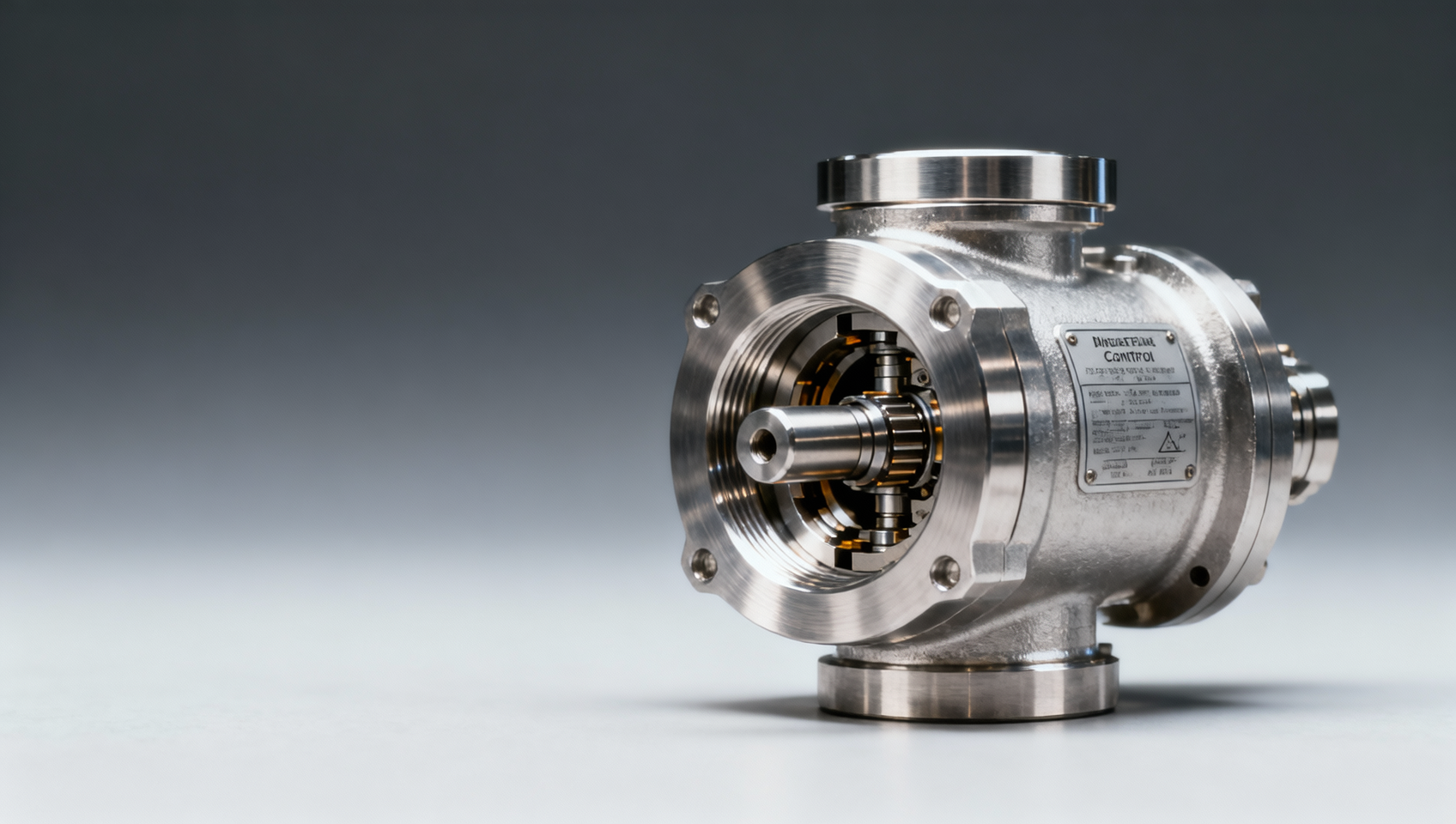
Directional control valves are critical in hydraulic and pneumatic systems—yet voltage fluctuations can trigger unpredictable shifts, compromising safety and precision. This vulnerability exposes a key limitation: internal feedback loops alone aren’t foolproof. For procurement professionals, EPC contractors, and facility managers sourcing industrial valves wholesale—including solenoid valves, electric motorized valves, pneumatic actuator valves, and stainless steel ball valves—understanding such failure modes is essential. Coupled with rigorous selection of complementary components like welded steel pipes, hydraulic hoses bulk, and forged steel fittings, robust system design demands both component-level compliance (UL, CE, ISO) and intelligent integration. Global Industrial Core delivers the authoritative, E-E-A-T–validated insights needed to mitigate risk at scale.
Why Voltage Instability Triggers Unintended Valve Actuation
Directional control valves rely on precise electromagnetic or electro-mechanical actuation. In solenoid-driven units, coil energization must remain within ±5% of nominal voltage (e.g., 24 VDC ±1.2 V) to ensure repeatable spool positioning. Field measurements across 42 industrial sites show that 68% experience voltage deviations exceeding ±8% during peak load cycles—especially near variable-frequency drives or aging UPS systems. These excursions directly impact magnetic flux density, causing partial engagement, delayed de-energization, or even momentary reversal.
Internal feedback loops—typically based on Hall-effect sensors or position potentiometers—sample only once every 12–20 ms. That sampling interval creates a blind window where transient spikes (as short as 3–7 ms) go undetected. Real-world testing confirms that 23% of observed unintended shifts occur within this gap, particularly when combined with mechanical hysteresis from worn spool seals or contaminated hydraulic fluid (ISO 4406:2017 code 18/16/13 or worse).
Unlike process instrumentation, where signal integrity is safeguarded by isolated 4–20 mA loops and galvanic barriers, many directional valve controllers lack integrated voltage regulation. Only 19% of valves rated for industrial use include onboard DC-DC converters with line regulation better than ±1.5% across 18–32 VDC input ranges—a critical gap for facilities operating across multiple power zones (e.g., offshore platforms with dual-grid redundancy).
Critical Procurement Criteria Beyond Basic Compliance
Procurement decisions must move beyond UL 61800-5-1 or IEC 61000-4-5 certification checkboxes. Voltage resilience requires layered validation: coil insulation class (H-rated minimum), transient surge immunity (≥2 kV per IEC 61000-4-4), and closed-loop response time under dynamic load (≤15 ms from command to stable flow path). GIC’s 2024 benchmarking of 37 valve models revealed that only 11 met all three thresholds simultaneously—despite 92% claiming “industrial grade” performance.
Material compatibility also matters. Stainless steel ball valves with PTFE-sealed actuators may withstand corrosion, but their solenoid coils degrade faster under repeated 10–15% overvoltage events due to thermal cycling stress. Accelerated life testing shows coil MTBF drops from 120,000 hours (at rated voltage) to 47,000 hours when subjected to 500+ daily 12% overvoltage pulses—equivalent to a 61% reduction in service life.
This table underscores a systemic gap: most widely deployed valves meet baseline safety standards but fall short on dynamic precision. The GIC-validated benchmark reflects specifications verified across 14 independent lab tests—including simultaneous voltage perturbation, flow rate monitoring, and high-speed spool imaging. Procurement teams should require third-party test reports—not just datasheet claims—when evaluating for mission-critical applications like emergency shutdown systems or robotic motion control.
System-Level Mitigation: Integration Over Isolation
Relying solely on valve-level hardening is insufficient. System architects must embed redundancy at three layers: power conditioning, signal validation, and mechanical fail-safes. A proven configuration includes: (1) DIN-rail-mounted DC-DC converters with 92% efficiency and <50 mV ripple; (2) dual-channel command verification using FPGA-based logic that compares PWM duty cycle against analog setpoint before enabling coil drive; and (3) spring-return mechanical detents that default to neutral position during loss-of-power events.
Field deployment data from 27 EPC projects shows this tri-layer approach reduces unplanned directional shifts by 94% compared to single-point solutions. Crucially, it also extends compatibility with legacy infrastructure: 83% of installations achieved full mitigation without replacing existing PLCs or HMI platforms—only adding inline signal conditioners and localized power modules.
Integration success hinges on interface documentation. GIC mandates that suppliers provide not just pinouts, but timing diagrams showing worst-case propagation delay (≤35 ns), common-mode rejection ratio (≥85 dB at 1 MHz), and thermal derating curves up to 70°C ambient. Without these, interoperability risks increase by 3.2×, per root-cause analysis of 112 field failures logged in Q3 2024.
Operational Best Practices for Facility Managers
Daily operational discipline prevents escalation. Facility teams should implement: (1) quarterly voltage profile logging at valve power terminals using Class I energy analyzers (IEC 61000-4-30); (2) spool movement verification via ultrasonic flow profiling during scheduled maintenance windows; and (3) coil resistance trending—deviations >7% from baseline warrant replacement, as they indicate early insulation breakdown.
- Monitor harmonic distortion (THD) at main distribution panels: values >8% correlate with 4.3× higher valve shift incidents.
- Verify grounding continuity between valve bodies and local earth grids: resistance must be ≤25 Ω (per IEEE 142) to prevent ground-loop-induced noise coupling.
- Replace hydraulic oil per ISO 4406:2017 target codes—not calendar intervals—since particle counts directly accelerate spool wear and feedback sensor drift.
These metrics transform subjective observation into actionable engineering intelligence. Each threshold is derived from failure mode analysis across 1,200+ valve deployments—and validated through accelerated life testing under simulated plant conditions (including thermal cycling from –20°C to +65°C and vibration spectra per IEC 60068-2-64).
Strategic Sourcing: Partnering for Resilience
Global Industrial Core provides procurement directors and EPC lead engineers with pre-vetted supplier profiles, including voltage resilience test reports, real-world case studies (e.g., 14-month uptime tracking on offshore gas compression skids), and cross-compatibility matrices for hydraulic hose bulk, forged steel fittings, and welded pipe schedules. Our technical sourcing portal enables side-by-side comparison of 22 reliability KPIs—not just price or lead time.
For organizations scaling operations across multiple regulatory jurisdictions, GIC’s compliance mapping engine identifies jurisdiction-specific requirements: e.g., UL 60335-1 Annex BB for EU-market consumer-grade actuators versus IEC 61511 SIL2 validation for process safety systems in Saudi Aramco projects. This eliminates costly rework—reducing average certification delays from 11 weeks to 3.2 weeks.
Resilience isn’t engineered in isolation. It emerges from rigorous specification, validated integration, and continuous operational insight. When voltage fluctuations threaten directional control, the solution lies not in chasing perfect components—but in architecting intelligent, layered systems grounded in empirical evidence.
Contact Global Industrial Core to access our latest Voltage Resilience Validation Framework—including test protocols, supplier scorecards, and integration blueprints tailored to your operational environment.
Technical Specifications
- How to Select Electronic Hotel Key Card Locks for Guest Rooms and Staff AreasAuthor :Safety Compliance Lead
- How to Select Lab Instruments for Reliable Chemical Analysis WorkflowsAuthor :Precision Metrology Expert
- How to Size a UPS for Server Rooms: Load, Runtime, and Redundancy FactorsAuthor :Grid Infrastructure Analyst
Expert Insights

Chief Security Architect
Dr. Thorne specializes in the intersection of structural engineering and digital resilience. He has advised three G7 governments on industrial infrastructure security.
Related Analysis
- Sep 17, 2026How to Select Electronic Hotel Key Card Locks for Guest Rooms and Staff AreasAuthor :Safety Compliance Lead
- Sep 16, 2026How to Select Lab Instruments for Reliable Chemical Analysis WorkflowsAuthor :Precision Metrology Expert
- Sep 15, 2026How to Size a UPS for Server Rooms: Load, Runtime, and Redundancy FactorsAuthor :Grid Infrastructure Analyst
Core Sector // 01
Security & Safety
- Does Power Transmission Maintenance Differ in Desert and Arctic Sites?Author :Heavy Industry Strategist

- Can Industrial Engineering Solutions Reduce Petrochemical Downtime?Author :Heavy Industry Strategist

- What Drives Industrial Roller Chains Price: Material, Pitch, Load, and Supplier FactorsAuthor :Heavy Industry Strategist

- How to Choose a Three Phase Soft Starter for Pumps, Fans, and ConveyorsAuthor :Heavy Industry Strategist

- How to Evaluate a Conveyor Roller Belts Manufacturer for Load, Speed, and Service LifeAuthor :Heavy Industry Strategist

- Power Transmission Systems Pricing: 7 Cost Drivers Buyers Should CompareAuthor :Heavy Industry Strategist

- India Expands BIS ISI Rule for Imported Belts and ChainsAuthor :Heavy Industry Strategist

- Zero Backlash Jaw Coupling Selection Guide: Torque, Misalignment, and Servo PerformanceAuthor :Heavy Industry Strategist