Magnesium Alloy Ingots Explained: Grades, Properties, and Common Casting Uses
Author
Date Published
Reading Time
Why are magnesium alloy ingots getting so much attention?
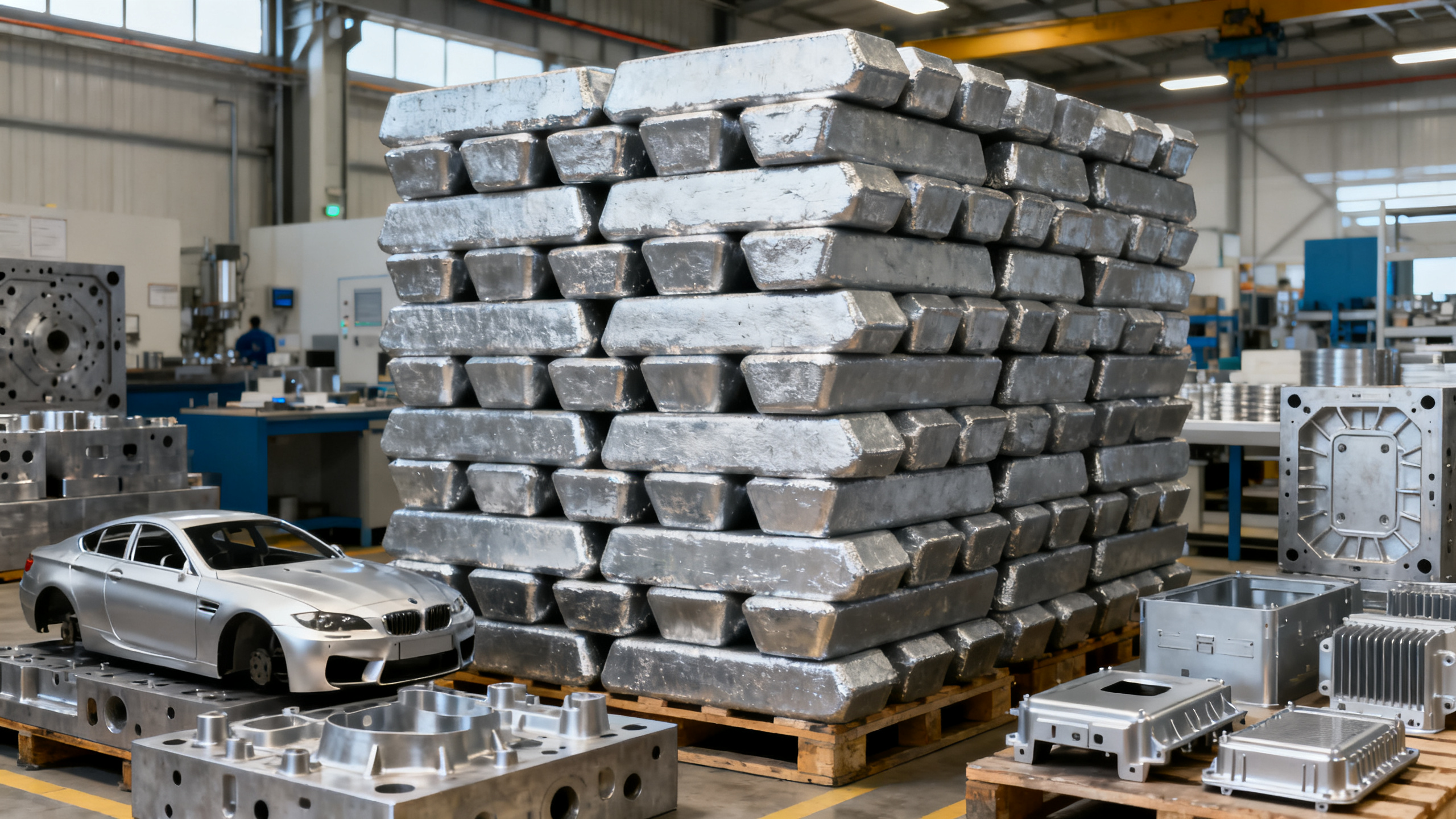
Magnesium alloy ingots sit at the start of many lightweight casting supply chains. They matter because weight reduction now affects energy use, transport efficiency, and equipment performance at the same time.
In practical terms, these ingots are remelted and cast into parts that need low mass, decent strength, and good dimensional control. That combination explains their growing role in industrial design reviews.
For technical research, the real question is not whether magnesium is light. That is already known. The more useful question is which alloy grade supports the required casting behavior and service conditions.
This is also where disciplined evaluation matters. GIC often frames materials through compliance, process reliability, and lifecycle risk, not just headline performance figures.
So, when people search for magnesium alloy ingots, they are usually trying to answer three things: what they are, where they fit, and how to judge if they are the right feedstock.
What exactly are magnesium alloy ingots, and how are they different from pure magnesium?
Magnesium alloy ingots are cast blocks of magnesium combined with controlled amounts of elements such as aluminum, zinc, manganese, rare earths, or zirconium.
Those additions change far more than strength. They influence fluidity, corrosion behavior, creep resistance, ignition sensitivity, and how stable the alloy remains during melting and casting.
Pure magnesium is very light, but it is rarely the preferred industrial feedstock for demanding cast components. It lacks the balanced properties needed for many structural or thermal applications.
That is why magnesium alloy ingots are usually specified by grade. The grade indicates a chemistry family and gives early clues about casting response and likely end use.
A simple way to read the market is this: the ingot is not the finished product. It is the engineered starting material that determines what the final casting can realistically achieve.
Which grades show up most often?
Several grades appear regularly in technical discussions, though exact selection depends on process route and service demands.
- AZ91: widely used for die casting, with good castability and a useful strength-to-weight balance.
- AM60: often chosen where better ductility and impact behavior are needed.
- AM50: similar logic to AM60, often considered for energy-absorbing parts.
- AE and rare-earth-containing grades: used when higher temperature stability becomes more important.
- ZK series: relevant in some structural applications where strength matters.
In other words, grade names are shorthand for trade-offs. No single magnesium alloy ingot grade is best in every casting environment.
Which properties actually matter when comparing magnesium alloy ingots?
People often start with density because magnesium alloys are among the lightest structural metals. That matters, but it is only one part of the decision.
A better comparison looks at the full property set around processing and service performance. Some values improve with one alloy addition, while others become less favorable.
The table helps narrow the discussion. Once the operating environment is clearer, property data becomes more meaningful and less abstract.
The core properties usually reviewed
- Low density for lightweight design and easier handling.
- Good castability in selected grades, especially for thin-wall parts.
- Moderate strength, often sufficient when weight efficiency matters more than peak load capacity.
- Useful thermal conductivity for some housings and heat-related components.
- Lower corrosion resistance than many alternatives unless protection is planned well.
- Sensitivity to high-temperature exposure in common grades.
More often than not, magnesium alloy ingots make sense when engineers optimize a system, not just a material coupon.
Where are magnesium alloy ingots commonly used in casting?
Their strongest fit is in cast components where weight, repeatability, and geometry matter together. That is why die casting remains one of the most common downstream uses.
Automotive applications are well known, especially housings, brackets, covers, steering-related structures, and interior support components. The goal is usually mass reduction without abandoning metallic performance.
Electronics and electrical enclosures also appear often. Magnesium alloys can offer shielding benefits, dimensional stability, and low weight in portable or fixed equipment housings.
Aerospace and defense discussions tend to be more selective. In those settings, qualification, corrosion management, and temperature demands become much more rigorous.
Industrial tools, instrument frames, and machinery covers are another practical category. Here, lighter castings can simplify installation, service access, or moving assemblies.
That said, not every lightweight part should be made from magnesium alloy ingots. If the part faces aggressive chemicals, high heat, or galvanic contact, the decision needs closer review.
Common casting routes
High-pressure die casting is the most familiar route because it supports volume production and intricate geometry. It also aligns well with established grades such as AZ91 and AM60.
Sand casting and permanent mold casting are possible too, though they are less common for some commercial programs. The preferred method depends on tolerances, lot size, and part complexity.
How do you choose the right grade without overcomplicating it?
A practical selection process starts with the service environment, then works backward to the alloy family. This avoids choosing a familiar grade that later fails in heat or corrosion exposure.
One useful screen is to separate parts into three groups: room-temperature structural use, impact-sensitive use, and elevated-temperature use. The best candidate set changes across those categories.
- If castability and broad availability matter most, AZ91 is often the first reference point.
- If ductility matters more than peak hardness, AM-series grades deserve attention.
- If sustained heat is part of the duty cycle, look harder at specialty grades with better creep resistance.
- If compliance requirements are strict, request traceable chemistry, test data, and relevant process certifications early.
In sourcing reviews, another important step is confirming remelt practice. Ingot quality is not only about nominal chemistry. Inclusion control, oxidation management, and melt handling affect casting results directly.
This is one reason industrial research platforms like GIC emphasize standards, documentation, and process discipline. Material selection becomes more reliable when the data package is as clear as the alloy grade.
What risks or misconceptions should be checked before specifying magnesium alloy ingots?
The first misconception is that lighter automatically means better. A lighter casting only creates value if stiffness, durability, manufacturability, and protection methods still meet the application target.
Another common misunderstanding concerns corrosion. Magnesium alloys can perform well, but they usually require deliberate surface treatment and careful control of dissimilar-metal contact.
Fire risk is also discussed frequently. The real issue is process control during melting and machining, not a blanket assumption that every magnesium component is unsafe in service.
Cost can be misread too. The ingot price alone does not define the economics. Tooling, cycle time, scrap, coating steps, and part-weight savings may shift the final result.
A short pre-check list usually helps keep the decision grounded.
- Confirm operating temperature range, not just room-temperature strength.
- Review corrosion path, coatings, and joining interfaces.
- Check whether the casting process is proven for the chosen geometry.
- Ask for standards, inspection records, and traceability details.
- Compare total component economics, not feedstock price alone.
So, when do magnesium alloy ingots make sense?
They make the most sense when lightweight casting performance creates system-level value and when the alloy grade matches the real service environment.
That usually means balancing grade chemistry, casting route, corrosion strategy, thermal demands, and documentation quality together rather than treating them as separate choices.
For early-stage research, a sensible next step is to map the part against a short decision grid: load, temperature, exposure, geometry, and certification needs. That quickly shows whether magnesium alloy ingots deserve deeper evaluation.
If the answer looks promising, compare two or three grades side by side and review not only property sheets but also casting experience and protection requirements.
Used well, magnesium alloy ingots are not just lightweight metal feedstock. They are a strategic material option for cast components where performance, manufacturability, and disciplined industrial decision-making need to work together.
Technical Specifications
- How to Select Electronic Hotel Key Card Locks for Guest Rooms and Staff AreasAuthor :Safety Compliance Lead
- How to Select Lab Instruments for Reliable Chemical Analysis WorkflowsAuthor :Precision Metrology Expert
- How to Size a UPS for Server Rooms: Load, Runtime, and Redundancy FactorsAuthor :Grid Infrastructure Analyst
Expert Insights

Chief Security Architect
Dr. Thorne specializes in the intersection of structural engineering and digital resilience. He has advised three G7 governments on industrial infrastructure security.
Related Analysis
- Sep 17, 2026How to Select Electronic Hotel Key Card Locks for Guest Rooms and Staff AreasAuthor :Safety Compliance Lead
- Sep 16, 2026How to Select Lab Instruments for Reliable Chemical Analysis WorkflowsAuthor :Precision Metrology Expert
- Sep 15, 2026How to Size a UPS for Server Rooms: Load, Runtime, and Redundancy FactorsAuthor :Grid Infrastructure Analyst
Core Sector // 01
Security & Safety
- Stainless Steel Welded Tube Applications: Matching Tube Supply to Fabrication NeedsAuthor :Heavy Industry Strategist

- What Maintenance Do Furnace Components Need After 18 Months?Author :Heavy Industry Strategist

- How to Assess Metal Materials for Thermal Cycling in Power BoilersAuthor :Heavy Industry Strategist

- How to Evaluate Aluminum Extrusion Suppliers for Tight-Tolerance Components?Author :Heavy Industry Strategist

- How to Evaluate a Weld Neck Flange Manufacturer for High-Pressure Pipe ProjectsAuthor :Heavy Industry Strategist

- EU REACH Ban Hits Cr(VI)-Coated Steel ImportsAuthor :Heavy Industry Strategist
-Coated Steel Imports")
- How to Evaluate a Heat Sink Aluminum Profile Supplier for Custom Thermal ProjectsAuthor :Heavy Industry Strategist

- Industrial Metal Fabrication Components Price: What Drives Cost and How to Compare QuotesAuthor :Heavy Industry Strategist