How to Choose a Steel Plate Supplier for Fabrication Projects: Grades, Tolerances, and Lead Times
Author
Date Published
Reading Time
How to Choose a Steel Plate Supplier for Fabrication Projects: Grades, Tolerances, and Lead Times
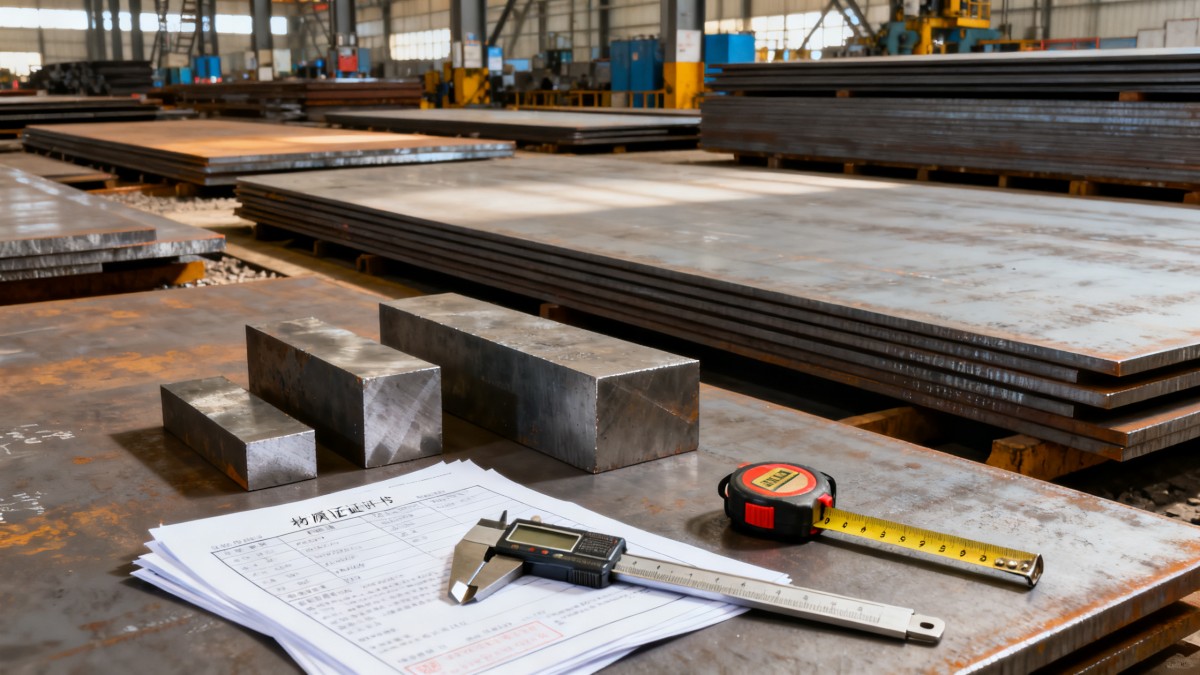
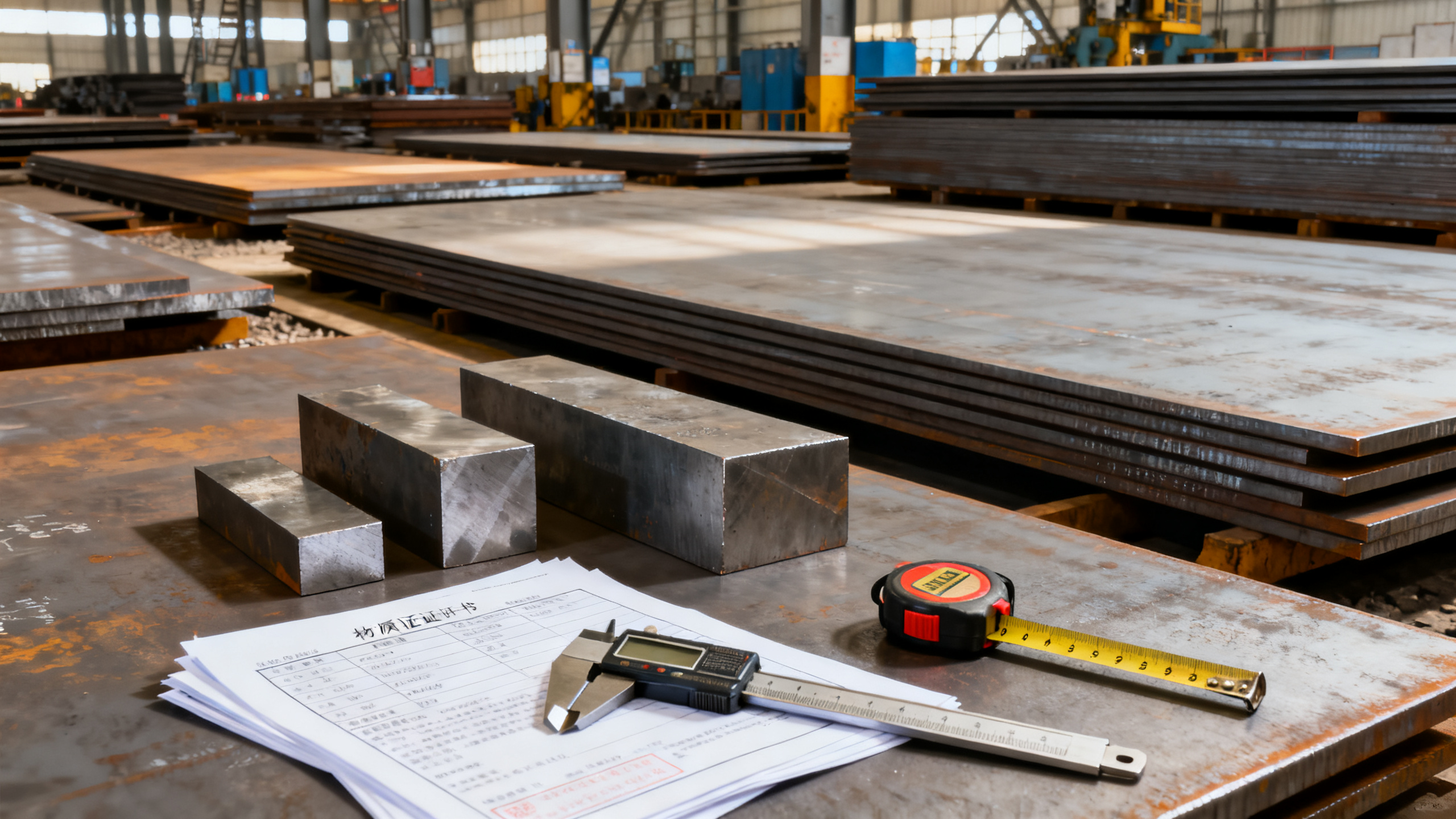
Choosing the right steel plate supplier can determine whether a fabrication project stays on schedule, meets specification, and controls risk.
For fabrication work, price matters, but it is rarely the deciding factor on its own.
A weak supplier can create delays, rework, failed inspections, and expensive site disruptions.
A capable steel plate supplier helps protect schedule certainty, weld quality, and downstream assembly performance.
That is why supplier selection should start with technical fit, then move into service capability and delivery reliability.
In practical terms, three issues usually drive the final decision: grades, tolerances, and lead times.
This guide breaks those factors into a decision framework you can use before issuing a purchase order.
Start with Application Fit, Not Catalog Availability
Many buyers begin by asking which steel plate supplier has stock.
That is understandable, especially under schedule pressure, but it can lead to poor material choices.
A better starting point is the actual fabrication demand.
Think about service environment, forming requirements, weld procedure, structural loading, corrosion exposure, and inspection standards.
For example, pressure vessel work, heavy structural modules, and wear applications all need different plate properties.
This also means the right steel plate supplier is not always the one with the broadest product list.
It is the one that understands your application and can prove material suitability with traceable documentation.
Questions to define before supplier comparison
- What grade and standard does the drawing specify?
- Is substitute material allowed, and under what approval route?
- Will the plate be cut, bent, machined, heat treated, or welded heavily?
- Do you need impact testing, ultrasonic testing, or special chemistry limits?
- What thickness range and plate dimensions are truly acceptable?
- Is mill origin, country of melt, or project approval list restricted?
Evaluate Grade Capability Beyond the Grade Name
Grade matching is often where supplier evaluation becomes superficial.
Two suppliers may both quote the same designation, yet their actual supply risk can be very different.
A reliable steel plate supplier should explain not only the nominal grade, but also the controlling standard and testing scope.
That includes mechanical properties, chemical composition, delivery condition, and supplementary requirements.
For structural fabrication, common grades may include ASTM A36, ASTM A572, ASTM A516, EN S275, or EN S355.
But designation alone does not confirm through-thickness performance, low-temperature toughness, or weldability behavior.
In real procurement, those details often determine whether fabrication proceeds smoothly.
What to verify on steel grades
- Standard edition and exact specification reference.
- Impact test temperature and absorbed energy values.
- Carbon equivalent and expected weldability.
- Normalizing, TMCP, quenched and tempered, or as-rolled condition.
- Z-quality or lamellar tearing resistance where needed.
- Availability of EN 10204 3.1 or 3.2 certificates.
A strong steel plate supplier should also flag when a quoted equivalent is not a true engineering substitute.
That kind of transparency is usually a better trust signal than a fast, generic quote.
Treat Tolerances as a Fabrication Risk Issue
Thickness tolerance is easy to underestimate during sourcing.
Yet tolerance variation affects fit-up, weld prep, cutting yield, machining allowance, and final dimensional control.
For heavy fabrication, even small deviations can multiply across assemblies.
A qualified steel plate supplier should be able to discuss thickness tolerance, flatness, width, length, squareness, and edge condition clearly.
More importantly, the supplier should confirm whether those tolerances are standard mill output or special order requirements.
This is where many buying teams lose time, because the quote looks compliant until shop measurements say otherwise.
Tolerance checkpoints before award
- Confirm the governing tolerance standard in writing.
- Ask for actual mill tolerance range at your ordered thickness.
- Check flatness if the plate will be CNC cut or precision welded.
- Review edge condition if beveling or direct use is planned.
- Clarify whether flame-cut blanks or processed parts are available.
When comparing suppliers, this is one area where lower price can hide higher fabrication cost.
Extra grinding, shimming, remachining, or rejected parts can erase any purchase savings quickly.
Check Certification, Traceability, and Compliance Discipline
For industrial projects, paperwork is not an administrative afterthought.
It is part of material acceptance.
A dependable steel plate supplier should maintain traceability from mill certificate to delivered plate.
That includes heat number control, marking retention, certificate accuracy, and support during inspection or audit.
If your project has CE, ISO, PED, ABS, DNV, or customer-specific compliance rules, ask about them early.
The more regulated the project, the more important this selection factor becomes.
Documents worth requesting during evaluation
- Sample mill test certificate.
- Quality management certification.
- Traceability workflow for mixed lots and cut pieces.
- Inspection and test plan support capability.
- Past project references in similar regulated sectors.
A steel plate supplier that responds precisely here usually performs better under project pressure later.
Lead Time Is More Than the Shipping Date
Lead time is often treated as a single line in a quotation.
In reality, it has several layers.
You need to separate stock availability, mill rolling schedule, processing time, documentation release, and transport timing.
A professional steel plate supplier should break those steps out clearly.
That makes schedule risk easier to evaluate and easier to manage.
From recent market behavior, the biggest delays usually come from nonstandard grades, thick plates, and special testing requests.
Imported material can add another layer of uncertainty through port congestion, customs, and inland handling.
How to assess lead time realism
- Ask whether the quote is based on stock or future production.
- Request earliest ship date and latest committed delivery date.
- Check whether testing, cutting, blasting, or priming adds days.
- Review the supplier’s expediting process for urgent orders.
- Understand partial shipment options for staged fabrication needs.
A good steel plate supplier does not promise the fastest number.
They give a delivery commitment you can actually build a project plan around.
Use a Practical Supplier Scorecard Before Final Selection
When several options look similar, a simple scorecard helps remove bias.
It also makes internal approval easier, especially when procurement and engineering priorities differ.
You can score each steel plate supplier on weighted criteria tied to project risk.
This kind of structure helps you choose the best steel plate supplier for the project, not just the cheapest quote on paper.
Red Flags That Should Slow the Buying Decision
Certain warning signs deserve attention before award.
- The supplier avoids confirming the exact standard revision.
- Certificates are delayed, incomplete, or inconsistent with the quote.
- Tolerance questions receive vague answers.
- Lead time changes every conversation.
- Substitution is suggested before your technical review is complete.
- The commercial team cannot connect you with technical support.
None of these issues automatically disqualifies a steel plate supplier.
But together, they usually point to avoidable execution risk.
Make the Final Decision with Risk, Not Price, at the Center
The best steel plate supplier is the one that helps your fabrication project move without surprises.
That means the supplier can supply the right grade, hold the right tolerances, and deliver on a credible timeline.
It also means strong documentation, responsive communication, and clear accountability when conditions change.
In day-to-day project work, these factors have more impact than a small difference in unit price.
Before placing the order, review your final shortlist against application fit, grade detail, tolerance control, and realistic lead time.
That approach gives you a more dependable steel plate supplier decision, fewer fabrication disruptions, and a stronger path to project delivery.
Technical Specifications
- Air Handling Unit Supplier Checklist: Performance Data, Lead Times, and SupportAuthor :Environmental Engineering Director
- Buying Fiberglass Water Tanks Wholesale: Compare Quotes and Delivery CostsAuthor :Environmental Engineering Director
- Choosing an XLPE Power Cable Supplier: Test Reports, Traceability, and Lead TimesAuthor :Grid Infrastructure Analyst
Expert Insights

Chief Security Architect
Dr. Thorne specializes in the intersection of structural engineering and digital resilience. He has advised three G7 governments on industrial infrastructure security.
Related Analysis
- Oct 19, 2026Air Handling Unit Supplier Checklist: Performance Data, Lead Times, and SupportAuthor :Environmental Engineering Director
- Oct 18, 2026Buying Fiberglass Water Tanks Wholesale: Compare Quotes and Delivery CostsAuthor :Environmental Engineering Director
- Oct 17, 2026Choosing an XLPE Power Cable Supplier: Test Reports, Traceability, and Lead TimesAuthor :Grid Infrastructure Analyst
Core Sector // 01
Security & Safety
- How to Specify Steel Heavy-Duty Corner Guards for Loading Bays and High-Traffic AreasAuthor :Heavy Industry Strategist

- Selecting Non-Ferrous Metal Plates for Corrosion, Weight, and Formability RequirementsAuthor :Heavy Industry Strategist

- Stainless Steel Welded Tube Applications: Matching Tube Supply to Fabrication NeedsAuthor :Heavy Industry Strategist

- What Maintenance Do Furnace Components Need After 18 Months?Author :Heavy Industry Strategist

- How to Assess Metal Materials for Thermal Cycling in Power BoilersAuthor :Heavy Industry Strategist

- How to Evaluate Aluminum Extrusion Suppliers for Tight-Tolerance Components?Author :Heavy Industry Strategist

- How to Evaluate a Weld Neck Flange Manufacturer for High-Pressure Pipe ProjectsAuthor :Heavy Industry Strategist

- EU REACH Ban Hits Cr(VI)-Coated Steel ImportsAuthor :Heavy Industry Strategist
-Coated Steel Imports")