Cemented Carbide Blanks Explained: Grades, Sizes, and How to Match Them to Tool Making
Author
Date Published
Reading Time
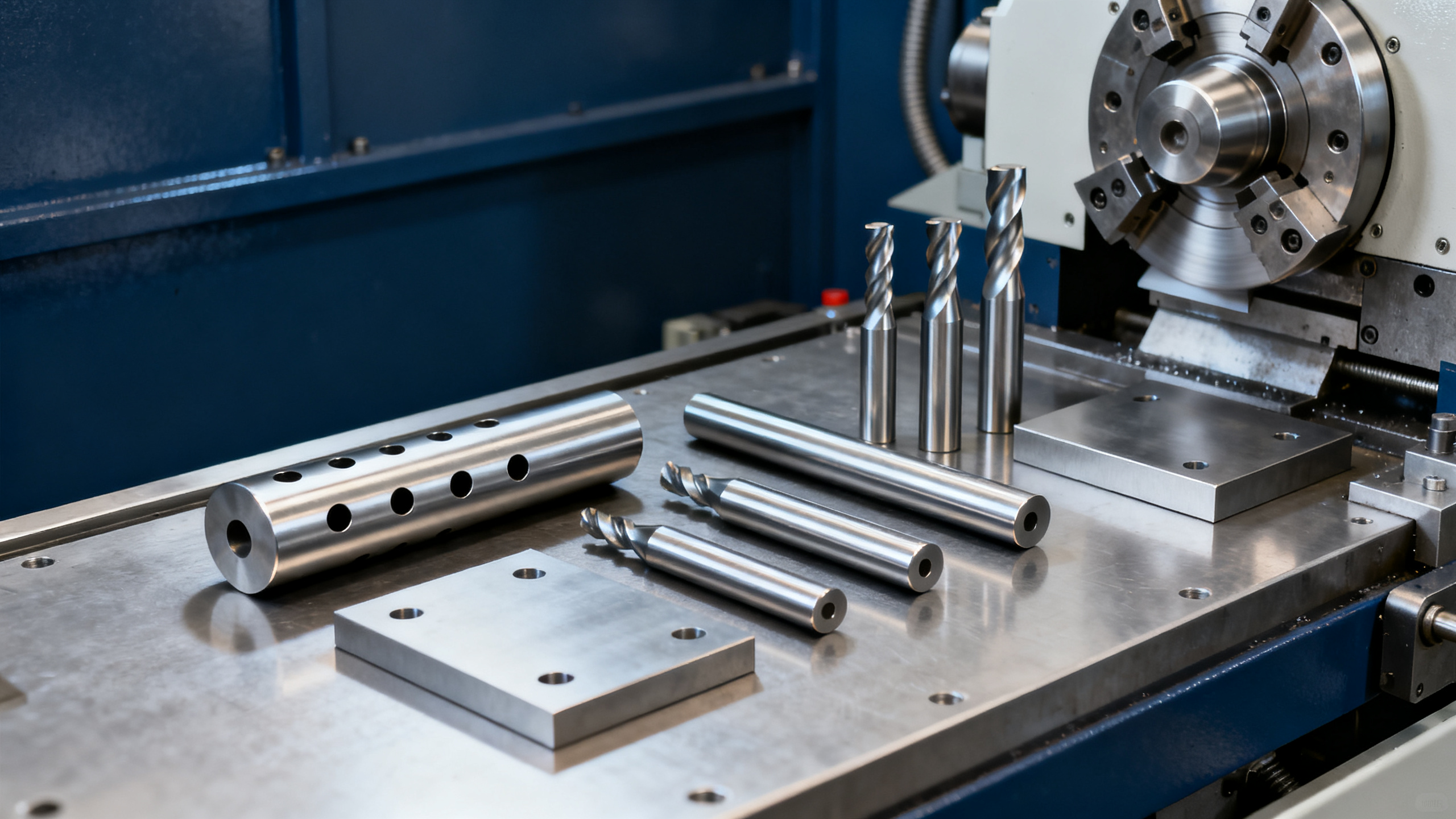
Cemented Carbide Blanks Explained: Grades, Sizes, and How to Match Them to Tool Making
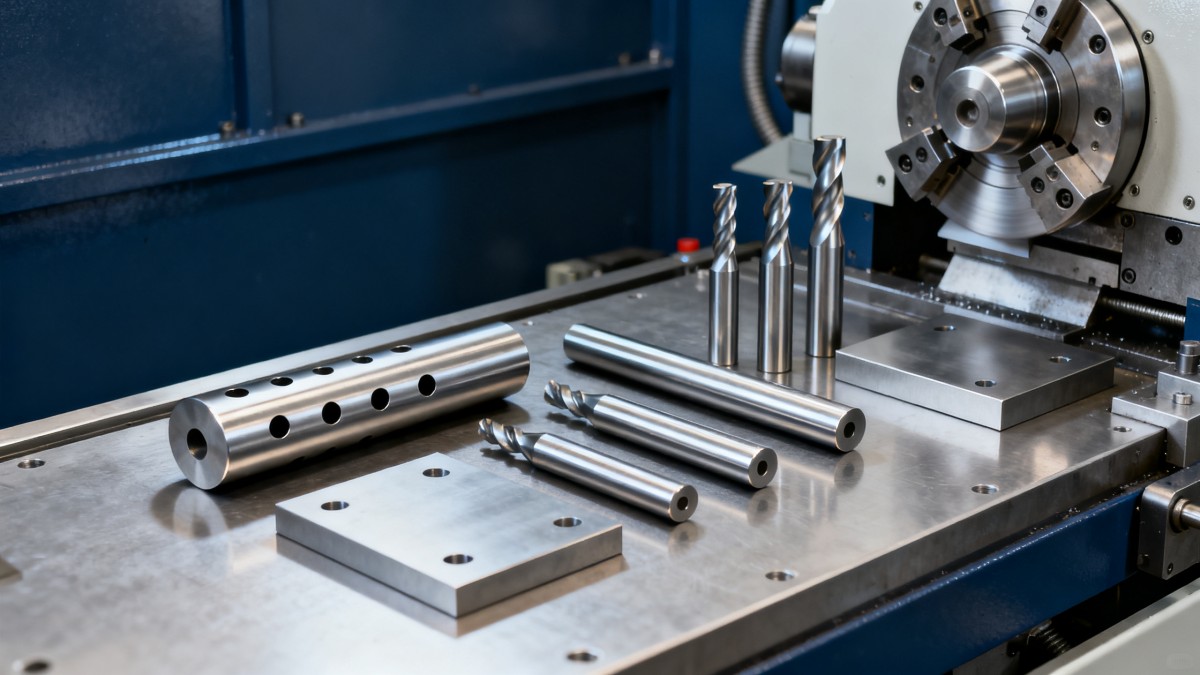
Choosing the right cemented carbide blanks shapes tool life, edge stability, and production cost from the start.
A poor match often leads to chipping, excessive wear, regrinding loss, or unstable machining results.
That is why cemented carbide blanks are not just raw pieces of material.
They are engineered starting points for drills, end mills, reamers, inserts, wear parts, and custom cutting tools.
In practical sourcing, selection depends on grade, grain structure, binder content, blank size, and required finishing allowance.
It also depends on the target workpiece, machine rigidity, coolant strategy, and acceptable failure risk.
This guide breaks down how cemented carbide blanks are specified and how to align them with tool-making needs.
What Cemented Carbide Blanks Actually Are
Cemented carbide blanks are sintered composites made mainly from tungsten carbide and a metallic binder, usually cobalt.
Some grades also include nickel or mixed binders for corrosion resistance or specialized performance.
The result is a material that combines high hardness with useful fracture resistance.
Compared with high-speed steel, cemented carbide blanks hold cutting edges longer and run at higher speeds.
However, they are also less forgiving when the setup is weak or impact loads are high.
This is where grade selection becomes critical.
How Grades Control Performance
When buyers compare cemented carbide blanks, grade is the first filter.
A grade defines hardness, transverse rupture strength, wear resistance, and toughness balance.
The key variables are grain size and binder percentage.
Fine and ultrafine grain grades
These cemented carbide blanks are common in solid carbide tools for steel, stainless steel, and precision milling.
They support sharper edges and better wear resistance.
They are a strong choice for micro tools and finish machining.
The trade-off is lower impact tolerance if the process is unstable.
Medium grain grades
These are often the most versatile cemented carbide blanks for general-purpose cutting tools.
They balance edge retention and toughness well.
For mixed production environments, this balanced profile reduces selection risk.
Coarser or higher-binder grades
These cemented carbide blanks are favored when shock resistance matters more than maximum wear life.
They fit interrupted cuts, roughing tools, mining wear parts, and tougher mechanical applications.
They usually sacrifice some hardness for better survivability.
Reading Grade Data Without Guesswork
Supplier grade names differ, so the label alone is rarely enough.
A better approach is to compare measurable properties and actual use recommendations.
- Check hardness, usually listed as HRA or HV.
- Review transverse rupture strength for toughness indication.
- Confirm grain size class and binder percentage.
- Look for ISO application guidance, such as P, M, K, N, S, or H families.
- Ask whether the grade is optimized for grinding, EDM, or direct forming.
In real procurement work, supplier test data matters more than marketing adjectives.
If the application is critical, request batch consistency records and density data as well.
Common Sizes and Blank Formats
Cemented carbide blanks come in more than one basic format.
The right geometry reduces waste, shortens grinding time, and improves dimensional control.
Rod blanks
These are the most common cemented carbide blanks for drills, end mills, burrs, and rotary tools.
They are available as solid rods, rods with coolant holes, and ground or unground versions.
Flat and plate blanks
These are used for inserts, knives, wear strips, punches, and custom profiles.
They suit applications where the tool shape will be cut, EDM-processed, or brazed later.
Preforms and near-net blanks
These cemented carbide blanks are shaped closer to the final tool.
They lower grinding load and material loss, especially for complex or high-volume tools.
Key size factors
- Diameter or thickness tolerance.
- Length tolerance and straightness.
- Surface condition, ground or sintered.
- Allowance for flute grinding or profile generation.
- Coolant hole layout and concentricity, if applicable.
How to Match Cemented Carbide Blanks to Tool Types
The best cemented carbide blanks depend on how the tool will cut, not just what it will look like.
Matching starts with application load, workpiece material, and edge geometry.
This kind of matching prevents a common mistake.
Many teams buy the hardest cemented carbide blanks available, then discover brittle failure during production trials.
Standards, Tolerances, and Quality Checks
For technical validation, dimensions alone are not enough.
Cemented carbide blanks should be reviewed against relevant quality and process expectations.
- Material certification and traceability.
- Density and hardness consistency across batches.
- Straightness, roundness, and surface integrity checks.
- Compliance with internal drawing tolerances.
- Supplier quality systems, often aligned with ISO frameworks.
For coolant-hole rods, inspection should also cover hole diameter variation and positional accuracy.
Even a good grade can perform poorly if blank geometry drifts outside process limits.
Common Selection Risks and How to Avoid Them
From recent sourcing patterns, the clearest signal is that mismatch costs usually hide inside trial runs.
The blank may look acceptable on paper, yet fail when grinding or cutting begins.
- Selecting by price only. Lower-cost cemented carbide blanks can raise total tool cost through scrap and downtime.
- Ignoring process stability. A brittle grade may work in a rigid CNC cell but fail in a less stable setup.
- Overlooking stock allowance. Too little grinding allowance limits correction; too much increases cycle time.
- Skipping trial batches. Small qualification runs reveal whether cemented carbide blanks match actual shop conditions.
- Assuming cross-supplier equivalence. Similar names do not guarantee the same carbide behavior.
A Practical Selection Workflow
A simple workflow helps narrow the right cemented carbide blanks faster and with less trial risk.
- Define the tool type, workpiece material, and cutting mode.
- Set the required balance between wear resistance and toughness.
- Choose the blank format, size tolerance, and surface condition.
- Compare supplier data sheets using real mechanical properties.
- Run pilot grinding and cutting tests before full release.
- Document performance by batch to support future standardization.
This also makes supplier discussions more productive.
Instead of asking for a generic grade, teams can specify the performance window they need.
Final Takeaway
The best cemented carbide blanks are not simply the hardest, cheapest, or most common ones.
They are the blanks that fit the real cutting load, tool geometry, tolerance target, and manufacturing route.
When grade data, blank size, and process conditions are evaluated together, tool performance becomes far more predictable.
For long-term value, qualify cemented carbide blanks with measurable criteria, not assumptions.
That approach reduces risk, improves consistency, and supports better tool-making decisions at scale.
Technical Specifications
- Air Handling Unit Supplier Checklist: Performance Data, Lead Times, and SupportAuthor :Environmental Engineering Director
- Buying Fiberglass Water Tanks Wholesale: Compare Quotes and Delivery CostsAuthor :Environmental Engineering Director
- Choosing an XLPE Power Cable Supplier: Test Reports, Traceability, and Lead TimesAuthor :Grid Infrastructure Analyst
Expert Insights

Chief Security Architect
Dr. Thorne specializes in the intersection of structural engineering and digital resilience. He has advised three G7 governments on industrial infrastructure security.
Related Analysis
- Oct 19, 2026Air Handling Unit Supplier Checklist: Performance Data, Lead Times, and SupportAuthor :Environmental Engineering Director
- Oct 18, 2026Buying Fiberglass Water Tanks Wholesale: Compare Quotes and Delivery CostsAuthor :Environmental Engineering Director
- Oct 17, 2026Choosing an XLPE Power Cable Supplier: Test Reports, Traceability, and Lead TimesAuthor :Grid Infrastructure Analyst
Core Sector // 01
Security & Safety
- How to Specify Steel Heavy-Duty Corner Guards for Loading Bays and High-Traffic AreasAuthor :Heavy Industry Strategist

- Selecting Non-Ferrous Metal Plates for Corrosion, Weight, and Formability RequirementsAuthor :Heavy Industry Strategist

- Stainless Steel Welded Tube Applications: Matching Tube Supply to Fabrication NeedsAuthor :Heavy Industry Strategist

- What Maintenance Do Furnace Components Need After 18 Months?Author :Heavy Industry Strategist

- How to Assess Metal Materials for Thermal Cycling in Power BoilersAuthor :Heavy Industry Strategist

- How to Evaluate Aluminum Extrusion Suppliers for Tight-Tolerance Components?Author :Heavy Industry Strategist

- How to Evaluate a Weld Neck Flange Manufacturer for High-Pressure Pipe ProjectsAuthor :Heavy Industry Strategist

- EU REACH Ban Hits Cr(VI)-Coated Steel ImportsAuthor :Heavy Industry Strategist
-Coated Steel Imports")