Galvanized Steel Coils vs Galvalume: Which Performs Better for Roofing Projects?
Author
Date Published
Reading Time
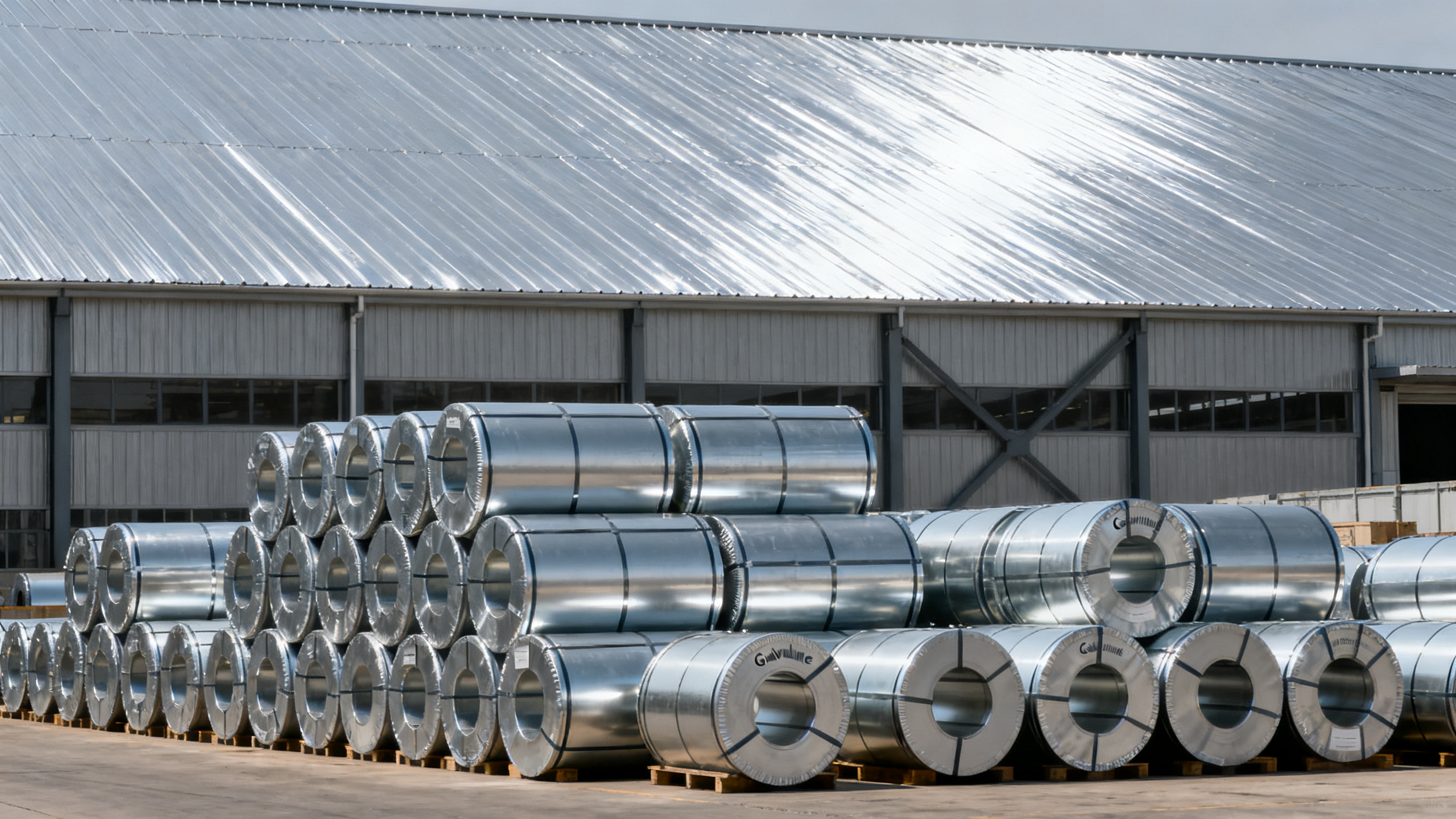
Roofing material decisions shape more than appearance. In industrial and commercial projects, they influence maintenance cycles, corrosion risk, energy behavior, and the reliability of the building envelope over decades.
That is why the comparison between galvanized steel coils and Galvalume remains important. Both are established coated steel options, yet they behave differently once exposed to moisture, heat, salts, and long service intervals.
For evaluations tied to lifecycle value, the right answer is rarely universal. Climate, roof geometry, coating quality, and compliance requirements often matter more than a simple price-per-ton comparison.
How the Two Materials Differ at the Coating Level
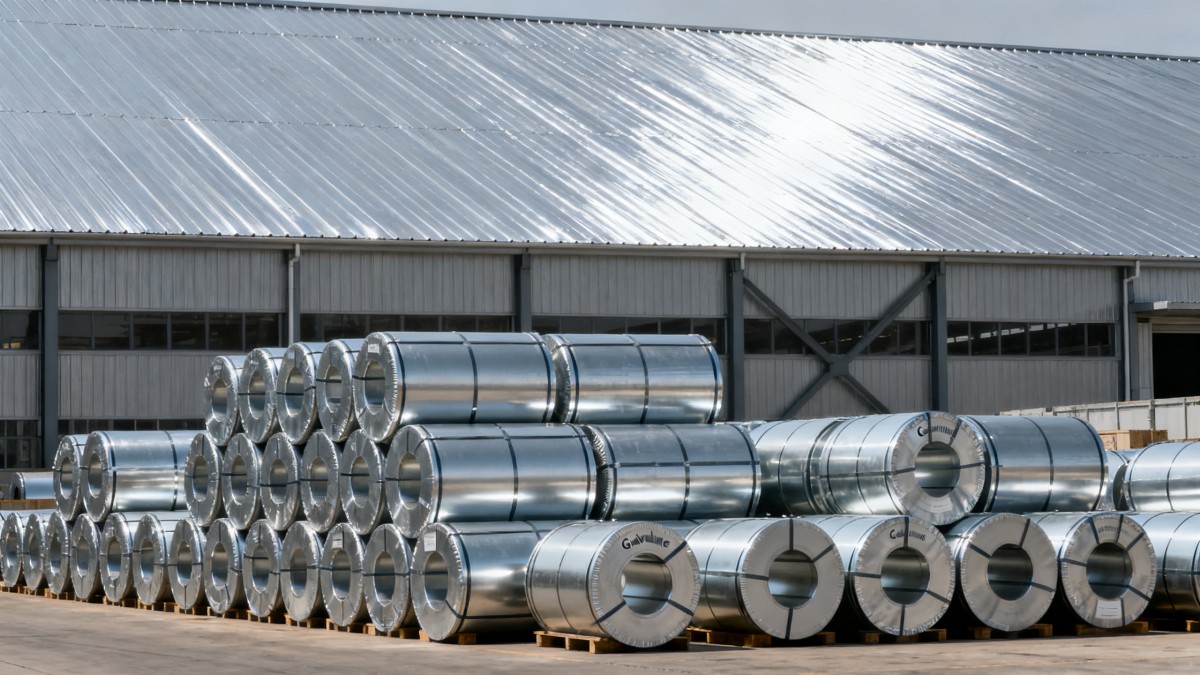
At a base level, both products start with steel. The difference lies in the protective metallic coating applied to the coil before fabrication into roofing panels or profiles.
Galvanized steel coils use a zinc coating. The zinc acts as a sacrificial barrier, which means it corrodes first and helps protect exposed steel at scratches or cut edges.
Galvalume uses an aluminum-zinc alloy coating, commonly around 55% aluminum, 43.4% zinc, and 1.6% silicon. That composition changes how the surface responds to long-term atmospheric exposure.
In practical terms, galvanized steel coils are often valued for familiarity, broad availability, and dependable protection in many standard roofing applications. Galvalume is often selected where longer corrosion performance is a priority.
Why Roofing Buyers Still Compare Them Closely
This is not a niche material debate. Roofing systems affect warehouse operations, utility buildings, manufacturing plants, logistics hubs, and other assets where downtime can become expensive very quickly.
From the perspective of Global Industrial Core, material selection is part of a wider infrastructure reliability question. A roof must perform under environmental stress while meeting cost, compliance, and service-life expectations.
That is also why surface coating discussions should not be isolated from procurement discipline. Coating weight, substrate quality, paint system compatibility, and manufacturing consistency all shape actual field performance.
A lower upfront material cost can look attractive. Yet if the roof faces early red rust, edge deterioration, or premature recoating, the apparent savings may disappear during the first maintenance cycle.
Corrosion Resistance Is Usually the Deciding Factor
For most roofing comparisons, corrosion behavior becomes the main decision point. This is where Galvalume often shows an advantage in broad atmospheric exposure.
The aluminum-rich coating forms a more durable barrier against oxidation over large exposed areas. In many outdoor roofing environments, that translates into slower general corrosion than standard galvanized steel coils.
Galvanized steel coils still perform well, especially where exposure is moderate and coating specifications are correctly matched to the project. Zinc protection remains highly useful, particularly when mechanical damage or cut-edge exposure is expected.
The exception is important. In certain harsh environments, especially where runoff, trapped moisture, or aggressive chemical conditions exist, neither option should be chosen on coating type alone.
Industrial coastal projects, livestock facilities, and roofs near corrosive exhaust sources demand a more careful review. Local contaminants can change the performance hierarchy faster than product brochures suggest.
Typical corrosion considerations
- Marine air and chloride exposure
- Standing water near laps or penetrations
- Contact with incompatible materials
- Industrial pollutants and acidic fallout
- Underside condensation in poorly ventilated roofs
Heat Reflectivity, Appearance, and Service Behavior
Roofing is not only about rust protection. Thermal behavior and visual durability also affect long-term value, especially in large facilities with broad exposed roof surfaces.
Galvalume is often favored for its reflective surface and stable appearance in unpainted applications. On some roofs, that can support lower heat absorption and better weathered aesthetics over time.
Galvanized steel coils can also be used effectively in painted roofing systems. When paired with a suitable pretreatment and coating system, they can meet demanding visual and protective expectations.
The real question is whether the roof will remain bare, painted, or exposed to high solar loads. Once finish system requirements enter the discussion, the coil substrate should be assessed together with paint warranty terms.
A Practical Comparison for Specification Work
A side-by-side view helps clarify where each material usually fits. The comparison below reflects common roofing considerations rather than a universal rule.
Where Galvanized Steel Coils Still Make Strong Business Sense
The comparison should not be read as Galvalume always replacing galvanized steel coils. In many projects, galvanized products remain commercially sound and technically appropriate.
This is especially true when the roof is part of a painted assembly, exposure levels are controlled, and the supply chain already supports established galvanized specifications.
Galvanized steel coils may also align well with projects that prioritize easier market sourcing, known forming behavior, and compatibility with existing fabrication routines.
Where budget sensitivity is high, they can deliver a credible balance of cost and performance, provided the project team does not under-specify coating mass or ignore local environmental risks.
When Galvalume Tends to Outperform
Galvalume generally stands out on large exposed roofing systems where long service life and lower corrosion progression are central objectives.
Distribution centers, industrial sheds, utility structures, and commercial roofs with long replacement intervals often benefit from that profile. The coating’s weather resistance can support lower lifecycle intervention.
That advantage becomes more meaningful when access is difficult, operations below the roof are sensitive, or future shutdown windows are limited. In those cases, reduced maintenance pressure has measurable business value.
Signals that justify a closer Galvalume review
- Long ownership horizon
- High cost of roof replacement disruption
- Large low-slope or lightly sloped roof areas
- Strong emphasis on weathering performance
- Preference for lower long-term maintenance intensity
What to Check Before Making the Final Call
A reliable decision needs more than the words galvanized or Galvalume on a quotation sheet. Roofing outcomes depend on technical details that are easy to overlook during sourcing.
Start with the environment. Coastal air, humidity, temperature swings, condensation risk, and industrial emissions should be mapped against the roof’s expected service duration.
Then confirm coating designation, thickness tolerance, and any applicable ASTM or equivalent standards. Material equivalence should be documented, not assumed from commercial naming alone.
It is also worth checking forming requirements. Some roofing profiles involve severe bends, seams, or penetrations that can influence coating performance around stressed areas.
Finally, review the supplier’s quality evidence. GIC’s broader infrastructure perspective is relevant here: certifications, test data, traceability, and field references are often better predictors than headline claims.
A Better Comparison Starts With the Right Questions
The strongest roofing decisions usually come from a structured comparison, not a generic preference for one coating family. Galvanized steel coils and Galvalume both have a place in modern roofing.
If the project favors broad atmospheric durability and a longer maintenance horizon, Galvalume often has the edge. If conditions are moderate and cost discipline is tighter, galvanized steel coils may remain the smarter fit.
The next step is to compare exposure conditions, coating specifications, finish systems, and expected replacement cycles on the same worksheet. That usually reveals which option performs better for the roof in question.
Technical Specifications
- Air Handling Unit Supplier Checklist: Performance Data, Lead Times, and SupportAuthor :Environmental Engineering Director
- Buying Fiberglass Water Tanks Wholesale: Compare Quotes and Delivery CostsAuthor :Environmental Engineering Director
- Choosing an XLPE Power Cable Supplier: Test Reports, Traceability, and Lead TimesAuthor :Grid Infrastructure Analyst
Expert Insights

Chief Security Architect
Dr. Thorne specializes in the intersection of structural engineering and digital resilience. He has advised three G7 governments on industrial infrastructure security.
Related Analysis
- Oct 19, 2026Air Handling Unit Supplier Checklist: Performance Data, Lead Times, and SupportAuthor :Environmental Engineering Director
- Oct 18, 2026Buying Fiberglass Water Tanks Wholesale: Compare Quotes and Delivery CostsAuthor :Environmental Engineering Director
- Oct 17, 2026Choosing an XLPE Power Cable Supplier: Test Reports, Traceability, and Lead TimesAuthor :Grid Infrastructure Analyst
Core Sector // 01
Security & Safety
- How to Specify Steel Heavy-Duty Corner Guards for Loading Bays and High-Traffic AreasAuthor :Heavy Industry Strategist

- Selecting Non-Ferrous Metal Plates for Corrosion, Weight, and Formability RequirementsAuthor :Heavy Industry Strategist

- Stainless Steel Welded Tube Applications: Matching Tube Supply to Fabrication NeedsAuthor :Heavy Industry Strategist

- What Maintenance Do Furnace Components Need After 18 Months?Author :Heavy Industry Strategist

- How to Assess Metal Materials for Thermal Cycling in Power BoilersAuthor :Heavy Industry Strategist

- How to Evaluate Aluminum Extrusion Suppliers for Tight-Tolerance Components?Author :Heavy Industry Strategist

- How to Evaluate a Weld Neck Flange Manufacturer for High-Pressure Pipe ProjectsAuthor :Heavy Industry Strategist

- EU REACH Ban Hits Cr(VI)-Coated Steel ImportsAuthor :Heavy Industry Strategist
-Coated Steel Imports")