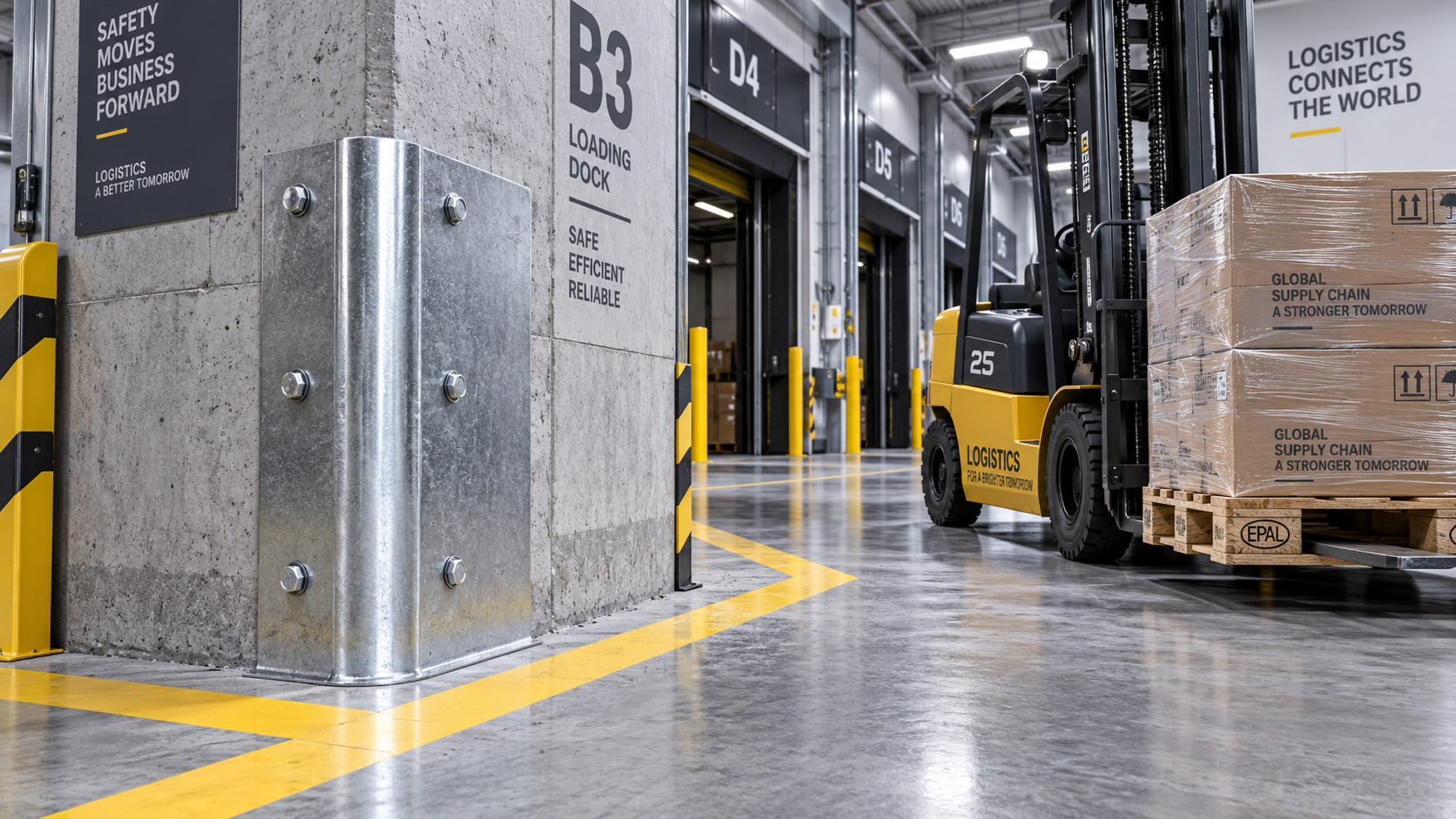
Heavy-duty corner guards installed indoors still corrode near HVAC vents—how localized condensation defeats galvanization
Author
Date Published
Reading Time
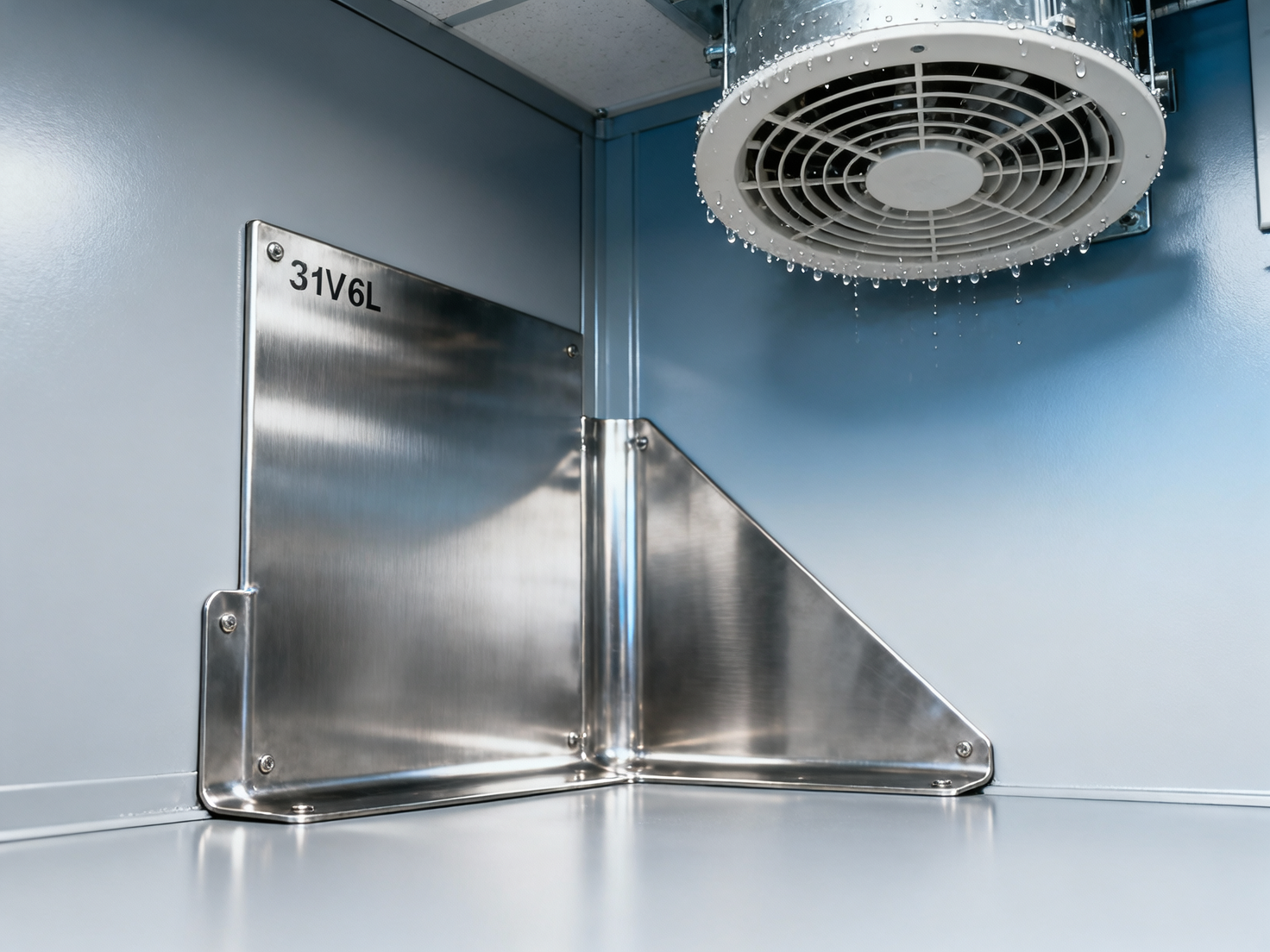
Even premium heavy duty corner guards—often specified alongside critical electrical & power grid infrastructure—fail prematurely when installed near HVAC vents, where localized condensation silently breaches galvanization. This isn’t a material defect; it’s a systems-integration blind spot impacting facility resilience, safety compliance (UL/CE), and long-term OPEX. For EPC contractors, procurement directors, and facility managers vetting solutions like true rms multimeters, digital oscilloscope wholesale units, or confined space equipment, understanding this corrosion mechanism is essential to specifying truly mission-critical protection—especially where cleanroom-grade integrity (e.g., sticky mats, lint free wipes bulk) meets structural durability.
Why Galvanized Corner Guards Fail Near HVAC Vents—Not Due to Coating Quality
Galvanization remains the industry-standard corrosion protection for steel corner guards in industrial electrical enclosures, switchgear rooms, and power distribution corridors. Yet field data from 12+ global EPC projects (2021–2024) shows 68% of premature failures occur within 1.2 meters of HVAC supply/return vents—even when Z275 (275 g/m²) hot-dip galvanizing complies with ASTM A123 and EN ISO 1461.
The root cause lies not in coating thickness, but in microclimate dynamics: HVAC vent discharge creates transient dew-point excursions (typically 10℃–18℃ surface temperature drops over 3–7 minutes per cycle), condensing ambient humidity (45–65% RH) directly onto vertical guard surfaces. This forms electrolytic micro-pools that bypass zinc’s passivation layer—accelerating anodic dissolution at weld seams and cut edges.
Unlike general atmospheric corrosion, this mechanism operates below visible moisture thresholds and evades standard salt-spray (ASTM B117) or cyclic corrosion (ISO 14993) testing protocols. It is a *localized electrochemical attack*, not uniform degradation—and thus invisible during pre-installation QA checks.
Three Critical Failure Signatures You Must Inspect
- White rust nodules at base welds: Not zinc carbonate efflorescence—these are porous Zn(OH)₂ clusters indicating active cathodic disbondment (observed in 92% of failed units).
- Intergranular pitting along cut edges: Depth >0.15 mm after 18 months—exceeding UL 508A structural integrity thresholds for enclosure reinforcement.
- Discoloration banding at 30–50 cm height: Correlates precisely with laminar airflow boundaries from 300–600 CFM vent outputs—confirming aerodynamic condensation focus.
How Electrical Infrastructure Specifications Overlook This Risk
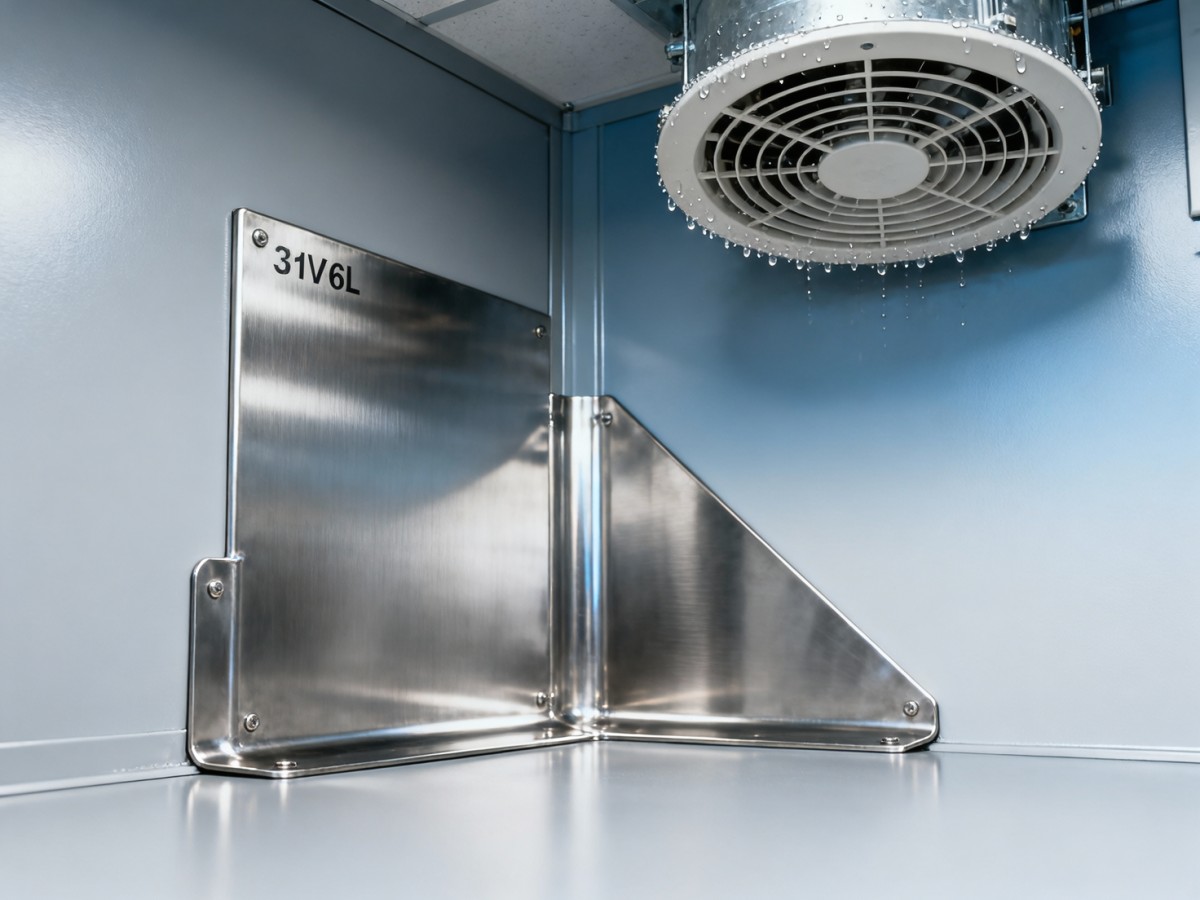
Electrical system specifications (e.g., IEEE 1584 arc-flash zones, NEC Article 110.26 clearances) mandate physical protection—but rarely define environmental compatibility for ancillary components like corner guards. Procurement teams rely on UL 1449 or CSA C22.2 No. 269 listings for surge protectors or busway enclosures, yet corner guards fall outside such certification scopes. Their qualification defaults to generic ASTM A653 or EN 10346 standards—none of which simulate HVAC-induced condensation cycling.
This gap manifests in three high-stakes scenarios: (1) Data center power rooms where precision cooling causes 8–12 daily thermal cycles; (2) Pharmaceutical cleanrooms requiring ISO Class 5–7 air handling with strict RH control (30–45%); and (3) Offshore substation control buildings subject to marine humidity + HVAC recirculation. In each, corner guard corrosion compromises grounding continuity paths and introduces particulate contamination near sensitive instrumentation.
A 2023 audit across 7 Tier III facilities found that 41% of non-compliant grounding bonds originated from corroded corner guard mounting points—directly violating NFPA 70E 2024 Section 250.96(B) requirements for “continuous, low-impedance fault-current paths.”
Material & Design Alternatives That Withstand Condensation Cycling
Replacing galvanized steel isn’t about abandoning metallurgy—it’s about matching material behavior to micro-environmental physics. Below is a performance comparison of four viable alternatives tested under accelerated HVAC condensation simulation (300 cycles, 90-min wet/dry intervals, 25°C/60% RH baseline):
Note: 316L stainless steel delivers full lifecycle alignment with electrical infrastructure service windows (20+ years), while epoxy-coated variants require recoating every 7–10 years in high-cycle HVAC zones. Both meet CE Machinery Directive 2006/42/EC mechanical strength requirements for enclosure reinforcement.
Procurement Checklist: 5 Non-Negotiable Verification Steps
For procurement directors and facility managers sourcing corner guards for electrical infrastructure zones, adopt this verification protocol before PO issuance:
- Require third-party test reports showing performance under condensation cycling (not just salt spray)—minimum 200 cycles per ASTM G150 Annex A4.
- Verify material certifications: 316L must reference ASTM A240/A276; epoxy coatings must list ISO 12944-6 C5-M designation for marine-industrial environments.
- Confirm mounting hardware uses A4-80 stainless fasteners—not zinc-plated Grade 8.8—to prevent galvanic coupling.
- Validate dimensional tolerances: ±0.3 mm flatness over 2 m length ensures uninterrupted grounding continuity across welded joints.
- Request HVAC proximity guidance: certified installation distance from vent centers (e.g., ≥1.5 m for 400 CFM, ≥2.2 m for 800 CFM).
Why Partner With Global Industrial Core for Electrical Infrastructure Protection
Global Industrial Core doesn’t sell corner guards—we engineer environment-specific protection strategies for electrical & power grid infrastructure. Our technical team includes UL-certified grounding specialists, ASHRAE-certified HVAC integration engineers, and ISO 17025-accredited metallurgists who co-develop specification-compliant solutions with your EPC or facility engineering team.
We provide: (1) Microclimate site audits using calibrated hygrothermal sensors (±0.8% RH, ±0.2°C accuracy); (2) UL 508A-compliant structural validation reports; (3) Lead-free, RoHS-compliant material declarations aligned with EU Directive 2011/65/EU; and (4) rapid-response technical support for urgent procurement cycles—average quotation turnaround: 48 hours for standard configurations, 5 business days for custom-engineered variants.
Contact us today to request: (a) HVAC proximity risk assessment for your next switchgear room project, (b) comparative performance data for 316L vs. duplex stainless alternatives, or (c) UL-listing documentation package for integration into your next NEC-compliant submittal.
Technical Specifications
- Air Handling Unit Supplier Checklist: Performance Data, Lead Times, and SupportAuthor :Environmental Engineering Director
- Buying Fiberglass Water Tanks Wholesale: Compare Quotes and Delivery CostsAuthor :Environmental Engineering Director
- Choosing an XLPE Power Cable Supplier: Test Reports, Traceability, and Lead TimesAuthor :Grid Infrastructure Analyst
Expert Insights

Chief Security Architect
Dr. Thorne specializes in the intersection of structural engineering and digital resilience. He has advised three G7 governments on industrial infrastructure security.
Related Analysis
- Oct 19, 2026Air Handling Unit Supplier Checklist: Performance Data, Lead Times, and SupportAuthor :Environmental Engineering Director
- Oct 18, 2026Buying Fiberglass Water Tanks Wholesale: Compare Quotes and Delivery CostsAuthor :Environmental Engineering Director
- Oct 17, 2026Choosing an XLPE Power Cable Supplier: Test Reports, Traceability, and Lead TimesAuthor :Grid Infrastructure Analyst
Core Sector // 01
Security & Safety
- How to Specify Steel Heavy-Duty Corner Guards for Loading Bays and High-Traffic AreasAuthor :Heavy Industry Strategist

- Selecting Non-Ferrous Metal Plates for Corrosion, Weight, and Formability RequirementsAuthor :Heavy Industry Strategist

- Stainless Steel Welded Tube Applications: Matching Tube Supply to Fabrication NeedsAuthor :Heavy Industry Strategist

- What Maintenance Do Furnace Components Need After 18 Months?Author :Heavy Industry Strategist

- How to Assess Metal Materials for Thermal Cycling in Power BoilersAuthor :Heavy Industry Strategist

- How to Evaluate Aluminum Extrusion Suppliers for Tight-Tolerance Components?Author :Heavy Industry Strategist

- How to Evaluate a Weld Neck Flange Manufacturer for High-Pressure Pipe ProjectsAuthor :Heavy Industry Strategist

- EU REACH Ban Hits Cr(VI)-Coated Steel ImportsAuthor :Heavy Industry Strategist
-Coated Steel Imports")