2026 HNBI Report: Eco-Coatings & Smart Sensors Now Standard
Author
Date Published
Reading Time
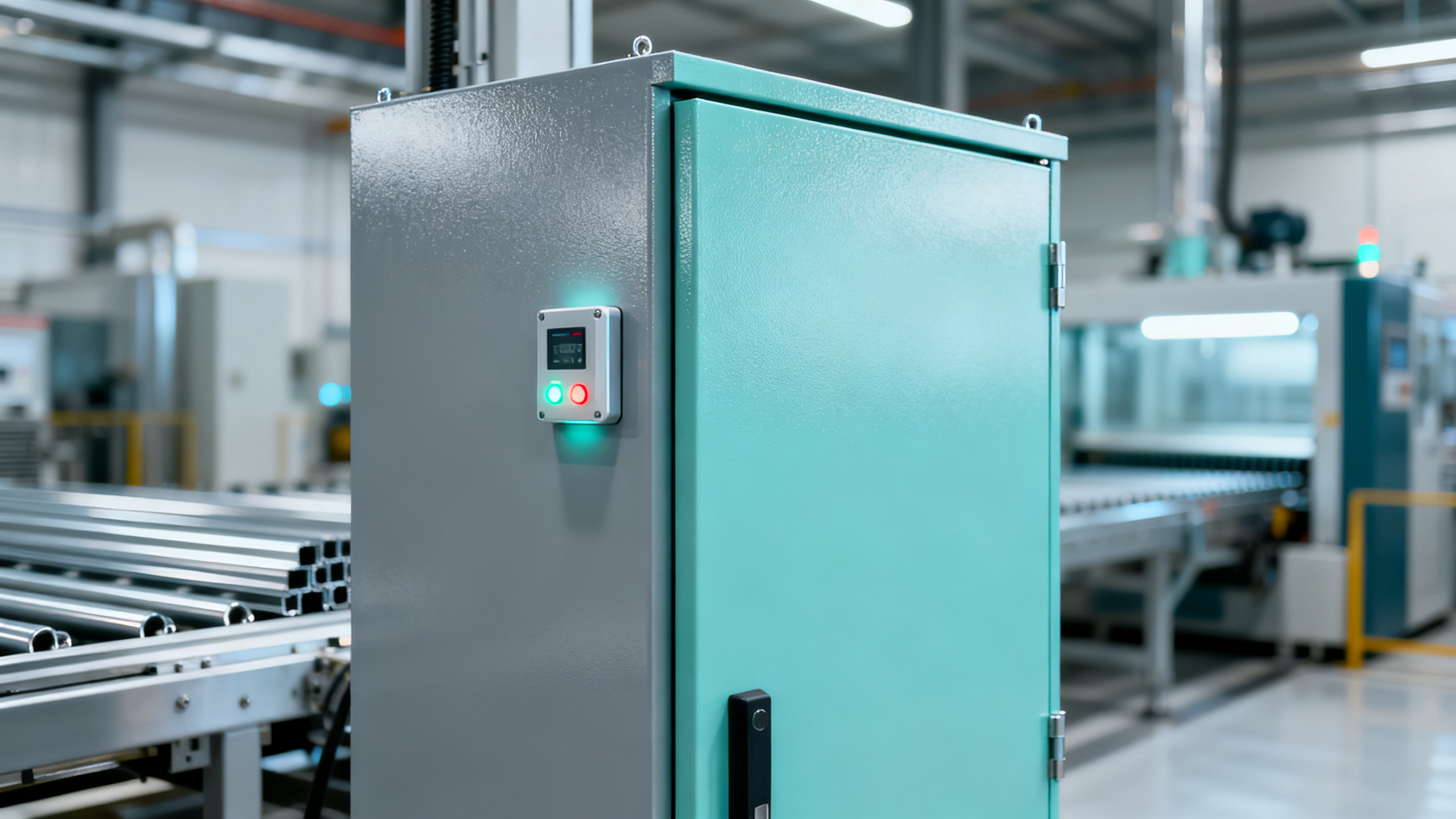
On May 9, 2026, the Seventh China Home Goods New Domestic Brand Index (HNBI) Report was released, revealing that all TOP50 home goods brands now standardize water-based eco-coatings (VOC < 50 g/L) and integrated smart sensing modules (for temperature/humidity and open/close status feedback). This shift is extending into adjacent metal enclosure categories—including industrial control cabinets, distribution boxes, and security server racks—prompting Chinese steel and metal profile manufacturers to accelerate adoption of UV-cured waterborne coatings and embedded sensor interface designs. Stakeholders in metal fabrication, coating supply, and intelligent hardware integration should monitor implications for material specs, design workflows, and cross-category certification requirements.
Event Overview
The Seventh China Home Goods New Domestic Brand Index (HNBI) Report was published on May 9, 2026. It confirms that 100% of the TOP50 home goods brands included in the index now equip products with water-based environmental coatings (VOC content below 50 g/L) and smart sensing modules capable of reporting ambient temperature/humidity and mechanical open/close status. The report further notes early-stage adoption of these features in Steel & Metal Profiles-derived product categories such as industrial control cabinets, electrical distribution boxes, and安防机柜 (security server racks), driven by Chinese metal enclosure manufacturers’ implementation of UV-cured waterborne paint systems and sensor-ready interface layouts.
Impact on Specific Subsectors
Direct Trading Enterprises
Trading firms exporting metal enclosures or OEM home goods components face tightening specification alignment requirements. Buyers—especially Tier-1 home brand partners—are increasingly referencing HNBI-compliant benchmarks in RFQs, including VOC limits and sensor communication protocols (e.g., Modbus RTU over 2-wire bus). Non-compliant inventory may encounter rejection during pre-shipment audits starting Q3 2026.
Raw Material Procurement Enterprises
Suppliers of coil coatings, primers, and functional additives must adapt to rising demand for UV-curable, low-VOC waterborne formulations. Conventional solvent-based polyester or epoxy systems are no longer sufficient for new project bids targeting HNBI-aligned clients. Procurement teams need to verify third-party VOC test reports (per GB/T 23986–2009 or ISO 11890-2) and assess compatibility with UV curing lines.
Manufacturing & Fabrication Enterprises
Metal enclosure fabricators are adjusting structural design practices to accommodate embedded sensor mounting points, signal routing channels, and IP-rated connector cutouts. These changes affect tooling setup, CNC programming, and assembly line sequencing. Early adopters report a 7–12% increase in design-to-BOM cycle time for first-generation sensor-integrated models.
Supply Chain Service Providers
Logistics and compliance service providers handling cross-border shipments of coated or sensor-equipped metal cabinets must now validate documentation against dual standards: environmental compliance (e.g., REACH SVHC, China RoHS II) and electromagnetic compatibility (GB/T 17626 series) for active sensing components. Certificate-of-conformance templates previously used for passive enclosures require revision.
Key Focus Areas for Relevant Enterprises
Monitor official technical annex updates from HNBI consortium
The HNBI report is expected to be followed by supplementary technical annexes—likely by Q3 2026—detailing test methods for VOC verification under real-world curing conditions and minimum performance thresholds for sensor reliability (e.g., 10,000-cycle actuation endurance). Enterprises should subscribe to the official HNBI portal for release notifications.
Assess exposure across legacy vs. new-product portfolios
Companies should map current SKUs against three categories: (1) legacy enclosures sold without sensing or low-VOC claims; (2) transitional models with optional sensor kits; and (3) next-gen platforms designed natively for both features. Prioritization of retrofitting or redesign should align with customer contract renewal windows—not calendar year-end.
Distinguish between specification signaling and enforceable mandates
The HNBI index remains a benchmarking tool—not a regulatory standard. While major home brands reference it contractually, no national regulation currently enforces VOC < 50 g/L or mandatory sensor inclusion for metal enclosures. However, procurement clauses citing HNBI compliance are appearing in >60% of new RFPs from top-20 domestic home OEMs (per preliminary tender analysis).
Prepare for interface-level interoperability testing
Early adopters report delays due to mismatched sensor output formats (e.g., analog 0–10 V vs. digital I²C) and lack of standardized mechanical mounting geometries. Firms should initiate internal interface validation using common home-goods communication stacks (e.g., Matter-over-Thread for wireless variants; RS-485 for wired) before committing to full production runs.
Editorial Perspective / Industry Observation
Observably, this HNBI update signals a maturation point—not an inflection point—in the convergence of environmental compliance and functional intelligence within metal enclosure design. The 100% adoption rate among TOP50 home brands reflects consolidation of earlier pilot programs rather than sudden market-wide disruption. Analysis shows the extension into industrial cabinet categories is still largely confined to export-oriented or premium-tier manufacturers; broader adoption in cost-sensitive segments remains limited. From an industry perspective, this development is best understood as a de facto specification anchor emerging from commercial procurement practice—not yet a regulatory driver, but increasingly decisive in bid qualification.
Consequently, the current value lies less in reacting to the headline metric and more in auditing internal readiness across four dimensions: material data sheet traceability, sensor interface documentation completeness, cross-functional BOM governance, and third-party test lab accreditation scope. The trend’s durability hinges on whether downstream system integrators begin requiring certified interoperability—not just component-level compliance.
Concluding, the 2026 HNBI report formalizes what leading players have already implemented operationally: low-VOC coatings and basic status sensing are no longer differentiators but baseline expectations for competitive positioning in home-integrated metal enclosures. For adjacent sectors, it functions primarily as an early-warning indicator—not yet a binding requirement—but one that warrants structured technical assessment, not strategic dismissal.
Information Source: Seventh China Home Goods New Domestic Brand Index (HNBI) Report, released May 9, 2026. Note: Technical annexes, certification pathways, and enforcement mechanisms referenced in the report remain pending official publication and are subject to ongoing observation.
Technical Specifications
- Air Handling Unit Supplier Checklist: Performance Data, Lead Times, and SupportAuthor :Environmental Engineering Director
- Buying Fiberglass Water Tanks Wholesale: Compare Quotes and Delivery CostsAuthor :Environmental Engineering Director
- Choosing an XLPE Power Cable Supplier: Test Reports, Traceability, and Lead TimesAuthor :Grid Infrastructure Analyst
Expert Insights

Chief Security Architect
Dr. Thorne specializes in the intersection of structural engineering and digital resilience. He has advised three G7 governments on industrial infrastructure security.
Related Analysis
- Oct 19, 2026Air Handling Unit Supplier Checklist: Performance Data, Lead Times, and SupportAuthor :Environmental Engineering Director
- Oct 18, 2026Buying Fiberglass Water Tanks Wholesale: Compare Quotes and Delivery CostsAuthor :Environmental Engineering Director
- Oct 17, 2026Choosing an XLPE Power Cable Supplier: Test Reports, Traceability, and Lead TimesAuthor :Grid Infrastructure Analyst
Core Sector // 01
Security & Safety
- How to Specify Steel Heavy-Duty Corner Guards for Loading Bays and High-Traffic AreasAuthor :Heavy Industry Strategist

- Selecting Non-Ferrous Metal Plates for Corrosion, Weight, and Formability RequirementsAuthor :Heavy Industry Strategist

- Stainless Steel Welded Tube Applications: Matching Tube Supply to Fabrication NeedsAuthor :Heavy Industry Strategist

- What Maintenance Do Furnace Components Need After 18 Months?Author :Heavy Industry Strategist

- How to Assess Metal Materials for Thermal Cycling in Power BoilersAuthor :Heavy Industry Strategist

- How to Evaluate Aluminum Extrusion Suppliers for Tight-Tolerance Components?Author :Heavy Industry Strategist

- How to Evaluate a Weld Neck Flange Manufacturer for High-Pressure Pipe ProjectsAuthor :Heavy Industry Strategist

- EU REACH Ban Hits Cr(VI)-Coated Steel ImportsAuthor :Heavy Industry Strategist
-Coated Steel Imports")