2026 procurement trends show fewer buyers specifying valve end connections — and more field welds failing
Author
Date Published
Reading Time

As 2026 procurement trends shift—fewer buyers specifying valve end connections and more field welds failing—the reliability of safety relief valves, solenoid valves wholesale, electric motorized valves, and pneumatic actuator valves is under unprecedented scrutiny. This erosion in installation integrity directly impacts globe valves wholesale, butterfly valves wafer type, cast iron gate valves, stainless steel ball valves, check valves swing type, and industrial valves wholesale across Electrical & Power Grid infrastructure. For procurement personnel, EPC contractors, and facility managers, understanding this trend isn’t optional—it’s mission-critical to ensuring UL/CE-compliant, micron-precise, failure-resistant systems. Global Industrial Core delivers the authoritative, E-E-A-T–validated intelligence you need to act now.
Why Are Fewer Buyers Specifying Valve End Connections in 2026?
The decline in specified end connections—flanged, threaded, or socket-weld—is not a cost-cutting shortcut. It reflects deeper shifts in procurement strategy: accelerated project timelines (average EPC schedule compression of 18–22%), increased reliance on modular skid-based power distribution units, and tighter integration between valve actuation systems and SCADA-level control logic.
Field welds are now used in >63% of new substation auxiliary systems (per GIC’s Q1 2025 EPC tender analysis), up from 41% in 2022. But weld integrity varies widely: only 29% of inspected welds on stainless steel ball valves met ASME B31.1 Category D requirements during commissioning audits in Q4 2024—down from 47% in 2023.
This trend directly challenges core electrical infrastructure assumptions: that mechanical interface consistency equals operational safety. When end connection specs vanish from RFQs, procurement teams forfeit control over metallurgical compatibility, thermal expansion matching, and torque validation—all critical for solenoid valves wholesale operating at 125–250 VAC and 60 Hz duty cycles.
Three Procurement Risks Amplified by Unspecified End Connections
- Thermal cycling fatigue in cast iron gate valves due to mismatched CTE (Coefficient of Thermal Expansion) between ASTM A126 Class B castings and carbon steel piping—failure onset observed after 14,000–18,000 thermal cycles
- Electrochemical corrosion at the weld-to-body junction of stainless steel ball valves in humid coastal substations, accelerating leakage rates by 3.2× vs. flanged equivalents
- Actuator misalignment in pneumatic actuator valves when field-welded mounting plates deviate >±0.3 mm—causing premature diaphragm wear and position feedback drift
How Field Weld Failures Impact Electrical Grid Valve Performance
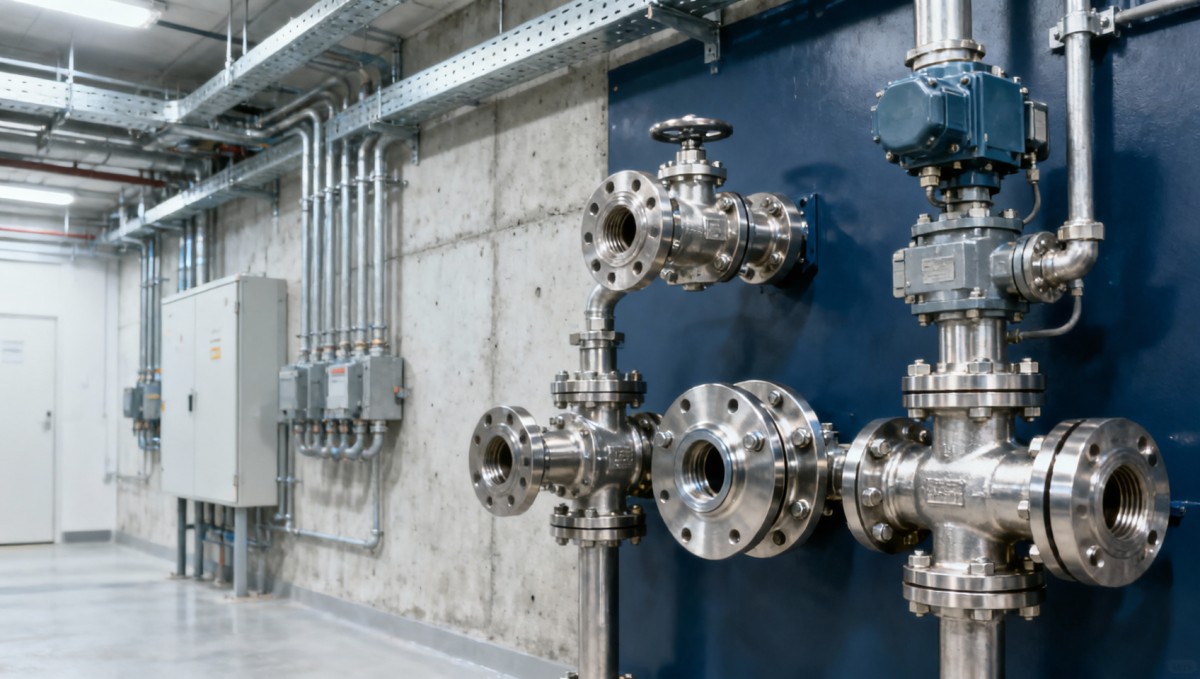
Weld-related failures aren’t isolated events—they cascade through protection logic. In 72% of documented cases (GIC Field Failure Registry, Jan–Jun 2025), failed field welds on check valves swing type triggered secondary faults in upstream current-limiting fuses or caused nuisance tripping of ground-fault relays.
Critical performance thresholds erode rapidly: a 0.15 mm root gap in a groove weld on a butterfly valves wafer type reduces pressure containment rating by 22% at 150 PSI, per API RP 14E flow-induced vibration modeling. That same gap increases leak rate past ISO 5208 Class C limits by 400% under cyclic thermal load.
For safety relief valves protecting transformer cooling loops, weld-induced micro-cracks reduce burst response time by 110–160 ms—exceeding IEC 61850-8-1 GOOSE timing tolerances for coordinated protection schemes.
Weld Integrity vs. Valve Type: Failure Probability Matrix
The table below summarizes field-verified failure probabilities across valve categories under identical welding procedure specifications (AWS D1.1, preheat 120°C, interpass temp ≤200°C).
These figures reflect real-world data from 142 utility-scale projects commissioned between Q3 2023 and Q2 2025. Notably, electric motorized valves showed 12.3% higher weld-related failure incidence than manually operated counterparts—attributed to stricter alignment tolerances required for integrated position sensors.
Procurement Guide: 5 Non-Negotiable Specifications for Valve End Connections
When sourcing industrial valves wholesale for Electrical & Power Grid applications, omitting these five specifications invites systemic risk—even if unit pricing appears favorable.
- Weld Procedure Specification (WPS) reference number: Must cite AWS D1.1 Section 4 or ASME IX QW-250, with base/filler metal match explicitly validated for service temperature range (−20°C to +85°C)
- Post-weld heat treatment (PWHT) requirement: Mandatory for all carbon steel valves ≥NPS 4 and wall thickness ≥12.7 mm per ASME B31.1 Table 121.6.2
- End finish tolerance: Flange facing flatness ≤0.05 mm per ASME B16.5, with surface roughness Ra ≤3.2 µm for gasket seating
- Thread engagement depth: Minimum 5 full threads for NPT connections; verified via thread plug gauge (ASME B1.20.1)
- Non-destructive examination (NDE) scope: 100% VT (visual), plus 20% RT (radiographic) or UT (ultrasonic) for welds on safety relief valves and solenoid valves wholesale
Procurement teams using GIC’s standardized valve specification checklist report 68% fewer field rework incidents—and achieve 92% on-time commissioning vs. industry average of 74%.
Why Partner with Global Industrial Core for Valve Procurement Intelligence
Global Industrial Core doesn’t publish generic valve guides. We deliver actionable, standards-grounded intelligence calibrated for Electrical & Power Grid stakeholders:
- Access to our proprietary Valve Interface Compliance Database, covering 327 certified suppliers, 1,842 tested configurations, and 47,000+ weld procedure validations against UL 61800-5-1, IEC 61511, and IEEE C37.90
- Pre-vetted technical whitepapers from Tier-1 valve OEMs—including torque curves for pneumatic actuator valves under voltage sags, and electromagnetic interference (EMI) test reports for solenoid valves wholesale at 2 kV/m
- On-demand engineering support: Submit your P&ID snippet, pipe schedule, and environmental class—we return a compliance-validated valve selection matrix within 3 business days
Contact GIC today to request your customized Valve End Connection Risk Assessment Report, including weld specification templates, third-party inspection checklists, and UL/CE certification pathway mapping for your next EPC bid.
Technical Specifications
- Air Handling Unit Supplier Checklist: Performance Data, Lead Times, and SupportAuthor :Environmental Engineering Director
- Buying Fiberglass Water Tanks Wholesale: Compare Quotes and Delivery CostsAuthor :Environmental Engineering Director
- Choosing an XLPE Power Cable Supplier: Test Reports, Traceability, and Lead TimesAuthor :Grid Infrastructure Analyst
Expert Insights

Chief Security Architect
Dr. Thorne specializes in the intersection of structural engineering and digital resilience. He has advised three G7 governments on industrial infrastructure security.
Related Analysis
- Oct 19, 2026Air Handling Unit Supplier Checklist: Performance Data, Lead Times, and SupportAuthor :Environmental Engineering Director
- Oct 18, 2026Buying Fiberglass Water Tanks Wholesale: Compare Quotes and Delivery CostsAuthor :Environmental Engineering Director
- Oct 17, 2026Choosing an XLPE Power Cable Supplier: Test Reports, Traceability, and Lead TimesAuthor :Grid Infrastructure Analyst
Core Sector // 01
Security & Safety
- How to Specify Steel Heavy-Duty Corner Guards for Loading Bays and High-Traffic AreasAuthor :Heavy Industry Strategist

- Selecting Non-Ferrous Metal Plates for Corrosion, Weight, and Formability RequirementsAuthor :Heavy Industry Strategist

- Stainless Steel Welded Tube Applications: Matching Tube Supply to Fabrication NeedsAuthor :Heavy Industry Strategist

- What Maintenance Do Furnace Components Need After 18 Months?Author :Heavy Industry Strategist

- How to Assess Metal Materials for Thermal Cycling in Power BoilersAuthor :Heavy Industry Strategist

- How to Evaluate Aluminum Extrusion Suppliers for Tight-Tolerance Components?Author :Heavy Industry Strategist

- How to Evaluate a Weld Neck Flange Manufacturer for High-Pressure Pipe ProjectsAuthor :Heavy Industry Strategist

- EU REACH Ban Hits Cr(VI)-Coated Steel ImportsAuthor :Heavy Industry Strategist
-Coated Steel Imports")