How to Compare Components & Metals Manufacturers by Output Stability
Author
Date Published
Reading Time
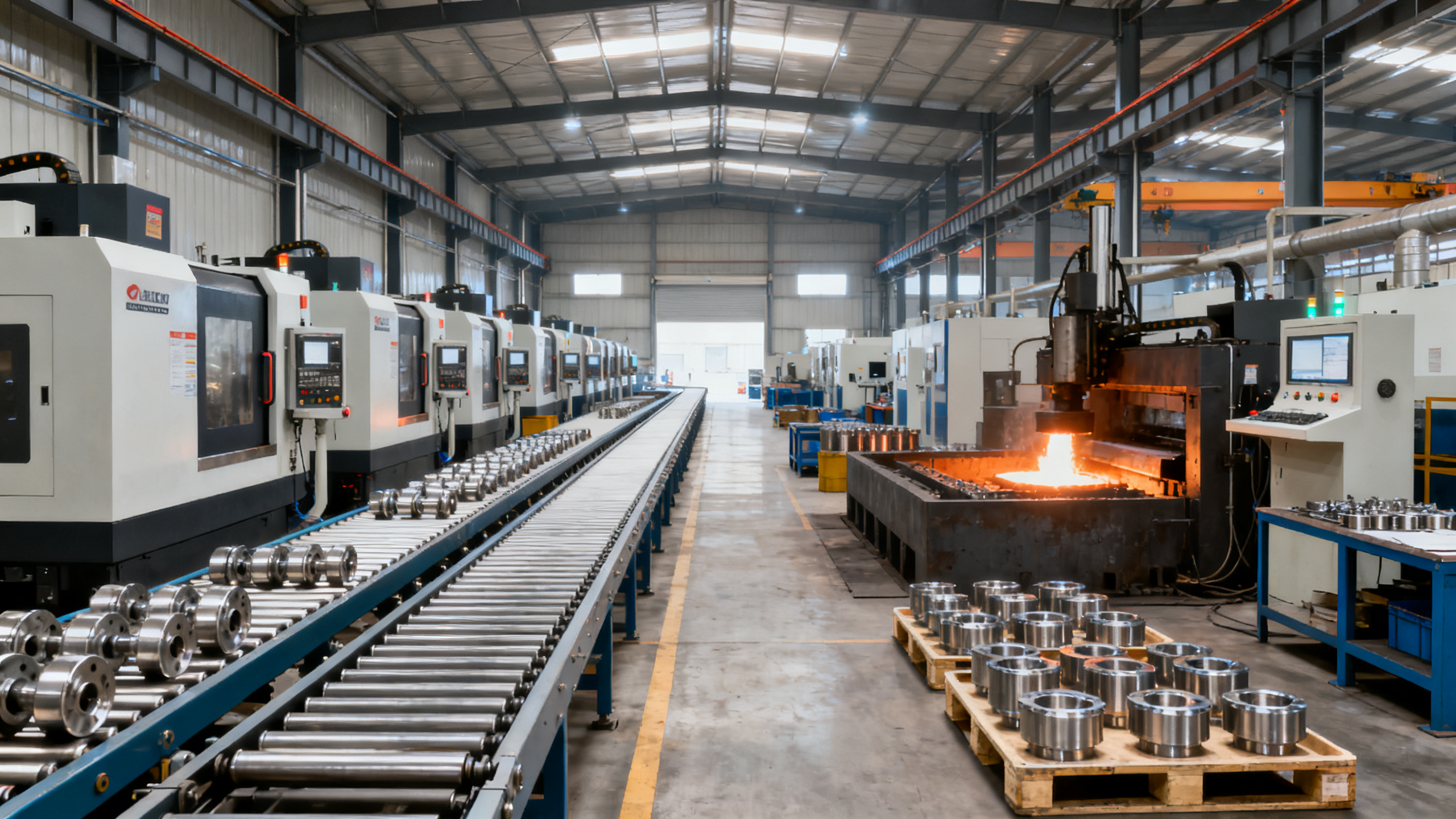
When evaluating a Components & Metals manufacturer, output stability is more than a production metric—it is a direct indicator of quality consistency, delivery reliability, and operational safety.
In industrial supply chains, unstable output can trigger dimensional drift, batch variation, delayed maintenance, and compliance exposure.
A structured comparison helps identify whether a Components & Metals manufacturer can sustain repeatable performance under real production pressure.
This guide explains how to compare suppliers through capacity discipline, process control, metallurgy integrity, and risk visibility.
What does output stability mean for a Components & Metals manufacturer?
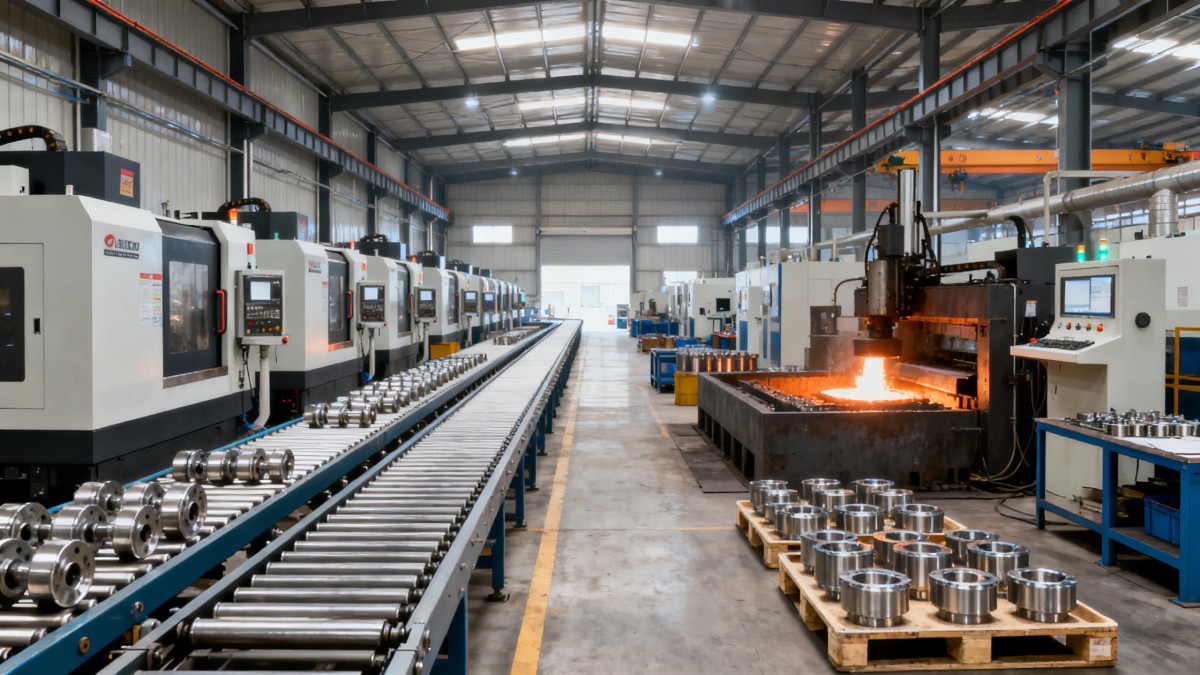
Output stability means the ability to deliver consistent volume, quality, and lead time across different production periods.
For a Components & Metals manufacturer, stable output combines machine availability, process repeatability, and controlled raw material inputs.
It is not enough to show high monthly capacity.
The stronger signal is whether output remains predictable during peak demand, tooling changes, alloy substitutions, or maintenance cycles.
In metal parts production, output stability often affects:
- Dimensional tolerance consistency
- Surface finish repeatability
- Mechanical property conformity
- Heat treatment reliability
- On-time shipment performance
A capable Components & Metals manufacturer should demonstrate stable yield, low rework rates, and reliable traceability between batches.
Which indicators best compare manufacturers beyond claimed capacity?
Published capacity alone can be misleading.
A better comparison uses operational indicators that show how output behaves over time.
1. Capacity utilization pattern
A healthy utilization range often suggests room for demand swings without overloading equipment or labor resources.
Very high utilization can indicate hidden delivery risk.
2. OEE and downtime discipline
Overall Equipment Effectiveness reveals whether machines actually produce qualified output at expected speed.
Unplanned downtime trends are especially important for a Components & Metals manufacturer handling critical parts.
3. First-pass yield
High first-pass yield usually reflects process maturity, fixture stability, calibrated inspection, and operator control.
Low first-pass yield often hides rework cost and schedule instability.
4. Batch-to-batch property variation
Mechanical and chemical consistency matters as much as part geometry.
Review tensile strength, hardness distribution, corrosion behavior, and microstructure records across several lots.
5. On-time delivery under change
The key test is not standard orders.
The key test is performance during engineering revisions, urgent replenishment, or mixed-model production.
How can process control reveal a stable Components & Metals manufacturer?
Stable output is usually built through disciplined processes rather than heroic final inspection.
A reliable Components & Metals manufacturer should show control at each production stage.
Incoming material control
Ask how alloys, billets, coils, powders, or cast inputs are verified before release to production.
Strong suppliers combine mill certificates with incoming tests and supplier qualification rules.
In-process monitoring
Look for SPC, control plans, tool-life management, furnace profiling, and scheduled gauge calibration.
These practices help a Components & Metals manufacturer detect drift before defects spread across a batch.
Change management
Output instability often appears after tooling replacement, subcontracting changes, or alternate raw material use.
Formal change approval and validation runs reduce this risk.
Traceability depth
Full traceability links heat number, machine route, operator, inspection results, and shipment data.
Without traceability, stable output claims are difficult to verify.
How do material performance and metallurgy affect output stability?
For metal-intensive products, output stability depends heavily on material behavior across forming, machining, joining, and finishing.
A Components & Metals manufacturer may keep production running, yet still create unstable quality through metallurgical inconsistency.
Important checkpoints include:
- Alloy chemistry control across heats
- Heat treatment uniformity across furnace loads
- Grain structure suitability for the application
- Residual stress management after forming or machining
- Coating or plating adhesion repeatability
For safety-related systems, subtle metallurgical variation can cause fatigue failure, seal leakage, distortion, or corrosion acceleration.
This is why test reports should span multiple lots, not only first-article approval.
In sectors tied to power, environment, measurement, and mechanical systems, long-term stability matters more than isolated lab results.
What common mistakes distort manufacturer comparison?
Several sourcing errors can make an unstable supplier look competitive.
Mistake 1: Comparing price before process capability
Lower pricing may reflect weaker process controls, thinner inspection coverage, or less resilient production planning.
Mistake 2: Using one successful sample as proof
A good prototype does not guarantee stable serial production.
Ask for historical production data over several months.
Mistake 3: Ignoring subcontracted steps
Plating, heat treatment, NDT, or specialized machining may be outsourced.
A Components & Metals manufacturer is only as stable as its controlled external processes.
Mistake 4: Overlooking compliance maintenance
Certificates matter, but ongoing compliance discipline matters more.
Standards such as ISO, CE, UL, or application-specific requirements should be embedded into routine production control.
How should comparison results be organized for practical decisions?
A weighted scorecard makes comparison more objective.
It also helps reveal trade-offs between cost, stability, and compliance readiness.
For a Components & Metals manufacturer, comparison should include site audit findings, trial order results, and evidence from multi-batch production.
If possible, compare at least three suppliers using the same drawing set, material grade, and acceptance criteria.
FAQ: What are the most useful questions to ask before approval?
Comparing a Components & Metals manufacturer by output stability creates a clearer picture than comparing price or rated capacity alone.
The strongest candidates combine repeatable production, disciplined metallurgy control, verified traceability, and dependable delivery under change.
For industrial infrastructure, that combination supports quality assurance, operational continuity, and compliance confidence.
Use a structured scorecard, request multi-batch evidence, and validate claims through audits or pilot orders before long-term commitment.
A careful review today can prevent costly instability across the entire service life of the system.
Technical Specifications
- Air Handling Unit Supplier Checklist: Performance Data, Lead Times, and SupportAuthor :Environmental Engineering Director
- Buying Fiberglass Water Tanks Wholesale: Compare Quotes and Delivery CostsAuthor :Environmental Engineering Director
- Choosing an XLPE Power Cable Supplier: Test Reports, Traceability, and Lead TimesAuthor :Grid Infrastructure Analyst
Expert Insights

Chief Security Architect
Dr. Thorne specializes in the intersection of structural engineering and digital resilience. He has advised three G7 governments on industrial infrastructure security.
Related Analysis
- Oct 19, 2026Air Handling Unit Supplier Checklist: Performance Data, Lead Times, and SupportAuthor :Environmental Engineering Director
- Oct 18, 2026Buying Fiberglass Water Tanks Wholesale: Compare Quotes and Delivery CostsAuthor :Environmental Engineering Director
- Oct 17, 2026Choosing an XLPE Power Cable Supplier: Test Reports, Traceability, and Lead TimesAuthor :Grid Infrastructure Analyst
Core Sector // 01
Security & Safety
- How to Specify Steel Heavy-Duty Corner Guards for Loading Bays and High-Traffic AreasAuthor :Heavy Industry Strategist

- Selecting Non-Ferrous Metal Plates for Corrosion, Weight, and Formability RequirementsAuthor :Heavy Industry Strategist

- Stainless Steel Welded Tube Applications: Matching Tube Supply to Fabrication NeedsAuthor :Heavy Industry Strategist

- What Maintenance Do Furnace Components Need After 18 Months?Author :Heavy Industry Strategist

- How to Assess Metal Materials for Thermal Cycling in Power BoilersAuthor :Heavy Industry Strategist

- How to Evaluate Aluminum Extrusion Suppliers for Tight-Tolerance Components?Author :Heavy Industry Strategist

- How to Evaluate a Weld Neck Flange Manufacturer for High-Pressure Pipe ProjectsAuthor :Heavy Industry Strategist

- EU REACH Ban Hits Cr(VI)-Coated Steel ImportsAuthor :Heavy Industry Strategist
-Coated Steel Imports")