Custom Metal Stamping Parts: What Tolerances, Tooling, and Materials Affect Cost?
Author
Date Published
Reading Time
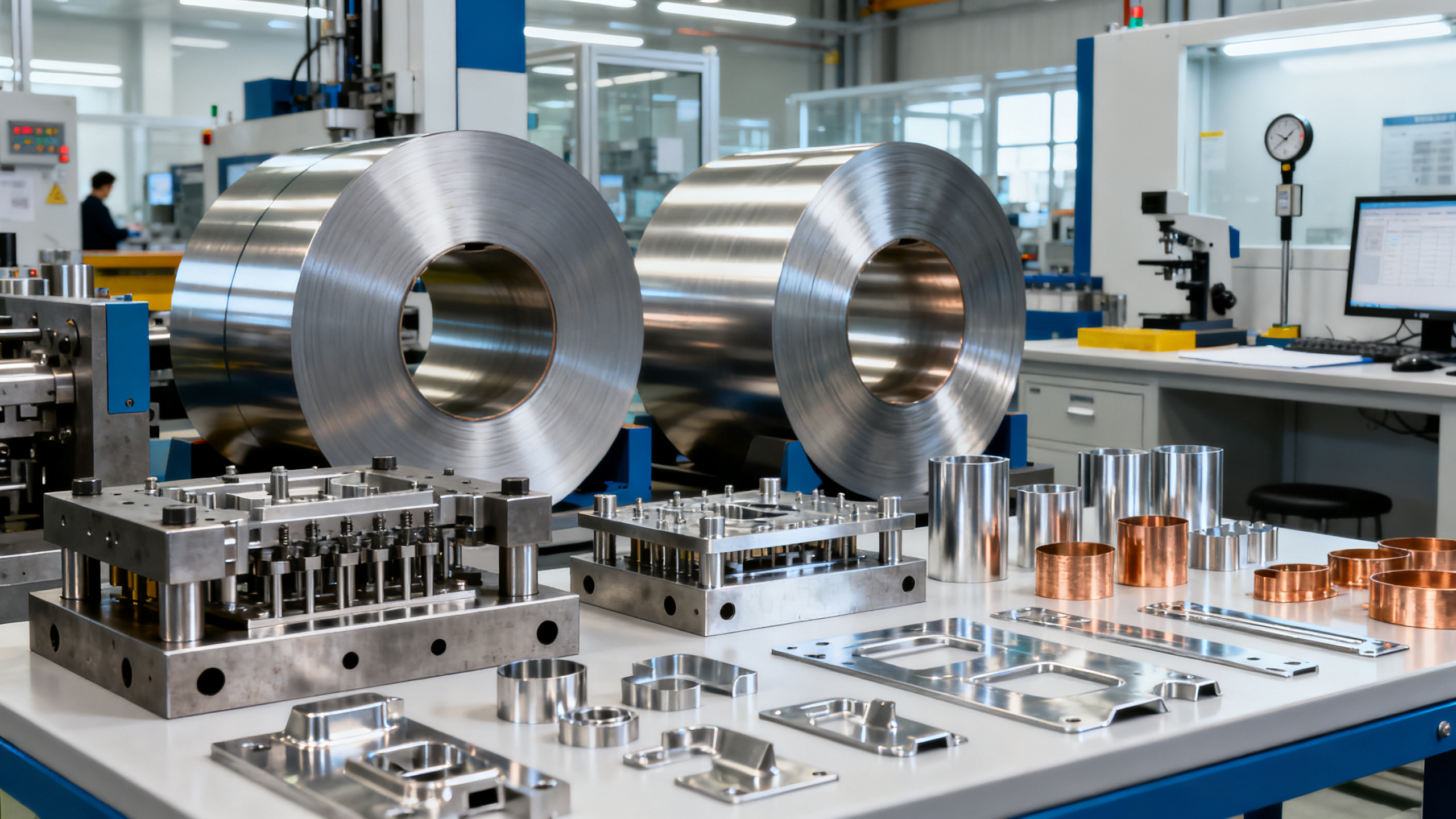
Why do custom metal stamping parts vary so much in cost?
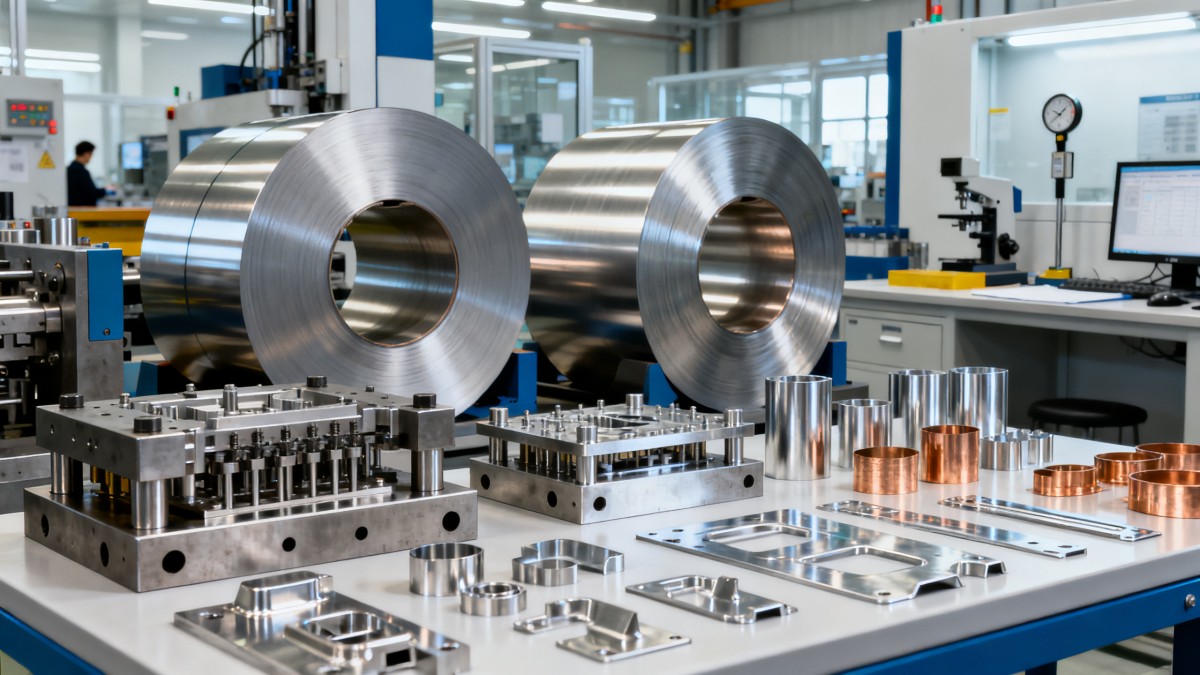
When reviewing custom metal stamping parts, unit price is only the visible layer. The real cost sits inside tolerance demands, tool design, material behavior, inspection depth, and production volume.
That is why two parts with similar shapes can carry very different quotes. One may run in stable, high-volume production. Another may require tight flatness, special steel, and frequent tool maintenance.
In industrial programs tied to power, safety, measurement, or mechanical systems, pricing also reflects risk. A supplier is not only selling stamped components. They are pricing process capability, compliance discipline, and delivery confidence.
This matters in the environments often examined by Global Industrial Core, where failure can disrupt critical infrastructure. In those settings, a low quote without process evidence may create higher total cost later.
A practical way to judge custom metal stamping parts is to separate cost into four questions. How precise must the part be, how complex is the tooling, what material is required, and how many parts will actually ship?
How tight do tolerances need to be before they start driving the quote?
Tolerance is often the fastest cost escalator. A dimension that looks minor on a drawing can force slower press speeds, more frequent inspection, secondary operations, or even a different manufacturing route.
In simple terms, wider tolerances give the process room to run efficiently. Tighter tolerances reduce that room. The supplier then invests more in die precision, setup control, operator checks, and measurement systems.
The most expensive drawings are not always the most technical ones. More commonly, they are the drawings that apply very tight tolerances to every feature, even where function does not require it.
For custom metal stamping parts, the critical distinction is between functional tolerances and blanket tolerances. If hole location affects assembly, that feature deserves control. If a cosmetic edge does not affect fit, loosen it.
The same logic applies to flatness, burr height, springback control, and positional accuracy. Each added requirement may seem reasonable alone. Combined, they can change the entire cost structure.
A useful quoting question is simple: which dimensions are truly critical to assembly, sealing, conductivity, safety, or wear? That conversation often removes unnecessary cost without reducing performance.
Does tooling cost matter more than piece price?
Sometimes it does, especially early in the program. For custom metal stamping parts, tooling is often the largest upfront cost, and its complexity directly shapes long-term economics.
A simple blanking die is relatively predictable. A progressive die with multiple stations, forming steps, tight strip layout, and in-die sensors is a different commercial case.
More complex tooling can still lower total cost when volume is high. It reduces manual handling, supports repeatability, and shortens per-part cycle time. The issue is not whether tooling is expensive. The issue is whether it matches forecast demand.
This is where many sourcing reviews become distorted. A lower initial tool quote may look attractive, but weak die life, unstable output, or poor maintainability can raise total program cost within months.
In actual projects, it helps to compare tooling proposals against the following checkpoints:
- Expected annual volume and peak monthly demand
- Die life before major refurbishment
- Changeover time and setup sensitivity
- Availability of spare inserts and maintenance records
- Capability data from first articles and repeat runs
For industrial applications governed by CE, UL, or ISO-linked documentation, tooling discipline also supports traceability. That may not appear on the price sheet, but it often affects approval speed and lifecycle risk.
Which materials make custom metal stamping parts more expensive, and why?
Material cost is not only the price per kilogram. It also includes how the metal behaves during stamping, how much scrap is generated, and what extra processing the part may need later.
Carbon steel is usually more economical than stainless steel, copper alloys, or specialty high-strength materials. Even so, a cheaper raw material can become costly if corrosion protection or post-processing is heavy.
Stainless steel often raises cost in three ways. The sheet itself is pricier, tool wear can increase, and forming may require more control because springback is less forgiving.
Copper and brass may support conductivity requirements, but they can introduce volatility in commodity pricing. Aluminum helps reduce weight, yet it may require special attention to surface marking and forming stability.
In broader industrial use, material selection is usually tied to environment first. Moisture, chemicals, load cycles, temperature, electrical contact, and regulatory demands should narrow options before cost comparisons begin.
More often than expected, the material grade is overspecified. If a standard commercial grade already satisfies corrosion, strength, and compliance needs, moving to a premium alloy may not improve real-world value.
A balanced review should include these questions:
- Does the part need strength, conductivity, corrosion resistance, or all three?
- Will the finish be plated, coated, or used as-stamped?
- How sensitive is the application to cosmetic marks or edge condition?
- Are mill certifications or traceable lots required?
These details shape the real cost of custom metal stamping parts far more accurately than raw material price alone.
When does volume offset the cost of custom metal stamping parts?
Volume changes almost every cost conversation. High volumes spread tooling investment across more parts, making piece price more competitive. Low volumes do the opposite, especially when setup and inspection are intensive.
That does not mean larger orders always save money. If forecasts are uncertain, buying around an aggressive volume assumption can create inventory exposure, engineering obsolescence, or cash tied up in slow-moving stock.
The better approach is to review total landed economics across realistic order patterns. In practice, this includes tooling amortization, packaging, logistics, quality reporting, and the cost of schedule variability.
For custom metal stamping parts used in infrastructure programs, demand may arrive in project waves rather than smooth monthly releases. Suppliers that can support phased production often create better value than those offering only a low headline price.
A concise decision table can help structure that discussion:
In other words, the right volume strategy is not the biggest order. It is the order pattern that fits usage, cash flow, and lead-time risk.
What details are often missed when comparing supplier quotes?
The common mistake is comparing piece price without comparing assumptions. Quotes for custom metal stamping parts can look similar while covering very different scopes of work.
One supplier may include PPAP-style documentation, material certs, in-process inspection, and protective packaging. Another may quote only the stamped part, leaving downstream requirements outside the number.
Lead time should also be read carefully. A short initial promise may exclude die approval, sampling loops, or plating queue time. In projects with fixed commissioning schedules, that gap can become expensive.
There is also the question of process stability. A quote backed by capability studies, gauge control, and revision discipline usually deserves more confidence than one based only on nominal specification review.
Before selecting among custom metal stamping parts suppliers, it helps to confirm:
- Quoted tolerance basis and any excluded features
- Tool ownership, storage, and refurbishment terms
- Material source, certification level, and substitution policy
- Inspection plan, sample approval route, and traceability method
- Secondary operations such as deburring, plating, heat treatment, or assembly
That deeper review aligns with the sourcing discipline promoted across GIC content. Cost decisions in heavy industry work best when quality evidence and operational resilience are reviewed alongside price.
So how should you evaluate custom metal stamping parts before making a final decision?
Start by identifying which requirements are truly functional. Tight tolerances, premium materials, and complex tooling are justified when they protect fit, safety, durability, or compliance.
Then separate avoidable cost from necessary cost. If a feature is not performance-critical, ask whether the tolerance can relax, the material can simplify, or the process can avoid secondary steps.
It is also worth reviewing custom metal stamping parts as a lifecycle purchase, not a line-item buy. Stable output, documented control, and predictable lead time often produce better commercial results than the lowest opening quote.
A sensible next step is to build a comparison sheet covering tolerance-critical features, tooling assumptions, material certifications, secondary operations, and realistic volume bands. That usually reveals the strongest option quickly.
When the application supports infrastructure, energy, safety, or measurement systems, this disciplined review becomes even more important. In those cases, the best-value custom metal stamping parts are the ones that reduce uncertainty as much as they reduce price.
Technical Specifications
- How to Select Electronic Hotel Key Card Locks for Guest Rooms and Staff AreasAuthor :Safety Compliance Lead
- How to Select Lab Instruments for Reliable Chemical Analysis WorkflowsAuthor :Precision Metrology Expert
- How to Size a UPS for Server Rooms: Load, Runtime, and Redundancy FactorsAuthor :Grid Infrastructure Analyst
Expert Insights

Chief Security Architect
Dr. Thorne specializes in the intersection of structural engineering and digital resilience. He has advised three G7 governments on industrial infrastructure security.
Related Analysis
- Sep 17, 2026How to Select Electronic Hotel Key Card Locks for Guest Rooms and Staff AreasAuthor :Safety Compliance Lead
- Sep 16, 2026How to Select Lab Instruments for Reliable Chemical Analysis WorkflowsAuthor :Precision Metrology Expert
- Sep 15, 2026How to Size a UPS for Server Rooms: Load, Runtime, and Redundancy FactorsAuthor :Grid Infrastructure Analyst
Core Sector // 01
Security & Safety
- Stainless Steel Welded Tube Applications: Matching Tube Supply to Fabrication NeedsAuthor :Heavy Industry Strategist

- What Maintenance Do Furnace Components Need After 18 Months?Author :Heavy Industry Strategist

- How to Assess Metal Materials for Thermal Cycling in Power BoilersAuthor :Heavy Industry Strategist

- How to Evaluate Aluminum Extrusion Suppliers for Tight-Tolerance Components?Author :Heavy Industry Strategist

- How to Evaluate a Weld Neck Flange Manufacturer for High-Pressure Pipe ProjectsAuthor :Heavy Industry Strategist

- EU REACH Ban Hits Cr(VI)-Coated Steel ImportsAuthor :Heavy Industry Strategist
-Coated Steel Imports")
- How to Evaluate a Heat Sink Aluminum Profile Supplier for Custom Thermal ProjectsAuthor :Heavy Industry Strategist

- Industrial Metal Fabrication Components Price: What Drives Cost and How to Compare QuotesAuthor :Heavy Industry Strategist