Components & Metals Quality Problems Often Begin Upstream
Author
Date Published
Reading Time
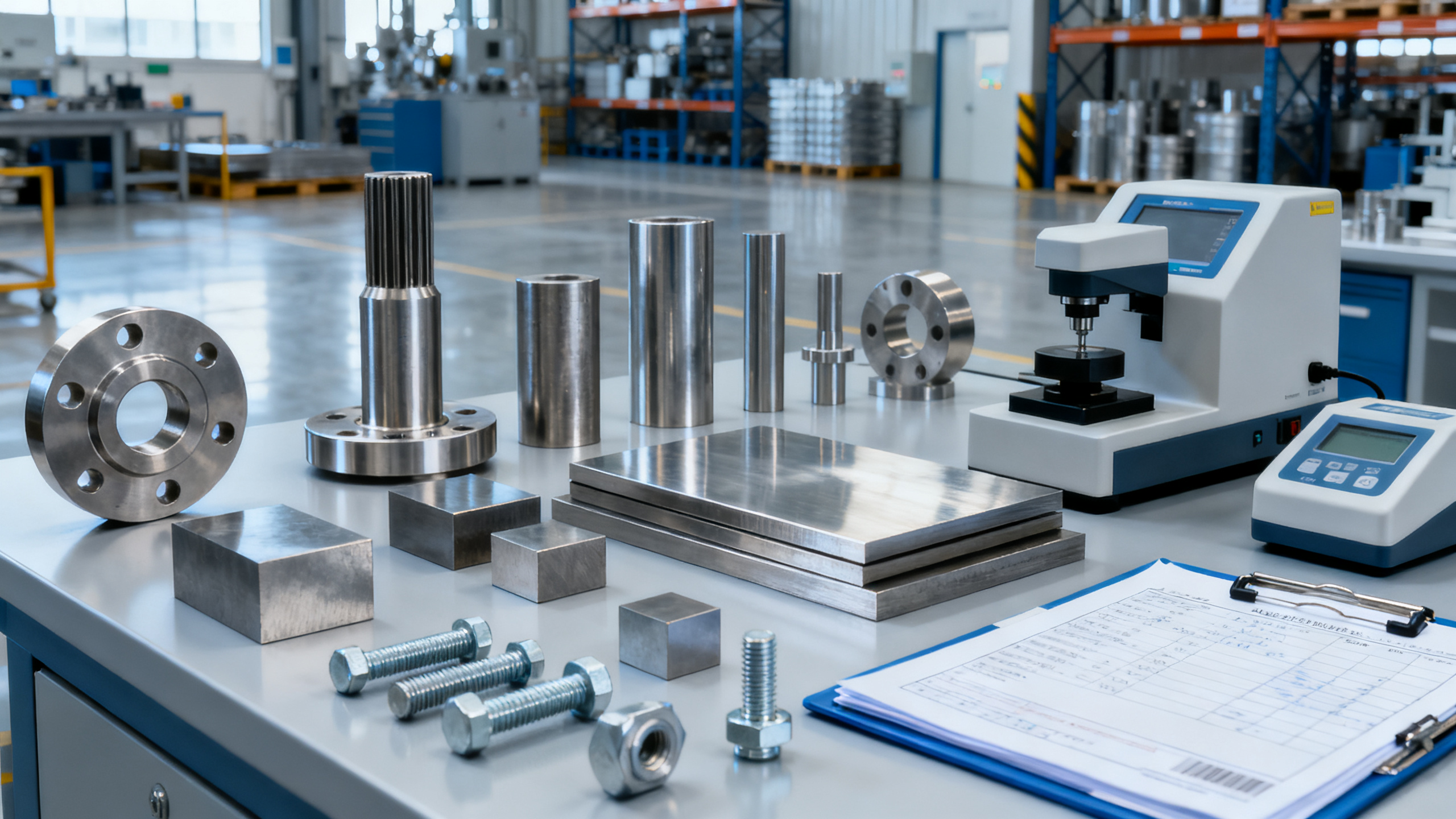
Many Components & Metals quality failures are not caused on the factory floor—they start much earlier, in raw material selection, supplier controls, and process discipline upstream. For quality control and safety managers, understanding these hidden risks is essential to preventing compliance issues, operational downtime, and costly system failures before they reach critical industrial environments.
Why do Components & Metals problems often begin before production?
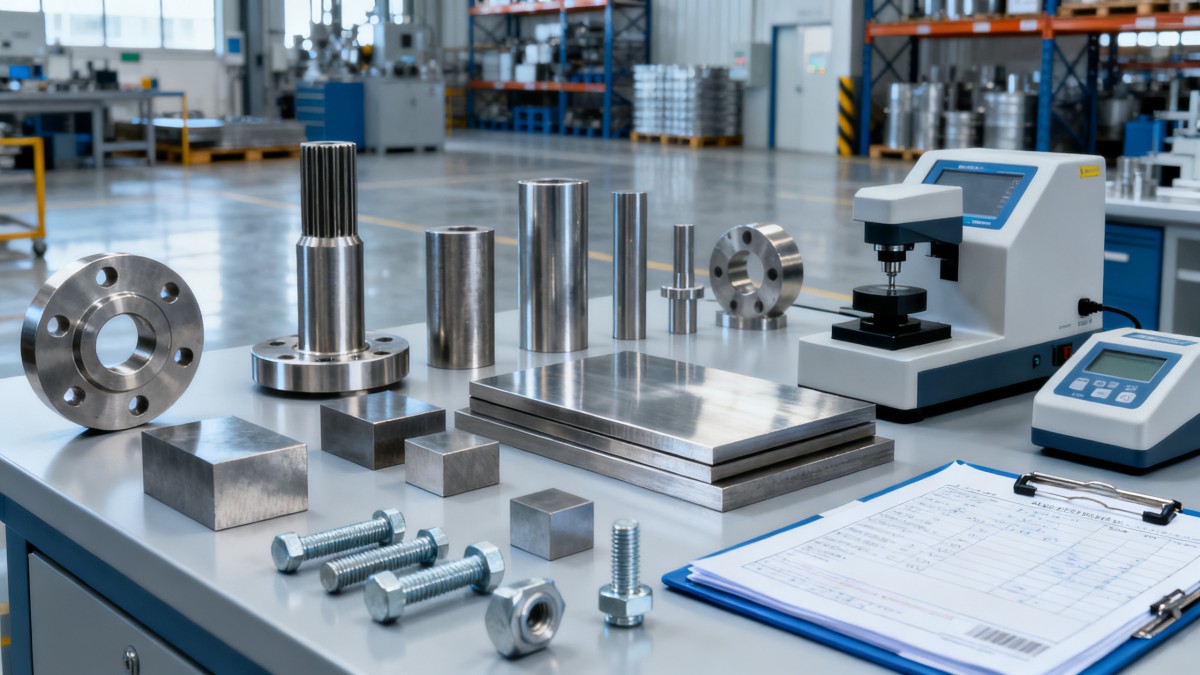
In industrial supply chains, visible defects are usually late-stage symptoms. The real cause often sits upstream: incorrect alloy selection, unstable melt chemistry, poor traceability, inconsistent heat treatment planning, or weak supplier qualification. By the time a component reaches incoming inspection, the defect may already be embedded in the metal structure or dimensional behavior.
For quality control teams, this creates a difficult situation. A part may pass visual checks yet fail under pressure, vibration, corrosion, or thermal cycling. For safety managers, the consequence is more serious. Hidden upstream weaknesses in Components & Metals can lead to leaks, arc events, structural fracture, instrument drift, or shutdowns in high-risk facilities.
This is especially relevant across mixed industrial environments where mechanical systems, electrical infrastructure, environmental equipment, and measurement devices interact. A flawed fastener, housing, enclosure, flange, shaft, or conductive metal element can trigger a broader reliability event that extends beyond one product category.
- Raw material substitutions made to control cost without engineering review.
- Suppliers lacking stable process capability for composition, hardness, or tolerance control.
- Incomplete documentation for mill certificates, test reports, and lot traceability.
- Overreliance on final inspection instead of upstream prevention and supplier auditing.
Which upstream risks matter most for quality control and safety managers?
Not every upstream issue carries the same operational impact. In practice, quality and safety teams should prioritize the risks that are hard to detect later and expensive to correct after assembly, installation, or commissioning. Components & Metals used in heavy industry demand a risk-based review rather than a paperwork-only approach.
High-impact upstream failure points
- Material grade mismatch: similar-looking steels or alloys may differ sharply in corrosion resistance, tensile strength, conductivity, or low-temperature toughness.
- Uncontrolled secondary sourcing: a qualified sample does not guarantee that later production lots come from the same mill, melt route, or process window.
- Heat treatment inconsistency: improper quenching, tempering, or stress relief can distort dimensions and reduce fatigue life.
- Surface treatment failure: coating thickness, adhesion, passivation, or plating chemistry may be unsuitable for outdoor, chemical, or marine conditions.
- Poor contamination control: mixed scrap, oil residue, moisture, or foreign particles can change weldability and corrosion behavior.
The table below helps quality and safety teams evaluate upstream Components & Metals risks by likelihood, detectability, and downstream consequence. It is useful for supplier onboarding, pre-award audits, and corrective action planning.
A key insight is that the most dangerous Components & Metals defects are not always those with the highest visual rejection rate. They are often the defects that remain undetected until the component enters a demanding service condition.
How should you assess suppliers upstream instead of relying only on final inspection?
Incoming inspection is necessary, but it cannot compensate for an unstable supply base. For critical Components & Metals, supplier evaluation should begin with process understanding. Quality managers need evidence of how a supplier controls chemistry, forming, machining, finishing, storage, and documentation from lot start to final dispatch.
What to verify during supplier qualification
- Review whether the supplier’s approved material list matches the required service environment, not just the drawing note.
- Check if mill certificates, inspection records, and batch IDs remain linked through cutting, machining, plating, and packing stages.
- Confirm process capability for critical dimensions, thread integrity, flatness, hardness range, and coating thickness.
- Verify how nonconforming materials are segregated to avoid mix-ups during rework or urgent shipments.
- Assess whether subcontracted operations such as heat treatment or galvanizing are controlled with the same rigor.
The next table provides a practical procurement and audit framework for Components & Metals suppliers. It helps cross-functional teams align technical, quality, and safety priorities before releasing purchase orders.
A supplier that performs well on price but poorly on traceability and process discipline is often expensive in the long run. Rework, line stoppages, emergency replacements, and incident investigations quickly erase nominal savings.
Which Components & Metals decisions are most often underestimated during procurement?
Procurement teams are frequently asked to move fast, protect budget, and support multiple projects at once. Under these pressures, Components & Metals are sometimes treated as interchangeable commodities. That assumption is risky when the part is exposed to aggressive media, cyclic loading, electrical continuity needs, or safety-critical retention functions.
Common underestimation points
- Choosing by nominal grade without checking actual service conditions such as chloride exposure, UV, temperature swings, or conductive bonding requirements.
- Approving samples from one production route, then accepting mass production from another route with different forming or finishing characteristics.
- Treating certification documents as a substitute for verifying dimensional repeatability and mechanical performance.
- Ignoring packaging and storage control for corrosion-sensitive or precision-machined Components & Metals during transit and site storage.
For safety managers, the procurement conversation should include failure mode thinking. Ask what happens if the chosen component drifts out of tolerance, loses coating protection, or cracks after installation. The right procurement decision is not the cheapest delivered unit. It is the option that minimizes lifecycle risk in the actual operating envelope.
How do standards and compliance affect upstream quality control?
Compliance in Components & Metals is broader than a certificate attached to a shipment. International industrial projects often require alignment with material, safety, and product standards tied to CE, UL, ISO, or project-specific technical specifications. Quality control must therefore verify both document completeness and physical conformity.
Practical compliance checkpoints
- Material certificates should match ordered grade, heat number, and relevant property requirements, not simply show a generic family designation.
- Inspection and test plans should define what is checked at raw material, in-process, and final stages, including any hold points for witness review.
- Dimensional and mechanical verification should reflect actual functional risk. Tight-tolerance parts, conductive assemblies, and pressure-retaining items often need deeper review.
- Where corrosion or environmental resistance is critical, surface treatment records and test methods should be clearly linked to each production lot.
This is where a strategic intelligence partner adds value. GIC supports industrial buyers and technical decision-makers by connecting sourcing decisions with real operating risks across safety systems, instrumentation, electrical infrastructure, environmental equipment, and mechanical metallurgy. That integrated view matters because a compliance gap in one material component can affect an entire system.
What does a stronger upstream prevention workflow look like?
A stronger workflow does not need to be complicated. It needs to be disciplined, cross-functional, and built around prevention. Quality control, safety, engineering, and procurement should share a common upstream review process for Components & Metals used in critical assets.
Recommended prevention workflow
- Define the service condition first: load, corrosion exposure, temperature, insulation or conductivity needs, and regulatory environment.
- Translate service needs into material and process requirements, including grade, hardness window, coating type, tolerance, and traceability level.
- Qualify suppliers based on capability, documentation discipline, and control of outsourced operations.
- Set incoming inspection plans according to risk, not habit. Some parts require verification of chemistry, hardness, or coating, not only dimensions.
- Capture field feedback and nonconformance data to update approved supplier lists and sourcing rules.
When this workflow is applied consistently, Components & Metals become more predictable in service. The result is fewer urgent deviations, better commissioning performance, and stronger control of safety exposure during operations.
FAQ: practical questions from quality and safety teams
How can I tell whether a Components & Metals supplier is truly stable?
Look beyond sample approval. A stable supplier can explain its raw material sources, process controls, outsourced treatments, traceability logic, and corrective action method. Ask for records from multiple lots, not just one successful batch. Stability shows up in repeatability, documentation consistency, and controlled change management.
Which incoming checks are most useful when risk is high?
That depends on function, but high-risk Components & Metals often justify targeted checks such as positive material identification, hardness verification, coating thickness measurement, critical dimension validation, and document linkage by lot number. The goal is to confirm the hidden properties that visual inspection cannot reveal.
Is the lowest-cost material option always a bad choice?
Not always. It becomes a bad choice when lower upfront cost introduces higher maintenance, shorter life, greater corrosion risk, or compliance uncertainty. In industrial procurement, the correct comparison is total risk-adjusted cost, not unit price alone.
Why do upstream issues escape detection until installation or operation?
Because many defects in Components & Metals are latent. They appear only under stress, pressure, heat, vibration, electrical load, or chemical exposure. If supplier controls are weak, a part may look acceptable while carrying hidden metallurgical or process-related weaknesses that emerge later.
Why choose us for upstream Components & Metals sourcing intelligence?
Global Industrial Core helps quality control personnel and safety managers make better upstream decisions before nonconformities reach site, assembly, or operation. Our value is not limited to generic sourcing advice. We connect material risk, supplier capability, compliance expectations, and end-use operating conditions across industrial systems where failure has wide consequences.
You can consult GIC when you need support with parameter confirmation, supplier screening logic, product selection criteria, certification document review, delivery risk evaluation, sample strategy, or custom sourcing plans for demanding environments. We also help teams structure comparison frameworks when multiple Components & Metals options appear similar on paper but differ in lifecycle reliability.
If your project involves strict compliance targets, compressed delivery schedules, cross-border procurement, or mixed industrial applications, contact us with your material requirements, drawings, service conditions, expected certifications, and lead-time constraints. A stronger upstream decision today can prevent a far more expensive downstream failure tomorrow.
Technical Specifications
Expert Insights

Chief Security Architect
Dr. Thorne specializes in the intersection of structural engineering and digital resilience. He has advised three G7 governments on industrial infrastructure security.
Related Analysis
Core Sector // 01
Security & Safety
- How to Select Flange Gaskets for Pressure, Temperature, and Media CompatibilityAuthor :Heavy Industry Strategist

- Selecting High-Temperature Gaskets for Steam, Flanges, and Thermal CyclingAuthor :Heavy Industry Strategist

- Selecting Low-Friction Pneumatic Seals for High-Cycle, Low-Pressure CylindersAuthor :Heavy Industry Strategist

- Selecting Spherical Roller Bearings for Mining: Load, Contamination, and Service LifeAuthor :Heavy Industry Strategist

- Do Deep Groove Ball Bearings Need Special Seals in Coastal Humidity?Author :Heavy Industry Strategist

- How to Select Anti Vibration Rubber Shock Absorbers for Machinery and EquipmentAuthor :Heavy Industry Strategist

- When to Specify Induction Hardened Slewing Ring Bearings for Heavy-Duty EquipmentAuthor :Heavy Industry Strategist

- How to Evaluate Weather Resistant EPDM Extrusion for Outdoor Sealing ApplicationsAuthor :Heavy Industry Strategist