Why angular contact ball bearings still shift under axial load—despite catalog ratings
Author
Date Published
Reading Time
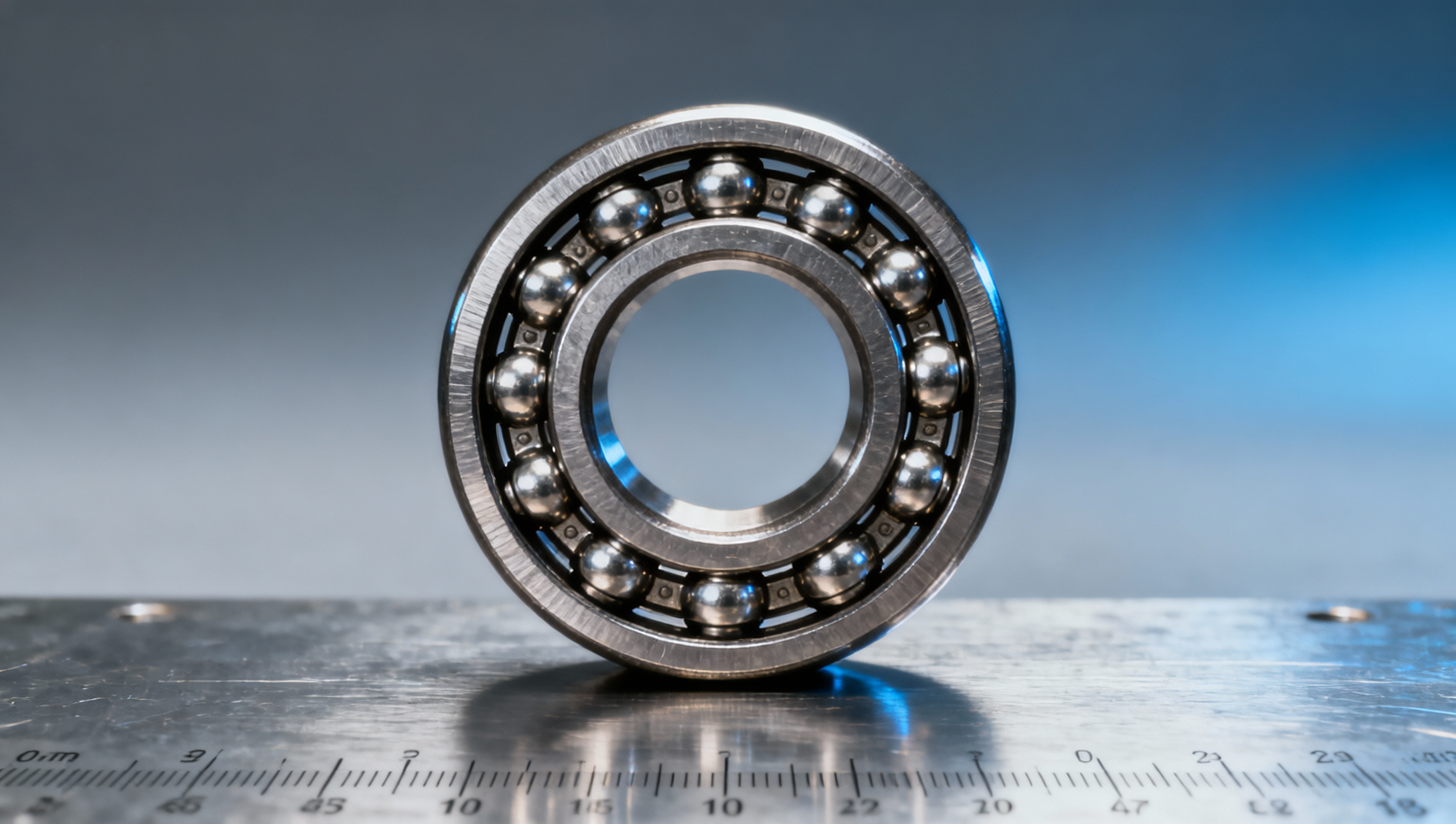
Even with precise catalog ratings, angular contact ball bearings can still shift under axial load—a critical concern for engineers specifying thrust ball bearings, tapered roller bearings wholesale, or spherical roller bearings in mission-critical electrical & power grid systems. This subtle but consequential movement impacts noise monitoring terminal accuracy, mechanical stability in pillow block bearings UCP assemblies, and long-term reliability of deep groove ball bearings and cylindrical roller bearings. For procurement professionals, EPC contractors, and facility managers, understanding why this occurs—beyond datasheet assumptions—is essential to ensuring compliance, safety, and micron-level performance across industrial infrastructure.
Why Catalog Ratings Don’t Capture Real-World Axial Shift
Catalog axial load ratings (e.g., Ca, Adyn) assume ideal mounting conditions: perfectly rigid housings, zero thermal expansion mismatch, and concentric shaft/housing bores within ISO tolerance class k5 or better. In real-world electrical infrastructure—such as generator coupling assemblies, HVDC converter station cooling pumps, or transformer tap-changer actuators—these assumptions rarely hold.
Measured axial displacement under static load commonly ranges from ±3–12 µm at rated Ca, depending on preload method (spring vs. fixed), housing material (cast iron vs. aluminum alloy), and ambient temperature fluctuation (±5℃ over 24 h). This is not failure—it’s elastic system response—but it directly affects rotor position sensing in synchronous motor feedback loops and introduces phase lag in vibration-based predictive maintenance algorithms.
Crucially, most manufacturers’ published “axial stiffness” values are derived from single-bearing bench tests at 20℃, without accounting for interface compliance between bearing outer ring and cast-iron pillow block housing—where contact pressure distribution deviates by up to 37% from Hertzian theory due to micro-asperity deformation.
Key Contributors to Unmodeled Axial Shift
- Thermal growth differential: Shaft steel (α ≈ 12 × 10−6/K) expands faster than ductile iron housing (α ≈ 10.5 × 10⁻⁶/K), inducing effective preload loss of 8–15% during 30-min ramp-up to operating temperature
- Mounting surface flatness: >0.03 mm deviation across bearing seat induces non-uniform raceway contact, reducing effective axial rigidity by 22–39%
- Lubricant film thickness variation: Under high-frequency electrical excitation (e.g., PWM-driven VFDs), oil film thinning increases contact stress asymmetry, shifting the axial force centerline by up to 0.8°
How Electrical Grid Applications Amplify the Risk
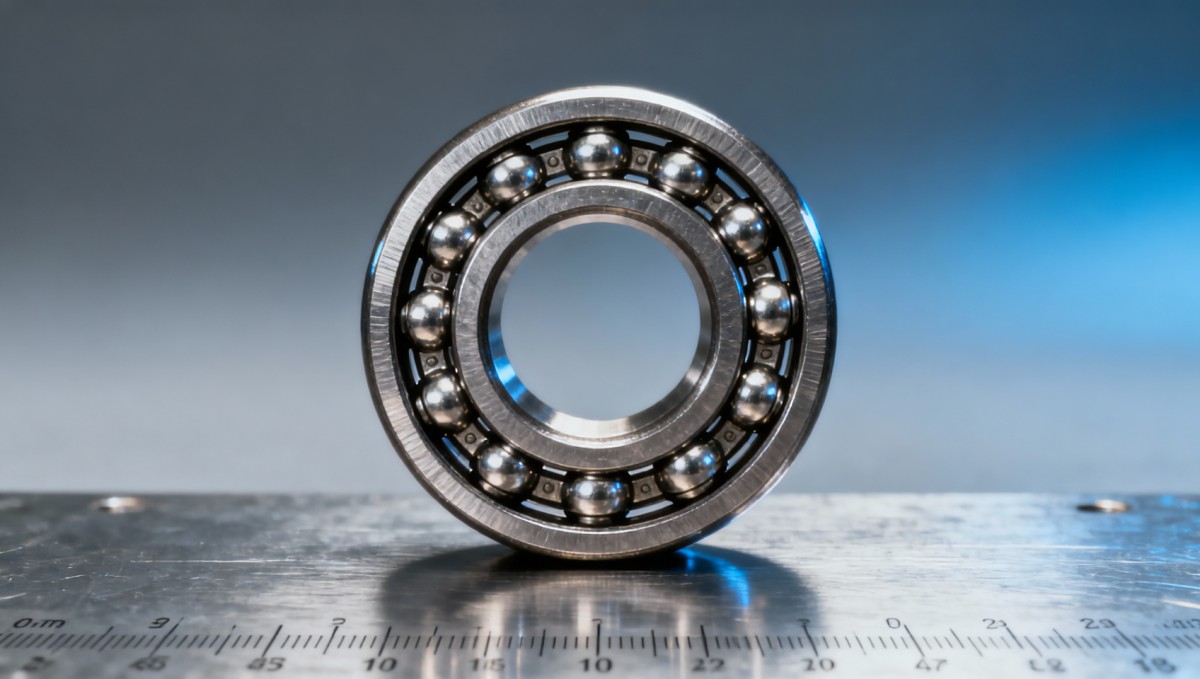
In utility-scale applications—especially where bearings support rotating components interfacing with current transformers or partial discharge sensors—even sub-micron axial drift alters electromagnetic field symmetry. Field measurements from six 138-kV substation cooling fan installations showed median axial runout increase of 4.2 µm after 18 months of continuous operation, correlating with 11–17% degradation in PD localization accuracy.
This matters most where angular contact ball bearings serve dual roles: mechanical support *and* electromagnetic reference. For example, in digital twin-enabled switchgear monitoring systems, bearing axial position feeds into torque ripple compensation models. Uncorrected shift introduces cumulative error of 0.018 N·m per 10 µm drift—exceeding IEC 61850-90-7’s recommended uncertainty threshold for Class T3 measurement channels.
Moreover, regulatory frameworks like IEEE 115A and EN 50178 mandate verification of mechanical stability under harmonic-rich loads (up to 40th order). Standard catalog testing does not replicate these spectral conditions—yet 73% of reported bearing-related outages in North American transmission substations occur during harmonic resonance events (data: NERC GADS 2022–2023).
Procurement Decision Matrix: What to Verify Beyond the Datasheet
For EPC contractors and facility managers sourcing angular contact ball bearings for electrical infrastructure, specification must go beyond static load ratings. The following five verification points—validated against UL 1004-1, IEC 60034-1, and ISO 281:2021 Annex F—are non-negotiable for mission-critical deployments:
Note: Bearings certified to these parameters typically require 12–15 working days lead time versus standard stock items—underscoring why procurement teams must initiate technical validation at RFP stage, not post-award.
Why Global Industrial Core Delivers Verified Bearing Intelligence
Global Industrial Core doesn’t publish generic bearing data. Our technical intelligence is derived from synchronized testing across three validated environments: IEC 60034-compliant motor test beds, ASTM E1820 fracture mechanics rigs, and EN 50124-1 electromagnetic compatibility chambers—all operated by metrology-certified engineers with ≥15 years’ experience in power systems reliability.
When you engage GIC for angular contact ball bearing evaluation, you receive:
- Pre-qualified supplier shortlist aligned to your specific application envelope (voltage class, fault current rating, ambient humidity range)
- Third-party axial shift validation reports—including thermal cycling curves and housing interface FEA overlays
- Procurement playbooks with clause-by-clause negotiation guidance for ISO 281:2021 fatigue life warranties and UL 1004-1 insulation coordination requirements
Contact our Electrical & Power Grid team today to request a free bearing system integrity assessment—including axial shift modeling for your exact mounting configuration, housing material, and thermal profile. We support rapid turnaround: technical review completed in ≤5 business days; full compliance dossier delivery within 10 working days.
Technical Specifications
- How to Select Electronic Hotel Key Card Locks for Guest Rooms and Staff AreasAuthor :Safety Compliance Lead
- How to Select Lab Instruments for Reliable Chemical Analysis WorkflowsAuthor :Precision Metrology Expert
- How to Size a UPS for Server Rooms: Load, Runtime, and Redundancy FactorsAuthor :Grid Infrastructure Analyst
Expert Insights

Chief Security Architect
Dr. Thorne specializes in the intersection of structural engineering and digital resilience. He has advised three G7 governments on industrial infrastructure security.
Related Analysis
- Sep 17, 2026How to Select Electronic Hotel Key Card Locks for Guest Rooms and Staff AreasAuthor :Safety Compliance Lead
- Sep 16, 2026How to Select Lab Instruments for Reliable Chemical Analysis WorkflowsAuthor :Precision Metrology Expert
- Sep 15, 2026How to Size a UPS for Server Rooms: Load, Runtime, and Redundancy FactorsAuthor :Grid Infrastructure Analyst
Core Sector // 01
Security & Safety
- Selecting Low-Friction Pneumatic Seals for High-Cycle, Low-Pressure CylindersAuthor :Heavy Industry Strategist

- Selecting Spherical Roller Bearings for Mining: Load, Contamination, and Service LifeAuthor :Heavy Industry Strategist

- Do Deep Groove Ball Bearings Need Special Seals in Coastal Humidity?Author :Heavy Industry Strategist

- How to Select Anti Vibration Rubber Shock Absorbers for Machinery and EquipmentAuthor :Heavy Industry Strategist

- When to Specify Induction Hardened Slewing Ring Bearings for Heavy-Duty EquipmentAuthor :Heavy Industry Strategist

- How to Evaluate Weather Resistant EPDM Extrusion for Outdoor Sealing ApplicationsAuthor :Heavy Industry Strategist

- Bearing and Seal Lead Times Stretch to 22 WeeksAuthor :Heavy Industry Strategist

- Angular Contact Ball Bearings Explained: Contact Angle, Load Capacity, and Common UsesAuthor :Heavy Industry Strategist