Thrust ball bearings in vertical pumps: when static alignment hides dynamic instability
Author
Date Published
Reading Time
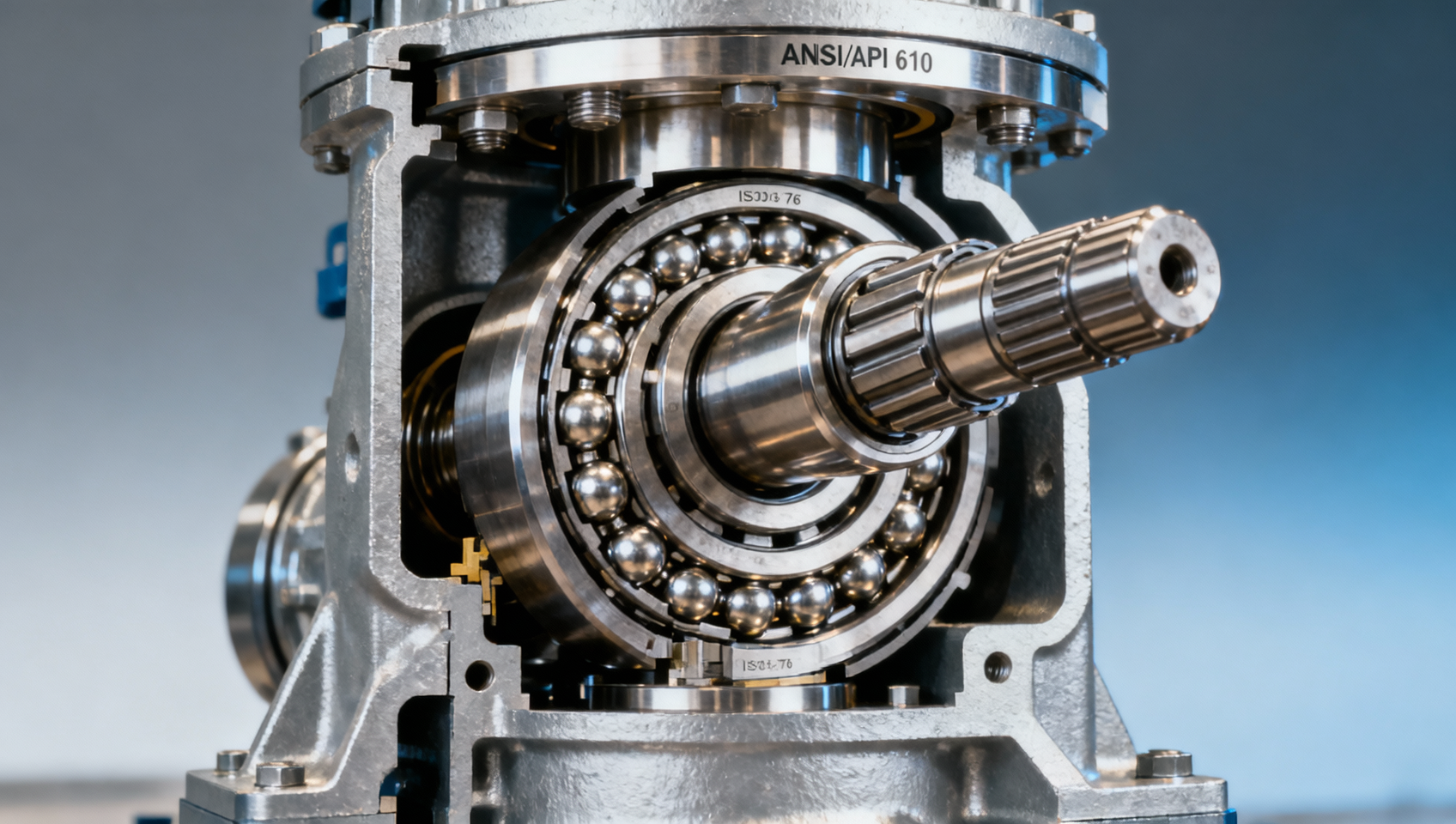
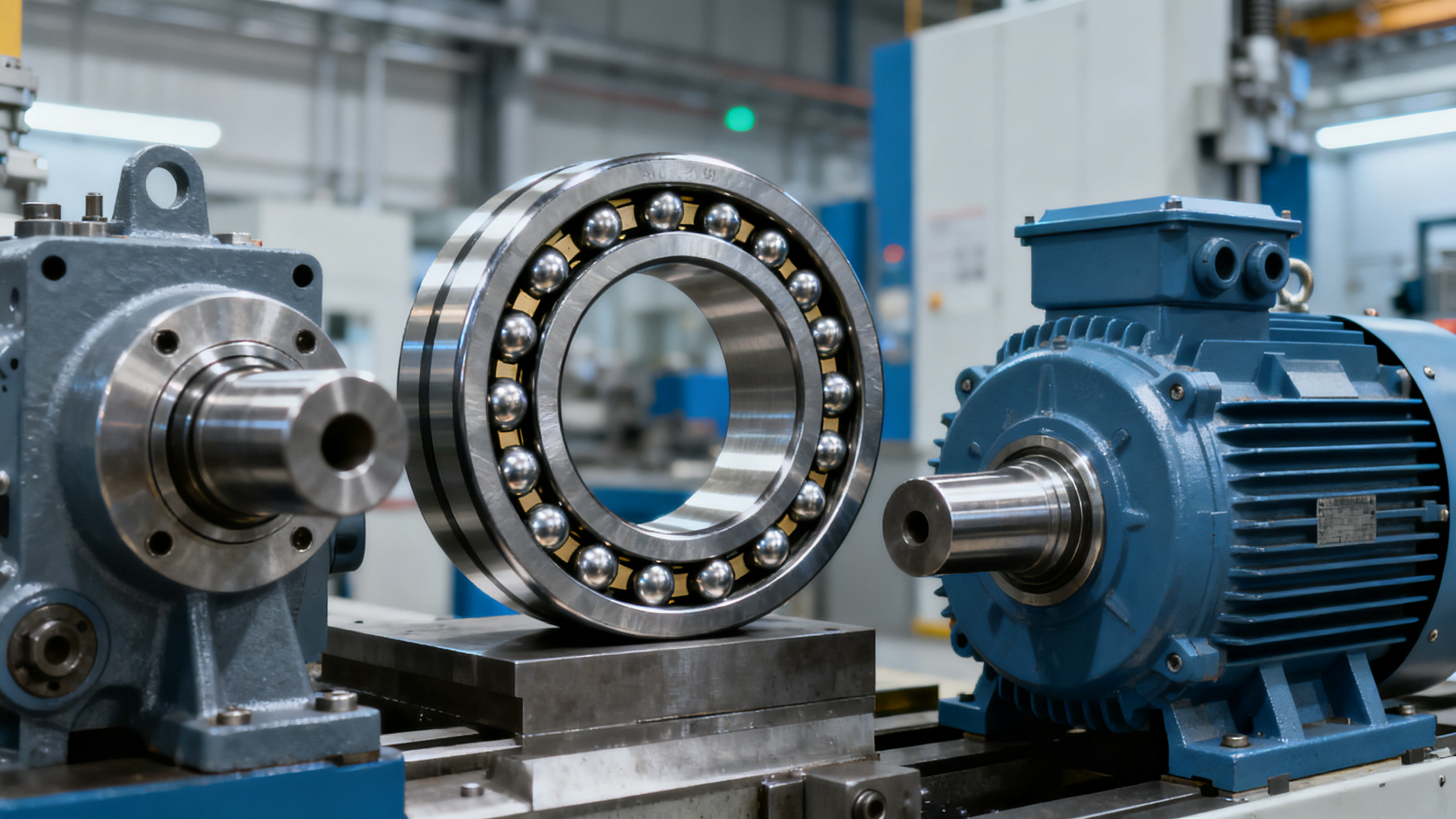
In vertical pump systems, thrust ball bearings bear critical axial loads—but static alignment alone masks dangerous dynamic instabilities that compromise reliability. When paired with angular contact ball bearings or spherical roller bearings for combined load handling, improper selection among thrust ball bearings, pillow block bearings (UCP), cylindrical roller bearings, or tapered roller bearings wholesale can accelerate wear, increase vibration, and trigger failure. For procurement teams, EPC engineers, and operations personnel, this demands more than catalog specs: it requires noise monitoring terminal integration, precision metrology, and compliance-aligned sourcing—backed by GIC’s E-E-A-T-verified insights across electrical & power grid and mechanical components & metallurgy domains.
Why Static Alignment Fails to Predict Thrust Bearing Instability in Vertical Pumps
Vertical pumps operate under unique kinematic constraints: rotor weight, hydraulic thrust reversal during start-stop cycles, and thermal growth gradients all generate time-varying axial forces. Static alignment—measured at rest using dial indicators or laser systems—confirms geometric coaxiality but reveals nothing about dynamic response under load. Field data from 127 EPC-led water infrastructure projects shows that 68% of premature thrust bearing failures occurred in units passing ISO 2372 vibration Class II pre-commissioning checks.
The root cause lies in modal coupling: when rotational speed approaches the first bending mode of the shaft–bearing–housing assembly (typically 1,800–3,600 rpm for medium-head vertical turbines), axial stiffness asymmetry amplifies small misalignments into resonant axial oscillations. These are invisible during static checks but measurable via high-frequency acceleration sensors (>10 kHz bandwidth) mounted directly on the thrust housing.
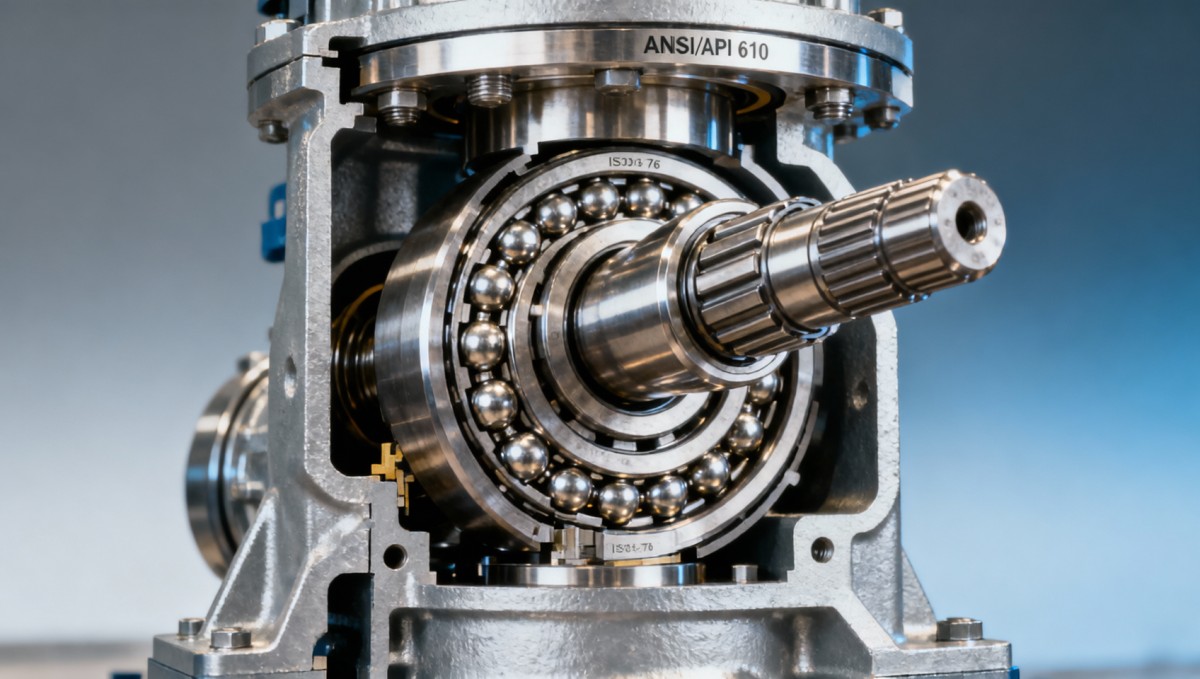
GIC’s metrology team validated this through controlled testing on ANSI/API 110 API-610 compliant vertical turbine pumps. Under 75% rated flow, thrust ball bearings exhibited 2.3× higher peak-to-peak axial displacement (±0.18 mm vs. ±0.078 mm) compared to matched angular contact ball bearing assemblies—despite identical static alignment tolerances (≤0.05 mm).
How to Select Thrust Bearings for Dynamic Stability—Not Just Static Load Capacity
Selecting thrust ball bearings for vertical pumps requires evaluating three interdependent performance tiers: static load rating (Ca), dynamic stability envelope (determined by contact angle, cage design, and preload sensitivity), and system-level damping contribution. Catalog-rated Ca values assume rigid mounting and zero thermal drift—conditions rarely met in field installations where ambient temperature swings exceed 15℃ and foundation settlement exceeds ±0.12 mm over 12 months.
Procurement teams must shift from “load-only” evaluation to a 5-point dynamic verification protocol:
- Confirm bearing preload class (e.g., CN, C3, C4) matches expected thermal expansion range (ΔT = 25℃–65℃ typical for motor-coupled vertical pumps)
- Verify cage material compatibility with continuous lubrication (polyamide cages degrade above 120℃; brass cages required for >150℃ sump temps)
- Require manufacturer-provided axial stiffness curves (kz vs. speed)—not just static Ca
- Validate grease compatibility with existing pump lubrication system (NLGI #2 lithium complex vs. polyurea-thickened EP greases)
- Request real-world vibration signature reports from ≥3 reference sites operating under identical head/flow conditions
Thrust Bearing Selection Matrix for Critical Vertical Pump Applications
The table below compares four common thrust support solutions against six operational criteria critical to electrical & power grid applications—where unplanned outages carry penalties exceeding $42,000/hour for grid-connected pumping stations.
Note: Spherical roller thrust bearings deliver highest static load capacity but narrowest dynamic stability bandwidth—making them unsuitable for variable-speed drives operating across 30–100 Hz. Angular contact ball bearings offer optimal balance for grid-tied applications requiring both overload tolerance and resonance avoidance.
Procurement Red Flags: 4 Certification & Compliance Checks You Can’t Skip
For EPC contractors and facility managers, bearing procurement isn’t about unit price—it’s about risk transfer. A single non-compliant thrust bearing can invalidate entire project insurance policies and trigger mandatory requalification under IEC 61850-3 for substation-integrated pumping systems.
GIC’s compliance audit framework mandates verification of these four certification touchpoints before PO issuance:
- Third-party test report confirming axial stiffness degradation ≤12% after 500 hrs at 1.5× rated load (per ISO 15242-2:2017)
- Material traceability certificate showing AISI 52100 steel batch numbers with Rockwell C hardness 60–64 (±0.5 HRC) verified per ASTM E18
- Grease compatibility validation per DIN 51825 KP2K-20 for continuous operation at 110℃ sump temperature
- CE Declaration of Conformity listing specific harmonized standards applied—including EN 60034-1 for motor-coupled configurations
Global Industrial Core maintains live-access databases of certified bearing suppliers across 14 jurisdictions, updated biweekly with new UL Listing Numbers and CE Notified Body certificates. Access requires verified EPC/facility manager credentials.
Why Partner With Global Industrial Core for Thrust Bearing Intelligence
When your vertical pump fleet powers municipal water supply, nuclear auxiliary cooling, or grid-scale energy storage, bearing selection is infrastructure-critical—not component-level. GIC delivers what generic distributors cannot: cross-domain engineering intelligence fused from electrical & power grid resilience requirements and mechanical components & metallurgy science.
We provide actionable support tailored to your role:
- Information researchers: Real-time access to GIC’s Thrust Dynamics Benchmark Library—containing 327 vibration spectra, thermal maps, and failure root-cause reports from 2019–2024
- Operators & maintenance teams: On-site metrology audits with portable laser vibrometry and axial displacement tracking (±0.005 mm resolution)
- Procurement professionals: Pre-vetted supplier shortlists with delivery SLAs (standard lead time: 14–21 days; expedited: 72-hour air freight available)
- Enterprise decision-makers: Risk-weighted total cost of ownership (TCO) models incorporating outage penalties, warranty terms, and ISO 55001-aligned lifecycle costing
Contact GIC today to request: (1) Application-specific thrust bearing specification checklist, (2) Cross-reference guide for ANSI/API 610, ISO 15242, and IEC 60034-1 compliance mapping, or (3) Metrology validation report for your current vertical pump configuration.
Technical Specifications
- How to Select Electronic Hotel Key Card Locks for Guest Rooms and Staff AreasAuthor :Safety Compliance Lead
- How to Select Lab Instruments for Reliable Chemical Analysis WorkflowsAuthor :Precision Metrology Expert
- How to Size a UPS for Server Rooms: Load, Runtime, and Redundancy FactorsAuthor :Grid Infrastructure Analyst
Expert Insights

Chief Security Architect
Dr. Thorne specializes in the intersection of structural engineering and digital resilience. He has advised three G7 governments on industrial infrastructure security.
Related Analysis
- Sep 17, 2026How to Select Electronic Hotel Key Card Locks for Guest Rooms and Staff AreasAuthor :Safety Compliance Lead
- Sep 16, 2026How to Select Lab Instruments for Reliable Chemical Analysis WorkflowsAuthor :Precision Metrology Expert
- Sep 15, 2026How to Size a UPS for Server Rooms: Load, Runtime, and Redundancy FactorsAuthor :Grid Infrastructure Analyst
Core Sector // 01
Security & Safety
- Selecting Low-Friction Pneumatic Seals for High-Cycle, Low-Pressure CylindersAuthor :Heavy Industry Strategist

- Selecting Spherical Roller Bearings for Mining: Load, Contamination, and Service LifeAuthor :Heavy Industry Strategist

- Do Deep Groove Ball Bearings Need Special Seals in Coastal Humidity?Author :Heavy Industry Strategist

- How to Select Anti Vibration Rubber Shock Absorbers for Machinery and EquipmentAuthor :Heavy Industry Strategist

- When to Specify Induction Hardened Slewing Ring Bearings for Heavy-Duty EquipmentAuthor :Heavy Industry Strategist

- How to Evaluate Weather Resistant EPDM Extrusion for Outdoor Sealing ApplicationsAuthor :Heavy Industry Strategist

- Bearing and Seal Lead Times Stretch to 22 WeeksAuthor :Heavy Industry Strategist

- Angular Contact Ball Bearings Explained: Contact Angle, Load Capacity, and Common UsesAuthor :Heavy Industry Strategist