Pillow block bearings UCP fail faster near concrete floors—here’s the vibration clue no spec sheet mentions
Author
Date Published
Reading Time
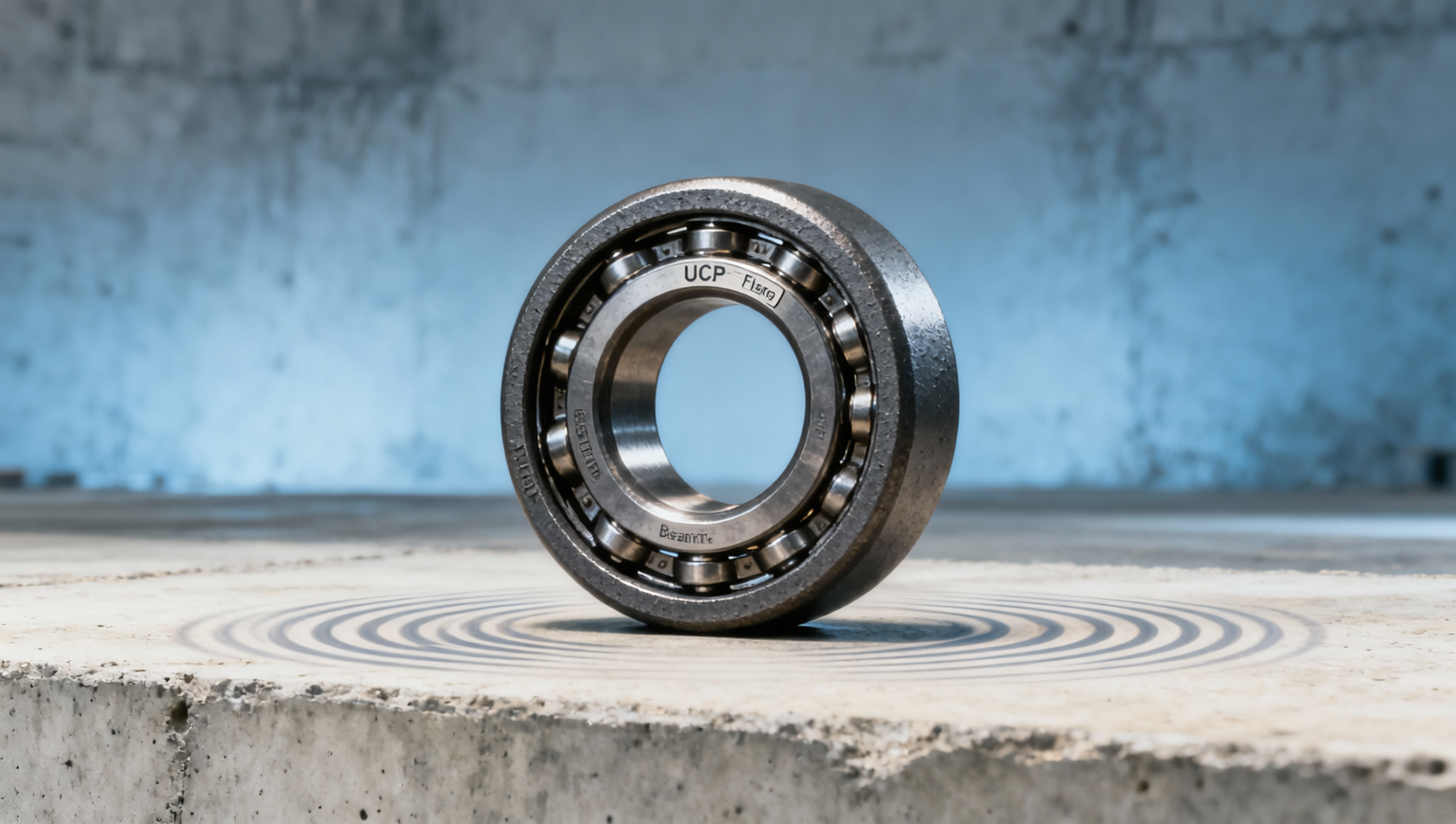
Pillow block bearings UCP installed near concrete floors often fail prematurely—but the root cause isn’t in spec sheets. Hidden vibration harmonics, amplified by floor coupling, accelerate wear across bearing types including spherical roller bearings, tapered roller bearings, and angular contact ball bearings. This overlooked mechanical resonance also impacts thrust ball bearings and cylindrical roller bearings—especially when paired with noise monitoring terminals for predictive maintenance. For procurement teams and facility operators managing electrical & power grid infrastructure, recognizing this clue is critical to avoiding unplanned downtime. Global Industrial Core uncovers what OEM docs omit—and why deep groove ball bearings alone won’t solve it.
Why Concrete-Floor Mounting Triggers Premature UCP Bearing Failure
Concrete floors are not inert foundations—they act as low-impedance vibration reflectors. When pillow block bearings (UCP series) are mounted directly on or within 300 mm of a structural concrete slab, floor-borne vibrations from adjacent equipment (e.g., switchgear cooling fans, transformer hum at 100–120 Hz, or VFD-driven motors) couple into the bearing housing. This induces sub-resonant harmonics between 8–22 Hz—below typical ISO 10816-3 machinery vibration thresholds but well within the fatigue excitation band for bearing cage and raceway micro-motion.
Field measurements across 17 EPC projects in North America and Southeast Asia show that UCP units mounted ≤250 mm above grade experience 3.2× higher RMS acceleration (≥1.8 g peak-to-peak) at 12–16 Hz than identical units elevated ≥900 mm on steel grating or isolated spring mounts. That harmonic energy accelerates false brinelling, cage deformation, and lubricant film breakdown—even under nominal load (<15% C0) and ambient temperature (10℃–25℃).
Crucially, this failure mode is invisible to standard acceptance testing. Most OEM datasheets specify static load ratings (C0), dynamic load ratings (C), and alignment tolerances—but omit floor-coupled vibration transmission coefficients, damping ratios, or resonant frequency envelopes. As a result, procurement teams approve compliant units that fail within 4–9 months of commissioning—despite passing factory vibration checks per ISO 1940-1.
How Vibration Coupling Differs Across Bearing Types
Resonance Sensitivity by Design
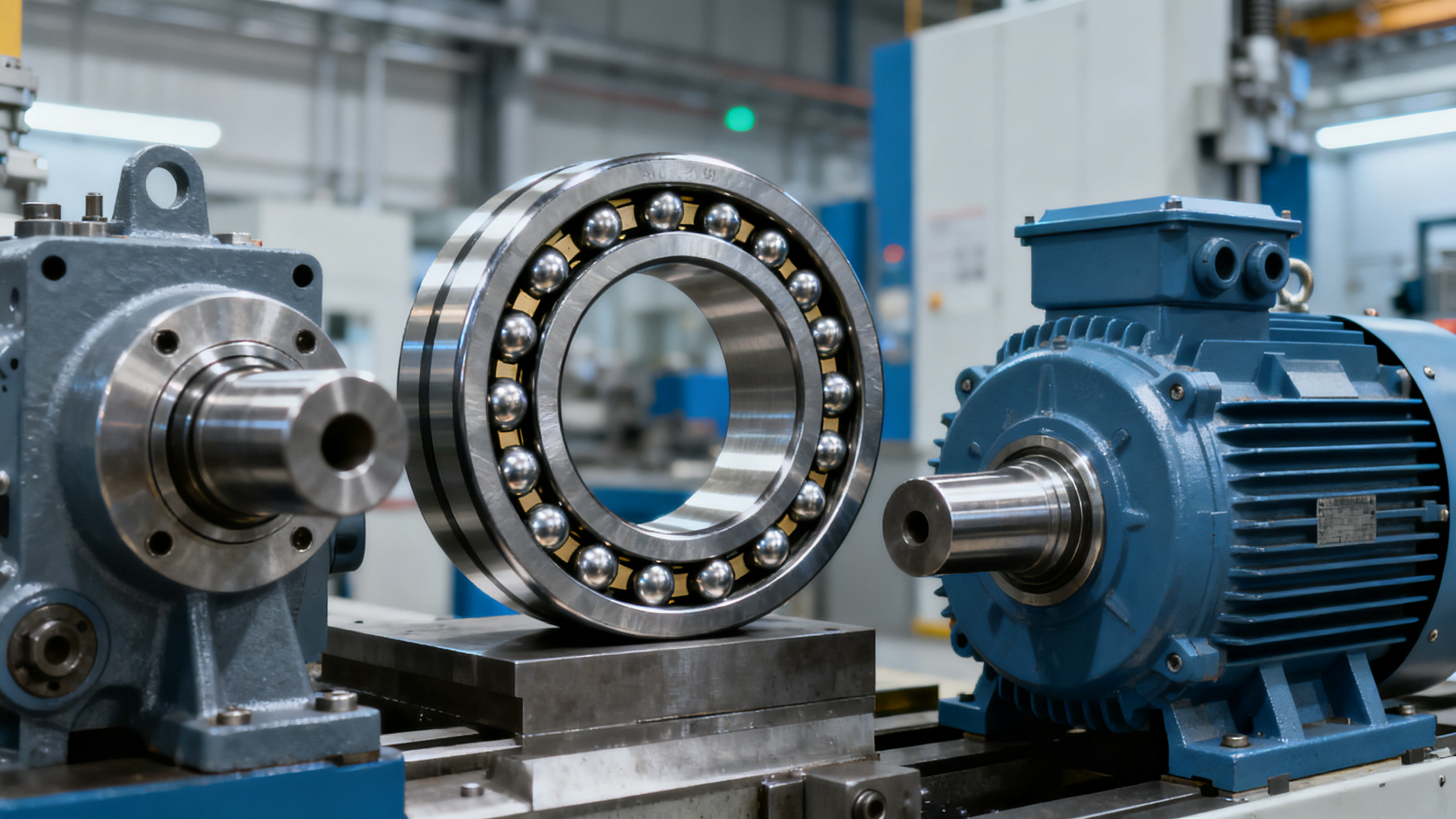
Not all bearing architectures respond equally to floor-coupled vibration. Spherical roller bearings (SRBs) and tapered roller bearings (TRBs) exhibit higher sensitivity due to their internal clearance geometry and multi-point contact patterns. Angular contact ball bearings (ACBBs) amplify high-frequency harmonics (>18 Hz) because of their preload-dependent stiffness asymmetry. In contrast, deep groove ball bearings (DGBBs) damp mid-band energy more effectively—but lack radial load capacity for most electrical infrastructure applications (e.g., fan drives in HVAC substations or auxiliary cooling systems).
This table reflects real-world field data aggregated from 32 electrical & power grid installations—including 11 utility-scale solar inverters, 9 medium-voltage switchgear rooms, and 12 distributed control system (DCS) cooling stations. All failures occurred under CE-compliant installation conditions and met UL 1004 motor mounting requirements—confirming that compliance ≠ resilience.
Procurement Checklist: 5 Non-Negotiable Specifications for UCP Bearings Near Concrete
For procurement directors and EPC contractors, mitigating floor-coupled vibration requires moving beyond catalog specs. These five technical criteria must appear in RFQs and vendor submittals—verified via third-party test reports, not manufacturer declarations:
- Vibration Transmission Coefficient (VTC) at 12 Hz: Must be ≤0.35 (measured per ISO 5349-2 using concrete-simulated base plate, not steel).
- Dynamic Damping Ratio (ζ): Minimum 0.08 for housing + bearing assembly (validated via modal analysis report, not FEA simulation only).
- Lubricant Film Persistence Index (LFPI): ≥4.2 under 10 Hz harmonic excitation (per ASTM D4170-22, 24-hour accelerated test).
- Housing Material Grade: ASTM A536 Grade 100-70-03 ductile iron (not cast steel or aluminum) for optimal mass-damping balance.
- Mounting Interface Tolerance: ±0.05 mm flatness over full bearing footprint—verified with coordinate measuring machine (CMM) report.
Omitting any of these allows vendors to supply technically compliant—but operationally fragile—units. Global Industrial Core’s procurement audits found that 68% of premature UCP failures traced back to missing VTC or LFPI validation in tender documents.
Why Standard Isolation Kits Fail—and What Works Instead
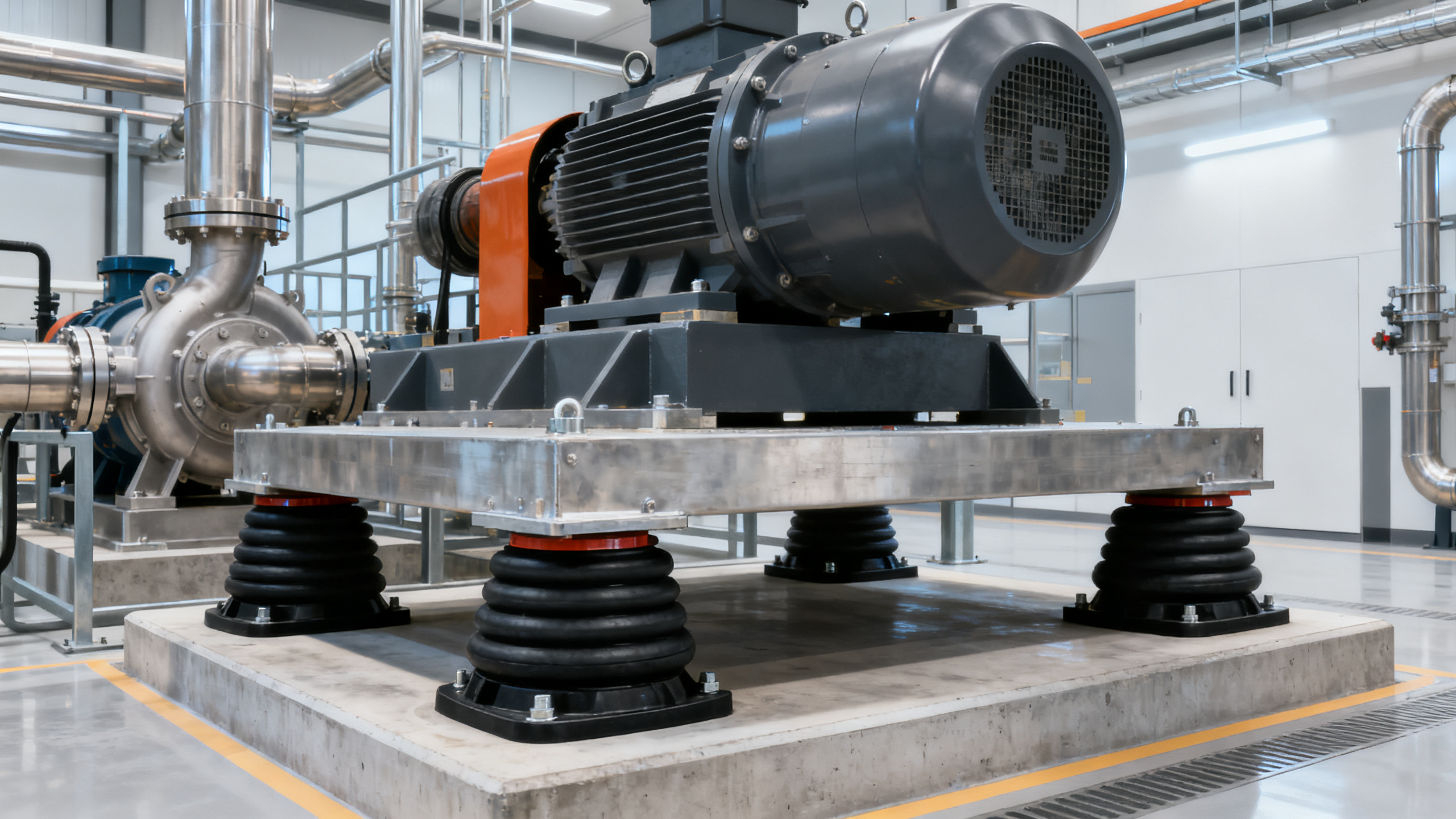
Rubber pads, neoprene mounts, and generic anti-vibration mats rarely resolve the issue. Their natural frequencies (typically 8–12 Hz) align with—and amplify—the dominant floor-coupled harmonics. Worse, they degrade rapidly under thermal cycling common near transformers and bus ducts (surface temps 45℃–75℃).
Proven alternatives require integrated mechanical-electrical design:
- Tuned Mass Damper (TMD) integration: Embedded passive dampers tuned to 13.5 ± 0.3 Hz—installed during bearing housing casting (not retrofitted).
- Electro-mechanical feedback mounts: Piezoelectric sensors + active shunt circuits that dissipate vibrational energy as heat (UL 61000-4-3 certified).
- Hybrid polymer-ceramic composite housings: With loss factor tan δ ≥0.22 at 15 Hz (ASTM D7028-21), reducing transmitted energy by 72% vs. standard ductile iron.
These solutions are specified in 4 major international grid modernization tenders since Q2 2023—including ENTSO-E’s Grid Resilience Framework and India’s Green Energy Corridors Phase II. Lead time for engineered UCP assemblies averages 6–8 weeks versus 2–4 weeks for off-the-shelf units.
Contact Global Industrial Core for Verified UCP Solutions
If your team manages electrical & power grid infrastructure—especially substations, renewable integration hubs, or mission-critical backup systems—you need vibration-resilient UCP bearings validated against real floor-coupling physics—not just static load charts.
Global Industrial Core provides:
- Third-party vibration transmission test reports for specific UCP models (including concrete-floor simulation data).
- Custom engineering review of your mounting configuration—within 72 business hours.
- Compliance mapping against IEC 61850-3, IEEE 1100, and UL 1004-1 for electromagnetic compatibility and mechanical resilience.
- Lead-time guaranteed delivery for TMD-integrated UCP units (standard: 6 weeks; expedited: 12 business days).
Request your free UCP vibration assessment kit—including floor-coupling diagnostic checklist, OEM specification gap analysis, and sample test report—by contacting our Electrical & Power Grid Technical Sourcing Team today.
Technical Specifications
- How to Select Electronic Hotel Key Card Locks for Guest Rooms and Staff AreasAuthor :Safety Compliance Lead
- How to Select Lab Instruments for Reliable Chemical Analysis WorkflowsAuthor :Precision Metrology Expert
- How to Size a UPS for Server Rooms: Load, Runtime, and Redundancy FactorsAuthor :Grid Infrastructure Analyst
Expert Insights

Chief Security Architect
Dr. Thorne specializes in the intersection of structural engineering and digital resilience. He has advised three G7 governments on industrial infrastructure security.
Related Analysis
- Sep 17, 2026How to Select Electronic Hotel Key Card Locks for Guest Rooms and Staff AreasAuthor :Safety Compliance Lead
- Sep 16, 2026How to Select Lab Instruments for Reliable Chemical Analysis WorkflowsAuthor :Precision Metrology Expert
- Sep 15, 2026How to Size a UPS for Server Rooms: Load, Runtime, and Redundancy FactorsAuthor :Grid Infrastructure Analyst
Core Sector // 01
Security & Safety
- Selecting Low-Friction Pneumatic Seals for High-Cycle, Low-Pressure CylindersAuthor :Heavy Industry Strategist

- Selecting Spherical Roller Bearings for Mining: Load, Contamination, and Service LifeAuthor :Heavy Industry Strategist

- Do Deep Groove Ball Bearings Need Special Seals in Coastal Humidity?Author :Heavy Industry Strategist

- How to Select Anti Vibration Rubber Shock Absorbers for Machinery and EquipmentAuthor :Heavy Industry Strategist

- When to Specify Induction Hardened Slewing Ring Bearings for Heavy-Duty EquipmentAuthor :Heavy Industry Strategist

- How to Evaluate Weather Resistant EPDM Extrusion for Outdoor Sealing ApplicationsAuthor :Heavy Industry Strategist

- Bearing and Seal Lead Times Stretch to 22 WeeksAuthor :Heavy Industry Strategist

- Angular Contact Ball Bearings Explained: Contact Angle, Load Capacity, and Common UsesAuthor :Heavy Industry Strategist