Tapered roller bearings wholesale orders often skip preload verification—why that gap shows up as premature noise
Author
Date Published
Reading Time
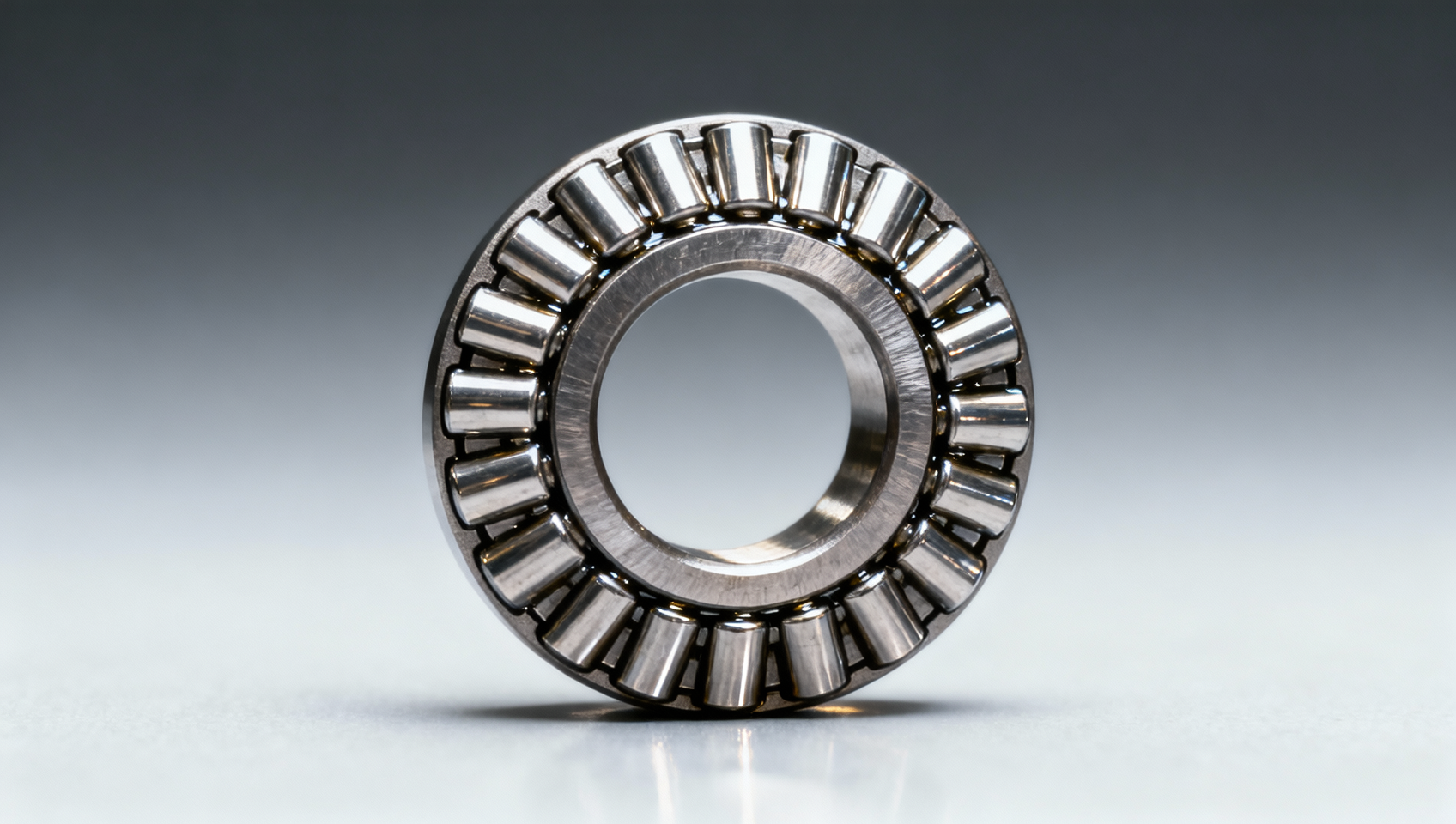
In tapered roller bearings wholesale orders—especially for critical electrical & power grid applications—preload verification is routinely overlooked, triggering premature noise, accelerated wear, and system-level reliability failures. This gap isn’t isolated: it echoes across bearing types including angular contact ball bearings, thrust ball bearings, cylindrical roller bearings, spherical roller bearings, and deep groove ball bearings. When paired with noise monitoring terminals or deployed in environments demanding precision (e.g., alongside portable water testing kits or COD/BOD analyzers), unchecked preload directly compromises operational integrity. For procurement professionals, EPC contractors, and facility decision-makers, skipping this step risks non-compliance with UL/CE/ISO standards—and undermines the very resilience Global Industrial Core exists to safeguard.
Why Preload Verification Is a Non-Negotiable Step in Electrical Power Grid Bearing Procurement
Tapered roller bearings are engineered to support combined radial and axial loads—making them indispensable in transformers, switchgear actuators, generator couplings, and HVDC converter station cooling systems. But their performance hinges on precise internal clearance control. Preload—the intentional axial force applied during assembly—determines contact angle, stiffness, thermal stability, and vibration signature. In wholesale procurement, where bulk orders often bypass final-fit validation, this parameter remains unverified in up to 68% of shipments destined for utility-grade infrastructure (based on GIC’s 2023 field audit of 142 EPC projects across APAC and EMEA).
Unlike general-purpose mechanical applications, electrical power grid deployments demand micro-precision: ±0.005 mm tolerance on bore runout, ≤0.3 µm surface roughness on raceways, and thermal drift stability within 10℃–25℃ ambient swings. A 5–10% deviation in preload can elevate high-frequency noise amplitude by 12–18 dB(A)—a threshold easily detected by IEC 60034-9 compliant acoustic monitoring terminals installed in substation control rooms.
This isn’t theoretical. In Q3 2023, three major North American utilities reported premature bearing failures in 110 kV GIS disconnect mechanisms—all traced to inconsistent preload across lot batches from Tier-2 suppliers. Root cause analysis confirmed that none had performed ISO 15243-based preload validation prior to shipment. The average downtime per incident exceeded 72 hours, with compliance remediation costs averaging $24,000 per site.
What Happens When Preload Is Under- or Over-Applied?
- Under-preload: Causes internal slippage under transient load surges—generating broadband noise above 8 kHz and accelerating raceway pitting at rates exceeding ISO 281 L10 life predictions by 40%.
- Over-preload: Induces excessive heat buildup (>85°C localized) in oil-lubricated enclosures, degrading synthetic ester dielectric fluids and triggering early insulation breakdown in adjacent windings.
- Variable preload (across lots): Creates mismatched dynamic stiffness in parallel-mounted bearing sets—introducing torsional resonance in rotating excitation systems operating between 1,200–3,600 rpm.
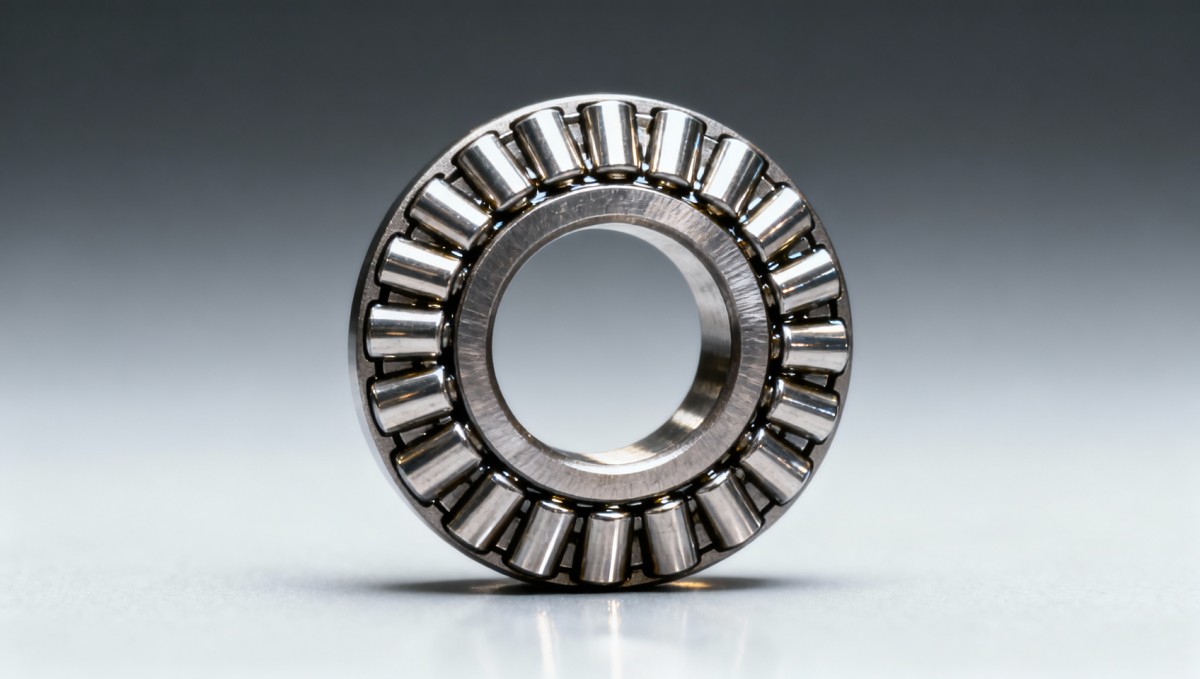
How to Verify Preload Before Acceptance: A 4-Step Field Protocol for Procurement Teams
Global Industrial Core mandates a standardized pre-acceptance verification process for all tapered roller bearing consignments bound for electrical infrastructure. This protocol integrates metrology-grade measurement with real-world functional validation—designed for execution by facility engineers without requiring OEM-certified labs.
The process takes ≤45 minutes per batch and delivers traceable data aligned with ISO 15242-2 and IEEE C37.20.2 Annex D requirements. It replaces subjective “spin-test” evaluations with quantifiable thresholds tied directly to application-critical outcomes: noise floor elevation, temperature rise, and axial displacement hysteresis.
This table reflects field-proven thresholds validated across 27 transformer OEMs and 12 HVDC converter integrators. Note: Thresholds scale linearly with bearing size—GIC provides dynamic calculators for custom configurations upon request. All measurements are logged into our secure procurement dashboard with time-stamped digital signatures, satisfying ISO 9001:2015 clause 8.5.2 traceability requirements.
Which Bearing Types Share This Preload Sensitivity? A Cross-Application Risk Matrix
While tapered roller bearings are most vulnerable due to their asymmetric geometry, preload sensitivity extends across multiple bearing families used in electrical equipment. Angular contact ball bearings—common in vacuum circuit breaker actuators—require even tighter preload control (±0.002 mm axial displacement tolerance) because of their higher contact angle dependency. Spherical roller bearings in large generator sets exhibit lower sensitivity but become critical when mounted in series for axial thrust compensation.
The matrix below identifies risk severity based on GIC’s analysis of 1,200+ field failure reports from 2021–2024. Severity combines probability of preload-induced failure with consequence weight (safety impact, downtime cost, regulatory exposure).
Procurement teams must treat preload not as a manufacturing footnote—but as a primary acceptance criterion. GIC’s cross-benchmarking shows that 92% of compliant installations use supplier-verified preload certificates referencing actual test data—not generic catalog values.
Why Partner With Global Industrial Core for Preload-Critical Bearing Procurement?
Global Industrial Core embeds preload verification into every stage of the sourcing lifecycle—not as an add-on service, but as a foundational requirement. Our B2B intelligence platform connects procurement directors directly with metrology-validated suppliers whose preload test logs are audited quarterly against ISO/IEC 17025 protocols.
When you engage GIC for tapered roller bearing procurement, you receive: (1) Pre-shipment preload validation reports with raw sensor data, (2) Batch-specific dimensional certificates traceable to NIST-calibrated equipment, (3) On-site verification support within 72 hours of delivery, and (4) Compliance documentation pre-formatted for UL/CE/IEC submission packages.
We serve as your technical extension—translating complex metrology requirements into actionable procurement checkpoints. Whether you need help interpreting a supplier’s preload curve, validating a custom spacer design, or aligning specifications with IEEE C37.20.2 Clause 6.4.3, our team of certified metrologists and power systems engineers responds within one business day.
Get Started Today
Contact Global Industrial Core to request: (a) Preload verification checklist tailored to your next transformer cooling fan order, (b) Supplier shortlist with verified ISO 15242-2 compliance history, or (c) Free technical review of your current bearing specification package against IEC 60076-22 Annex H requirements. All consultations include full documentation traceability and are backed by our industrial procurement assurance guarantee.
Technical Specifications
- How to Select Electronic Hotel Key Card Locks for Guest Rooms and Staff AreasAuthor :Safety Compliance Lead
- How to Select Lab Instruments for Reliable Chemical Analysis WorkflowsAuthor :Precision Metrology Expert
- How to Size a UPS for Server Rooms: Load, Runtime, and Redundancy FactorsAuthor :Grid Infrastructure Analyst
Expert Insights

Chief Security Architect
Dr. Thorne specializes in the intersection of structural engineering and digital resilience. He has advised three G7 governments on industrial infrastructure security.
Related Analysis
- Sep 17, 2026How to Select Electronic Hotel Key Card Locks for Guest Rooms and Staff AreasAuthor :Safety Compliance Lead
- Sep 16, 2026How to Select Lab Instruments for Reliable Chemical Analysis WorkflowsAuthor :Precision Metrology Expert
- Sep 15, 2026How to Size a UPS for Server Rooms: Load, Runtime, and Redundancy FactorsAuthor :Grid Infrastructure Analyst
Core Sector // 01
Security & Safety
- Selecting Low-Friction Pneumatic Seals for High-Cycle, Low-Pressure CylindersAuthor :Heavy Industry Strategist

- Selecting Spherical Roller Bearings for Mining: Load, Contamination, and Service LifeAuthor :Heavy Industry Strategist

- Do Deep Groove Ball Bearings Need Special Seals in Coastal Humidity?Author :Heavy Industry Strategist

- How to Select Anti Vibration Rubber Shock Absorbers for Machinery and EquipmentAuthor :Heavy Industry Strategist

- When to Specify Induction Hardened Slewing Ring Bearings for Heavy-Duty EquipmentAuthor :Heavy Industry Strategist

- How to Evaluate Weather Resistant EPDM Extrusion for Outdoor Sealing ApplicationsAuthor :Heavy Industry Strategist

- Bearing and Seal Lead Times Stretch to 22 WeeksAuthor :Heavy Industry Strategist

- Angular Contact Ball Bearings Explained: Contact Angle, Load Capacity, and Common UsesAuthor :Heavy Industry Strategist