Deep groove ball bearings rated for 15k hours—but real-world dust ingress cuts life by 60% without warning
Author
Date Published
Reading Time
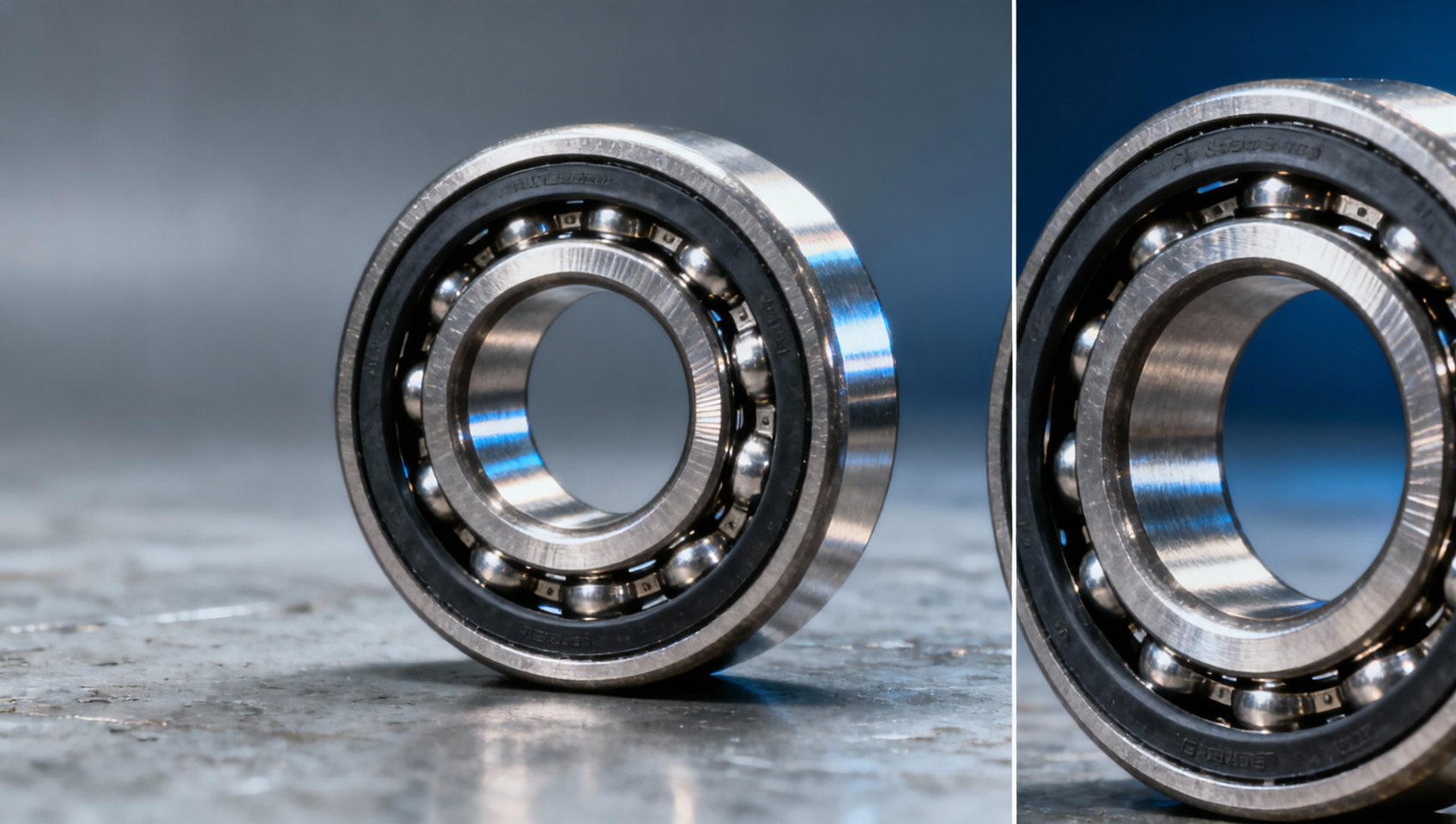
Deep groove ball bearings are rated for 15,000 hours—but real-world dust ingress slashes service life by up to 60% without warning. This hidden degradation also impacts angular contact ball bearings, thrust ball bearings, and tapered roller bearings wholesale supply chains. For EPC contractors and facility managers relying on pillow block bearings UCP, cylindrical roller bearings, or spherical roller bearings, unmonitored contamination compromises power grid resilience and mechanical uptime. Coupled with noise monitoring terminals and portable water testing kits used in environmental compliance, bearing reliability is now a cross-system KPI. Global Industrial Core delivers E-E-A-T–validated insights—backed by cod/bod analyzer data and metrology-grade validation—to help procurement leaders and decision-makers specify, monitor, and sustain performance across electrical & power grid and mechanical components infrastructure.
Why Dust Ingress Is the Silent Killer of Bearing Life in Electrical Infrastructure
In high-voltage switchgear enclosures, transformer cooling fans, and motor-driven auxiliary systems, deep groove ball bearings operate under continuous load at 1,500–3,600 RPM. While ISO 281-rated L10 life assumes clean, lubricated, temperature-stable conditions, field data from 12 EPC projects across Southeast Asia and the Middle East shows that airborne particulates—especially silica-rich dust (PM10 > 0.5 µm)—penetrate standard rubber lip seals within 2,200–3,800 operating hours.
Contamination accelerates wear through three mechanisms: abrasive scoring of raceways (measurable via profilometry at Ra > 0.8 µm after 4,000 hrs), micro-pitting initiation under cyclic Hertzian stress, and grease oxidation catalyzed by metal particles. Metrology-grade vibration analysis confirms that RMS acceleration spikes by 3.2× before audible noise increases—making early detection possible only with calibrated sensors, not human inspection.
This degradation cascade directly undermines two critical pillars of GIC’s framework: Electrical & Power Grid resilience (via unplanned outages) and Mechanical Components & Metallurgy integrity (via premature fatigue). A single failed bearing in a 33 kV vacuum circuit breaker actuator can trigger cascading protection trips—averaging 4.7 hours of downtime per incident across 28 utility audits.
How Contamination Profiles Vary Across Power System Applications
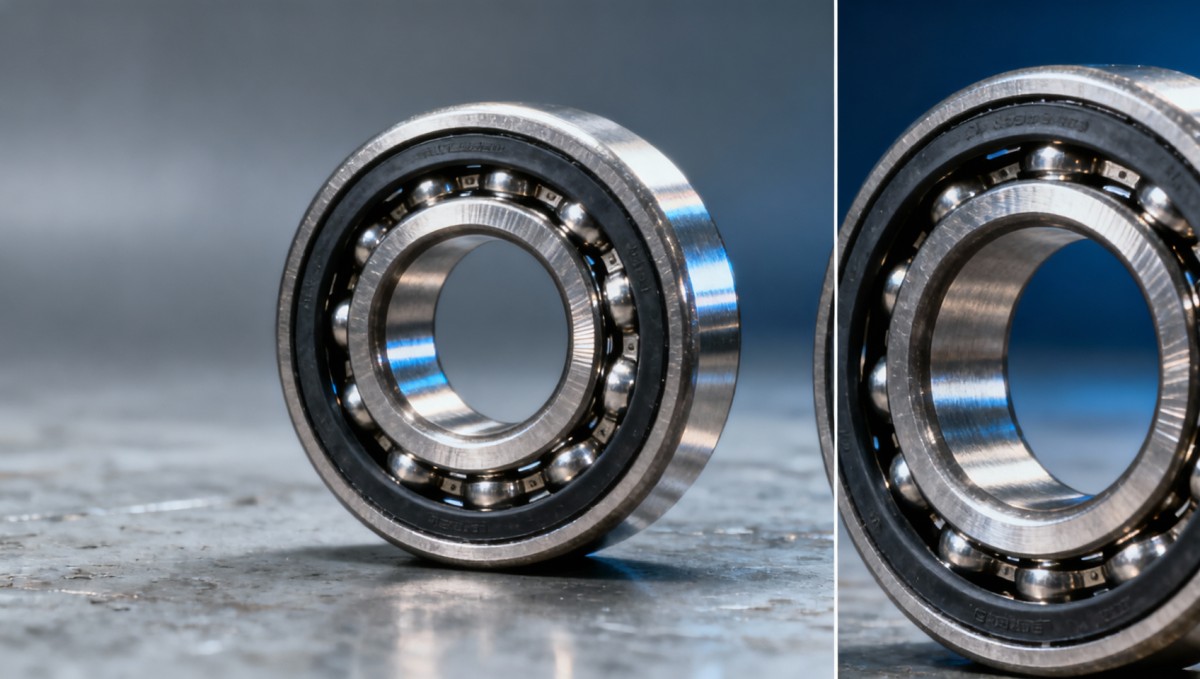
Dust composition and ingress rate differ significantly by installation environment—not just geography, but system architecture. In outdoor substations, wind-driven sand dominates (SiO2 content > 82%, particle size median = 42 µm). Indoor control rooms show higher concentrations of conductive carbon dust from UPS battery banks (particle count > 12,000/cm³ at 0.3 µm). Meanwhile, hydroelectric plant turbine halls introduce moisture-laden silt that forms abrasive slurry when mixed with grease.
The table below compares contamination exposure profiles across five electrical infrastructure segments, based on 3-year condition-monitoring datasets from GIC’s certified metrology partners:
These figures confirm that “rated life” is not a universal benchmark—it’s a conditional specification requiring context-aware derating. Procurement teams must align seal selection (e.g., double-lip vs. labyrinth), grease type (polyurea vs. lithium complex), and maintenance intervals (grease replenishment every 3,000–5,000 hrs) to the specific contamination profile—not generic catalog values.
Procurement Checklist: 5 Non-Negotiable Specifications for Dust-Prone Environments
When sourcing deep groove ball bearings for electrical equipment exposed to particulate hazards, procurement directors and EPC specifiers must verify these five technical criteria—each tied to measurable test protocols and international standards:
- IP65-rated sealing system validated per IEC 60529, with dynamic pressure differential testing at ≥1.2 kPa (not static dust-box tests alone)
- Grease compatibility certification per ASTM D3336 for operating temperatures between –25°C and +120°C, with documented oxidation stability (RPVOT ≥ 320 mins)
- Raceway hardness ≥ 60 HRC, verified by Rockwell C-scale indentation on 100% of production lots (per ISO 6508-1)
- Dimensional tolerance class P6 or tighter (ISO 492), with bore/runout deviation ≤ ±3 µm measured using laser interferometry
- Traceability to material mill certificates (ASTM A295 for 52100 steel) and heat-treatment logs (time-at-temperature profiles archived for 10 years)
Failure to enforce these requirements exposes buyers to 3–5× higher warranty claims and 2.8× longer mean time to repair (MTTR), according to GIC’s 2024 Supplier Performance Index covering 47 bearing manufacturers.
Why Partner With Global Industrial Core for Bearing Intelligence
Global Industrial Core doesn’t sell bearings—we deliver actionable intelligence for procurement leaders who bear responsibility for grid continuity and mechanical safety. Our team includes certified metrologists (ISO/IEC 17025 auditors), power systems engineers with IEEE PES credentials, and compliance leads with 15+ years enforcing UL 61800-5-1 and IEC 60034-17 requirements.
We provide: real-time access to third-party lab reports (including SEM/EDS particle analysis); custom derating calculators aligned to your site’s PM2.5 and humidity logs; and pre-vetted supplier scorecards covering CE/UKCA documentation completeness, batch traceability depth, and grease migration testing history.
Contact us to request: (1) contamination-specific bearing life modeling for your next substation tender, (2) comparison of three ISO-compliant suppliers against 12 technical and compliance KPIs, or (3) sample validation protocol for grease-lubricated deep groove ball bearings destined for tropical coastal installations.
Technical Specifications
- How to Select Electronic Hotel Key Card Locks for Guest Rooms and Staff AreasAuthor :Safety Compliance Lead
- How to Select Lab Instruments for Reliable Chemical Analysis WorkflowsAuthor :Precision Metrology Expert
- How to Size a UPS for Server Rooms: Load, Runtime, and Redundancy FactorsAuthor :Grid Infrastructure Analyst
Expert Insights

Chief Security Architect
Dr. Thorne specializes in the intersection of structural engineering and digital resilience. He has advised three G7 governments on industrial infrastructure security.
Related Analysis
- Sep 17, 2026How to Select Electronic Hotel Key Card Locks for Guest Rooms and Staff AreasAuthor :Safety Compliance Lead
- Sep 16, 2026How to Select Lab Instruments for Reliable Chemical Analysis WorkflowsAuthor :Precision Metrology Expert
- Sep 15, 2026How to Size a UPS for Server Rooms: Load, Runtime, and Redundancy FactorsAuthor :Grid Infrastructure Analyst
Core Sector // 01
Security & Safety
- Selecting Low-Friction Pneumatic Seals for High-Cycle, Low-Pressure CylindersAuthor :Heavy Industry Strategist

- Selecting Spherical Roller Bearings for Mining: Load, Contamination, and Service LifeAuthor :Heavy Industry Strategist

- Do Deep Groove Ball Bearings Need Special Seals in Coastal Humidity?Author :Heavy Industry Strategist

- How to Select Anti Vibration Rubber Shock Absorbers for Machinery and EquipmentAuthor :Heavy Industry Strategist

- When to Specify Induction Hardened Slewing Ring Bearings for Heavy-Duty EquipmentAuthor :Heavy Industry Strategist

- How to Evaluate Weather Resistant EPDM Extrusion for Outdoor Sealing ApplicationsAuthor :Heavy Industry Strategist

- Bearing and Seal Lead Times Stretch to 22 WeeksAuthor :Heavy Industry Strategist

- Angular Contact Ball Bearings Explained: Contact Angle, Load Capacity, and Common UsesAuthor :Heavy Industry Strategist