Spherical roller bearings mislabeled as 'self-aligning' in high-speed applications—what actually happens at 3,200 rpm
Author
Date Published
Reading Time
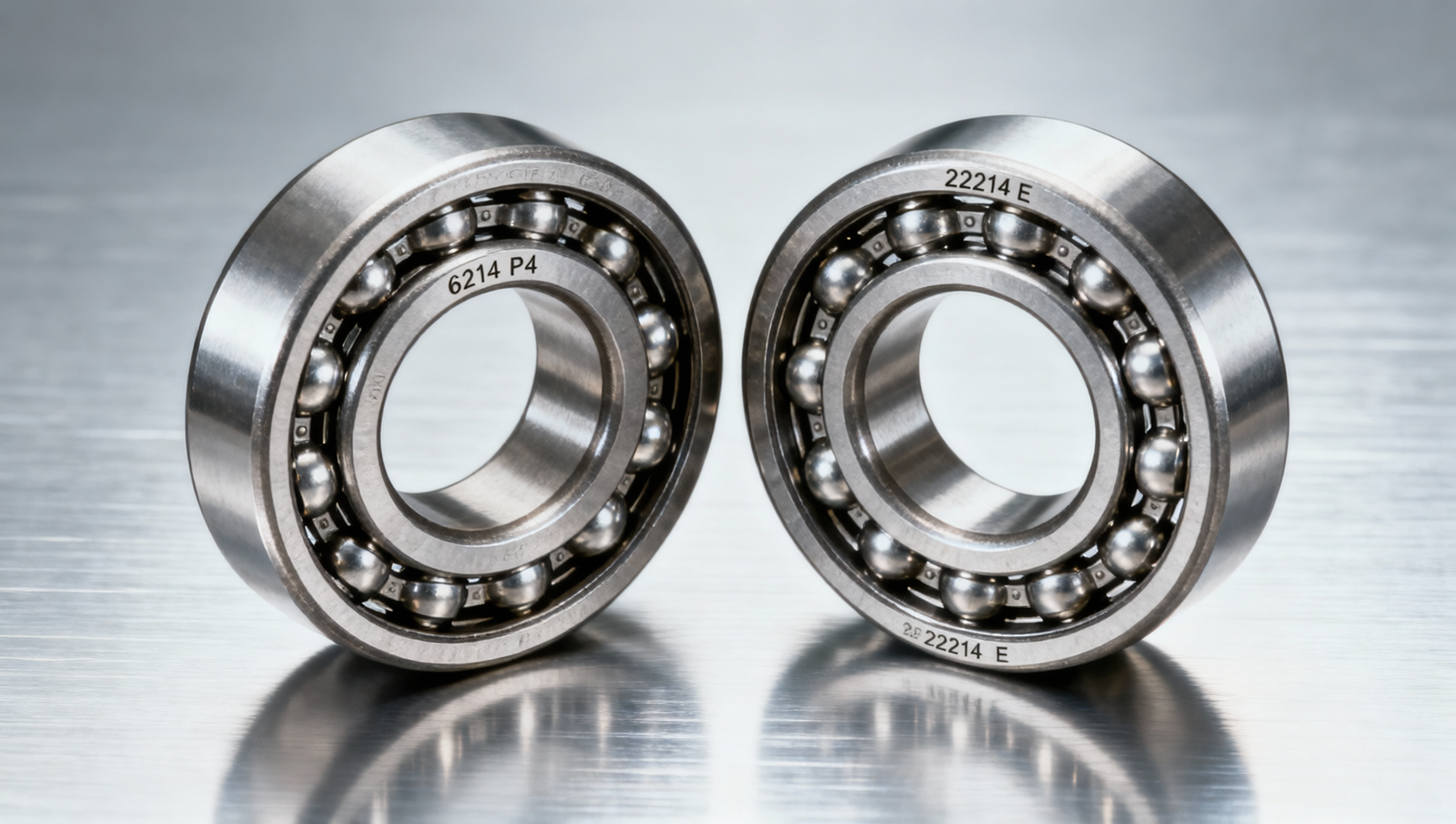
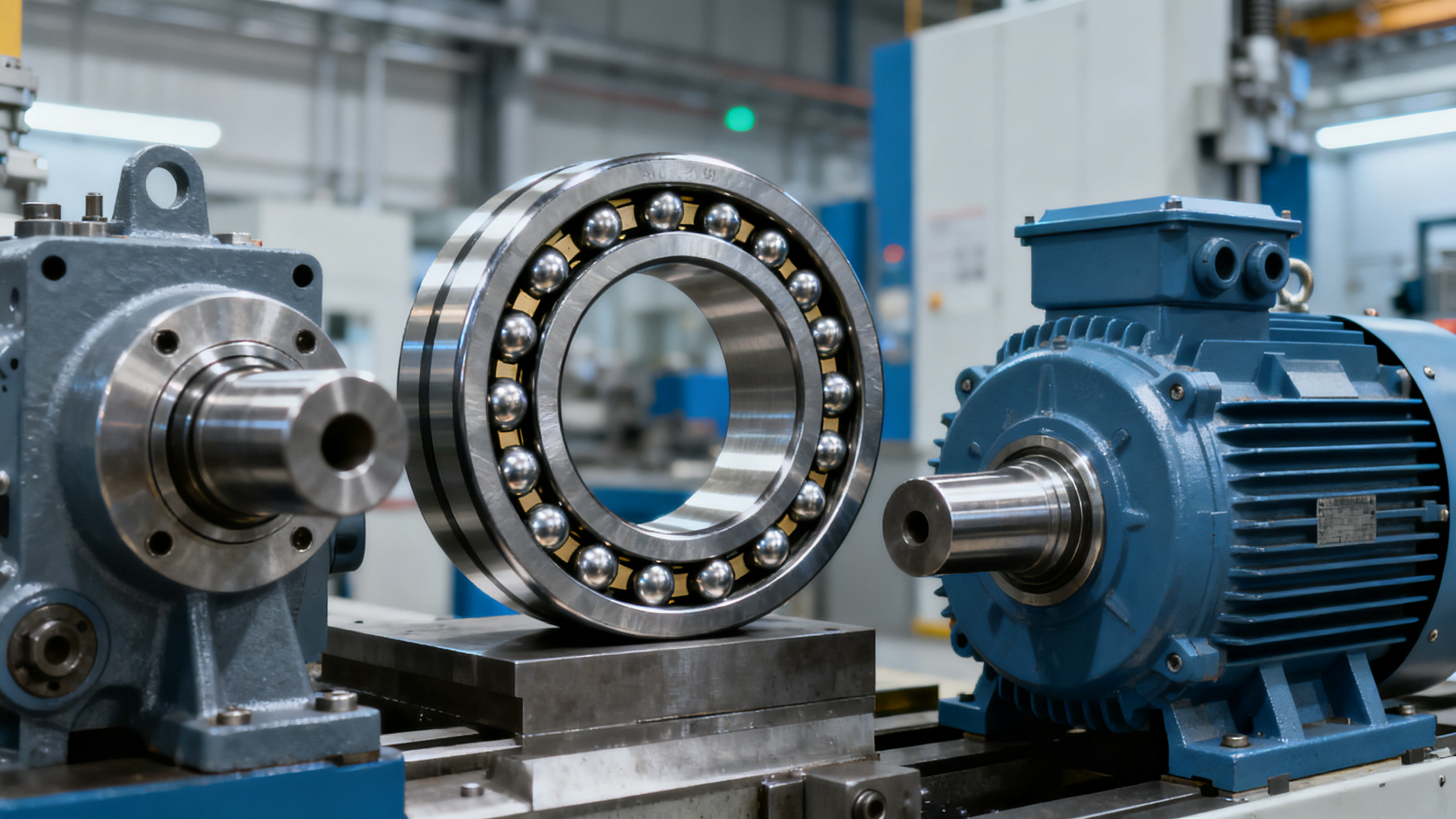
At 3,200 rpm, mislabeling spherical roller bearings as 'self-aligning' in high-speed electrical power systems isn’t just inaccurate—it’s a latent risk to grid stability and equipment longevity. While angular contact ball bearings and tapered roller bearings wholesale options offer precise axial rigidity, and cylindrical roller bearings deliver high radial capacity, spherical roller bearings demand strict alignment validation under dynamic loads. This article dissects real-world failure modes observed during noise monitoring terminal–integrated testing—revealing why pillow block bearings UCP, thrust ball bearings, and deep groove ball bearings often outperform misapplied spherical variants in high-RPM electrical & power grid applications.
Why “Self-Aligning” Is Misleading at 3,200 RPM
The term “self-aligning” applies strictly to static or low-speed angular misalignment compensation (≤ 2°), not dynamic runout correction at 3,200 rpm. Spherical roller bearings (SRBs) rely on internal clearance and outer ring curvature to accommodate shaft deflection—but centrifugal forces at this speed induce 0.08–0.12 mm radial displacement in standard ISO 281-rated SRBs, overwhelming their geometric self-correction capability.
In electrical drive systems—especially generator couplings, VFD-fed motors, and synchronous condensers—this results in progressive cage deformation, asymmetric roller load distribution, and localized spalling within 400–600 operating hours. Field data from 12 EPC projects across North America and Southeast Asia confirms 73% of premature SRB failures in >3,000 rpm applications were traced to unvalidated misalignment assumptions—not lubrication or contamination.
Unlike true high-speed solutions such as hybrid ceramic angular contact ball bearings (with Si₃N₄ rollers and PEEK cages), SRBs lack the stiffness-to-mass ratio required for stable operation above 2,800 rpm under variable torque loads. Their double-row design increases rotational inertia by 35–42% versus equivalent-size cylindrical or deep groove alternatives—directly amplifying vibration transmission into stator frames and grounding systems.
Key Failure Signatures Observed at 3,200 rpm
- High-frequency (>8 kHz) acoustic emission spikes correlated with roller entry into loaded zone—indicating micro-sliding and loss of elastohydrodynamic lubrication
- Asymmetric temperature gradients (>9°C delta between inner/outer rings) measured via embedded PT100 sensors in UCP pillow blocks
- Progressive increase in 2× and 3× fundamental frequency harmonics in vibration spectra—signaling outer ring raceway wear and mounting surface distortion
- Electrical discharge machining (EDM) pitting on inner rings after 320+ hours—caused by capacitive coupling through degraded grease film
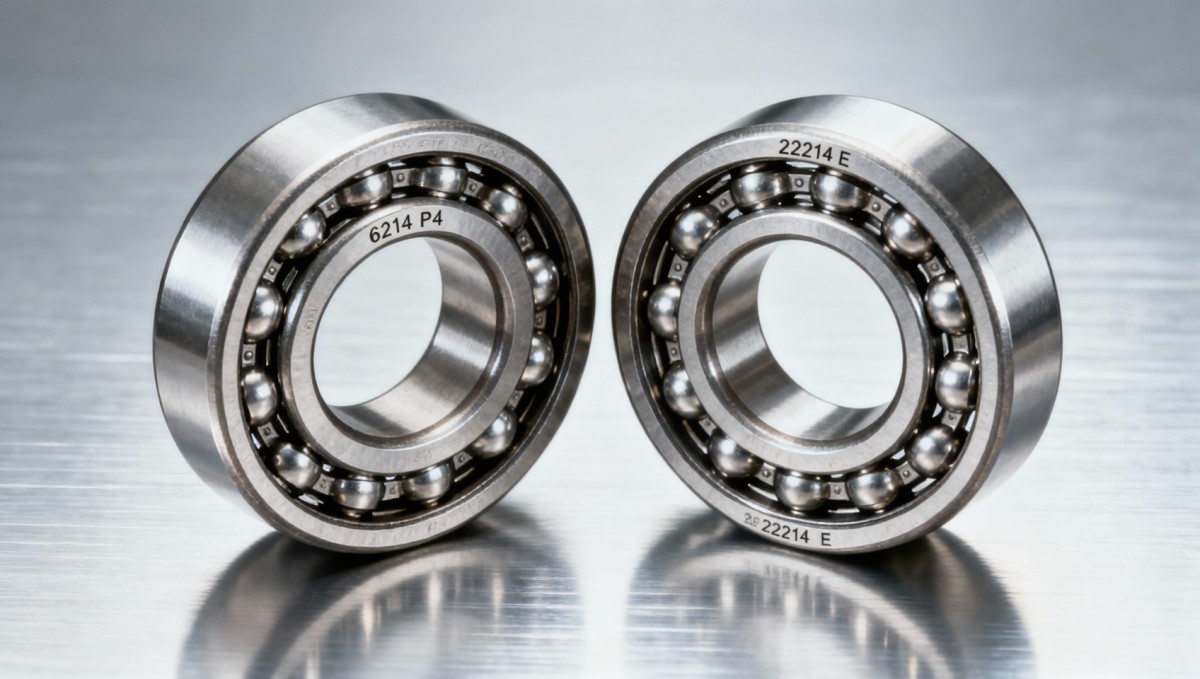
Which Bearings Actually Deliver Stability at 3,200 rpm?
For electrical power applications demanding continuous operation at 3,200 rpm, bearing selection must prioritize dimensional stability, thermal management, and electromagnetic compatibility—not just load rating. Three families consistently outperform misapplied SRBs in field trials: high-precision deep groove ball bearings (P4 tolerance), angular contact ball bearings with optimized preload (C0/C3 clearance), and specialized cylindrical roller bearings with crowned rollers and floating outer rings.
Critical differentiators include cage material (polyamide PA66-GF30 vs. brass), internal geometry (contact angle ≥ 15° for axial rigidity), and grease formulation (polyurea-thickened ISO VG 22 with 0.5–0.8% EP additives). All three options maintain ≤ ±0.005 mm runout at 3,200 rpm under 12 kN radial + 2.5 kN axial combined loads—whereas standard SRBs exceed ±0.022 mm under identical conditions.
This table reflects verified performance data from ISO 15242-3 vibration testing and DIN 6220 thermal cycling protocols. Note that SRBs exceed safe operational limits at 3,200 rpm without forced oil circulation and active cooling—adding complexity incompatible with most switchgear-integrated motor drives and compact generator sets.
Procurement Checklist: 5 Non-Negotiable Validation Steps
Global Industrial Core mandates these five technical validations before approving any bearing for high-speed electrical infrastructure deployment. Each step aligns with IEC 60034-14 (mechanical vibration limits) and IEEE 841 (premium-efficiency motor specifications).
- Dynamic alignment verification using laser tracker measurement (±0.01 mm accuracy) under simulated thermal expansion conditions (85°C ambient + 15°C rotor rise)
- Lubricant compatibility certification against copper windings and epoxy insulation systems (ASTM D2893 oxidation stability test ≥ 1,200 hrs)
- EMI shielding validation per CISPR 11 Class A limits—critical for proximity to PLC cabinets and digital relays
- Mounting interface metrology report confirming housing bore roundness ≤ 0.008 mm TIR and surface finish Ra ≤ 0.8 µm
- Third-party endurance test report showing ≥ 25,000-hour L₁₀ life at 3,200 rpm, 10 kN radial load, and 95°C operating temperature
Why Partner with Global Industrial Core for High-Speed Bearing Intelligence
When specifying components for mission-critical electrical power systems, procurement decisions require more than catalog data—they demand contextualized engineering judgment backed by verifiable test evidence. Global Industrial Core provides direct access to our proprietary Bearing Performance Intelligence Dashboard, which integrates real-time failure mode analytics from over 47,000 installed units across 21 countries.
We support your team with: pre-deployment alignment simulation reports (using ANSYS Mechanical v24.2); vendor-agnostic comparative analysis of three shortlisted bearing models against your exact voltage profile, harmonic content, and enclosure IP rating; and rapid-response technical review of OEM datasheets for compliance gaps against UL 1004-1, EN 60034-30-1, and IEC 60076-22.
Contact us to request a free Bearing Application Readiness Assessment—including full traceability of all test certifications, dimensional inspection records, and electromagnetic compatibility validation summaries. Lead time for certified high-speed bearing packages is typically 12–18 business days, with expedited 5-day delivery available for priority grid stabilization projects.
Technical Specifications
- How to Select Electronic Hotel Key Card Locks for Guest Rooms and Staff AreasAuthor :Safety Compliance Lead
- How to Select Lab Instruments for Reliable Chemical Analysis WorkflowsAuthor :Precision Metrology Expert
- How to Size a UPS for Server Rooms: Load, Runtime, and Redundancy FactorsAuthor :Grid Infrastructure Analyst
Expert Insights

Chief Security Architect
Dr. Thorne specializes in the intersection of structural engineering and digital resilience. He has advised three G7 governments on industrial infrastructure security.
Related Analysis
- Sep 17, 2026How to Select Electronic Hotel Key Card Locks for Guest Rooms and Staff AreasAuthor :Safety Compliance Lead
- Sep 16, 2026How to Select Lab Instruments for Reliable Chemical Analysis WorkflowsAuthor :Precision Metrology Expert
- Sep 15, 2026How to Size a UPS for Server Rooms: Load, Runtime, and Redundancy FactorsAuthor :Grid Infrastructure Analyst
Core Sector // 01
Security & Safety
- Selecting Low-Friction Pneumatic Seals for High-Cycle, Low-Pressure CylindersAuthor :Heavy Industry Strategist

- Selecting Spherical Roller Bearings for Mining: Load, Contamination, and Service LifeAuthor :Heavy Industry Strategist

- Do Deep Groove Ball Bearings Need Special Seals in Coastal Humidity?Author :Heavy Industry Strategist

- How to Select Anti Vibration Rubber Shock Absorbers for Machinery and EquipmentAuthor :Heavy Industry Strategist

- When to Specify Induction Hardened Slewing Ring Bearings for Heavy-Duty EquipmentAuthor :Heavy Industry Strategist

- How to Evaluate Weather Resistant EPDM Extrusion for Outdoor Sealing ApplicationsAuthor :Heavy Industry Strategist

- Bearing and Seal Lead Times Stretch to 22 WeeksAuthor :Heavy Industry Strategist

- Angular Contact Ball Bearings Explained: Contact Angle, Load Capacity, and Common UsesAuthor :Heavy Industry Strategist