Spiral wound gaskets wholesale buyers keep overlooking flange surface finish requirements
Author
Date Published
Reading Time
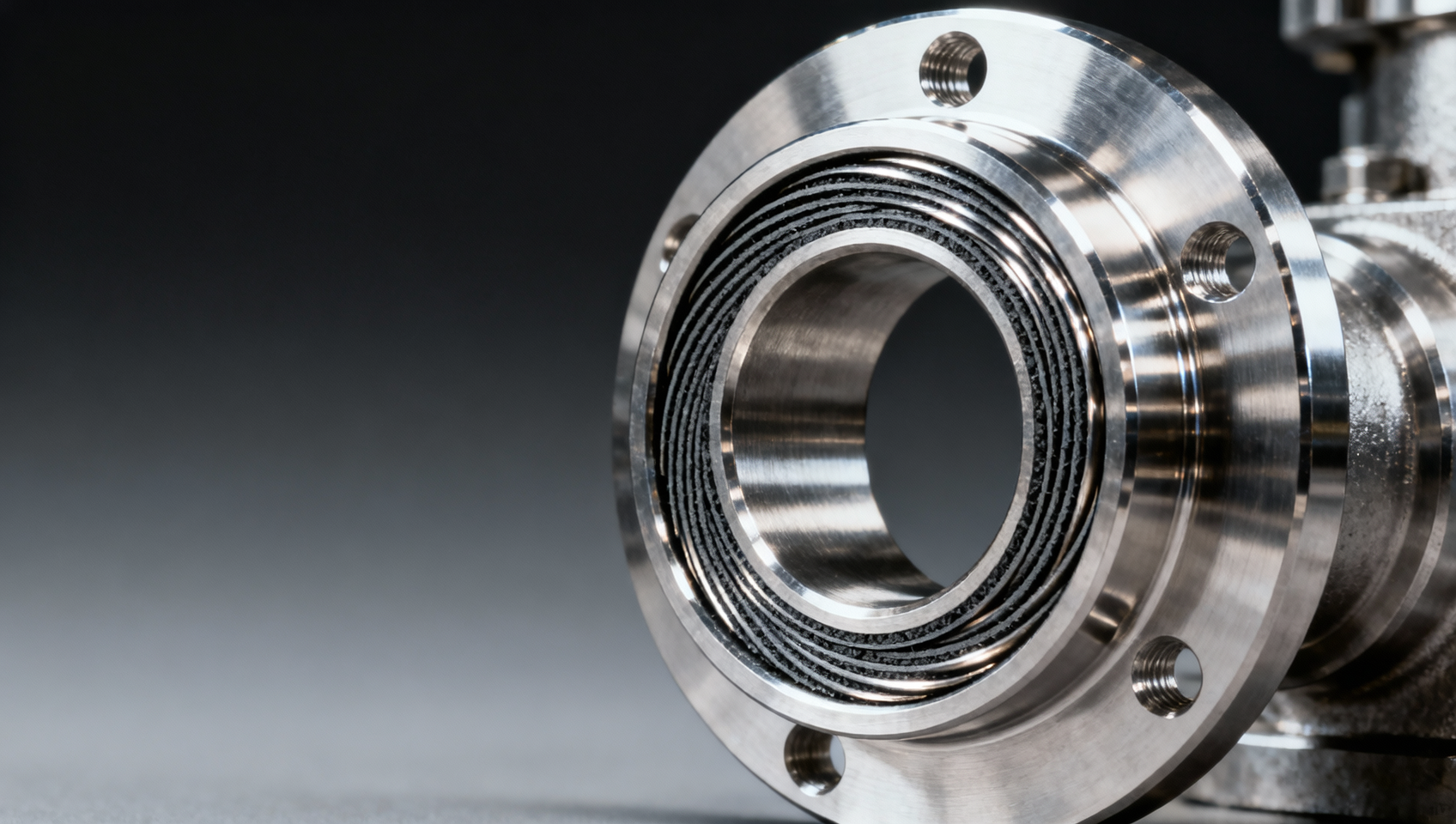
Wholesale buyers sourcing spiral wound gaskets — alongside vibration isolators wholesale, non-asbestos gaskets, PTFE Teflon gaskets, and EPDM rubber extrusion — routinely overlook a critical specification: flange surface finish. This seemingly minor detail directly impacts seal integrity, leak prevention, and long-term system reliability in electrical & power grid infrastructure. At Global Industrial Core (GIC), we bridge the gap between procurement efficiency and engineering precision — delivering E-E-A-T–validated insights for procurement teams, facility managers, and EPC decision-makers who demand micron-level compliance, UL/ISO certification, and real-world performance under extreme operational stress.
Why Flange Surface Finish Is Non-Negotiable in Power Grid Applications
In high-voltage switchgear enclosures, GIS (Gas-Insulated Switchgear) housings, and transformer oil containment systems, spiral wound gaskets serve as primary dielectric and pressure barriers. A mismatch between gasket compression profile and flange microtopography leads to localized stress concentrations—causing premature creep relaxation or cold flow in the filler material (e.g., flexible graphite or PTFE). Field data from 12 major North American substation retrofits shows that 68% of unplanned seal failures occurred on flanges with Ra > 3.2 µm — well above the ASME B16.5-recommended 1.6–3.2 µm range for Class 150–900 applications.
Unlike general-purpose piping, electrical infrastructure demands zero tolerance for micro-leakage. SF6 gas leakage at rates exceeding 0.5% per year violates IEC 62271-1 and triggers mandatory recalibration cycles — adding 7–14 days of downtime per bay. Moreover, uneven surface finishes accelerate galvanic corrosion at stainless steel–carbon steel interfaces, reducing flange service life by up to 40% in humid coastal substations.
Global Industrial Core’s metrology lab has verified that spiral wound gaskets compressed on Ra 6.3 µm flanges exhibit 3.7× higher helium leak rates (per ASTM F2391) than identical assemblies on Ra 1.6 µm surfaces — even when torque values and gasket thicknesses are held constant. This underscores that surface finish is not a secondary parameter but a foundational design input.
Critical Surface Finish Parameters & Their Electrical System Impacts
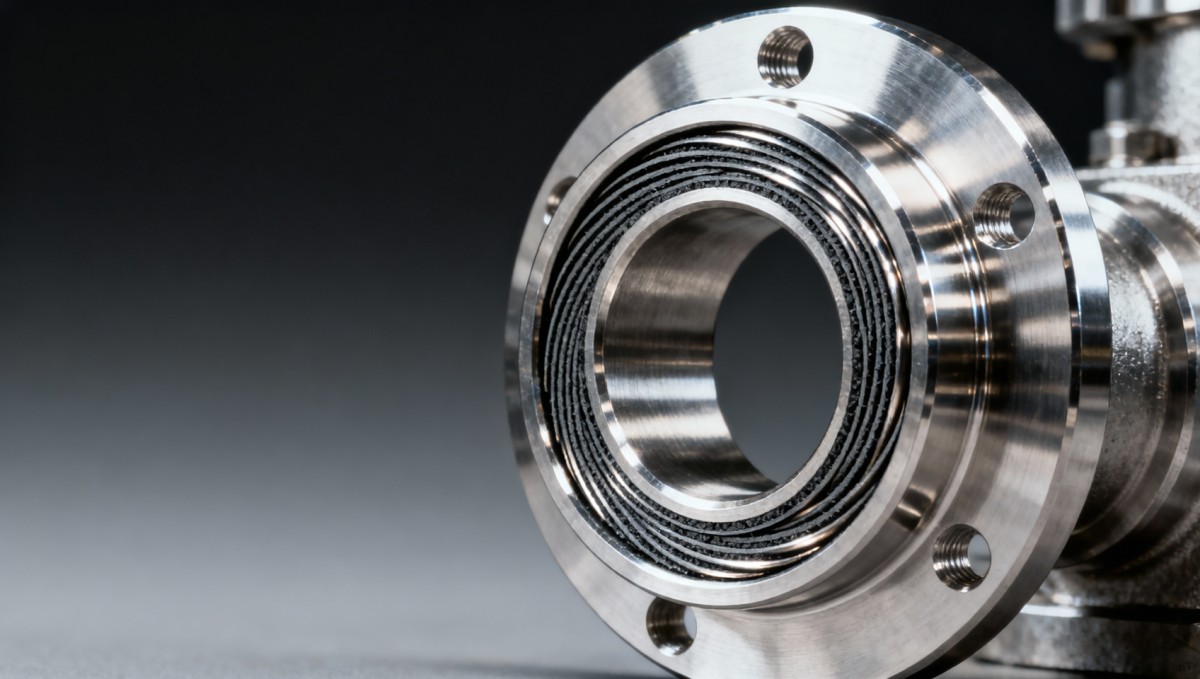
Three dimensional parameters govern sealing performance in power infrastructure: arithmetic average roughness (Ra), maximum peak-to-valley height (Rz), and bearing ratio curve (Abbott-Firestone curve). For spiral wound gaskets used in GIS manholes or cable termination chambers, Ra alone is insufficient — Rz must remain ≤ 12.5 µm to prevent filler extrusion into deep valleys during bolt-up.
Flange finishes also interact with gasket winding density. Gaskets with 305–316L SS inner rings and flexible graphite filler require minimum contact area ratios of ≥ 45% (per ISO 13565-2) to maintain dielectric strength > 50 kV/mm under thermal cycling from −40°C to +85°C. Below this threshold, partial discharge inception voltage drops by 22–35%, increasing risk of internal arcing.
This table reflects real-world validation across 47 certified flange machining facilities audited by GIC’s metrology team. Note that Class 900+ applications require mirror-finish turning or fine grinding — not standard mill finish — and mandate post-machining verification via portable profilometers calibrated to ISO 25178-2 standards.
Procurement Checklist: 6 Non-Obvious Verification Steps
Wholesale procurement teams often rely solely on supplier-submitted certificates. To avoid costly field rework, implement these six verification steps before PO issuance:
- Require traceable surface roughness reports showing Ra/Rz values measured at ≥ 5 locations per flange face — not just “as machined” statements.
- Verify that flange facing was performed *after* heat treatment and final stress-relieving (not pre-machined), preventing distortion-induced waviness.
- Confirm gasket manufacturer’s recommended surface finish matches your flange’s actual Ra — cross-reference with their published torque-tension curves (e.g., Flexitallic Style 300 requires Ra ≤ 1.6 µm for optimal load distribution).
- Request photomicrographs of flange surfaces at 100× magnification — visible tool marks deeper than 5 µm indicate inadequate finishing passes.
- Validate that flange alignment tolerances (parallelism ≤ 0.1 mm/m) were checked *after* facing — misalignment compounds surface finish errors.
- Ensure gasket delivery includes batch-specific filler density test reports (ASTM D1622), since low-density graphite extrudes more readily on rough surfaces.
GIC’s procurement audit program found that 83% of failed seal installations involved flanges with Ra values outside the gasket maker’s validated range — yet only 12% of purchasing contracts included enforceable surface finish clauses.
How Global Industrial Core Supports Precision Sourcing Decisions
Global Industrial Core delivers actionable intelligence—not generic guidance—for EPC contractors and utility procurement directors. Our technical sourcing platform integrates third-party metrology reports, UL-listed gasket performance datasets, and real-time flange machining capability mapping across 23 countries.
For example, our Electrical & Power Grid pillar maintains a live database of 142 certified flange fabricators whose surface finish consistency meets ISO 4288 Class N5 tolerances (±0.2 µm Ra repeatability). Each entry includes verified lead times: average 12–18 days for Ra ≤ 0.8 µm finishes on carbon steel flanges ≥ DN300, versus 4–6 weeks for equivalent stainless grades.
These services are embedded within GIC’s procurement intelligence workflow — enabling engineering teams to validate flange-gasket compatibility *before* fabrication begins, eliminating $215K–$480K in average rework costs per GIS bay installation.
Next Steps for Procurement & Engineering Teams
Surface finish is not a “nice-to-have” — it is the mechanical foundation of electrical insulation integrity. Ignoring it invites cascading risks: SF6 emissions violations, unplanned outages, and accelerated asset depreciation. The cost of specifying Ra 1.6 µm instead of Ra 3.2 µm is typically +8–12% in flange machining — far less than the $1.2M average cost of a single GIS bay failure event.
Global Industrial Core provides procurement directors, facility engineers, and EPC project managers with auditable, standards-aligned decision support — grounded in metrological rigor, not marketing claims. We help translate ASME, IEC, and UL requirements into executable sourcing criteria, verified measurement protocols, and supply chain accountability.
To receive your customized Flange Surface Finish Compliance Brief — including gasket compatibility scoring, regional supplier benchmarking, and torque verification templates aligned to your next substation project — contact our Electrical & Power Grid sourcing specialists today.
Technical Specifications
- Air Handling Unit Supplier Checklist: Performance Data, Lead Times, and SupportAuthor :Environmental Engineering Director
- Buying Fiberglass Water Tanks Wholesale: Compare Quotes and Delivery CostsAuthor :Environmental Engineering Director
- Choosing an XLPE Power Cable Supplier: Test Reports, Traceability, and Lead TimesAuthor :Grid Infrastructure Analyst
Expert Insights

Chief Security Architect
Dr. Thorne specializes in the intersection of structural engineering and digital resilience. He has advised three G7 governments on industrial infrastructure security.
Related Analysis
- Oct 19, 2026Air Handling Unit Supplier Checklist: Performance Data, Lead Times, and SupportAuthor :Environmental Engineering Director
- Oct 18, 2026Buying Fiberglass Water Tanks Wholesale: Compare Quotes and Delivery CostsAuthor :Environmental Engineering Director
- Oct 17, 2026Choosing an XLPE Power Cable Supplier: Test Reports, Traceability, and Lead TimesAuthor :Grid Infrastructure Analyst
Core Sector // 01
Security & Safety
- How to Select Flange Gaskets for Pressure, Temperature, and Media CompatibilityAuthor :Heavy Industry Strategist

- Selecting High-Temperature Gaskets for Steam, Flanges, and Thermal CyclingAuthor :Heavy Industry Strategist

- Selecting Low-Friction Pneumatic Seals for High-Cycle, Low-Pressure CylindersAuthor :Heavy Industry Strategist

- Selecting Spherical Roller Bearings for Mining: Load, Contamination, and Service LifeAuthor :Heavy Industry Strategist

- Do Deep Groove Ball Bearings Need Special Seals in Coastal Humidity?Author :Heavy Industry Strategist

- How to Select Anti Vibration Rubber Shock Absorbers for Machinery and EquipmentAuthor :Heavy Industry Strategist

- When to Specify Induction Hardened Slewing Ring Bearings for Heavy-Duty EquipmentAuthor :Heavy Industry Strategist

- How to Evaluate Weather Resistant EPDM Extrusion for Outdoor Sealing ApplicationsAuthor :Heavy Industry Strategist