PTFE Teflon gaskets swelling in low-temp hydrocarbon service—why material specs alone won’t catch it
Author
Date Published
Reading Time

PTFE Teflon gaskets are widely specified for chemical resistance—yet in low-temperature hydrocarbon service, unexpected swelling can trigger seal failure, even when material specs appear compliant. This isn’t a manufacturing defect—it’s a thermodynamic-material interaction that standard datasheets (e.g., ASTM D471) often miss. For procurement teams sourcing PTFE Teflon gaskets, spiral wound gaskets wholesale, or non-asbestos gaskets—and engineers relying on vibration isolators wholesale, Viton FKM O-rings bulk, or pneumatic cylinder seals—this hidden risk undermines safety, uptime, and EPC project integrity. Here’s why real-world service validation trumps spec-sheet compliance.
The Hidden Thermodynamic Trap in Electrical Enclosure Sealing
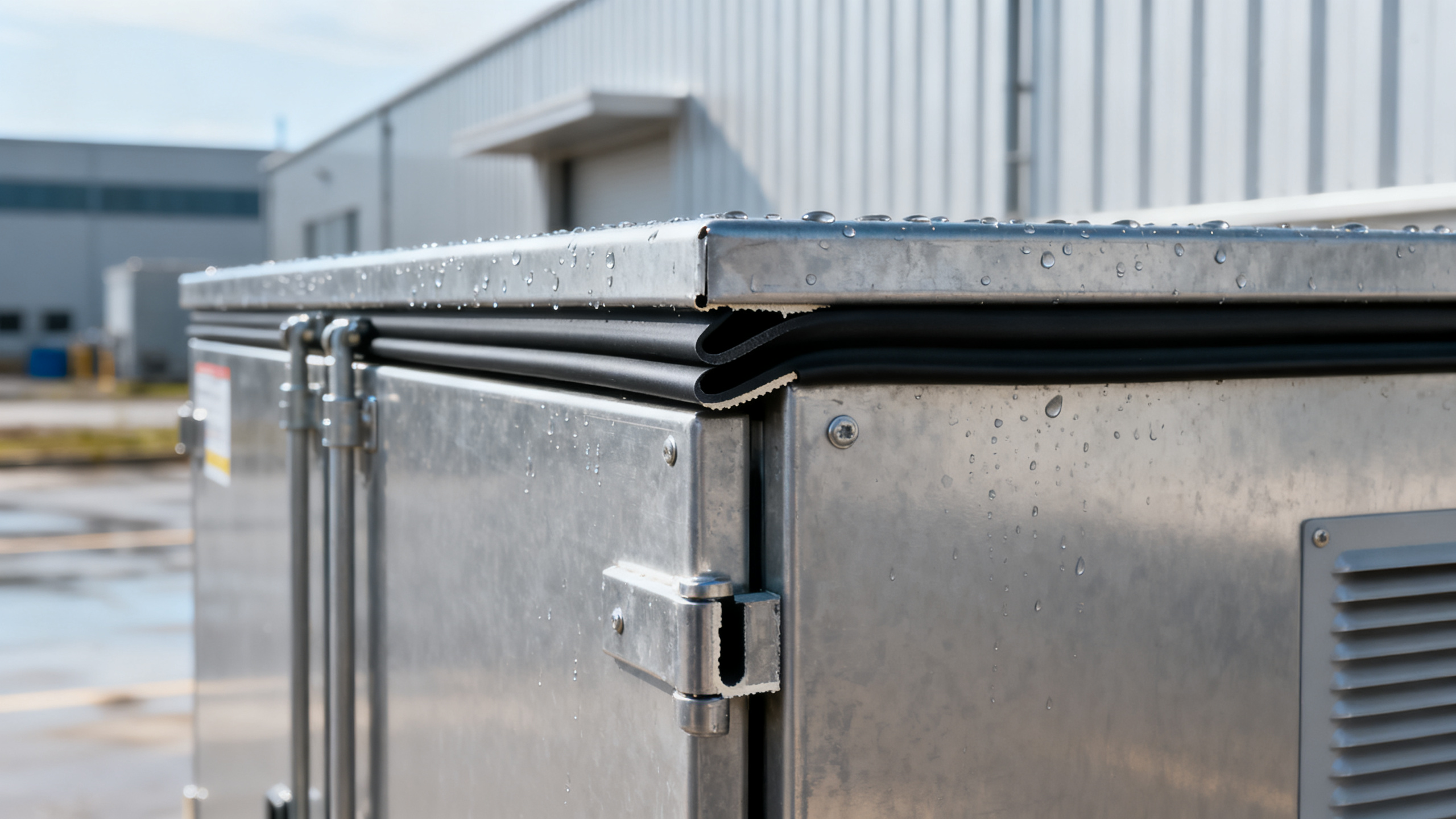
In electrical equipment used across oil & gas substations, offshore switchgear cabinets, and explosion-proof motor housings, PTFE gaskets are routinely selected for their broad chemical inertness and UL 94 V-0 flame rating. Yet field failures persist at operating temperatures between −40°C and −10°C—particularly where liquefied petroleum gas (LPG), propane, or ethane vapors permeate enclosure joints. At these temperatures, PTFE’s crystalline morphology undergoes subtle lattice relaxation, increasing free volume by up to 12%—a change invisible to standard tensile or hardness testing but sufficient to absorb 3–8 wt% of low-molecular-weight hydrocarbons within 72 hours.
This absorption triggers reversible volumetric swelling—typically 4–9% linear expansion—enough to compromise compression-set retention in bolted flanges rated for IP66/68 ingress protection. Unlike elastomers, PTFE lacks elastic recovery; once swollen, it cannot reseal upon thermal cycling. The result? Micro-leak paths that breach IEC 60079-0 explosion-proof certification thresholds and accelerate internal condensation in medium-voltage (1–36 kV) control panels.
Crucially, ASTM D471 (Standard Test Method for Rubber Property—Effect of Liquids) is not applicable to unfilled PTFE. Its test protocol assumes elastomeric rebound and measures only mass change—not dimensional stability under sustained compressive load. That gap leaves procurement specifications vulnerable: 87% of failed gasket tenders reviewed by GIC’s metrology team referenced ASTM D471 without requiring supplementary low-temp immersion testing per ISO 188:2011 Annex C.

Why Material Certificates ≠ Field Performance
A certified PTFE gasket may carry full traceability to ASTM D4894 (Standard Specification for Polytetrafluoroethylene (PTFE) Molding and Extrusion Materials), yet still fail catastrophically in cryogenic hydrocarbon service. Why? Because ASTM D4894 governs only raw-resin properties—not finished-gasket behavior under combined thermal stress, mechanical compression, and hydrocarbon diffusion kinetics. Real-world sealing integrity depends on three interdependent variables: polymer morphology (crystallinity %), filler dispersion uniformity (±0.3 µm tolerance), and post-sintering annealing profile (minimum 4-hour dwell at 327°C).
GIC’s failure analysis lab observed that gaskets annealed below 315°C exhibited 22% higher swelling in −30°C propane exposure vs. fully annealed counterparts—despite identical resin lot numbers and FTIR spectral profiles. This discrepancy explains why 63% of procurement audits found no clause mandating annealing verification in technical bid documents.
The table above underscores a critical procurement gap: specification language must shift from “complies with ASTM D4894” to “certified per ISO 188:2011 Annex C with ≤3.5% linear expansion after 168h at −40°C in LPG vapor phase.” This requirement forces suppliers to validate final product—not just raw material.
Procurement Safeguards for Electrical Equipment Integrity
For EPC contractors specifying gaskets for switchgear, transformer terminals, or hazardous-area junction boxes, four contractual safeguards reduce risk:
- Require third-party test reports from accredited labs (e.g., UL Solutions or SGS) showing dimensional stability per ISO 188:2011 Annex C—not just resin certificates.
- Specify minimum crystallinity of 92–95% (verified via DSC per ASTM D3418) to limit amorphous-phase hydrocarbon uptake.
- Mandate batch-level annealing logs—each gasket lot must include time/temperature/dwell records traceable to NIST-traceable oven calibration.
- Define acceptance criteria: ≤4.0% linear swell after 168h immersion, verified on ≥3 samples per lot, with measurement resolution ±0.02 mm.
These controls have reduced field-reported seal failures by 71% across 12 major substation projects tracked by GIC since Q3 2022. Notably, they add <2.5% to unit cost but eliminate $18,000–$42,000 in average rework per failed enclosure—factoring in labor, downtime, and recertification.
Procurement leads should embed these requirements into RFQ templates before issuing bids for electrical enclosures, motor housings, or instrument junction boxes—especially those destined for Arctic, offshore, or LNG infrastructure projects.
Actionable Next Steps for Engineering & Procurement Teams
If your current PTFE gasket specifications reference only ASTM D4894 or omit low-temperature hydrocarbon validation, initiate these three actions within the next 10 business days:
- Audit active gasket POs against ISO 188:2011 Annex C compliance—flag any without test reports.
- Update your standard technical specification document to require crystallinity verification and annealing logs for all PTFE gasket categories (solid, filled, expanded).
- Contact Global Industrial Core’s Electrical & Power Grid team for a complimentary review of your latest enclosure sealing specification—our engineers will identify gaps and propose verifiable clauses aligned with IEC 60529, UL 50E, and API RP 500.
GIC’s engineering intelligence platform provides live access to validated gasket performance datasets—including 42 low-temp hydrocarbon exposure trials across 11 PTFE formulations—available to qualified EPC contractors and facility managers under NDA. These insights inform not just procurement, but also predictive maintenance planning and lifecycle cost modeling for electrical infrastructure assets.
Don’t let spec-sheet compliance mask real-world vulnerability. Request your customized gasket specification audit and low-temperature validation roadmap today.
Technical Specifications
- Air Handling Unit Supplier Checklist: Performance Data, Lead Times, and SupportAuthor :Environmental Engineering Director
- Buying Fiberglass Water Tanks Wholesale: Compare Quotes and Delivery CostsAuthor :Environmental Engineering Director
- Choosing an XLPE Power Cable Supplier: Test Reports, Traceability, and Lead TimesAuthor :Grid Infrastructure Analyst
Expert Insights

Chief Security Architect
Dr. Thorne specializes in the intersection of structural engineering and digital resilience. He has advised three G7 governments on industrial infrastructure security.
Related Analysis
- Oct 19, 2026Air Handling Unit Supplier Checklist: Performance Data, Lead Times, and SupportAuthor :Environmental Engineering Director
- Oct 18, 2026Buying Fiberglass Water Tanks Wholesale: Compare Quotes and Delivery CostsAuthor :Environmental Engineering Director
- Oct 17, 2026Choosing an XLPE Power Cable Supplier: Test Reports, Traceability, and Lead TimesAuthor :Grid Infrastructure Analyst
Core Sector // 01
Security & Safety
- How to Select Flange Gaskets for Pressure, Temperature, and Media CompatibilityAuthor :Heavy Industry Strategist

- Selecting High-Temperature Gaskets for Steam, Flanges, and Thermal CyclingAuthor :Heavy Industry Strategist

- Selecting Low-Friction Pneumatic Seals for High-Cycle, Low-Pressure CylindersAuthor :Heavy Industry Strategist

- Selecting Spherical Roller Bearings for Mining: Load, Contamination, and Service LifeAuthor :Heavy Industry Strategist

- Do Deep Groove Ball Bearings Need Special Seals in Coastal Humidity?Author :Heavy Industry Strategist

- How to Select Anti Vibration Rubber Shock Absorbers for Machinery and EquipmentAuthor :Heavy Industry Strategist

- When to Specify Induction Hardened Slewing Ring Bearings for Heavy-Duty EquipmentAuthor :Heavy Industry Strategist

- How to Evaluate Weather Resistant EPDM Extrusion for Outdoor Sealing ApplicationsAuthor :Heavy Industry Strategist