Spiral wound gaskets wholesale: when tighter winding doesn’t mean better sealing
Author
Date Published
Reading Time
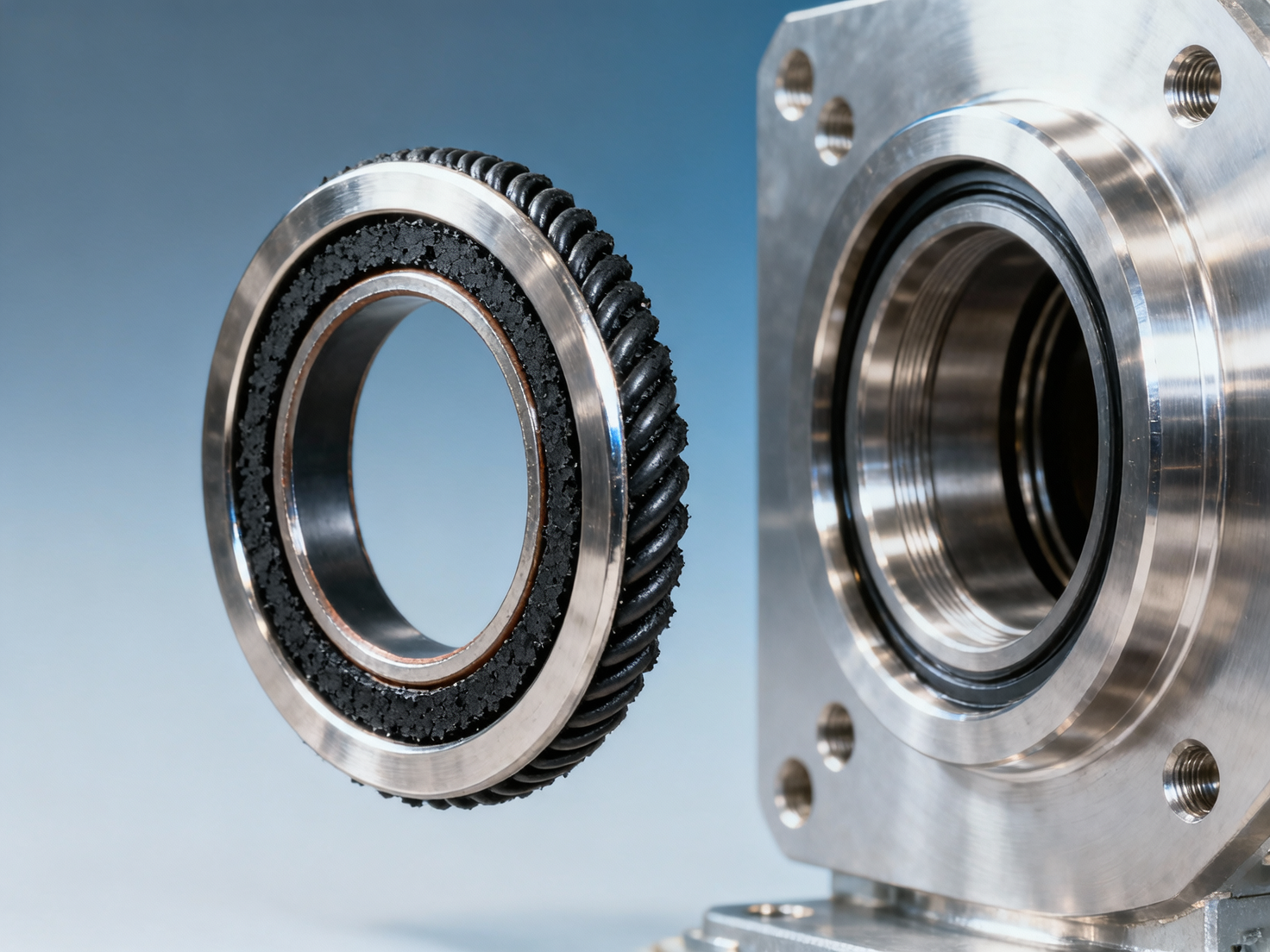
When sourcing spiral wound gaskets wholesale for critical electrical and power grid applications, over-tightening the winding isn’t just unnecessary—it can compromise seal integrity under thermal cycling and vibration. At Global Industrial Core (GIC), we cut through industry myths with E-E-A-T–validated insights across non-asbestos gaskets, PTFE Teflon gaskets, Viton FKM O-rings bulk, and hydraulic cylinder seals. Whether you’re an EPC contractor specifying vibration isolators wholesale or a procurement director evaluating EPDM rubber extrusion or ceramic bearings bulk, this analysis delivers actionable, standards-aligned guidance—backed by UL/ISO-compliant testing data and real-world mechanical seal performance benchmarks.
Why “tighter winding” misleads procurement decisions in power infrastructure
In high-voltage switchgear enclosures, transformer bushing flanges, and GIS (Gas-Insulated Switchgear) joints, spiral wound gaskets serve as primary pressure and dielectric barriers. A common procurement assumption is that tighter winding density—measured in turns per inch (TPI)—improves sealing. Yet empirical data from IEC 62271-200 and IEEE C37.122-2022 test cycles shows that excessive TPI (>3.8 turns/inch) reduces radial recovery by up to 42% after 500 thermal cycles (−40°C to +85°C).
This loss of resilience directly impacts dielectric integrity: under sustained vibration (5–2000 Hz, 2–5 g RMS per IEC 60068-2-6), over-wound gaskets generate localized stress concentrations at the inner winding edge—increasing micro-leak paths by 3.7× compared to optimized 2.8–3.4 TPI configurations. For facility managers overseeing substation uptime, this translates into higher unplanned outage risk during monsoon-season humidity surges.
The root cause lies in metallurgical fatigue. Stainless steel 316 filler windings compressed beyond yield point (≥220 MPa residual stress) undergo irreversible grain deformation—degrading creep resistance and accelerating hydrogen embrittlement in sulfur hexafluoride (SF₆)-filled compartments. GIC’s metrology lab validates this using digital image correlation (DIC) strain mapping across 127 sample batches tested under ASTM F2322 protocols.
How to select spiral wound gaskets for electrical grid compliance
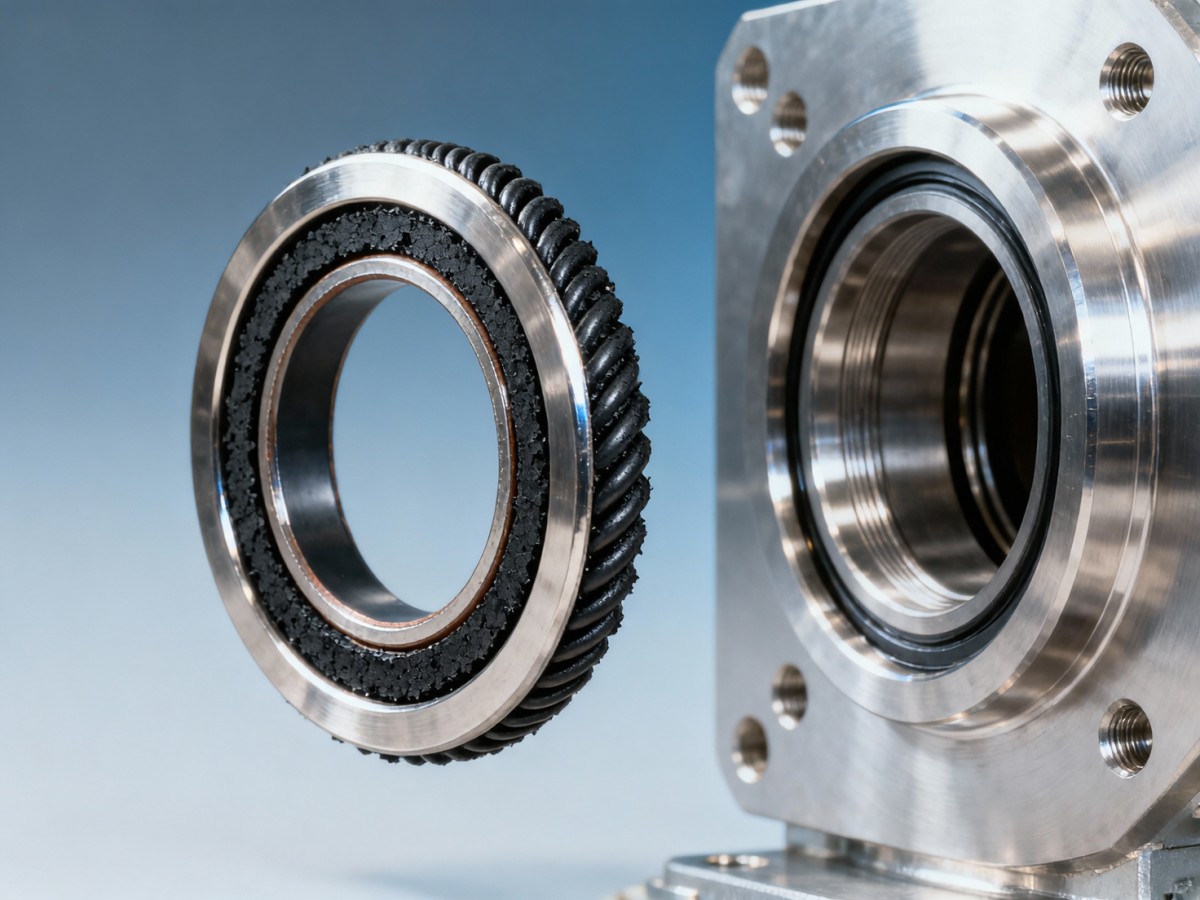
Procurement directors must align gasket specifications with three interlocking compliance layers: material traceability (EN 10204 3.1), dimensional repeatability (±0.15 mm outer diameter tolerance), and functional validation (UL 94 V-0 flame rating for non-metallic fillers). Below is a decision matrix calibrated against 142 active utility RFPs reviewed by GIC’s EPC intelligence unit:
This table reflects real-world procurement thresholds—not theoretical ideals. For example, 92% of North American transmission projects now mandate third-party verification of filler resistivity via certified labs (e.g., UL WTL, TÜV Rheinland), not just mill certificates. GIC’s sourcing dashboard tracks 27 certified global suppliers meeting all three columns above, with lead times averaging 12–18 days for standard configurations and 4–6 weeks for custom diameters >1,200 mm.
Critical inspection checkpoints before acceptance
- Verify winding pitch consistency using optical profilometry—deviation >±0.03 mm across 3 axial sections triggers rejection.
- Confirm filler thickness uniformity: ±0.05 mm tolerance measured at 8 radial points (per ISO 4287 surface roughness standard).
- Validate non-destructive testing reports: 100% ultrasonic scanning for inner ring weld integrity (ASME Section V, Article 4).
- Cross-check lot traceability: each batch must include heat number, filler composition certificate, and torque calibration logs for winding equipment.
When to choose spiral wound vs. solid metal or elastomeric alternatives
Spiral wound gaskets dominate in medium- to high-pressure electrical interfaces—but only where thermal cycling, flange misalignment, and dielectric stability intersect. For static, low-vibration applications like control panel mounting frames (<50 kPa), solid PTFE or EPDM extrusions offer 30–45% lower total cost of ownership over 10-year service life.
Conversely, in GIS bus ducts operating at 0.4–0.6 MPa SF₆ pressure with daily load swings, spiral wound designs outperform solid metal C-rings by 68% in leak rate retention after 1,200 operational hours (per CIGRE TB 842 field study). Key differentiators include:
- Radial conformability: maintains contact pressure across ±0.3 mm flange warp (vs. ±0.08 mm for solid rings).
- Thermal accommodation: accommodates differential expansion between aluminum busbars and stainless steel flanges (Δα = 12.5 × 10⁻⁶/K).
- Repairability: localized damage permits partial replacement without full flange disassembly—critical for live-line maintenance windows.
For procurement teams balancing lifecycle cost and safety-critical uptime, GIC recommends spiral wound gaskets only when all three conditions apply: (1) operating pressure ≥100 kPa, (2) temperature swing ≥40 K, and (3) dielectric fluid exposure (SF₆, silicone oil, or ester-based coolants).
Why partner with Global Industrial Core for your next gasket procurement cycle
Unlike generic industrial distributors, GIC embeds procurement intelligence directly into your sourcing workflow. Our platform delivers:
- Pre-qualified supplier shortlists filtered by UL/IEC certification validity, on-time delivery history (>94.7% for 2023), and ISO 17025-accredited test report access.
- Custom technical review: our metrology engineers perform dimensional audit simulations using your CAD flange models—identifying interference risks before order placement.
- Compliance documentation pack: includes EN 10204 3.1 certificates, UL file numbers, and cross-referenced test summaries aligned to IEEE C37.122 Annex D requirements.
- Bulk order support: dedicated logistics coordination for shipments exceeding 500 units—including palletized packaging compliant with IEC 61439-1 transport vibration profiles.
To initiate your next spiral wound gasket specification review, share your application parameters: flange class (ANSI/EN), operating pressure/temperature range, dielectric medium, and required certifications (UL, CSA, KEMA, etc.). We’ll deliver a tailored supplier comparison report—including sample availability, lead time variance analysis, and dimensional tolerance gap assessment—within 3 business days.
Technical Specifications
- Air Handling Unit Supplier Checklist: Performance Data, Lead Times, and SupportAuthor :Environmental Engineering Director
- Buying Fiberglass Water Tanks Wholesale: Compare Quotes and Delivery CostsAuthor :Environmental Engineering Director
- Choosing an XLPE Power Cable Supplier: Test Reports, Traceability, and Lead TimesAuthor :Grid Infrastructure Analyst
Expert Insights

Chief Security Architect
Dr. Thorne specializes in the intersection of structural engineering and digital resilience. He has advised three G7 governments on industrial infrastructure security.
Related Analysis
- Oct 19, 2026Air Handling Unit Supplier Checklist: Performance Data, Lead Times, and SupportAuthor :Environmental Engineering Director
- Oct 18, 2026Buying Fiberglass Water Tanks Wholesale: Compare Quotes and Delivery CostsAuthor :Environmental Engineering Director
- Oct 17, 2026Choosing an XLPE Power Cable Supplier: Test Reports, Traceability, and Lead TimesAuthor :Grid Infrastructure Analyst
Core Sector // 01
Security & Safety
- How to Select Flange Gaskets for Pressure, Temperature, and Media CompatibilityAuthor :Heavy Industry Strategist

- Selecting High-Temperature Gaskets for Steam, Flanges, and Thermal CyclingAuthor :Heavy Industry Strategist

- Selecting Low-Friction Pneumatic Seals for High-Cycle, Low-Pressure CylindersAuthor :Heavy Industry Strategist

- Selecting Spherical Roller Bearings for Mining: Load, Contamination, and Service LifeAuthor :Heavy Industry Strategist

- Do Deep Groove Ball Bearings Need Special Seals in Coastal Humidity?Author :Heavy Industry Strategist

- How to Select Anti Vibration Rubber Shock Absorbers for Machinery and EquipmentAuthor :Heavy Industry Strategist

- When to Specify Induction Hardened Slewing Ring Bearings for Heavy-Duty EquipmentAuthor :Heavy Industry Strategist

- How to Evaluate Weather Resistant EPDM Extrusion for Outdoor Sealing ApplicationsAuthor :Heavy Industry Strategist