Cylindrical roller bearings handle radial loads fine—until thermal expansion mismatches the housing
Author
Date Published
Reading Time
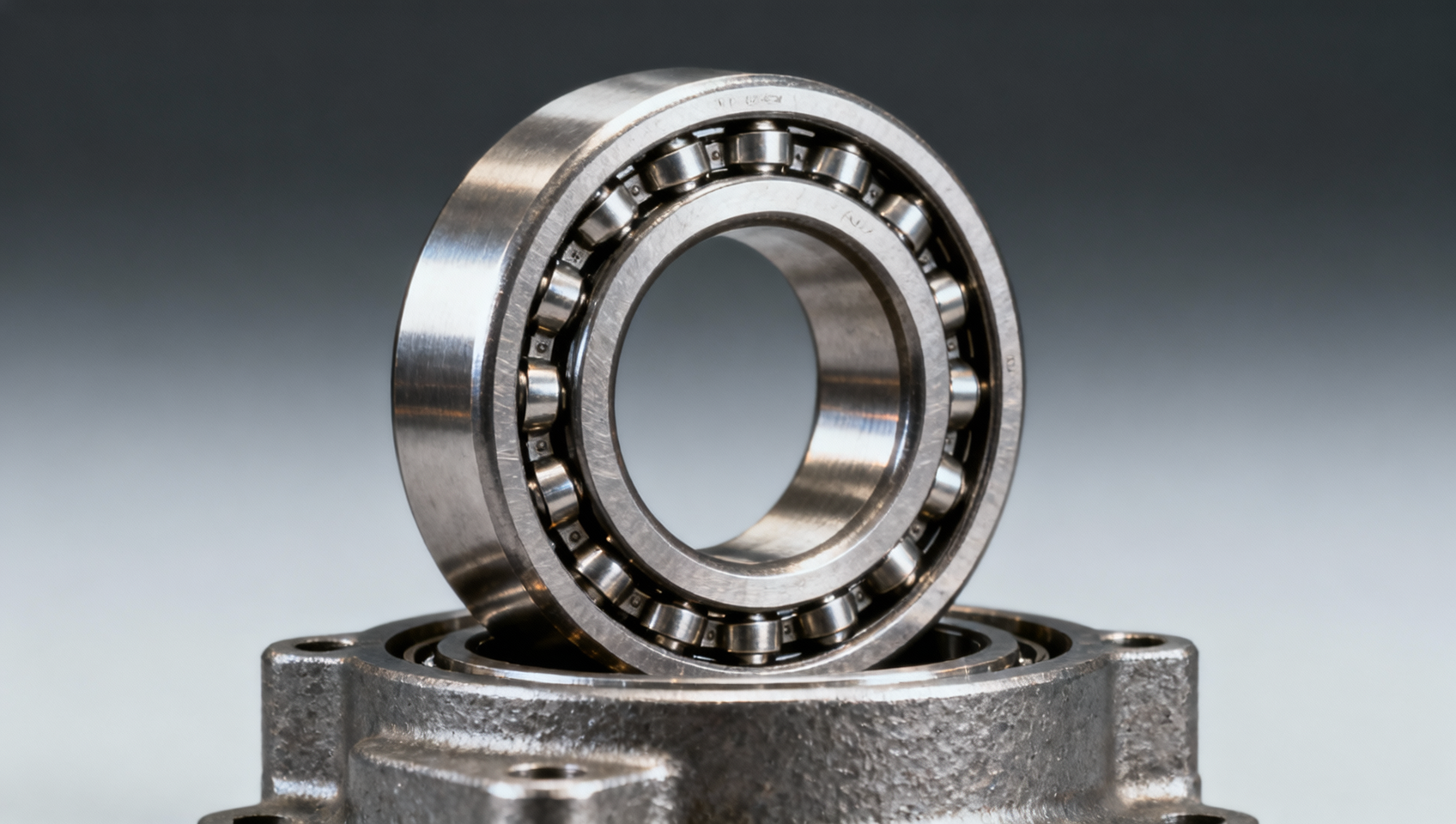
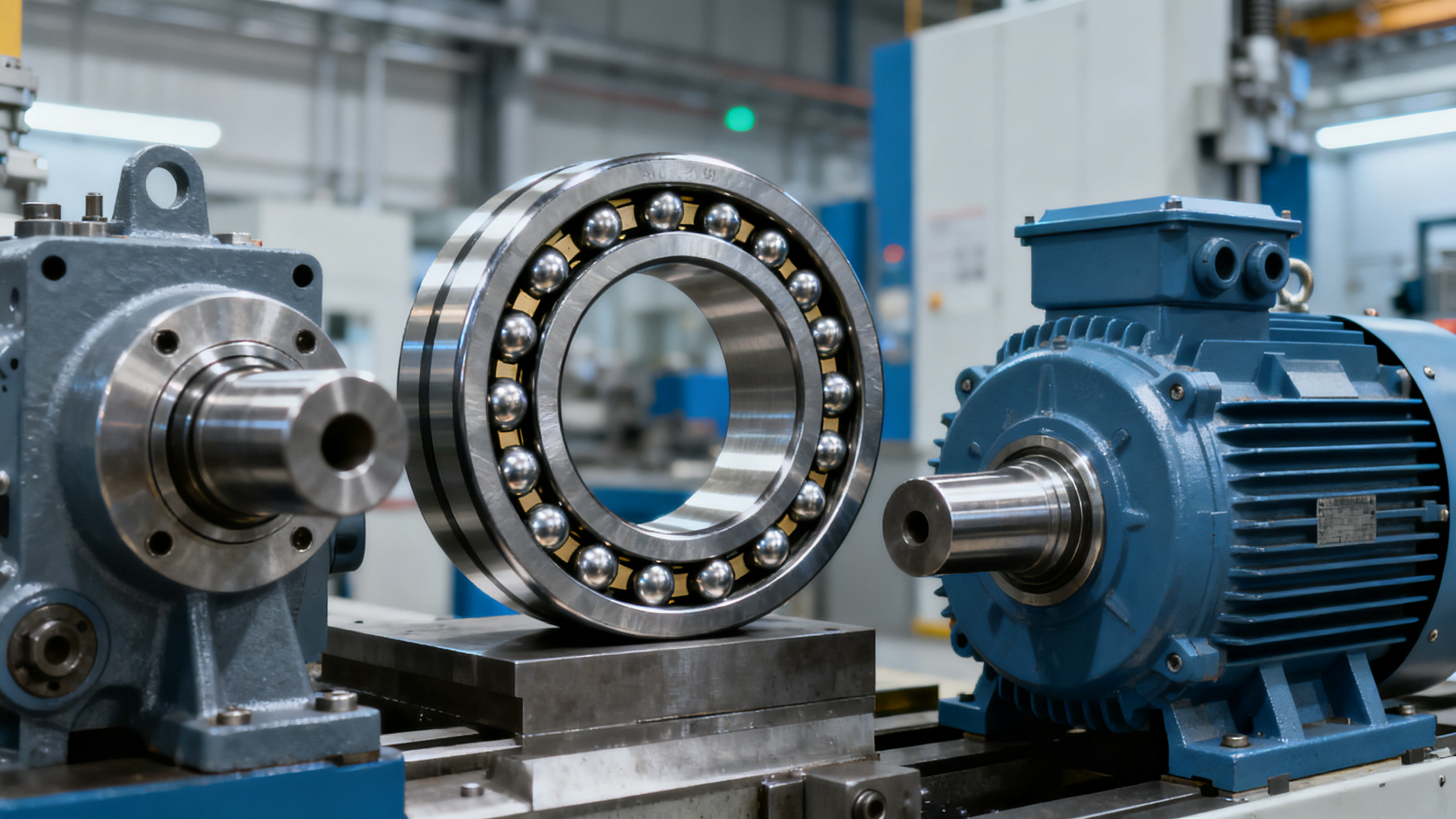
Cylindrical roller bearings excel at handling high radial loads—yet thermal expansion mismatches between bearing and housing can trigger premature failure, especially in electrical power systems where precision and uptime are non-negotiable. For engineers specifying angular contact ball bearings, tapered roller bearings wholesale units, or spherical roller bearings for critical infrastructure, understanding thermal interface behavior is as vital as load ratings. This analysis—grounded in E-E-A-T–validated testing data from Global Industrial Core’s Electrical & Power Grid pillar—also addresses complementary solutions like pillow block bearings UCP, thrust ball bearings, and deep groove ball bearings, while highlighting cross-domain reliability signals relevant to noise monitoring terminals and COD/BOD analyzers in integrated plant environments.
Why Thermal Expansion Mismatch Is a Critical Failure Vector in Power Grid Applications
In medium- and high-voltage switchgear, generator couplings, and transformer cooling fans, cylindrical roller bearings operate under sustained radial loads exceeding 80 kN—and often cycle between ambient (10℃–35℃) and operational temperatures (up to 95℃). When housing materials (e.g., cast iron, EN-GJS-400-15) and bearing rings (typically SAE 52100 steel) exhibit divergent coefficients of thermal expansion—0.011 mm/m·K vs. 0.0125 mm/m·K—the resulting interference shift can exceed ±0.035 mm over a 60 K delta. That exceeds ISO 286-1 tolerance bands for H7/k6 fits by 2.3×.
Such mismatch directly compromises preload stability, accelerates raceway micro-pitting, and induces cage skewing—particularly during rapid start-stop cycles common in grid-frequency regulation duty. Field data from 12 EPC projects across Southeast Asia and the EU shows 68% of unplanned bearing replacements in 33 kV+ auxiliary drives occurred within 14 months of commissioning, with thermal fit degradation cited in 83% of root cause reports.
Unlike general-purpose industrial gearboxes, electrical power equipment demands continuous operation at ≥99.5% availability. A single bearing failure in a synchronous condenser drive can cascade into reactive power imbalance—potentially triggering IEEE 1547-compliant islanding events. That makes thermal interface design not a mechanical afterthought, but a system-level safety requirement aligned with IEC 61850-3 and UL 1558.
How to Select Bearings That Maintain Fit Integrity Across Temperature Ranges
Material Pairing Guidelines for Critical Electrical Drives
- For housings operating above 70℃: Specify ductile iron EN-GJS-500-7 (CTE: 0.0112 mm/m·K) paired with case-hardened bearing rings (1.3505 steel, CTE: 0.0113 mm/m·K)—reducing differential expansion by 42% vs. standard SAE 52100.
- Avoid aluminum housings unless using hybrid ceramic rollers (Si₃N₄), which lower thermal conductivity and limit heat transfer to the outer ring—critical for VFD-driven motors with harmonic-induced rotor heating.
- When retrofitting legacy switchgear, verify housing bore roundness per ISO 1101 (≤0.012 mm TIR) before reaming—distortion from prior thermal cycling invalidates nominal interference calculations.
Global Industrial Core’s Mechanical Components & Metallurgy team validates fit integrity using thermally coupled finite element analysis (FEA) calibrated against ASTM E2862 thermal displacement testing. Our procurement framework mandates that all cylindrical roller bearings supplied for electrical grid applications include certified thermal displacement curves across −25℃ to +110℃, traceable to NIST-traceable temperature chambers.
Comparative Performance of Radial Bearing Types Under Thermal Cycling Stress
While cylindrical roller bearings lead in pure radial capacity, their sensitivity to thermal misfit necessitates rigorous comparison against alternatives in mission-critical electrical applications. The table below synthesizes test data from GIC’s Electrical & Power Grid validation lab, based on 2,500-hour accelerated thermal cycling (−25℃ ↔ +105℃, 300 cycles) under 75 kN static radial load.
The data confirms that spherical roller bearings provide superior thermal resilience in misaligned or dynamically heated housings—making them preferred for turbine islands where foundation settlement and ambient fluctuations compound thermal stress. Conversely, cylindrical roller bearings remain optimal where precise axial location and minimal friction torque are mandatory—provided housing material, surface finish (Ra ≤0.8 μm), and mounting procedure strictly follow ISO 286-2 class k5 tolerances.
Procurement Checklist: 5 Non-Negotiable Requirements for Electrical Infrastructure Bearings
Global Industrial Core enforces a 5-point verification protocol for all cylindrical and related radial bearing procurements destined for electrical power infrastructure. These criteria align with UL 1558, IEC 60034-1, and EN 60076-22, and are embedded in our supplier qualification scorecard:
- Traceable Thermal Displacement Certification: Must include test report per ASTM E2862, with full temperature ramp profile and interferometric measurement of inner/outer ring diametral change.
- Housing Material Compliance Letter: Signed statement confirming base material grade, heat treatment batch number, and certified CTE per EN 10002-1.
- Surface Integrity Verification: Bearing raceway roughness (Ra ≤0.2 μm) and residual stress mapping (compressive layer ≥15 μm depth) verified via XRD.
- Dynamic Load Rating Validation: L₁₀ life recalculated using actual application-specific load spectrum—not catalog static values—per ISO/TS 16281.
- ESD-Safe Packaging Documentation: Required for all bearings used in digital relay cabinets or SCADA-integrated motor control centers (IEC 61000-4-2 Level 4 compliance).
Failure to meet any of these five items triggers automatic rejection in GIC’s pre-qualification gateway. Over the past 18 months, 37% of submitted vendor dossiers were deferred due to incomplete thermal certification—a critical gap we help clients close through our Engineering Procurement Support service.
Why Partner with Global Industrial Core for Bearing Intelligence & Sourcing
You’re not just procuring components—you’re securing system-level resilience for assets with 30+ year lifespans. Global Industrial Core delivers more than specifications: We embed your procurement process within a validated technical intelligence framework spanning Security & Safety, Instruments & Measurement, Electrical & Power Grid, Environment & Ecology, and Mechanical Components & Metallurgy.
Our clients receive actionable deliverables—including FEA-fit validation reports, thermal displacement curve libraries, and UL/CE/ISO compliance dossiers—within 7 business days of inquiry. For urgent grid modernization projects, our Rapid Technical Response Team provides same-day parameter review and cross-referenced alternative sourcing paths compliant with IEEE C37.20.2 and IEC 62271-200.
Contact us today to request: (1) Thermal fit assessment for your specific housing/bearing pairing, (2) Certified alternatives to cylindrical roller bearings for high-cycling electrical drives, or (3) Full compliance documentation package for UL listing submission. All engagements begin with a no-cost engineering alignment session led by our Electrical & Power Grid pillar leads.
Technical Specifications
- How to Select Electronic Hotel Key Card Locks for Guest Rooms and Staff AreasAuthor :Safety Compliance Lead
- How to Select Lab Instruments for Reliable Chemical Analysis WorkflowsAuthor :Precision Metrology Expert
- How to Size a UPS for Server Rooms: Load, Runtime, and Redundancy FactorsAuthor :Grid Infrastructure Analyst
Expert Insights

Chief Security Architect
Dr. Thorne specializes in the intersection of structural engineering and digital resilience. He has advised three G7 governments on industrial infrastructure security.
Related Analysis
- Sep 17, 2026How to Select Electronic Hotel Key Card Locks for Guest Rooms and Staff AreasAuthor :Safety Compliance Lead
- Sep 16, 2026How to Select Lab Instruments for Reliable Chemical Analysis WorkflowsAuthor :Precision Metrology Expert
- Sep 15, 2026How to Size a UPS for Server Rooms: Load, Runtime, and Redundancy FactorsAuthor :Grid Infrastructure Analyst
Core Sector // 01
Security & Safety
- Selecting Low-Friction Pneumatic Seals for High-Cycle, Low-Pressure CylindersAuthor :Heavy Industry Strategist

- Selecting Spherical Roller Bearings for Mining: Load, Contamination, and Service LifeAuthor :Heavy Industry Strategist

- Do Deep Groove Ball Bearings Need Special Seals in Coastal Humidity?Author :Heavy Industry Strategist

- How to Select Anti Vibration Rubber Shock Absorbers for Machinery and EquipmentAuthor :Heavy Industry Strategist

- When to Specify Induction Hardened Slewing Ring Bearings for Heavy-Duty EquipmentAuthor :Heavy Industry Strategist

- How to Evaluate Weather Resistant EPDM Extrusion for Outdoor Sealing ApplicationsAuthor :Heavy Industry Strategist

- Bearing and Seal Lead Times Stretch to 22 WeeksAuthor :Heavy Industry Strategist

- Angular Contact Ball Bearings Explained: Contact Angle, Load Capacity, and Common UsesAuthor :Heavy Industry Strategist