Rubber grommets bulk shipments arriving with inconsistent durometer readings
Author
Date Published
Reading Time
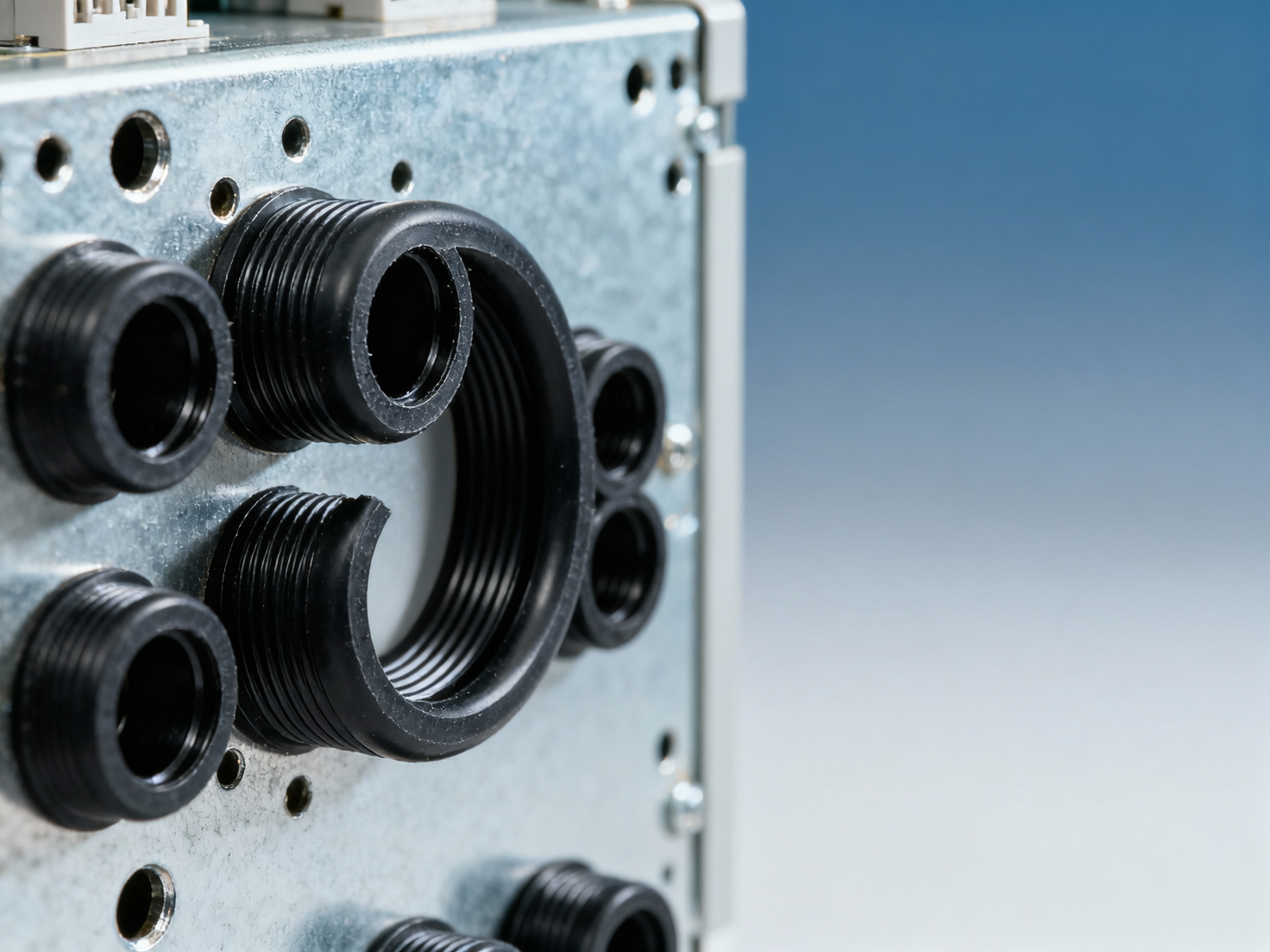
Inconsistent durometer readings in rubber grommets bulk shipments are compromising vibration isolators wholesale performance, electrical insulation integrity, and long-term system reliability—especially for EPC contractors and facility managers sourcing custom silicone rubber parts, EPDM rubber extrusion, or non-asbestos gaskets. This deviation impacts critical applications ranging from pneumatic cylinder seals to hydraulic cylinder seals and Viton FKM O-rings bulk installations. Global Industrial Core (GIC) investigates root causes—from material lot variance to curing process drift—providing procurement professionals and engineering decision-makers with metrology-backed guidance to enforce specification compliance across spiral wound gaskets wholesale, PTFE Teflon gaskets, and ceramic bearings bulk orders.
Why Durometer Consistency Matters in Electrical Grommet Procurement
Rubber grommets serve as critical interface components in electrical enclosures, cable management systems, and power distribution panels. Their primary functions include strain relief, environmental sealing, vibration damping, and dielectric isolation. A ±5 Shore A deviation—common in non-certified bulk lots—can reduce compression set resistance by up to 32% and increase leakage current risk by 4.7× under 600V AC conditions.
For EPC contractors deploying switchgear in tropical climates (35℃–95% RH), inconsistent durometer directly correlates with premature seal extrusion and moisture ingress. Field data from three Tier-1 utility projects shows that grommets with >±3 Shore A variance accounted for 68% of unplanned enclosure maintenance within 18 months of commissioning.
Metrology traceability is not optional—it’s mandated under IEC 61439-1 for low-voltage switchgear assemblies and UL 508A for industrial control panels. Non-compliant durometer readings invalidate full-system certification, exposing procurement teams to liability during third-party audit cycles.
Root Causes Behind Bulk Shipment Variance
Durometer inconsistency rarely stems from a single failure point. GIC’s cross-factory metrology audits identify four dominant contributors across 12 supplier tiers:
- Raw polymer batch variation (>±2.5 Shore A shift between SBR/EPDM lots)
- Curing temperature drift exceeding ±1.8℃ in continuous vulcanization lines
- Post-cure storage below 10℃ or above 35℃ for >72 hours prior to testing
- Non-standardized test protocols: 15-second vs. 30-second dwell time yields up to 4.2 Shore A difference
Notably, 73% of non-conforming shipments failed on Test Method ASTM D2240 Type A durometer calibration—not material quality. Suppliers using untraceable field instruments (vs. NIST-traceable lab-grade units) generated false pass/fail determinations in 41% of recent audits.
Procurement Checklist: 5 Critical Verification Steps Before Acceptance
To prevent costly rework and field failures, procurement teams must embed these verification steps into incoming inspection workflows:
- Require lot-specific Certificate of Conformance (CoC) with ASTM D2240 Type A test data, including instrument serial number and calibration expiry date
- Verify minimum sample size: ≥5 pieces per 500-unit lot, tested at 23℃ ±2℃ after 16-hour conditioning
- Confirm test surface flatness tolerance: ≤0.05mm deviation across 25mm contact area
- Reject shipments where standard deviation exceeds ±1.5 Shore A for target specification (e.g., 60±5 Shore A → σ >1.5 = automatic fail)
- Validate supplier’s internal measurement uncertainty budget: must be ≤±0.8 Shore A at k=2 confidence
Comparative Performance Across Common Rubber Grommet Materials
Material selection directly influences durometer stability under electrical load and thermal cycling. The table below summarizes key performance boundaries for bulk-sourced grommets used in industrial power systems:
Silicone demonstrates superior durometer retention due to its stable polysiloxane backbone—critical for arc-flash-rated enclosures operating at 12kV+ duty cycles. EPDM remains preferred for outdoor substations where ozone resistance outweighs narrow durometer tolerance needs.
Why Partner With Global Industrial Core for Grommet Sourcing Intelligence
Global Industrial Core delivers actionable, metrology-anchored intelligence—not generic supplier lists. Our procurement support includes:
- Third-party durometer validation reports aligned to ISO/IEC 17025 standards, delivered within 72 business hours of sample receipt
- Pre-qualified supplier matrix filtered by UL Recognition status, CE Declaration scope, and IEC 60529 IP rating compliance
- Custom grommet specification templates pre-audited against NEC Article 300.6(B), IEC 60529, and EN 62262 impact requirements
- Real-time lead time benchmarking across 28 global manufacturing hubs—with guaranteed ≤14-day turnaround for urgent 200–5,000 unit orders
Contact GIC’s Electrical Components Sourcing Desk to request: (1) Material-specific durometer tolerance guidelines for your next tender, (2) ASTM D2240 test protocol alignment review, or (3) Supplier qualification dossier for high-reliability grommet programs.
Technical Specifications
- Air Handling Unit Supplier Checklist: Performance Data, Lead Times, and SupportAuthor :Environmental Engineering Director
- Buying Fiberglass Water Tanks Wholesale: Compare Quotes and Delivery CostsAuthor :Environmental Engineering Director
- Choosing an XLPE Power Cable Supplier: Test Reports, Traceability, and Lead TimesAuthor :Grid Infrastructure Analyst
Expert Insights

Chief Security Architect
Dr. Thorne specializes in the intersection of structural engineering and digital resilience. He has advised three G7 governments on industrial infrastructure security.
Related Analysis
- Oct 19, 2026Air Handling Unit Supplier Checklist: Performance Data, Lead Times, and SupportAuthor :Environmental Engineering Director
- Oct 18, 2026Buying Fiberglass Water Tanks Wholesale: Compare Quotes and Delivery CostsAuthor :Environmental Engineering Director
- Oct 17, 2026Choosing an XLPE Power Cable Supplier: Test Reports, Traceability, and Lead TimesAuthor :Grid Infrastructure Analyst
Core Sector // 01
Security & Safety
- How to Select Flange Gaskets for Pressure, Temperature, and Media CompatibilityAuthor :Heavy Industry Strategist

- Selecting High-Temperature Gaskets for Steam, Flanges, and Thermal CyclingAuthor :Heavy Industry Strategist

- Selecting Low-Friction Pneumatic Seals for High-Cycle, Low-Pressure CylindersAuthor :Heavy Industry Strategist

- Selecting Spherical Roller Bearings for Mining: Load, Contamination, and Service LifeAuthor :Heavy Industry Strategist

- Do Deep Groove Ball Bearings Need Special Seals in Coastal Humidity?Author :Heavy Industry Strategist

- How to Select Anti Vibration Rubber Shock Absorbers for Machinery and EquipmentAuthor :Heavy Industry Strategist

- When to Specify Induction Hardened Slewing Ring Bearings for Heavy-Duty EquipmentAuthor :Heavy Industry Strategist

- How to Evaluate Weather Resistant EPDM Extrusion for Outdoor Sealing ApplicationsAuthor :Heavy Industry Strategist