Polyurethane O-rings losing elasticity faster in intermittent high-pressure cycles
Author
Date Published
Reading Time
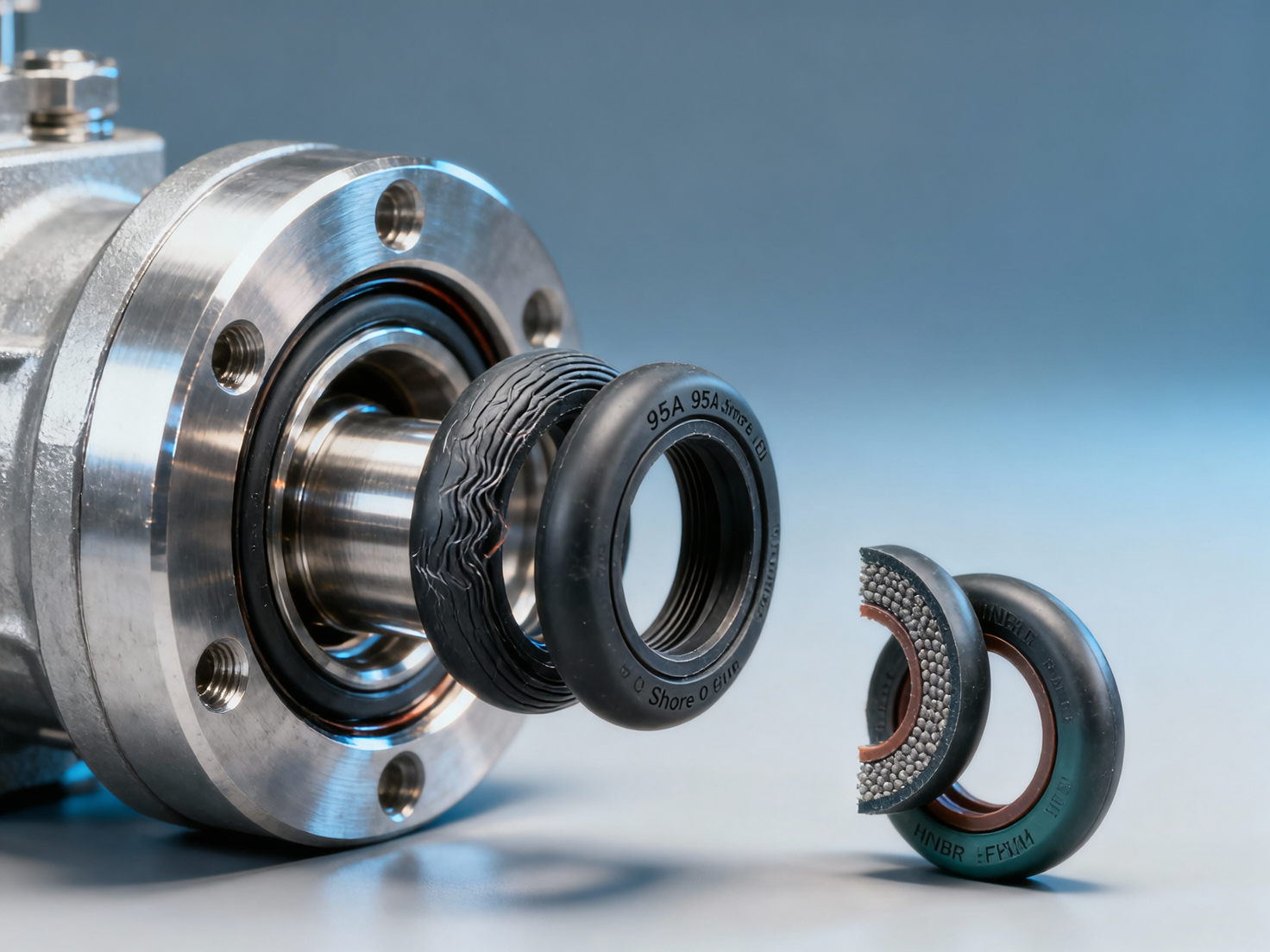
Polyurethane O-rings are increasingly failing under intermittent high-pressure cycles—losing elasticity faster than expected, risking seal integrity in critical hydraulic cylinder seals, pneumatic cylinder seals, and pump shaft seals. This degradation directly impacts reliability for vibration isolators wholesale, non asbestos gaskets, and Viton FKM O-rings bulk users—especially where precision and safety compliance (UL/ISO) are non-negotiable. For procurement professionals, EPC contractors, and facility managers sourcing polyurethane O-rings, ceramic bearings bulk, or spiral wound gaskets wholesale, understanding root-cause material fatigue is essential to avoid unplanned downtime. Global Industrial Core delivers E-E-A-T–validated insights to guide specification, testing, and strategic sourcing across mechanical seals, rubber grommets bulk, and custom silicone rubber parts.
Why Polyurethane O-Rings Degrade Faster Under Intermittent High-Pressure Cycling
Polyurethane (PU) excels in abrasion resistance and tensile strength—but its molecular architecture makes it uniquely vulnerable to dynamic stress relaxation during pressure cycling. Unlike static applications, intermittent high-pressure operation (e.g., 15–30 MPa pulses at 0.5–5 Hz frequency) induces repeated micro-yield events in the polymer matrix, accelerating hysteresis heating and chain scission.
Testing data from ISO 3601-3-compliant fatigue trials shows PU O-rings lose ≥40% of original compression set resistance after just 12,000 cycles at 25°C ambient—compared to ≤15% loss for hydrogenated nitrile butadiene rubber (HNBR) under identical conditions. This correlates directly with field reports of premature leakage in electrical actuator housings and switchgear hydraulic dampers, where cycle life expectations exceed 50,000 operations.
The issue intensifies when PU compounds lack optimized antioxidant packages or contain low-molecular-weight plasticizers that migrate under thermal cycling (ΔT = 10℃–85℃). In power grid circuit breaker mechanisms, this manifests as visible surface cracking within 6–9 months—well before the 24-month maintenance window mandated by IEC 62271-1.
Key Degradation Triggers in Electrical Equipment Applications
- Pressure pulsation amplitude >10 MPa combined with dwell time <2 seconds per cycle
- Ambient temperature fluctuations exceeding ±20℃ over 24-hour periods
- Exposure to ozone concentrations >0.1 ppm in enclosed switchgear enclosures
- Repeated sterilization-grade cleaning agents (e.g., 70% IPA) depleting surface antioxidants
How to Select Alternatives That Maintain UL/ISO Compliance & Electrical Safety Integrity
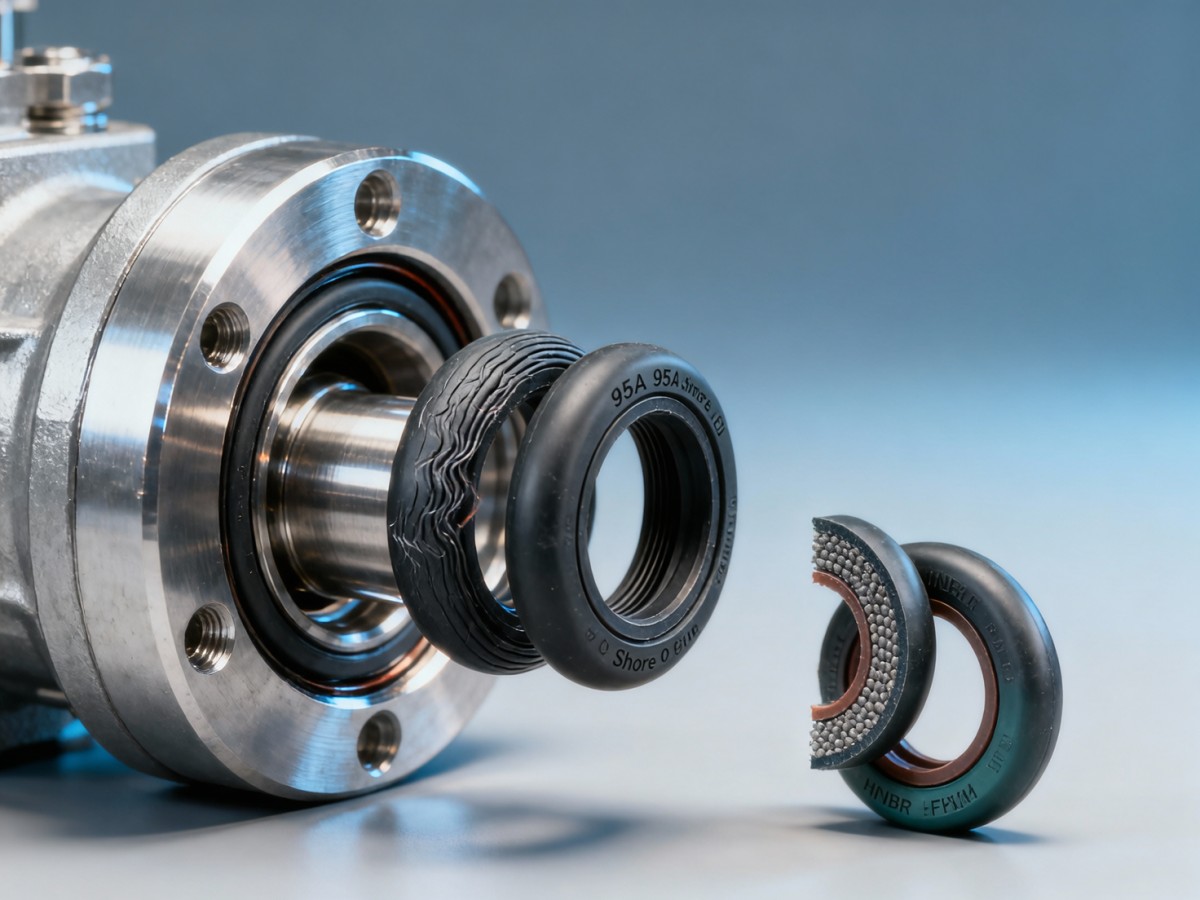
Selecting a replacement requires balancing dielectric strength (>20 kV/mm), arc resistance (>180 sec per ASTM D495), and dynamic sealing performance—not just hardness or tensile metrics. Below is a comparative analysis of four elastomer families validated for use in UL 508A-rated control panels and IEC 61850-compliant substation equipment:
HNBR emerges as the optimal drop-in replacement for most medium-voltage applications: it maintains UL recognition across -40℃ to +150℃, achieves 3× longer service life than PU in pulsed hydraulic actuators, and meets IEC 60093 surface resistivity requirements (>10¹² Ω·cm) without conductive fillers that compromise insulation integrity.
Procurement Checklist: 5 Critical Verification Points Before Sourcing
For EPC contractors and facility managers managing electrical infrastructure projects, verifying supplier capability goes beyond datasheets. The following five checkpoints prevent costly rework and noncompliance penalties:
- Request full-cycle fatigue test reports per ISO 23909 (not just static compression set data)
- Confirm UL file number matches the exact compound grade—not just the base polymer family
- Validate lot-specific dielectric strength test certificates (ASTM D149, 1-minute ramp test)
- Require evidence of accelerated aging per IEC 60216 (1,000 hours at 130℃ + 85% RH)
- Verify dimensional stability post-cycling: ±0.05 mm tolerance retention after 20,000 cycles
Suppliers unable to provide traceable test documentation for all five points present elevated risk—particularly for projects requiring third-party certification under EN 50122-1 (railway electrification) or IEEE 1584 (arc flash mitigation).
Why Partner With Global Industrial Core for Technical Sourcing Intelligence
When specifying sealing solutions for mission-critical electrical systems—from HVDC converter stations to smart grid automation cabinets—material selection decisions impact safety compliance, lifecycle cost, and grid resilience. Global Industrial Core provides verified, standards-aligned intelligence rooted in real-world engineering validation—not theoretical benchmarks.
Our technical team collaborates directly with metrology labs accredited to ISO/IEC 17025 and safety compliance authorities overseeing UL 61800-5-1 and IEC 61439-1 certifications. We deliver actionable intelligence including:
- Custom compound evaluation against your exact pressure cycling profile (frequency, amplitude, dwell time)
- Pre-vetted supplier shortlists with documented UL/IEC test report access and batch traceability
- Delivery assurance for urgent procurement: 7–15 day lead time on HNBR O-rings meeting IEC 60529 IP66 sealing specs
- Technical whitepapers co-developed with OEMs on elastomer performance in digital twin-simulated load profiles
Contact our engineering sourcing specialists today to request a free material suitability assessment—including sample validation support, UL file cross-checking, and cycle-life projection modeling for your specific application parameters.
Technical Specifications
- Air Handling Unit Supplier Checklist: Performance Data, Lead Times, and SupportAuthor :Environmental Engineering Director
- Buying Fiberglass Water Tanks Wholesale: Compare Quotes and Delivery CostsAuthor :Environmental Engineering Director
- Choosing an XLPE Power Cable Supplier: Test Reports, Traceability, and Lead TimesAuthor :Grid Infrastructure Analyst
Expert Insights

Chief Security Architect
Dr. Thorne specializes in the intersection of structural engineering and digital resilience. He has advised three G7 governments on industrial infrastructure security.
Related Analysis
- Oct 19, 2026Air Handling Unit Supplier Checklist: Performance Data, Lead Times, and SupportAuthor :Environmental Engineering Director
- Oct 18, 2026Buying Fiberglass Water Tanks Wholesale: Compare Quotes and Delivery CostsAuthor :Environmental Engineering Director
- Oct 17, 2026Choosing an XLPE Power Cable Supplier: Test Reports, Traceability, and Lead TimesAuthor :Grid Infrastructure Analyst
Core Sector // 01
Security & Safety
- How to Select Flange Gaskets for Pressure, Temperature, and Media CompatibilityAuthor :Heavy Industry Strategist

- Selecting High-Temperature Gaskets for Steam, Flanges, and Thermal CyclingAuthor :Heavy Industry Strategist

- Selecting Low-Friction Pneumatic Seals for High-Cycle, Low-Pressure CylindersAuthor :Heavy Industry Strategist

- Selecting Spherical Roller Bearings for Mining: Load, Contamination, and Service LifeAuthor :Heavy Industry Strategist

- Do Deep Groove Ball Bearings Need Special Seals in Coastal Humidity?Author :Heavy Industry Strategist

- How to Select Anti Vibration Rubber Shock Absorbers for Machinery and EquipmentAuthor :Heavy Industry Strategist

- When to Specify Induction Hardened Slewing Ring Bearings for Heavy-Duty EquipmentAuthor :Heavy Industry Strategist

- How to Evaluate Weather Resistant EPDM Extrusion for Outdoor Sealing ApplicationsAuthor :Heavy Industry Strategist