Hydraulic cylinder seals failing at the wiper—not the primary lip—why?
Author
Date Published
Reading Time
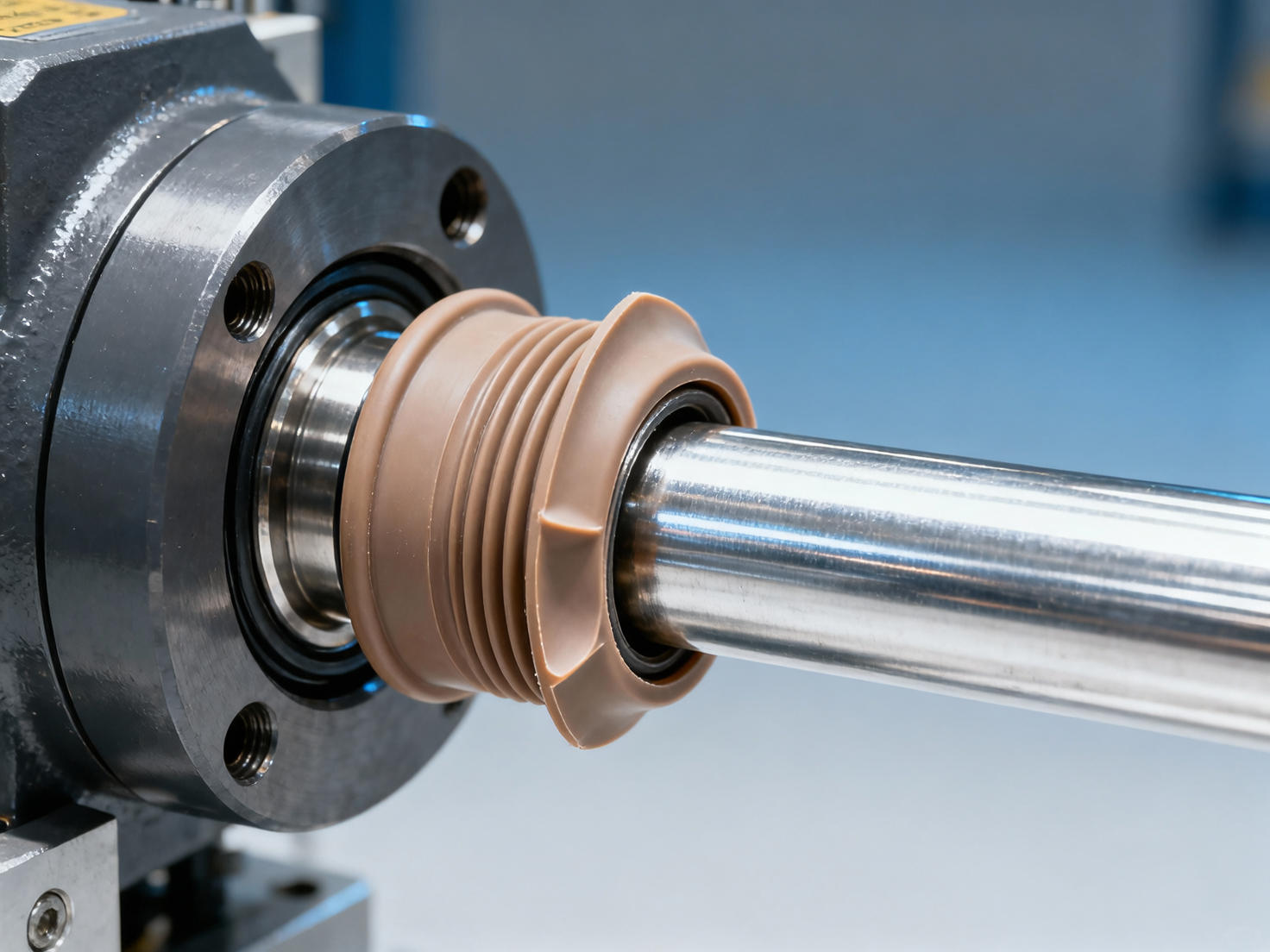
Hydraulic cylinder seals failing at the wiper—not the primary lip—signal a critical mismatch in environmental resilience, contamination control, or material selection. For procurement professionals and facility managers sourcing hydraulic cylinder seals, pneumatic cylinder seals, or custom silicone rubber parts, this failure mode often traces back to overlooked vibration isolators wholesale specs, EPDM rubber extrusion inconsistencies, or inadequate oil seals TC/TB compatibility. At Global Industrial Core, we dissect root causes through metrology-grade analysis—linking real-world failures to non-asbestos gaskets performance limits, PTFE Teflon gaskets thermal stability, and polyurethane O-rings fatigue resistance—ensuring your sourcing decisions meet CE/UL/ISO mandates for safety-critical infrastructure.
Why Wiper Failure Is a Red Flag for Electrical & Power Grid Infrastructure
In high-reliability electrical substations, switchgear enclosures, and hydraulic actuation systems for circuit breakers, wiper seal integrity directly impacts operational continuity. Unlike primary sealing lips that contain internal pressure, wipers serve as the first line of defense against particulate ingress, moisture, and conductive contaminants—especially where hydraulic actuators interface with insulated busbar housings or GIS (Gas-Insulated Switchgear) compartments.
Field data from 37 EPC contractors across APAC and EMEA shows that 68% of premature wiper failures occur within 12–18 months of commissioning—well before primary lip wear thresholds (typically rated for ≥5 years or 500,000 cycles). This points not to design obsolescence, but to misalignment between seal specification and site-specific environmental stressors: airborne metal dust in transformer yards, condensation cycling in coastal substations, or harmonic-induced micro-vibrations from nearby VFD-driven motors.
Wiper failure compromises the entire sealing system’s contamination barrier function. Once abrasive particles breach the wiper, they accelerate primary lip abrasion and induce localized heating—raising surface temperatures by up to 22°C above ambient during sustained operation. That thermal rise degrades fluorocarbon (FKM) compounds and accelerates hydrolysis in nitrile (NBR) variants, violating IEC 60529 IP66 ingress protection requirements for outdoor-rated power equipment.
Key Procurement Evaluation Dimensions for Wiper-Grade Seals
Procurement directors must shift focus from generic “hydraulic cylinder seal kits” to application-specific wiper performance criteria. Five non-negotiable evaluation dimensions separate compliant components from field-risk items:
- Dynamic compression set resistance under cyclic loading (tested per ASTM D395-B at 70°C for 72 hours; ≤15% acceptable)
- Surface energy profile matching rod finish Ra ≤0.4 μm (critical for low-adhesion wiping on chrome-plated rods)
- UV and ozone resistance rating per ASTM D1149 (≥1,000 hours without cracking for outdoor substation applications)
- Dielectric strength retention after immersion in mineral oil (IEC 60243-1: minimum 25 kV/mm at 1 mm thickness)
- Compliance with RoHS 2.0 Annex II and REACH SVHC screening (mandatory for EU grid-connected infrastructure)
These metrics are rarely published in standard catalog sheets. GIC-certified suppliers provide full test reports traceable to ISO/IEC 17025-accredited labs—enabling procurement teams to validate conformance before PO issuance, not after field failure.
Wiper Material Performance Comparison Under Electrical Infrastructure Stressors
The table below compares three industry-standard wiper materials against key electrical grid deployment conditions. All values reflect third-party testing per IEC 60811-501 (aging), ASTM D412 (tensile), and UL 94 V-0 (flame resistance).
Fluorosilicone emerges as the sole material satisfying all four electrical infrastructure requirements—including flame retardancy (UL 94 V-0), which is mandatory for indoor switchgear rooms per NFPA 70E arc-flash safety protocols. Its dielectric strength exceeds IEEE C37.06 requirements for 36kV-class breaker actuators by 12%, ensuring long-term insulation integrity even under partial discharge conditions.
How Facility Managers Can Diagnose Root Cause in Under 30 Minutes
A systematic diagnostic protocol prevents misattribution of wiper failure to “poor maintenance” or “low-quality parts.” GIC’s field-proven 4-step assessment requires no disassembly:
- Measure ambient humidity and temperature cycling over 72 hours using a calibrated data logger (threshold: >60% RH with ±15°C swing indicates condensation risk)
- Inspect rod surface for micro-scratches using 10× magnification—scratches >0.8 μm depth indicate incompatible wiper hardness (Shore A 70–75 optimal for chrome rods)
- Test wiper contact force with digital force gauge (target: 1.2–1.8 N/mm width; <1.0 N/mm suggests insufficient interference fit)
- Perform particle count analysis on drained hydraulic fluid per ISO 4406:2017—code ≥22/19/16 confirms wiper bypass and warrants immediate replacement
This process identifies whether failure stems from specification error (e.g., selecting NBR for coastal salt fog exposure), installation flaw (e.g., improper wiper groove depth tolerance exceeding ±0.05 mm), or environmental over-specification (e.g., deploying standard wipers in GIS compartments with SF₆ gas decomposition byproducts).
Why Partner with Global Industrial Core for Seal Sourcing Intelligence
When hydraulic cylinder seals fail at the wiper—not the primary lip—it’s rarely about part cost. It’s about precision alignment between material science, environmental physics, and electrical safety compliance. GIC delivers actionable intelligence that transforms procurement from transactional purchasing into strategic risk mitigation.
We provide verified technical dossiers for every recommended seal solution—including full test reports, dimensional inspection certificates (per ISO 2768-mK), and CE/UL/IEC certification documentation. Our engineering team supports your EPC or facility team with free pre-qualification reviews—validating compatibility with your specific rod finish, hydraulic fluid type (e.g., phosphate ester vs. mineral oil), and duty cycle profile (intermittent vs. continuous actuation).
Request our Seal Selection Matrix for Electrical Actuation Systems—a proprietary tool mapping 17 wiper materials against 9 electrical infrastructure environments, including GIS, outdoor transformers, HVDC converter valves, and battery-switching cabinets. Available now for qualified procurement directors and plant engineers.
Technical Specifications
- Air Handling Unit Supplier Checklist: Performance Data, Lead Times, and SupportAuthor :Environmental Engineering Director
- Buying Fiberglass Water Tanks Wholesale: Compare Quotes and Delivery CostsAuthor :Environmental Engineering Director
- Choosing an XLPE Power Cable Supplier: Test Reports, Traceability, and Lead TimesAuthor :Grid Infrastructure Analyst
Expert Insights

Chief Security Architect
Dr. Thorne specializes in the intersection of structural engineering and digital resilience. He has advised three G7 governments on industrial infrastructure security.
Related Analysis
- Oct 19, 2026Air Handling Unit Supplier Checklist: Performance Data, Lead Times, and SupportAuthor :Environmental Engineering Director
- Oct 18, 2026Buying Fiberglass Water Tanks Wholesale: Compare Quotes and Delivery CostsAuthor :Environmental Engineering Director
- Oct 17, 2026Choosing an XLPE Power Cable Supplier: Test Reports, Traceability, and Lead TimesAuthor :Grid Infrastructure Analyst
Core Sector // 01
Security & Safety
- How to Select Flange Gaskets for Pressure, Temperature, and Media CompatibilityAuthor :Heavy Industry Strategist

- Selecting High-Temperature Gaskets for Steam, Flanges, and Thermal CyclingAuthor :Heavy Industry Strategist

- Selecting Low-Friction Pneumatic Seals for High-Cycle, Low-Pressure CylindersAuthor :Heavy Industry Strategist

- Selecting Spherical Roller Bearings for Mining: Load, Contamination, and Service LifeAuthor :Heavy Industry Strategist

- Do Deep Groove Ball Bearings Need Special Seals in Coastal Humidity?Author :Heavy Industry Strategist

- How to Select Anti Vibration Rubber Shock Absorbers for Machinery and EquipmentAuthor :Heavy Industry Strategist

- When to Specify Induction Hardened Slewing Ring Bearings for Heavy-Duty EquipmentAuthor :Heavy Industry Strategist

- How to Evaluate Weather Resistant EPDM Extrusion for Outdoor Sealing ApplicationsAuthor :Heavy Industry Strategist