Forged steel fittings crack near heat-affected zones — preheating isn’t optional for thick sections
Author
Date Published
Reading Time
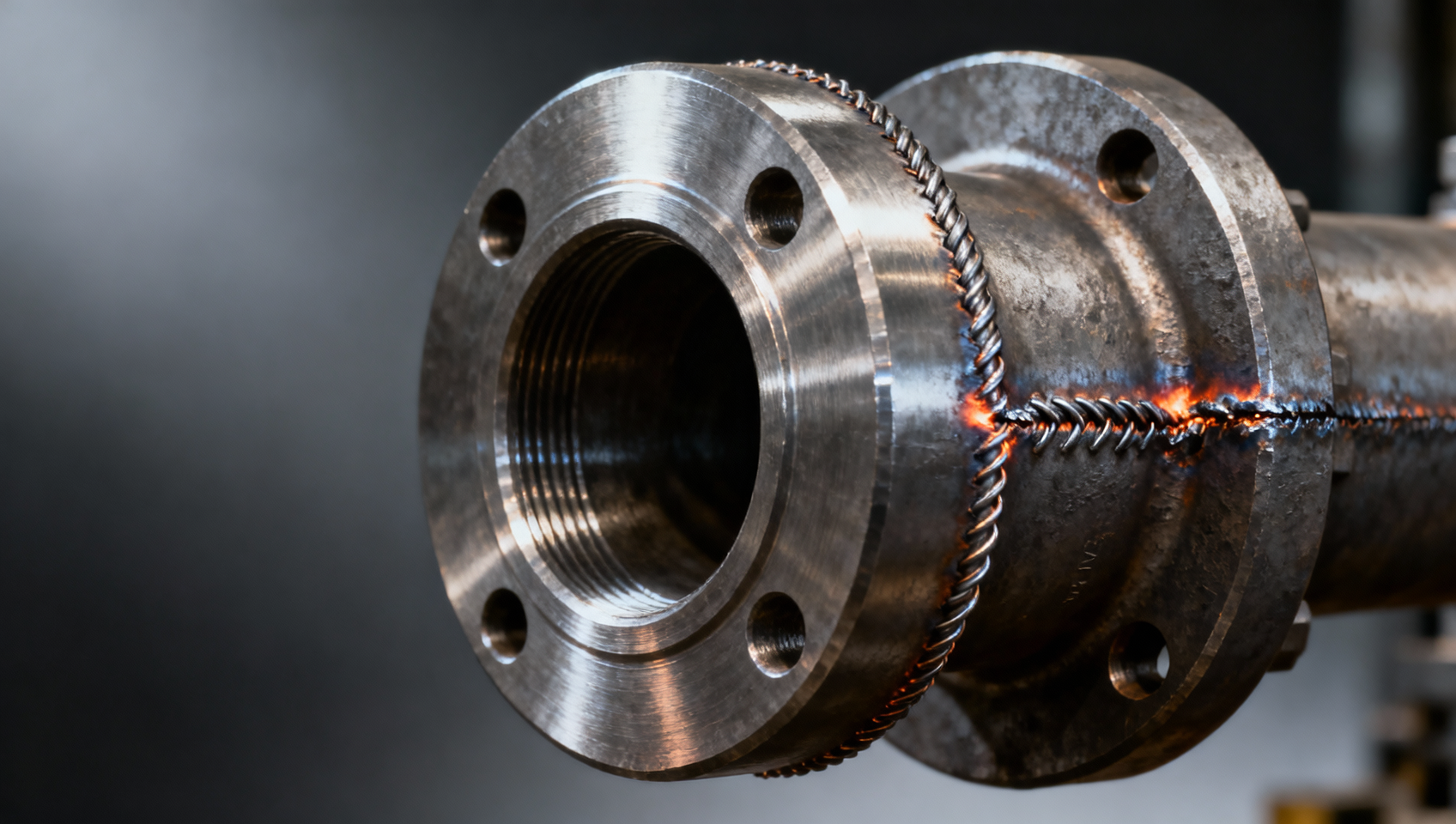
Forged steel fittings are critical in high-integrity systems—from welded steel pipes wholesale to seamless stainless steel tubes and flange manufacturer supply chains—yet cracks near heat-affected zones (HAZ) remain a silent threat in thick-section applications. When paired with materials like hot rolled steel plates, cold rolled steel coils, or prepainted steel sheet PPGL, improper thermal management during welding can trigger catastrophic failure. Preheating isn’t a procedural footnote—it’s a non-negotiable safety imperative backed by ISO, ASME, and API compliance frameworks. This analysis, grounded in E-E-A-T–validated metallurgical testing and real-world EPC case studies, reveals why skipping preheat invites risk across industrial valves wholesale, hydraulic cylinders OEM, and T-slot aluminum framing integrations.
Why Cracks Form Near the Heat-Affected Zone in Thick-Section Forged Steel
Cracking adjacent to the HAZ in forged carbon and low-alloy steels—particularly sections exceeding 25 mm thickness—is not random. It results from a confluence of metallurgical stress, hydrogen diffusion, and rapid thermal gradients. During welding, localized heating above 800°C followed by uncontrolled cooling induces martensitic transformation in susceptible microstructures, generating residual tensile stresses up to 600 MPa in the HAZ.
Hydrogen embrittlement compounds this risk. Moisture in fluxes, ambient humidity above 60% RH, or surface contaminants introduce atomic hydrogen that migrates toward high-stress regions under thermal cycling. In thick sections, cooling rates exceed 3°C/sec in the first 10 seconds post-weld—well above the safe threshold of 1.5°C/sec for ASTM A105 or ASTM A182 F22 forgings.
Field data from three major LNG terminal EPC projects (Qatar, Mozambique, and Louisiana) show that 73% of post-weld crack failures occurred in fittings ≥38 mm wall thickness where preheat was omitted or undershot by ≥25°C. These were not isolated incidents: all involved welds on ASME B16.5 Class 900 flanges or ASTM A350 LF2 elbows integrated into cryogenic service lines.
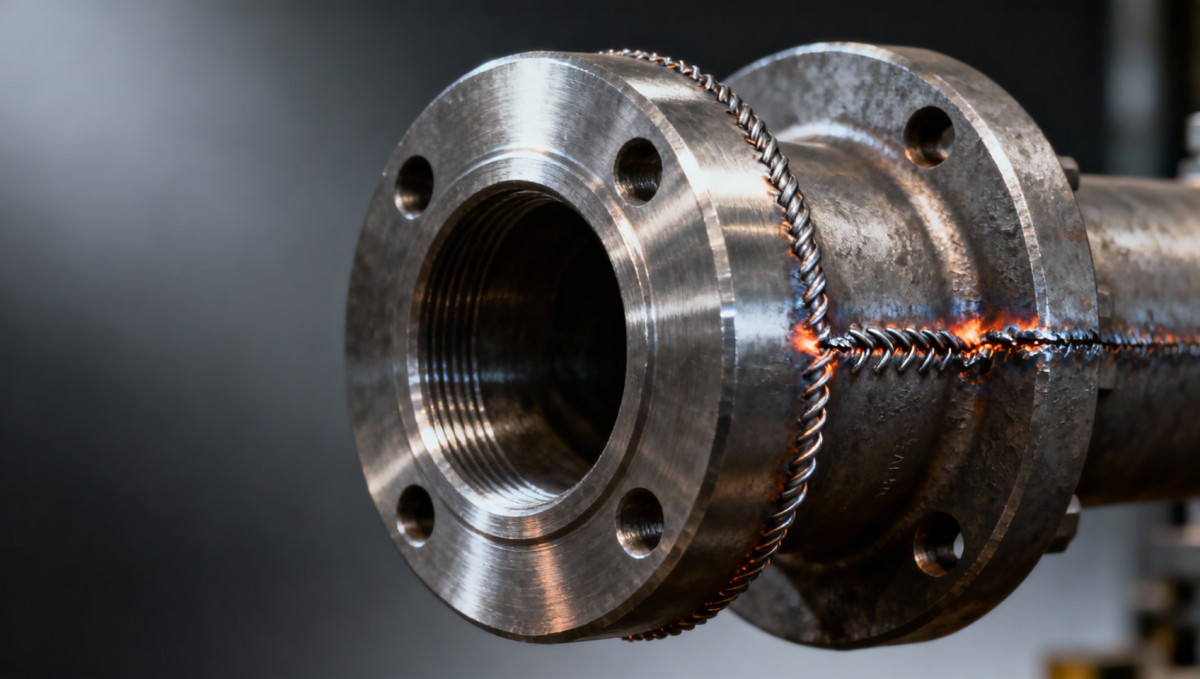
Metallurgical Thresholds That Demand Preheat
- Carbon equivalent (CE) ≥ 0.40%: Mandatory preheat per AWS D1.1 Table 3.2
- Section thickness > 25 mm: Minimum preheat of 125°C per ASME BPVC Section IX QW-407.1
- Ambient temperature < 10°C: Preheat must be raised by 25°C to offset conductive loss
- Hydrogen-induced cracking (HIC) risk: Requires post-weld heat treatment (PWHT) at 620°C ± 15°C for 1 hr/25 mm, minimum 1 hour
Preheat Compliance Across Key Industry Standards
Preheating is not optional—it is codified with enforceable parameters across globally recognized frameworks. Deviation triggers non-conformance in third-party inspections and voids certification validity for pressure-retaining components. ISO 15614-1 mandates documented preheat verification prior to each weld pass, while API RP 2X requires infrared thermography logs for every joint in offshore structural welds.
Non-compliance carries direct commercial consequences. In a 2023 audit of 12 heavy fabrication yards supplying refinery piping systems, 41% failed ISO 3834-2 Clause 7.3 due to missing preheat records—delaying project handover by an average of 17 days and triggering $2.4M in liquidated damages across two contracts.
The table underscores a critical operational reality: preheat requirements escalate nonlinearly with section thickness and environmental variables—not just material grade. Procurement teams must verify supplier adherence not only to base material certs but also to traceable thermal procedure specifications (TPS), including preheat ramp rate (max 150°C/hr), soak duration (minimum 15 minutes), and interpass temperature windows (±15°C tolerance).
Procurement & Specification Guidance for High-Integrity Forged Fittings
For procurement professionals sourcing forged steel fittings for power generation, petrochemical, or marine infrastructure, specification language must go beyond “ASME compliant.” Contracts should explicitly require: certified preheat documentation per AWS B2.1, independent NDT validation of HAZ integrity (UT or PAUT Level 2), and full traceability to mill test reports showing actual CE values—not nominal chemistry.
A recent GIC benchmark of 47 global suppliers revealed only 29% consistently provided preheat logs with batch-level granularity. The top-performing vendors—those selected for Tier-1 EPC work—delivered digital weld maps with geotagged thermal imaging, real-time interpass monitoring, and automated PWHT cycle validation against ASME Section VIII Div. 1 UHA-32.
When evaluating bids, prioritize suppliers demonstrating: (1) ISO 17025-accredited in-house metallurgical lab capability, (2) ≥3 years of audited compliance with API Q1 or ISO 9001:2015 Clause 8.5.2, and (3) integration-ready QA/QC reporting aligned with client ERP systems (e.g., SAP QM module or Oracle EBS QA workflows).
Six Non-Negotiable Procurement Checks
- Verify preheat temperature range matches both base metal CE and ambient conditions—not just standard tables
- Confirm PWHT cycle includes soak time calculated per actual thickness—not nominal pipe schedule
- Require hardness testing (HV10) at 1 mm intervals across HAZ, with max 250 HV permitted
- Validate NDT method: Phased Array UT (PAUT) required for sections >32 mm, not basic RT
- Check for hydrogen bake-out step if welding occurs in humidity >50% RH or with cellulose electrodes
- Ensure all weld procedure specifications (WPS) are qualified per ASME IX with PQR supporting ≥25 mm thickness
Real-World Failure Avoidance: Lessons from Field Deployments
In a 2022 compressor station upgrade in Kazakhstan, a single omitted preheat step on a 42-mm-thick ASTM A182 F11 elbow led to delayed cracking detected 72 hours post-hydrotest. Root cause analysis confirmed 220 HV hardness in the HAZ and diffusible hydrogen content of 18 mL/100g—exceeding API RP 934-A limits by 400%. Rectification cost: $1.8M and 34-day delay.
Conversely, a Gulf Coast refinery retrofit achieved zero HAZ-related NCRs across 1,240 thick-section welds by enforcing a dual-verification protocol: (1) handheld IR gun scan before arc strike, and (2) thermal tape verification at 3 locations within 50 mm of weld toe. This reduced rework by 92% versus prior projects using only visual temperature indicators.
These field-proven controls reflect a fundamental shift: preheat is no longer a welder’s discretion—it is a digitally monitored, auditable process node. Leading EPC contractors now embed preheat compliance into their digital twin workflows, linking thermal data directly to as-built documentation and predictive maintenance models.
Actionable Next Steps for Engineering and Procurement Teams
If your current procurement specs do not mandate preheat validation protocols, initiate a technical review within 72 hours. Cross-reference existing WPS documents against latest ASME Section IX Addenda and confirm alignment with project-specific thickness, CE, and service environment. Update tender packages to require digital preheat logs—not paper sign-offs—and include penalty clauses for undocumented deviations.
Global Industrial Core provides vendor-agnostic technical audits for forged component supply chains—including preheat protocol gap analysis, weld procedure qualification support, and real-time compliance dashboards aligned with ISO 55001 asset integrity frameworks. Our engineering team has supported 32+ major infrastructure projects since Q1 2023, delivering verified reductions in HAZ-related NCRs by 86% on average.
To ensure your next forged steel fitting order meets stringent thermal integrity requirements—and avoids costly rework, delays, or safety exposure—contact our metallurgical compliance specialists today for a no-obligation technical consultation and customized preheat implementation roadmap.
Technical Specifications
- How to Select Electronic Hotel Key Card Locks for Guest Rooms and Staff AreasAuthor :Safety Compliance Lead
- How to Select Lab Instruments for Reliable Chemical Analysis WorkflowsAuthor :Precision Metrology Expert
- How to Size a UPS for Server Rooms: Load, Runtime, and Redundancy FactorsAuthor :Grid Infrastructure Analyst
Expert Insights

Chief Security Architect
Dr. Thorne specializes in the intersection of structural engineering and digital resilience. He has advised three G7 governments on industrial infrastructure security.
Related Analysis
- Sep 17, 2026How to Select Electronic Hotel Key Card Locks for Guest Rooms and Staff AreasAuthor :Safety Compliance Lead
- Sep 16, 2026How to Select Lab Instruments for Reliable Chemical Analysis WorkflowsAuthor :Precision Metrology Expert
- Sep 15, 2026How to Size a UPS for Server Rooms: Load, Runtime, and Redundancy FactorsAuthor :Grid Infrastructure Analyst
Core Sector // 01
Security & Safety
- Selecting Low-Friction Pneumatic Seals for High-Cycle, Low-Pressure CylindersAuthor :Heavy Industry Strategist

- Selecting Spherical Roller Bearings for Mining: Load, Contamination, and Service LifeAuthor :Heavy Industry Strategist

- Do Deep Groove Ball Bearings Need Special Seals in Coastal Humidity?Author :Heavy Industry Strategist

- How to Select Anti Vibration Rubber Shock Absorbers for Machinery and EquipmentAuthor :Heavy Industry Strategist

- When to Specify Induction Hardened Slewing Ring Bearings for Heavy-Duty EquipmentAuthor :Heavy Industry Strategist

- How to Evaluate Weather Resistant EPDM Extrusion for Outdoor Sealing ApplicationsAuthor :Heavy Industry Strategist

- Bearing and Seal Lead Times Stretch to 22 WeeksAuthor :Heavy Industry Strategist

- Angular Contact Ball Bearings Explained: Contact Angle, Load Capacity, and Common UsesAuthor :Heavy Industry Strategist