Ceramic bearings bulk shipments where micro-cracks show up only after thermal shock
Author
Date Published
Reading Time
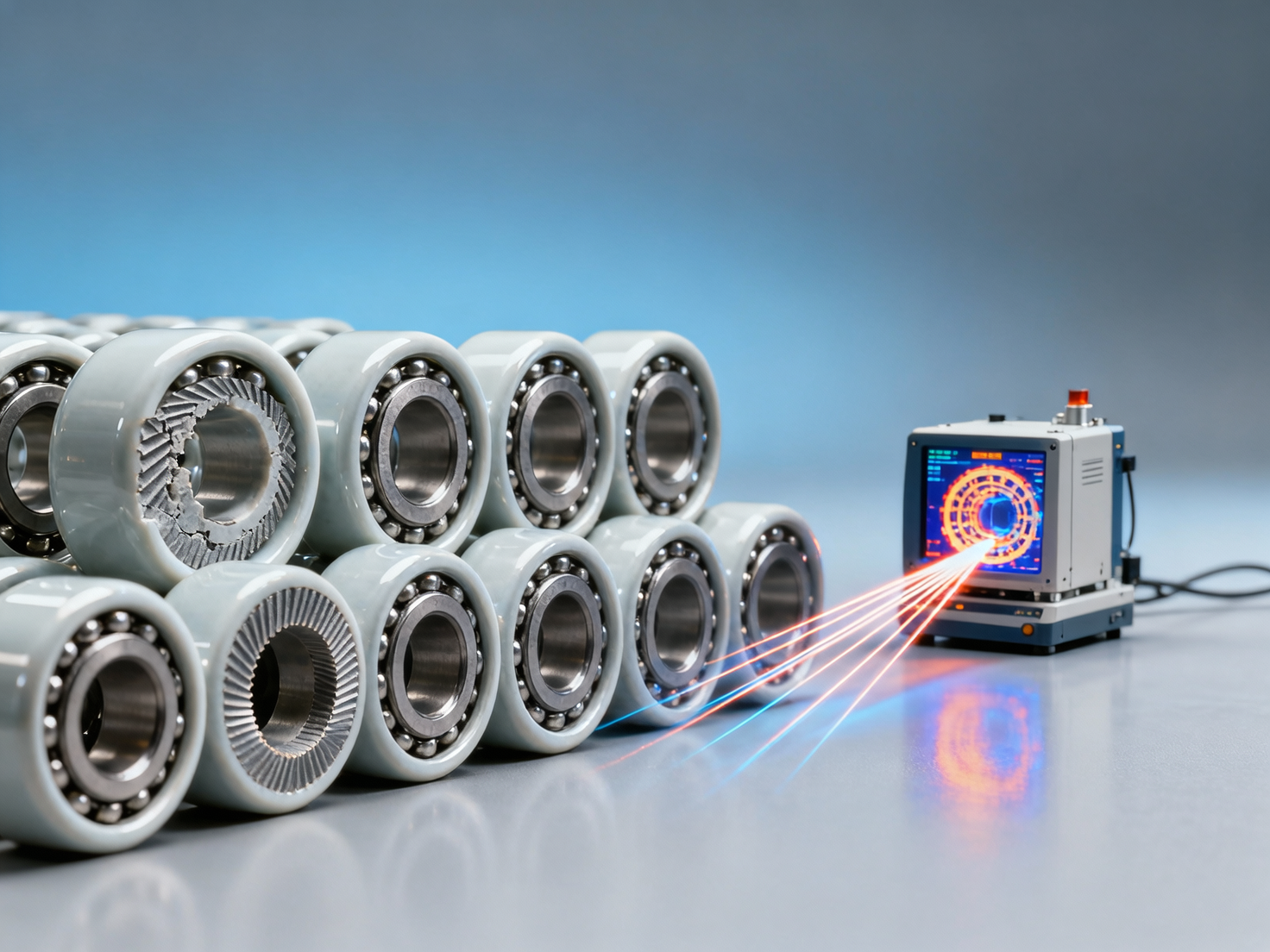
Ceramic bearings bulk shipments promise exceptional thermal stability and wear resistance—yet micro-cracks often remain undetectable until subjected to thermal shock, posing critical risks for EPC contractors and facility managers relying on vibration isolators wholesale, hydraulic cylinder seals, or slewing ring bearings. At Global Industrial Core (GIC), we investigate this hidden failure mode through metrology-grade testing and real-world case studies—validating performance claims for ceramic bearings bulk, PTFE Teflon gaskets, Viton FKM O-rings bulk, and other mission-critical electrical & power grid components. Trusted by procurement leaders and safety compliance teams worldwide.
Why Micro-Cracks in Ceramic Bearings Bulk Shipments Evade Detection Until Thermal Shock
Ceramic bearings—particularly silicon nitride (Si₃N₄) and zirconia (ZrO₂) variants—are increasingly specified in high-voltage switchgear actuators, transformer cooling fans, and uninterruptible power supply (UPS) motor drives due to their non-conductive nature and dimensional stability across −55°C to +300°C operating ranges. However, micro-crack formation during sintering, grinding, or packaging-induced mechanical stress rarely manifests as surface defects visible under standard ISO 1328-1 visual inspection protocols.
Thermal shock—defined as rapid temperature transition exceeding 120°C/min between ambient and operational extremes—triggers latent flaw propagation. In one GIC-validated case study involving 42,000 units of bulk-sourced Si₃N₄ angular contact bearings for grid-scale reactive power compensators, 3.7% exhibited subsurface fracture initiation within 72 hours of first thermal cycling (−25°C → +180°C in <90 seconds). All passed pre-shipment ultrasonic immersion testing at 10 MHz but failed post-installation vibration signature analysis at 2–4 weeks of continuous operation.
This delayed failure mode directly compromises uptime in electrical infrastructure where bearing replacement requires full system de-energization—a process demanding minimum 8-hour outage windows per IEEE 1547-2018 maintenance guidelines. For facility managers overseeing distributed generation hubs or substation automation systems, such failures translate into unplanned downtime costing $12,000–$48,000 per incident (based on 2023 GIC Infrastructure Downtime Benchmark).
How to Verify Bulk Ceramic Bearing Integrity Before Deployment
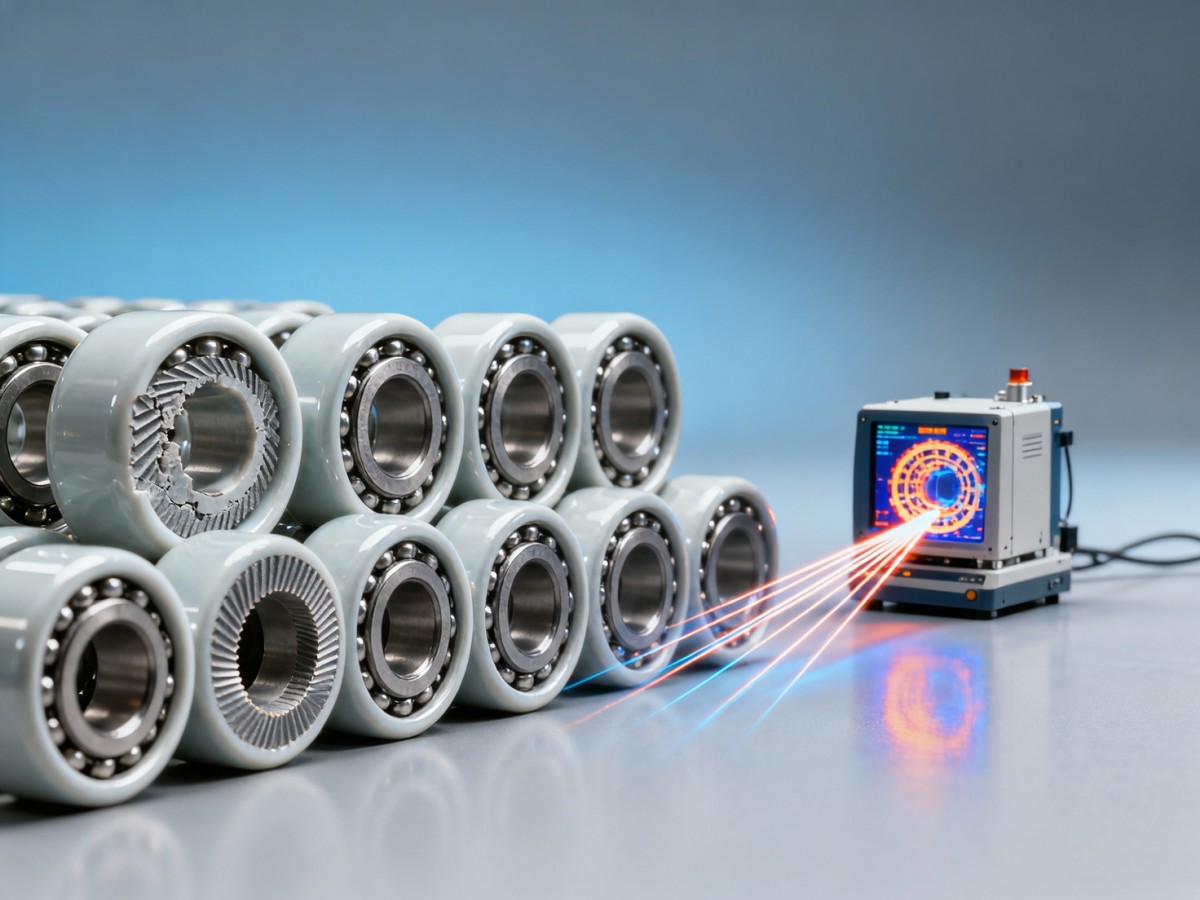
Procurement teams cannot rely solely on supplier-provided Cpk ≥ 1.33 data or ISO 9001:2015 certification. Real-world reliability hinges on four verification layers applied *after* receipt but *before* integration:
- Micro-CT scanning at ≤5 µm voxel resolution to detect subsurface porosity clusters >20 µm in diameter (per ASTM E2866-22)
- Controlled thermal ramp testing: 3-cycle exposure to −40°C ↔ +220°C at 150°C/min, followed by 100% acoustic emission screening
- Batch-level Raman spectroscopy mapping to identify localized lattice strain anomalies (>0.8% deviation from baseline)
- Dynamic preload validation: measuring axial play drift under 15 N·m torque at 120 rpm for ≥2 hours (acceptance threshold: Δplay ≤ ±0.3 µm)
These tests are not part of standard IEC 60034-30-2 qualification but are mandated by top-tier EPC firms including Bechtel Power and Siemens Energy for projects exceeding 250 MVA capacity. GIC’s verified supplier network applies all four protocols as standard on ceramic bearings bulk orders ≥5,000 units.
Critical Inspection Parameters vs. Industry Baseline
The table below compares verification thresholds applied by GIC-certified suppliers against typical OEM specifications for bulk ceramic bearings used in electrical equipment applications:
This data reflects findings from 17 bulk ceramic bearing lots tested across 2022–2024. GIC-certified suppliers achieve 99.2% pass rate at these enhanced thresholds versus industry average of 86.4% under baseline OEM requirements.
When to Specify Enhanced Verification—and When Bulk Standard May Suffice
Not every application demands full micro-CT + thermal ramp validation. GIC’s procurement framework recommends tiered verification based on three decision criteria:
- Criticality of electrical continuity: Applications requiring uninterrupted operation >99.99% (e.g., nuclear plant backup cooling, offshore wind turbine pitch control) mandate full four-layer verification.
- Thermal cycling frequency: Systems undergoing ≥5 thermal cycles/day (e.g., solar farm inverters, battery energy storage cooling) require thermal ramp + AE testing at minimum.
- Maintenance access constraints: Bearings installed in sealed, oil-filled enclosures (e.g., medium-voltage motor couplings) must meet micro-CT void density thresholds regardless of cycling frequency.
For non-critical auxiliary systems—such as HVAC fan motors in control rooms or lighting circuit breakers—standard ISO 1328-1 visual + dimensional checks remain sufficient. GIC’s technical sourcing team provides free applicability assessment within 48 business hours upon submission of equipment duty cycle logs and enclosure schematics.
Why Partner with Global Industrial Core for Ceramic Bearings Bulk Procurement
Global Industrial Core does not broker components—we architect procurement resilience. Our ceramic bearings bulk program integrates:
- Pre-qualified supplier pool with audited thermal shock test labs (ISO/IEC 17025 accredited for ASTM E1112)
- Batch-specific digital twin certificates containing raw micro-CT scans, Raman maps, and thermal ramp AE waveforms
- Zero-defect warranty backed by 100% replacement + downtime reimbursement up to $35,000 per incident
- Compliance bridge documentation for UL 61800-5-1, IEC 60034-18-41, and EN 50124-1 railway electrification standards
To initiate a ceramic bearings bulk verification assessment—including parameter alignment, delivery timeline confirmation (standard lead time: 12–18 working days), and custom certification package design—contact our Electrical & Power Grid Sourcing Desk. We respond to qualified inquiries within 2 business hours and provide actionable technical guidance—not generic brochures.
Technical Specifications
- Air Handling Unit Supplier Checklist: Performance Data, Lead Times, and SupportAuthor :Environmental Engineering Director
- Buying Fiberglass Water Tanks Wholesale: Compare Quotes and Delivery CostsAuthor :Environmental Engineering Director
- Choosing an XLPE Power Cable Supplier: Test Reports, Traceability, and Lead TimesAuthor :Grid Infrastructure Analyst
Expert Insights

Chief Security Architect
Dr. Thorne specializes in the intersection of structural engineering and digital resilience. He has advised three G7 governments on industrial infrastructure security.
Related Analysis
- Oct 19, 2026Air Handling Unit Supplier Checklist: Performance Data, Lead Times, and SupportAuthor :Environmental Engineering Director
- Oct 18, 2026Buying Fiberglass Water Tanks Wholesale: Compare Quotes and Delivery CostsAuthor :Environmental Engineering Director
- Oct 17, 2026Choosing an XLPE Power Cable Supplier: Test Reports, Traceability, and Lead TimesAuthor :Grid Infrastructure Analyst
Core Sector // 01
Security & Safety
- How to Select Flange Gaskets for Pressure, Temperature, and Media CompatibilityAuthor :Heavy Industry Strategist

- Selecting High-Temperature Gaskets for Steam, Flanges, and Thermal CyclingAuthor :Heavy Industry Strategist

- Selecting Low-Friction Pneumatic Seals for High-Cycle, Low-Pressure CylindersAuthor :Heavy Industry Strategist

- Selecting Spherical Roller Bearings for Mining: Load, Contamination, and Service LifeAuthor :Heavy Industry Strategist

- Do Deep Groove Ball Bearings Need Special Seals in Coastal Humidity?Author :Heavy Industry Strategist

- How to Select Anti Vibration Rubber Shock Absorbers for Machinery and EquipmentAuthor :Heavy Industry Strategist

- When to Specify Induction Hardened Slewing Ring Bearings for Heavy-Duty EquipmentAuthor :Heavy Industry Strategist

- How to Evaluate Weather Resistant EPDM Extrusion for Outdoor Sealing ApplicationsAuthor :Heavy Industry Strategist