Dosing agitators wholesale quotes differ because mixing duty is ignored
Author
Date Published
Reading Time
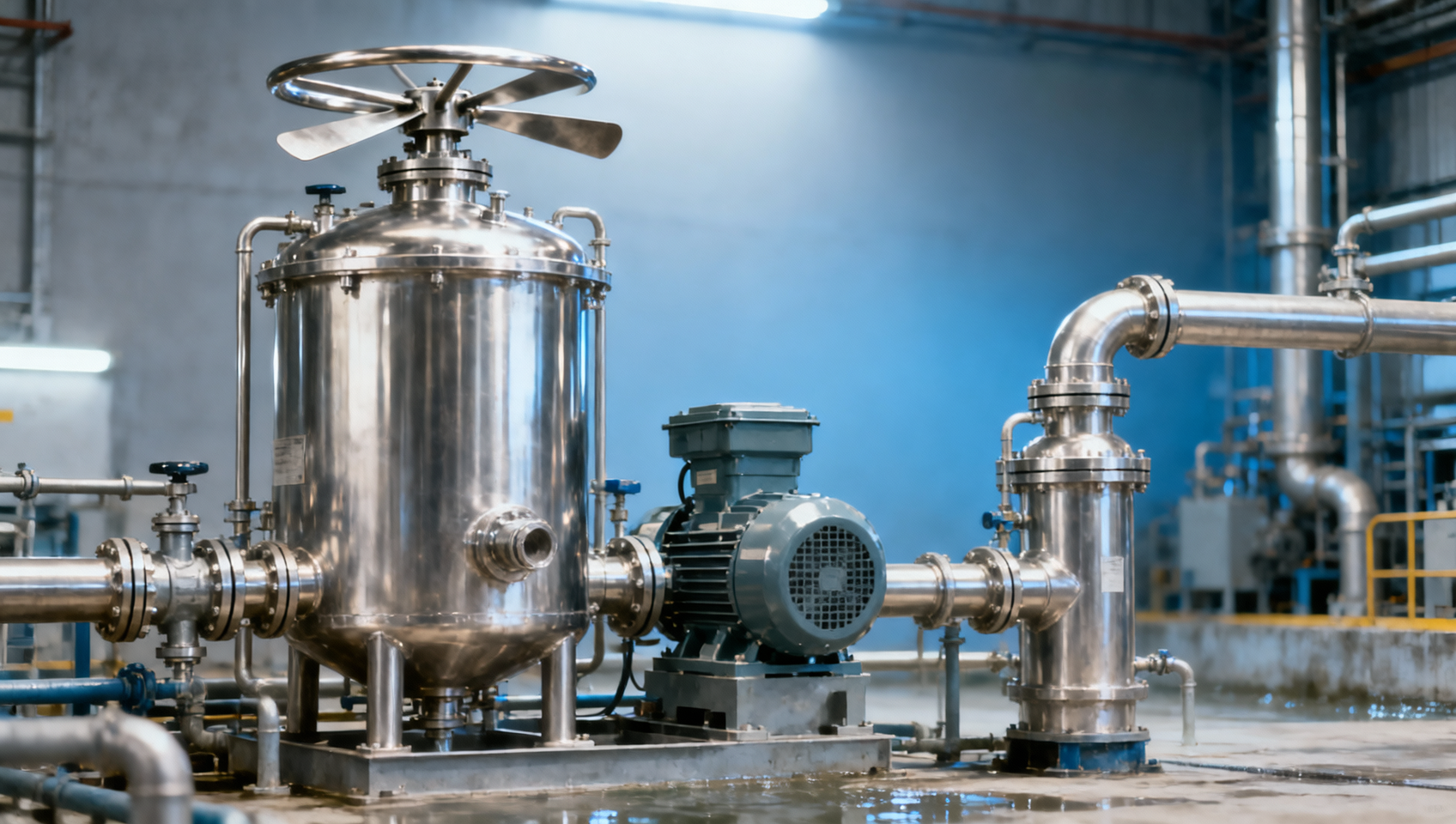
Many dosing agitators wholesale quotes look competitive at first glance, yet the real cost gap often comes from one overlooked factor: mixing duty. For buyers comparing wastewater treatment chemicals systems, static mixers wholesale options, or complete process packages with centrifugal water pumps, ignoring viscosity, tank geometry, solids loading, and runtime can lead to underperformance, rework, and higher lifecycle costs. This article explains why accurate duty definition is the key to fair pricing and reliable procurement.
For industrial researchers, plant operators, procurement teams, and decision-makers, the issue is not simply whether an agitator can rotate. The real question is whether it can deliver the required blend quality, suspension effect, dosing uniformity, and service life under actual site conditions for 8, 16, or even 24 hours per day.
In B2B sourcing, two wholesale quotes may look similar in specification sheets while hiding major differences in shaft design, motor power, impeller geometry, sealing arrangement, corrosion allowance, and control strategy. When mixing duty is poorly defined, suppliers are forced to guess. One may underquote by assuming water-like liquid, while another prices for abrasive slurry or variable-density chemicals.
That is why serious procurement starts with duty clarification. A fair comparison requires the same process basis, the same operating envelope, and the same acceptance criteria. Without that, price benchmarking becomes misleading and project risk moves downstream to commissioning, maintenance, and plant reliability.
Why mixing duty changes the real price of a dosing agitator
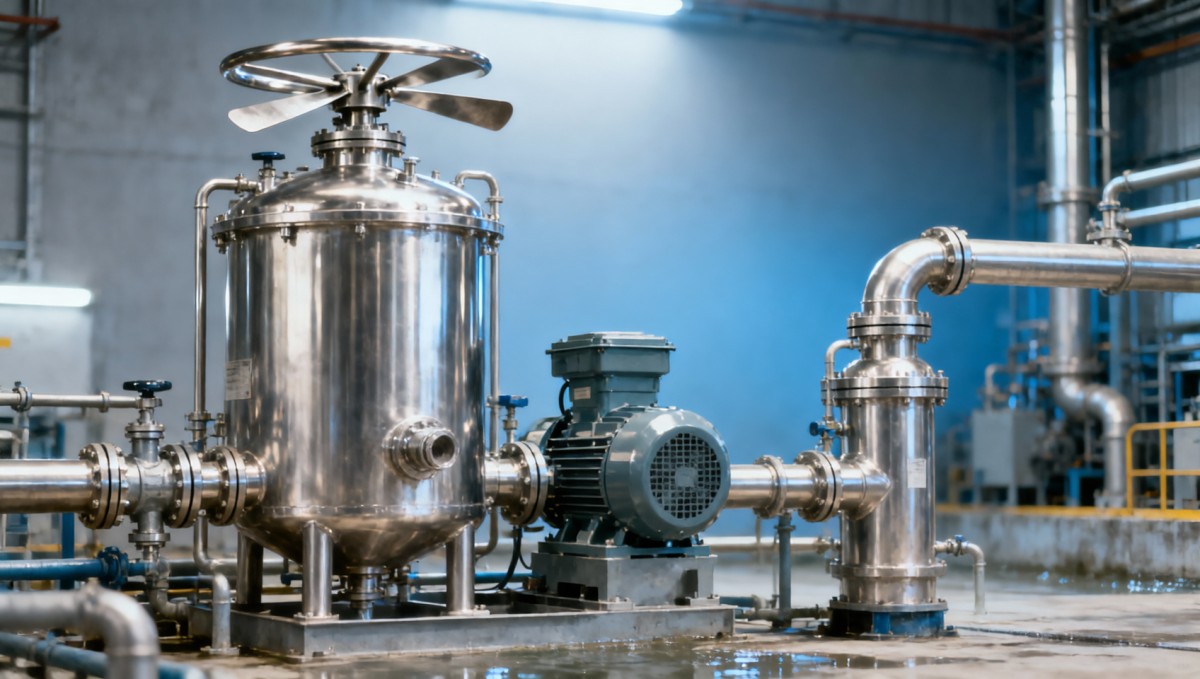
A dosing agitator is not priced only by tank size or motor kilowatts. It is priced by duty. In industrial environments, duty includes liquid viscosity, specific gravity, solids concentration, batch or continuous operation, tank dimensions, baffle arrangement, temperature range, and required mixing result. A unit intended for 200 cP polymer make-up behaves very differently from one handling 1 cP clean water.
This explains why wholesale quotes differ so much. A supplier quoting for a 2.2 kW top-entry mixer with a simple marine impeller may assume low viscosity and short runtime. Another may quote a 4 kW gear-driven unit with reinforced shaft and corrosion-resistant wetted parts for 16-hour daily service. On paper, both are “dosing agitators,” but they are not equivalent industrial solutions.
In chemical dosing skids, wastewater treatment systems, and neutralization tanks, mixing duty also affects accessory requirements. More demanding service may require VFD control, dry-run protection, double mechanical seals, level interlocks, or compatibility with centrifugal water pumps and static mixers. These additions can move a quote by 15% to 40%, but they often prevent much larger losses during operation.
The following comparison shows how duty assumptions typically influence quote structure and lifecycle exposure. It is useful when reviewing multiple supplier responses that seem inconsistent.
The key lesson is simple: quote variation is often not a pricing anomaly but a duty-definition gap. Buyers who normalize duty assumptions before asking for prices usually get more transparent offers, fewer change orders, and stronger technical alignment across vendors.
Common signs that duty has been ignored in quoting
- Quotes list motor power and tank volume, but no viscosity range, solids percentage, or operating temperature.
- Suppliers provide no impeller type, no shaft length check, and no mention of tank geometry or baffles.
- There is no distinction between blending, suspension, dilution, pH correction, and flocculant activation duties.
- Mechanical seal type, wetted material, and control method are left “as standard,” despite aggressive media or long runtime.
The duty data buyers should define before requesting wholesale quotes
A reliable RFQ for dosing agitators should define process duty with enough depth to let suppliers size equipment correctly. In many projects, fewer than 10 technical inputs are submitted, while at least 15 to 20 data points are needed for an informed quotation. That gap is one reason procurement teams receive offers that are impossible to compare fairly.
At a minimum, buyers should specify tank working volume, liquid height, diameter-to-height ratio, medium viscosity, density, pH, solids content, operating temperature, and target outcome. “Mix chemical in tank” is not enough. The supplier needs to know whether the goal is dissolution in 5 minutes, solids suspension with no sediment after 30 minutes, or concentration uniformity within a defined tolerance.
For wastewater treatment chemicals, polymer activation, alkali dosing, and coagulant preparation, the process target often determines the mixer type more than the tank size does. A 1,000-liter tank with fragile polymer may require low-shear mixing, while a 500-liter lime slurry tank may need higher torque and anti-settling geometry. Similar capacity does not mean similar agitator design.
The checklist below can help technical, operations, and procurement teams create a common basis before seeking wholesale quotes or integrated system bids.
Core RFQ checklist for dosing agitator duty definition
When this information is included, suppliers can engineer on the same basis. That improves quote accuracy and reduces the chance of one vendor pricing a standard unit while another includes a fully duty-rated industrial mixer package.
Five practical procurement inputs often missed
- Minimum and maximum liquid level, not just nominal tank volume.
- Whether the chemical is shear-sensitive, foaming, or crystal-forming.
- Expected start-stop frequency, such as 6 cycles per hour or continuous operation.
- Electrical supply details, for example 380–415 V, 50 Hz, 3 phase.
- Site requirements for ingress protection, hazardous area rating, or washdown environment.
These details seem minor, but they can change lead time by 1–3 weeks and alter total installed cost materially. In international sourcing, they also affect export packing, spare parts planning, and commissioning readiness.
How mixing duty affects equipment selection across complete process packages
Dosing agitators rarely work alone. In real plants, they are part of a broader process package that may include static mixers wholesale assemblies, chemical storage tanks, dosing pumps, level instruments, control panels, and centrifugal water pumps. If agitator duty is not matched to the overall process, bottlenecks appear elsewhere in the line.
For example, a chemical dilution skid may use a centrifugal water pump to feed dilution water at a stable rate while the dosing agitator ensures concentration uniformity in the make-up tank. If the agitator is undersized, the downstream dosing pump may feed a non-uniform solution. The result is unstable pH control, overconsumption of chemicals, or repeated operator adjustment over a 12-hour shift.
Static mixers can reduce tank mixing demand in some applications, but not all. They are effective for continuous in-line blending of compatible streams when residence time and pressure drop are acceptable. They are not a full substitute when solids must be suspended, polymer must be gently activated, or chemical stock solutions must remain homogeneous for several hours.
A system-level comparison helps buyers understand where each mixing method fits and how it influences the quoted scope.
When to use tank agitators, static mixers, or combined arrangements
The right selection depends on process variability. If feed concentration changes by more than 10% across a shift, a tank-based equalization step may be necessary. If operation is steady and low-viscosity, a static mixer may reduce footprint. Procurement should therefore evaluate mixers as part of a process chain, not as isolated line items.
Integration points that affect quote accuracy
- Control philosophy: local starter, VFD, PLC interlock, or full dosing skid automation.
- Hydraulic interaction: recirculation rate, pump head, pipe velocity, and inlet nozzle position.
- Maintenance access: top clearance, seal replacement space, and lifting arrangement.
- Material compatibility: tank, mixer shaft, impeller, valves, and instrument wetted parts should match the chemical environment.
Ignoring these interfaces often produces a cheap quote that later requires field modification. In industrial projects, one site rework event can erase the apparent savings of a lower wholesale offer.
A practical evaluation method for buyers comparing wholesale quotes
When several suppliers submit proposals, the best approach is to compare commercial and technical elements in one matrix. Price should usually be one of at least 4 core dimensions: duty compliance, mechanical robustness, operating cost, and delivery risk. A quote that is 12% lower but based on incomplete duty may become the most expensive option within the first 6 months of operation.
Procurement teams often focus on motor power, material grade, and unit price because those items are easy to compare. However, operators care about vibration, settling, foam generation, seal leakage, and consistency of chemical concentration. Decision-makers care about plant uptime, maintenance budget, and process stability. A useful evaluation method must connect all three perspectives.
One effective model is to assign weighted scores to the most important factors. The exact weighting varies by project, but technical fit should usually carry at least 35% to 45% in critical process duties. For aggressive or 24/7 service, lifecycle and maintenance factors should not be less than 20%.
The table below provides a practical comparison structure that can be adapted for EPC procurement, plant upgrades, or distributor sourcing.
Suggested quote comparison matrix
This type of matrix helps teams justify decisions internally. It also creates a more transparent discussion with suppliers, who can explain why one quote includes upgraded materials, better seals, or a different impeller arrangement. As a result, negotiations shift from headline price to process fit and total project value.
Three procurement mistakes that drive hidden cost
- Comparing only the motor kilowatt rating without checking torque curve, gearbox service factor, and mixing objective.
- Accepting a low-price quote with no defined acceptance criteria for concentration uniformity or suspension performance.
- Buying agitators separately from tanks, pumps, and controls when interface responsibility is unclear.
In many industrial settings, hidden cost comes not from the purchase order but from post-installation troubleshooting. A disciplined quote review process reduces that risk significantly.
Implementation, commissioning, and long-term reliability considerations
Even a well-specified dosing agitator can disappoint if implementation details are neglected. Installation should confirm nozzle orientation, mounting rigidity, shaft alignment, electrical compatibility, and actual operating level. For medium and large tanks, small deviations in mounting position can change circulation patterns enough to create dead zones or vortex formation.
Commissioning should verify more than motor rotation. A practical site acceptance routine may include a 4-step check: dry mechanical inspection, no-load electrical run, water test, and process-medium performance confirmation. Where possible, buyers should define measurable outcomes such as mixing time under 10 minutes, visible sediment absence after 30 minutes, or stable solution concentration during a full dosing cycle.
Long-term reliability also depends on maintenance planning. For continuous-duty service, operators should inspect seals, fasteners, vibration, and current draw at regular intervals, often every 250 to 500 operating hours depending on process severity. In corrosive or abrasive applications, spare seals and critical wear parts should be included in the first purchase lot to avoid emergency procurement later.
Industrial buyers should treat supplier support as part of the quote, not an afterthought. Documentation such as GA drawings, wiring diagrams, spare parts lists, and O&M instructions can save days during installation and reduce the chance of incorrect field modifications.
FAQ for industrial buyers and operators
How do I know whether a low quote is underdesigned?
Check whether the supplier has stated design viscosity, solids percentage, operating hours, and target mixing result. If those values are missing, the quote may be based on a generic water-like assumption. Also review seal type, shaft diameter, and material compatibility. An underdesigned unit often looks acceptable at purchase but struggles under actual plant duty.
What delivery time is typical for a dosing agitator package?
Standard industrial units may ship in 2–4 weeks, while custom-built mixers with material upgrades, special seals, or integrated control panels can take 5–8 weeks or longer depending on scope. International sourcing may add transit, inspection, and documentation time, so procurement should confirm the full project timeline rather than factory completion only.
Can static mixers replace dosing agitators completely?
Not always. Static mixers are effective for continuous in-line blending, especially with low-to-medium viscosity fluids, but they do not maintain tank homogeneity over hold periods and are not ideal for solids suspension or delicate polymer activation. In many systems, the best result comes from using both technologies for different stages of the process.
Which documents should procurement request before ordering?
Ask for a duty-confirmation sheet, GA drawing, material list for wetted parts, motor and gearbox data, seal details, electrical requirements, recommended spare parts, and commissioning guidance. For integrated packages, request interface responsibility for pumps, controls, and instrumentation so there is no ambiguity during installation.
Dosing agitators wholesale quotes differ for a valid reason when mixing duty differs. The real procurement problem begins when that duty is undefined, assumed, or inconsistent across suppliers. By clarifying viscosity, tank geometry, solids loading, operating schedule, and performance targets upfront, buyers can compare quotes on an equal basis and reduce the risk of underperformance, retrofits, and avoidable lifecycle cost.
For EPC teams, facility managers, procurement directors, and technical operators, the best results come from treating agitator sourcing as a process-engineering decision rather than a catalog purchase. If you need support reviewing dosing agitator specifications, comparing static mixers wholesale options, or aligning mixer duty with pumps and chemical systems, contact GIC to discuss your application, request a tailored evaluation framework, or get a more accurate sourcing plan.
Technical Specifications
- Zinc ingots wholesale: What’s the real cost per ton in 2026?Author :Heavy Industry Strategist
- Aluminum ingots bulk vs. cast bars: Which delivers better yield for extrusion?Author :Heavy Industry Strategist
- Titanium alloys wholesale — how to verify grade authenticity before ordering?Author :Heavy Industry Strategist
Expert Insights

Chief Security Architect
Dr. Thorne specializes in the intersection of structural engineering and digital resilience. He has advised three G7 governments on industrial infrastructure security.
Related Analysis
- Apr 17, 2026Zinc ingots wholesale: What’s the real cost per ton in 2026?Author :Heavy Industry Strategist
- Apr 17, 2026Aluminum ingots bulk vs. cast bars: Which delivers better yield for extrusion?Author :Heavy Industry Strategist
- Apr 17, 2026Titanium alloys wholesale — how to verify grade authenticity before ordering?Author :Heavy Industry Strategist
Core Sector // 01
Security & Safety
- Steam traps wholesale: Which type fails least in condensate return lines with air binding?Author :Environmental Engineering Director

- Check valves (swing type): When does water hammer override disc stability?Author :Environmental Engineering Director
: When does water hammer override disc stability?")
- Cast iron gate valves: Are they still viable for potable water mains in 2026?Author :Environmental Engineering Director

- Grease interceptor wholesale options differ more in cleaning designAuthor :Environmental Engineering Director

- Polyaluminium chloride PAC dosage errors often start with pH assumptionsAuthor :Environmental Engineering Director

- Polyacrylamide PAM wholesale grades are harder to compare than they lookAuthor :Environmental Engineering Director

- Wastewater treatment chemicals that cut sludge cost are not always cheaperAuthor :Environmental Engineering Director

- Pure water bottling machine downtime often starts in the rinsing sectionAuthor :Environmental Engineering Director