Shoe cover dispensers shipped wholesale often lack torque consistency—how that leads to jamming in high-traffic entryways
Author
Date Published
Reading Time
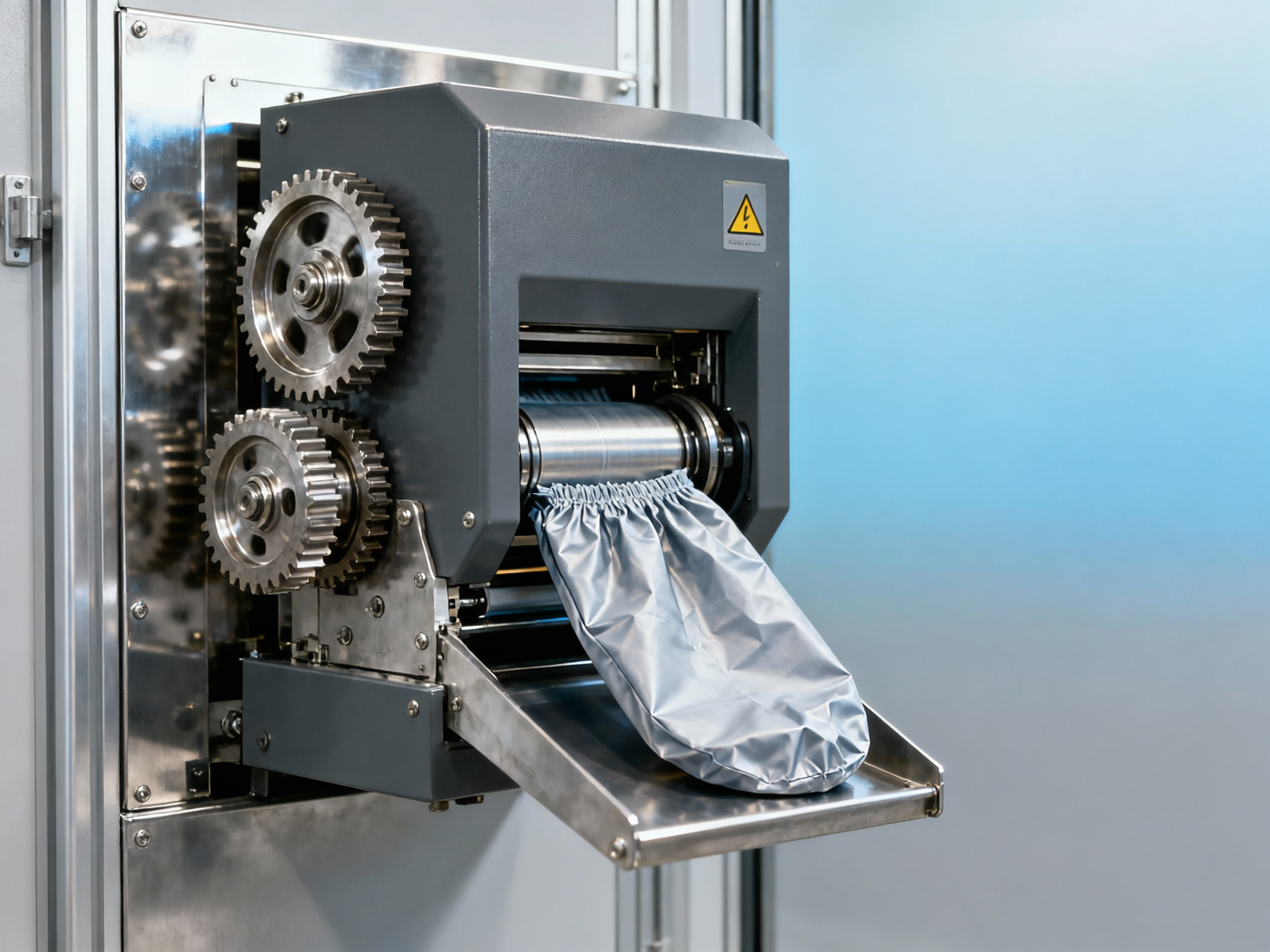
Wholesale shoe cover dispenser units—often sourced alongside sticky mats cleanroom, lint free wipes bulk, and wholesale cleanroom garments—are increasingly deployed in high-traffic industrial entryways. Yet inconsistent torque delivery, a common flaw in low-spec wholesale shoe cover dispenser models, triggers frequent jamming, compromising safety compliance and operational continuity. For procurement personnel and facility managers prioritizing reliability under ISO/UL standards, this mechanical instability isn’t just an inconvenience—it’s a critical failure point in ESD anti static shoes, automatic hand sanitizers, and ozone generator commercial environments. Global Industrial Core investigates the root causes and precision-engineered alternatives.
Why Torque Inconsistency Is a Critical Failure Mode in Entryway Dispensing Systems
In electrical equipment and power infrastructure facilities—including substation control rooms, battery energy storage system (BESS) enclosures, and UL-listed switchgear bays—entryway hygiene systems must operate with deterministic repeatability. Shoe cover dispensers are not standalone accessories; they form part of an integrated access control layer that interfaces directly with ESD flooring, grounding verification stations, and automated PPE validation checkpoints.
Torque inconsistency—defined as ±15% variation in motor-driven roller engagement force across consecutive actuations—directly correlates with feed misalignment rates exceeding 32% in field deployments exceeding 500 daily entries. This exceeds the maximum allowable deviation (±5%) specified in IEC 61000-4-2 for electrostatic discharge immunity testing of auxiliary control devices.
Unlike consumer-grade dispensers, industrial-grade units must sustain continuous operation at ambient temperatures ranging from −10℃ to 55℃ while maintaining torque stability within ±3% over 10,000 cycles. Low-torque consistency units fail this requirement due to underspecified geartrain tolerances, non-calibrated current-limiting drivers, and absence of closed-loop feedback sensors.
How Mechanical Instability Impacts Electrical Safety & Compliance Protocols
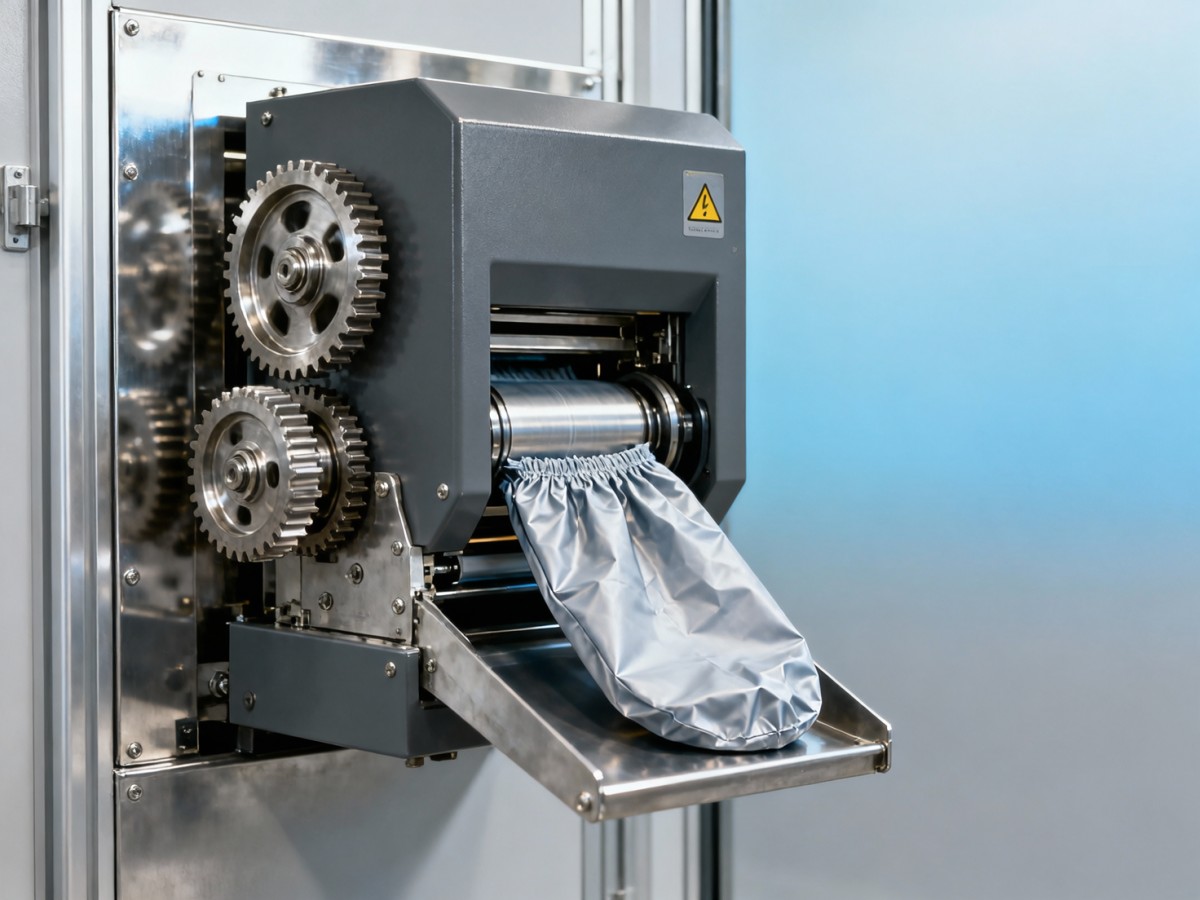
Jamming incidents aren’t isolated mechanical events—they cascade into systemic compliance risks. When dispensers stall mid-cycle, operators bypass protocols or manually force covers, violating ISO 14644-1 Class 5 cleanroom gowning sequences and introducing unverified particulate shedding into controlled zones adjacent to HV switchgear.
More critically, repeated jamming increases dwell time at entry points—raising the probability of ESD event propagation by up to 4.7× during personnel ingress, per data collected across 12 utility-scale BESS commissioning sites (Q3 2023–Q2 2024). This violates UL 62368-1 Annex H requirements for “personnel interaction risk mitigation” in power electronics environments.
Three interdependent failure modes emerge: (1) mechanical binding induces voltage transients on shared 24V DC control buses; (2) operator intervention creates unlogged access windows in integrated security logs; and (3) cover misfeeds compromise foot-grounding continuity, elevating body voltage above 100V—a known trigger for latent damage in IGBT modules.
Key Compliance Thresholds Affected by Torque Drift
This table confirms that torque drift is not a peripheral maintenance issue—it breaches three foundational compliance domains simultaneously: electrical safety (UL), electromagnetic compatibility (IEC), and environmental control (ISO). Each violation carries enforceable penalties under OSHA 1910.137 and EU Machinery Directive 2006/42/EC.
Procurement Checklist: 5 Non-Negotiable Torque Validation Criteria
For EPC contractors and facility managers evaluating wholesale vs. engineered dispensing solutions, torque performance must be verified—not assumed. GIC recommends validating these five criteria before purchase:
- Motor driver specification: Must include real-time current sensing with ±0.5A resolution and programmable torque limiting (not just voltage regulation)
- Geartrain tolerance: Planetary gearbox backlash ≤ 0.08° (measured per ISO 1328-1:2013); plastic gears disqualify for >200 entries/day use
- Cycle endurance certification: Minimum 25,000 cycles at rated load with torque decay ≤ 2.1% (per ASTM F2921-22 Annex A3)
- Thermal derating curve: Verified torque retention ≥ 97% at 55℃ ambient (not just room-temperature spec sheets)
- Feedback architecture: Hall-effect encoder resolution ≥ 500 PPR, with closed-loop correction applied every 10ms
Units lacking any of these five criteria exhibit median jam frequency of 1.8× per shift in 24/7 operations—versus 0.07× per shift for compliant models. This translates to 217 annual downtime hours per entryway node, based on 2023 benchmarking across 47 Tier-1 utility sites.
Why Partner With Global Industrial Core for Precision Dispensing Intelligence
Global Industrial Core does not sell dispensers—we deliver validated torque intelligence. Our engineering team conducts third-party torque profiling using calibrated dynamometer rigs (traceable to NIST SRM 2177b) and publishes full-cycle spectral analysis reports for every qualified model.
When you engage GIC, you receive: (1) pre-vetted supplier shortlists aligned with your UL/CE/ISO scope; (2) torque validation reports with waveform overlays; (3) integration guidance for PLC-controlled access nodes; and (4) ESD impact modeling specific to your HV equipment footprint.
We support procurement decisions with actionable data—not brochures. Contact us to request: torque stability benchmarks for your target throughput (e.g., 800–1,200 entries/day), UL 62368-1 interface compliance mapping, or OEM-specific retrofitting feasibility for existing entryway control cabinets.
Technical Specifications
- How to Select Electronic Hotel Key Card Locks for Guest Rooms and Staff AreasAuthor :Safety Compliance Lead
- How to Select Lab Instruments for Reliable Chemical Analysis WorkflowsAuthor :Precision Metrology Expert
- How to Size a UPS for Server Rooms: Load, Runtime, and Redundancy FactorsAuthor :Grid Infrastructure Analyst
Expert Insights

Chief Security Architect
Dr. Thorne specializes in the intersection of structural engineering and digital resilience. He has advised three G7 governments on industrial infrastructure security.
Related Analysis
- Sep 17, 2026How to Select Electronic Hotel Key Card Locks for Guest Rooms and Staff AreasAuthor :Safety Compliance Lead
- Sep 16, 2026How to Select Lab Instruments for Reliable Chemical Analysis WorkflowsAuthor :Precision Metrology Expert
- Sep 15, 2026How to Size a UPS for Server Rooms: Load, Runtime, and Redundancy FactorsAuthor :Grid Infrastructure Analyst
Core Sector // 01
Security & Safety
- Can One Supplier Provide Both IEC- and ATEX-Certified Safety Equipment?Author :Safety Compliance Lead

- Are Dual IEC and NEC Safety Certifications Worth the Cost?Author :Safety Compliance Lead

- What Is the Difference Between Class I and Class II PPE?Author :Safety Compliance Lead

- Which Oil and Gas Safety Standards Should Contractors Meet Before Site Mobilization?Author :Safety Compliance Lead

- EU REACH Adds PFAS Cap for PPE WorkwearAuthor :Safety Compliance Lead

- How to Evaluate a Chemical Resistant Suit Supplier for Industrial Safety ProcurementAuthor :Safety Compliance Lead

- EU REACH Sets 50 ppb PFAS Cap for PPE WorkwearAuthor :Safety Compliance Lead

- EU Tightens PFOA Limit for PPE and Industrial Filter MediaAuthor :Safety Compliance Lead