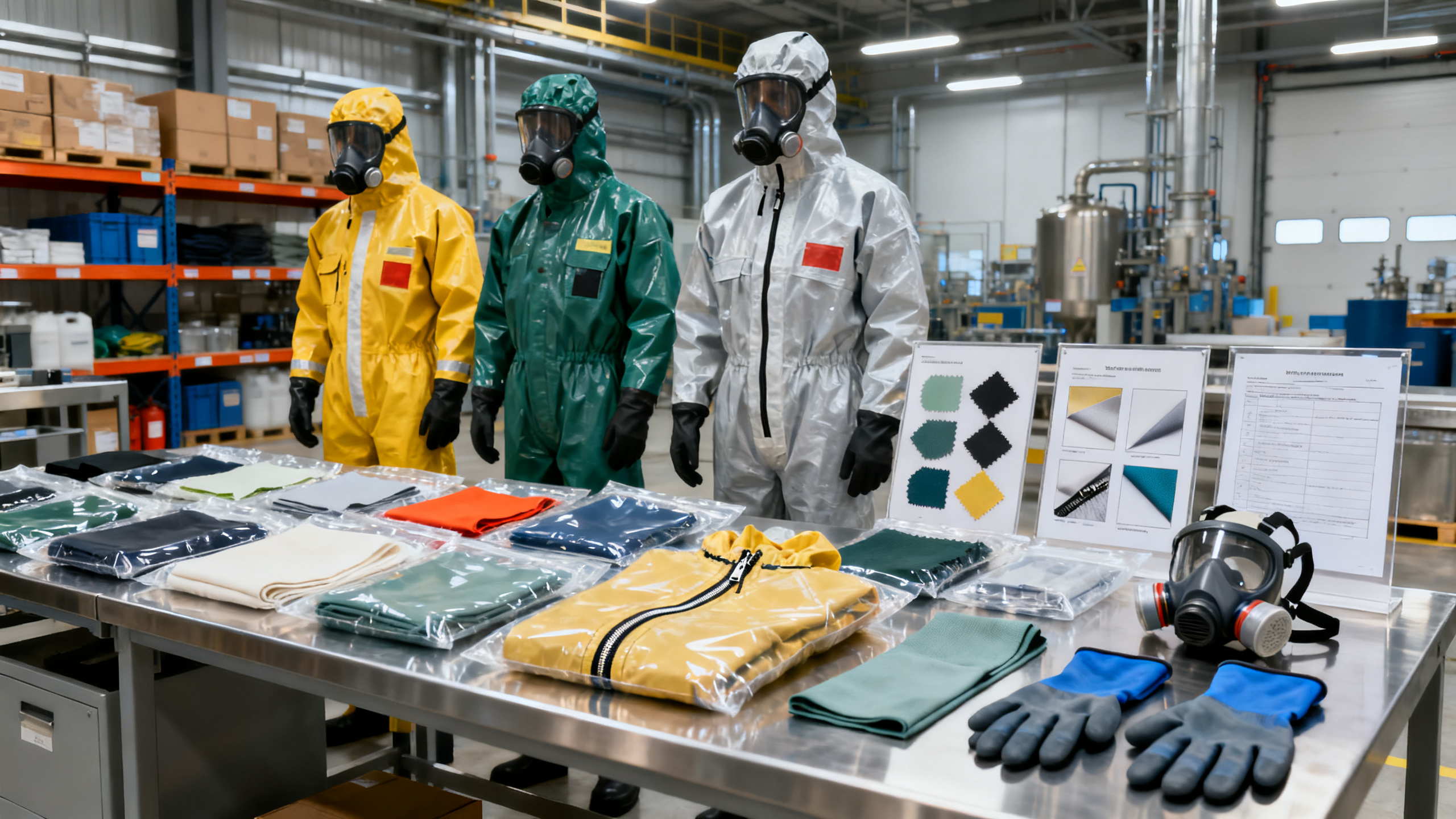
ASTM F2100-26 Medical Mask Standard Takes Effect
Author
Date Published
Reading Time

On May 1, 2026, the updated ASTM F2100-26 standard for medical masks entered into force in the United States, introducing stricter performance requirements—including particle filtration efficiency (PFE) ≥99.9% and synthetic blood penetration resistance ≥160 mmHg. The standard’s scope now extends to industrial-grade PPE garment fabrics, and has already driven a 32% increase in export orders for testing and measurement equipment such as the TSI 8130A and GESTER GT-C303. Exporters and suppliers of PPE materials, certification-related instrumentation, and compliance-focused manufacturing services should monitor implications across supply chain tiers.
Event Overview
Effective May 1, 2026, the ASTM F2100-26 standard for medical face masks became officially enforceable in the U.S. It specifies new minimum thresholds: particle filtration efficiency (PFE) of at least 99.9%, and resistance to synthetic blood penetration of no less than 160 mmHg. The standard’s application has been formally extended to include industrial-grade personal protective equipment (PPE) garment fabrics. Concurrently, demand for testing and measurement devices—including the TSI 8130A and GESTER GT-C303—has risen by 32% in export orders, according to publicly reported trade data.
Industries Affected
Direct Exporters of PPE Fabrics and Finished Masks
These enterprises face revised conformity requirements when targeting U.S. healthcare or industrial procurement channels. Compliance with ASTM F2100-26 is now a prerequisite—not optional—for market access in regulated segments. Non-compliant stock may be rejected at customs or disqualified from tender processes.
Raw Material Suppliers (e.g., Meltblown Nonwovens, Spunbond Layers)
Upstream material providers must verify that base substrates meet the enhanced PFE and fluid resistance benchmarks. Batch-level validation data—and traceability to final fabric performance—have become essential for downstream certification support.
Contract Manufacturers and Converters
Fabric laminators, mask assemblers, and cut-and-sew facilities must update quality control protocols to align with the new test parameters. Equipment calibration, operator training, and documentation of test conditions (e.g., flow rate, challenge aerosol size) are now subject to greater scrutiny during third-party audits.
Distribution and Certification Service Providers
Agents facilitating U.S. market entry—including those coordinating ASTM-aligned lab testing, FDA listing support, or import documentation—must ensure service offerings reflect the expanded scope of F2100-26, especially its inclusion of PPE garment fabrics.
Key Actions for Enterprises and Practitioners
Monitor official updates from ASTM International and U.S. FDA guidance documents
The ASTM F2100-26 text itself does not define enforcement mechanisms; interpretation and implementation details may emerge via FDA communications or notified body bulletins. Tracking these sources helps distinguish formal requirements from voluntary best practices.
Review current product portfolios against newly covered categories
Since the standard now explicitly includes industrial PPE garment fabrics—not just masks—enterprises supplying coveralls, gowns, or isolation suits for U.S.-bound markets should assess whether their existing certifications apply or require revalidation under F2100-26 criteria.
Distinguish between policy signal and operational readiness
A 32% export order increase for testing equipment reflects early market response, but does not confirm widespread adoption of F2100-26-compliant fabrics in commercial supply chains. Enterprises should treat this as an indicator of growing demand—not evidence of full regulatory transition—and avoid premature capacity expansion without verified end-customer commitments.
Prepare for upstream verification and documentation requirements
Manufacturers should initiate internal alignment on test method traceability (e.g., ISO 16890, ASTM F2299), retain raw material certificates of analysis, and ensure lab reports explicitly reference F2100-26 clauses—not just generic ‘ASTM testing’.
Editorial Perspective / Industry Observation
Observably, ASTM F2100-26 functions primarily as a technical specification upgrade—not a standalone regulatory mandate—but its influence is amplified through procurement policies and private-sector certification programs. Analysis shows its extension to PPE garment fabrics signals a convergence trend: standards originally designed for medical devices are increasingly shaping industrial PPE requirements in North America. This shift does not replace ANSI/ISEA or NFPA standards, but introduces overlapping expectations that may affect multi-market product development strategies. From an industry perspective, the 32% equipment export growth reflects preparatory activity—not yet systemic compliance—and warrants ongoing observation rather than immediate strategic overhaul.
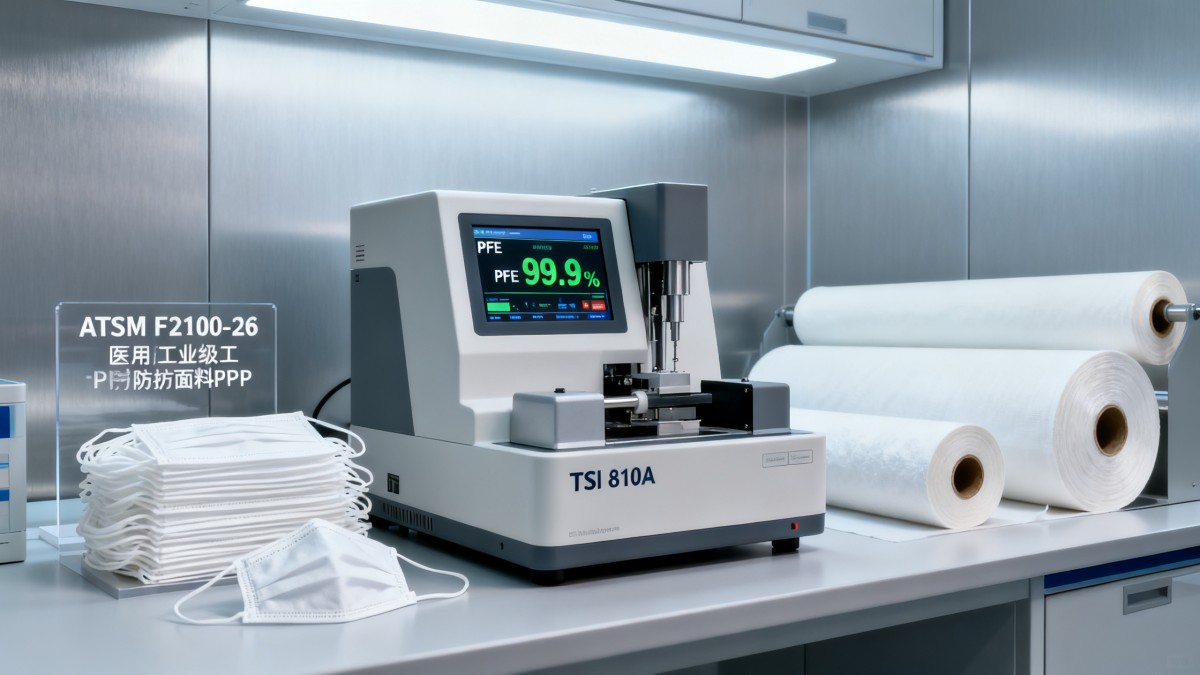
In summary, ASTM F2100-26’s enforcement marks a tightening of technical benchmarks for U.S.-bound medical and industrial PPE textiles, with measurable early effects on testing infrastructure demand. Its significance lies less in immediate regulatory enforcement and more in its role as a de facto benchmark influencing sourcing decisions, certification pathways, and supplier qualification criteria. Currently, it is better understood as an evolving technical signal—one requiring calibrated attention, not wholesale operational change.
Source: ASTM International (F2100-26 standard document, effective date confirmed); publicly reported export order data for TSI 8130A and GESTER GT-C303 testing equipment. Note: FDA enforcement guidance and adoption timelines for PPE garment applications remain under observation.
Technical Specifications
- How to Select Electronic Hotel Key Card Locks for Guest Rooms and Staff AreasAuthor :Safety Compliance Lead
- How to Select Lab Instruments for Reliable Chemical Analysis WorkflowsAuthor :Precision Metrology Expert
- How to Size a UPS for Server Rooms: Load, Runtime, and Redundancy FactorsAuthor :Grid Infrastructure Analyst
Expert Insights

Chief Security Architect
Dr. Thorne specializes in the intersection of structural engineering and digital resilience. He has advised three G7 governments on industrial infrastructure security.
Related Analysis
- Sep 17, 2026How to Select Electronic Hotel Key Card Locks for Guest Rooms and Staff AreasAuthor :Safety Compliance Lead
- Sep 16, 2026How to Select Lab Instruments for Reliable Chemical Analysis WorkflowsAuthor :Precision Metrology Expert
- Sep 15, 2026How to Size a UPS for Server Rooms: Load, Runtime, and Redundancy FactorsAuthor :Grid Infrastructure Analyst
Core Sector // 01
Security & Safety
- Can One Supplier Provide Both IEC- and ATEX-Certified Safety Equipment?Author :Safety Compliance Lead

- Are Dual IEC and NEC Safety Certifications Worth the Cost?Author :Safety Compliance Lead

- What Is the Difference Between Class I and Class II PPE?Author :Safety Compliance Lead

- Which Oil and Gas Safety Standards Should Contractors Meet Before Site Mobilization?Author :Safety Compliance Lead

- EU REACH Adds PFAS Cap for PPE WorkwearAuthor :Safety Compliance Lead

- How to Evaluate a Chemical Resistant Suit Supplier for Industrial Safety ProcurementAuthor :Safety Compliance Lead

- EU REACH Sets 50 ppb PFAS Cap for PPE WorkwearAuthor :Safety Compliance Lead

- EU Tightens PFOA Limit for PPE and Industrial Filter MediaAuthor :Safety Compliance Lead