Why a security & safety supplier can affect compliance
Author
Date Published
Reading Time
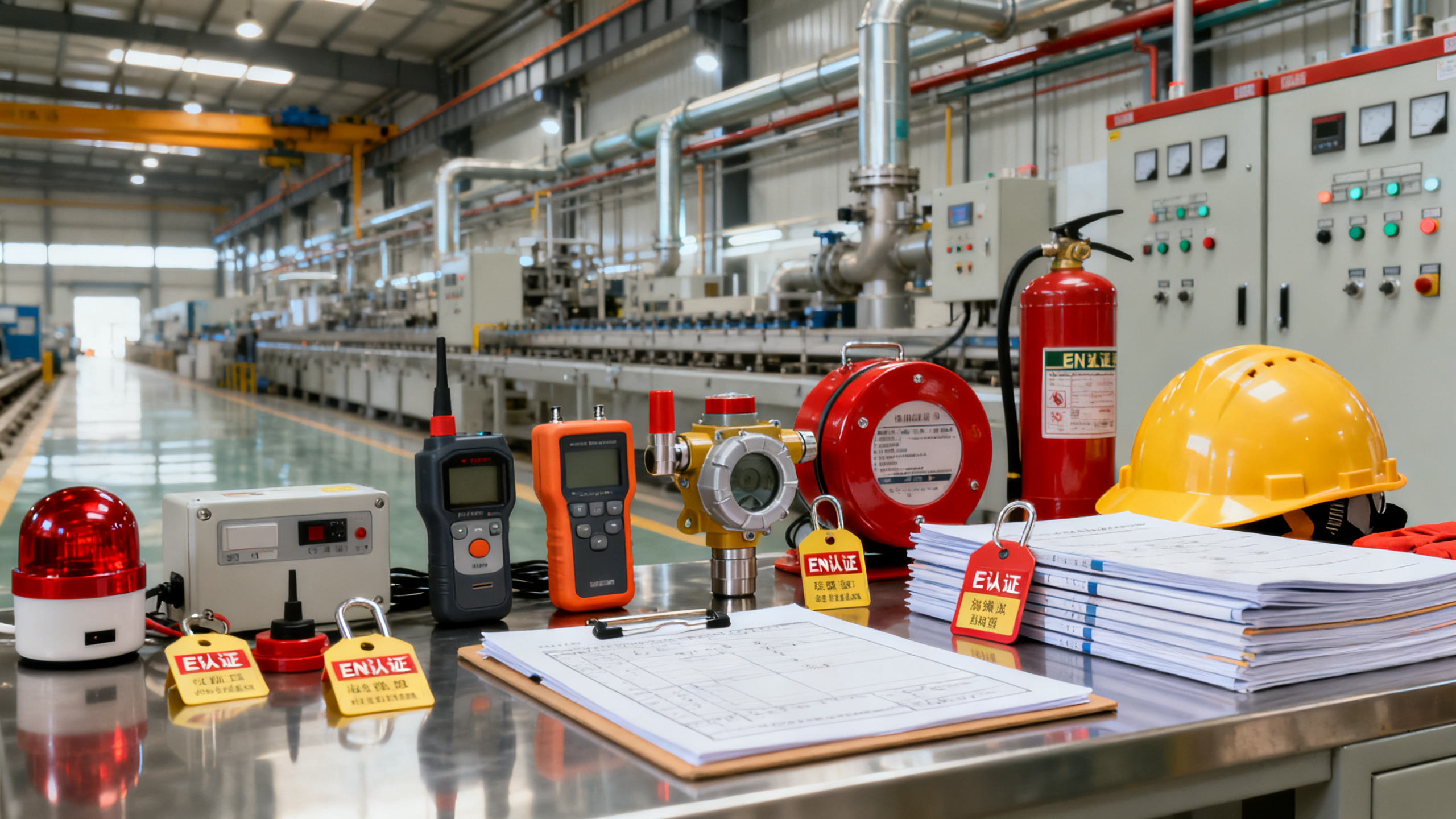
Choosing the right Security & Safety supplier is not only a sourcing task. It directly influences compliance status, audit readiness, incident prevention, and long-term operational resilience across industrial environments.
When alarms, PPE, detection systems, guarding devices, lockout solutions, or fire protection components fail, compliance gaps appear quickly. Those gaps can trigger fines, shutdowns, insurance disputes, or serious harm.
A capable Security & Safety supplier supports certified performance, traceable documentation, stable quality, and regulatory alignment. A weak supplier creates hidden exposure that often appears during audits, incidents, or cross-border inspections.
Why a checklist approach matters for supplier compliance
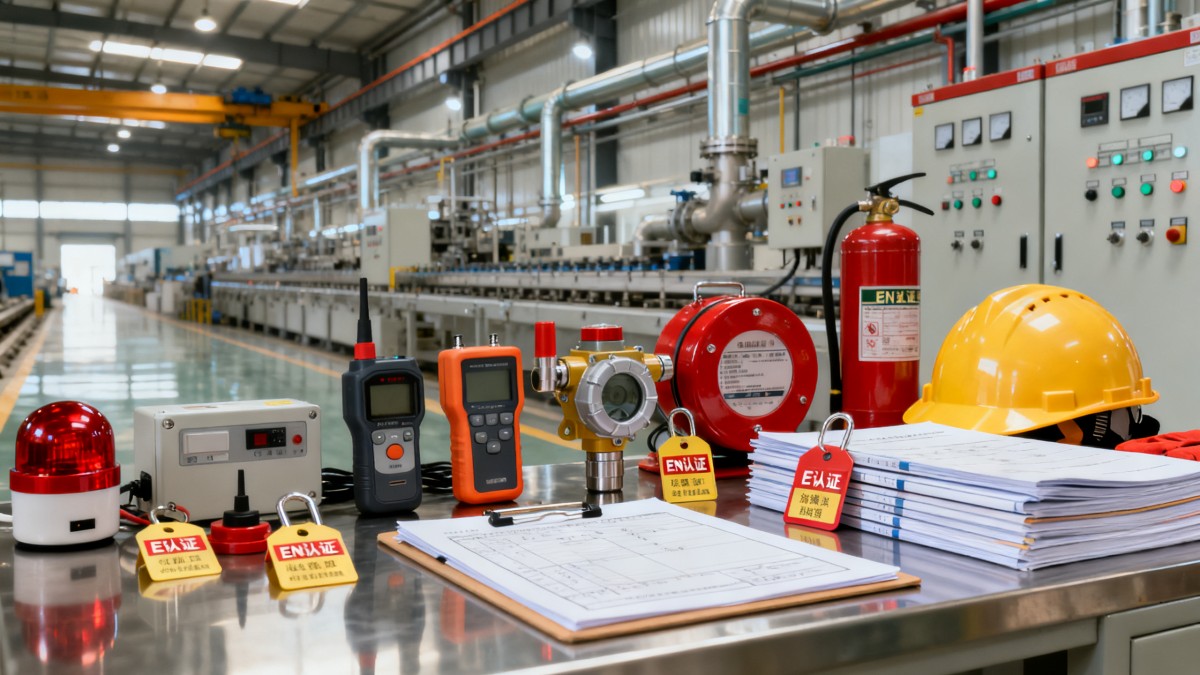
Compliance failures rarely come from one obvious mistake. They usually result from several small breakdowns in specification control, testing records, product labeling, maintenance guidance, and supplier communication.
A checklist prevents subjective decisions. It helps compare each Security & Safety supplier against the same operational, regulatory, and documentation standards before approval, onboarding, or renewal.
This is especially important in integrated industrial projects, where safety equipment interfaces with electrical systems, instrumentation, building controls, environmental monitoring, and mechanical infrastructure.
Core checklist: how to evaluate a Security & Safety supplier
- Verify certification scope and validity. Confirm CE, UL, ISO, ATEX, or local approvals match the exact product model, use condition, and installation region.
- Check traceability controls. Require batch records, serial tracking, material declarations, and revision history for every critical safety component and replacement part.
- Review technical documentation quality. Assess datasheets, declarations of conformity, test reports, installation manuals, and maintenance instructions for accuracy and completeness.
- Confirm performance testing under real conditions. Ask whether products were validated for dust, vibration, humidity, corrosive exposure, heat, or hazardous locations.
- Audit change management practices. Ensure the Security & Safety supplier notifies design, material, firmware, or component changes before shipment or field replacement.
- Examine quality management maturity. Look beyond ISO 9001 certificates and review CAPA records, nonconformance handling, inspection frequency, and supplier audit history.
- Assess regulatory knowledge. Confirm the supplier understands OSHA, NFPA, IEC, EN, local building codes, and sector-specific safety requirements affecting deployment.
- Test response capability. Measure how quickly the Security & Safety supplier can provide revised documents, root-cause analysis, emergency replacements, and field support.
- Validate lifecycle support. Check spare part availability, product obsolescence planning, calibration intervals, service bulletins, and expected support duration.
- Compare total compliance cost. Include recertification effort, installation errors, retraining, downtime risk, and audit remediation, not only purchase price.
Quick supplier review table
How supplier capability affects different industrial scenarios
New facility construction and EPC delivery
During greenfield or brownfield projects, a Security & Safety supplier influences submittal approval, inspection timelines, and commissioning quality. Missing certificates or inconsistent specifications can delay handover.
In this stage, supplier discipline matters because safety products must align with drawings, electrical loads, hazardous area classifications, and local authority requirements.
Operating plants and maintenance programs
In active facilities, the wrong Security & Safety supplier can introduce undocumented substitutions. That weakens preventive maintenance plans and complicates root-cause analysis after an event.
Reliable suppliers support replacement equivalency, calibration records, training updates, and end-of-life planning. Those elements are vital for maintaining continuous compliance.
Multi-site and cross-border operations
Compliance becomes more complex when one organization operates across regions. A qualified Security & Safety supplier helps standardize approved products while adapting to regional codes and import rules.
Without that support, sites may use inconsistent labels, different technical files, or non-equivalent replacements. Those inconsistencies become serious liabilities during enterprise audits.
Commonly overlooked risks when selecting a Security & Safety supplier
Assuming certifications cover every configuration
A certificate may apply only to a specific assembly, enclosure, voltage range, or region. Small configuration changes can invalidate compliant use.
Ignoring document control after first approval
Many teams validate a supplier once, then stop checking revision updates. Later shipments may contain altered materials, firmware, or labeling with no internal review.
Prioritizing price over support depth
A low-cost Security & Safety supplier may lack field troubleshooting, emergency stock, or compliance expertise. The hidden cost appears when failures need immediate resolution.
Treating all safety categories as equal
Gloves, gas detectors, interlocks, fire suppression devices, and emergency lighting have different risk profiles. Evaluation criteria must reflect criticality, exposure, and legal consequences.
Overlooking supplier training and onboarding value
Strong suppliers do more than ship products. They provide installation guidance, competency materials, and misuse prevention that reduce noncompliance at the point of use.
Practical steps to strengthen supplier compliance control
- Build a risk-tiered approval matrix and apply stricter review to life-safety, hazardous-area, and emergency response equipment than to low-criticality consumables.
- Create a mandatory document package for every Security & Safety supplier, including certifications, manuals, declarations, inspection reports, and revision-controlled drawings.
- Schedule periodic supplier reviews using delivery quality, audit findings, incident reports, complaint data, and corrective action closure performance.
- Link procurement records with maintenance and EHS systems so substitutions, failures, and recurring defects can be traced to the original source.
- Include notification clauses in contracts that require pre-approval for design changes, certificate lapses, discontinued items, or manufacturing site transfers.
These controls turn supplier management into a measurable compliance process. They also support stronger internal governance across safety, engineering, maintenance, and quality functions.
Conclusion and next action
A Security & Safety supplier can affect compliance far beyond product delivery. The supplier shapes certification integrity, documentation accuracy, installation success, maintenance continuity, and audit confidence.
The most effective next step is simple: review current suppliers against a formal checklist, classify them by risk, and close the biggest documentation and change-control gaps first.
In industrial operations, compliance is rarely protected by paperwork alone. It is protected by choosing a Security & Safety supplier that can prove performance, traceability, and regulatory discipline every time.
Technical Specifications
- How to Select Electronic Hotel Key Card Locks for Guest Rooms and Staff AreasAuthor :Safety Compliance Lead
- How to Select Lab Instruments for Reliable Chemical Analysis WorkflowsAuthor :Precision Metrology Expert
- How to Size a UPS for Server Rooms: Load, Runtime, and Redundancy FactorsAuthor :Grid Infrastructure Analyst
Expert Insights

Chief Security Architect
Dr. Thorne specializes in the intersection of structural engineering and digital resilience. He has advised three G7 governments on industrial infrastructure security.
Related Analysis
- Sep 17, 2026How to Select Electronic Hotel Key Card Locks for Guest Rooms and Staff AreasAuthor :Safety Compliance Lead
- Sep 16, 2026How to Select Lab Instruments for Reliable Chemical Analysis WorkflowsAuthor :Precision Metrology Expert
- Sep 15, 2026How to Size a UPS for Server Rooms: Load, Runtime, and Redundancy FactorsAuthor :Grid Infrastructure Analyst
Core Sector // 01
Security & Safety
- Can One Supplier Provide Both IEC- and ATEX-Certified Safety Equipment?Author :Safety Compliance Lead

- Are Dual IEC and NEC Safety Certifications Worth the Cost?Author :Safety Compliance Lead

- What Is the Difference Between Class I and Class II PPE?Author :Safety Compliance Lead

- Which Oil and Gas Safety Standards Should Contractors Meet Before Site Mobilization?Author :Safety Compliance Lead

- EU REACH Adds PFAS Cap for PPE WorkwearAuthor :Safety Compliance Lead

- How to Evaluate a Chemical Resistant Suit Supplier for Industrial Safety ProcurementAuthor :Safety Compliance Lead

- EU REACH Sets 50 ppb PFAS Cap for PPE WorkwearAuthor :Safety Compliance Lead

- EU Tightens PFOA Limit for PPE and Industrial Filter MediaAuthor :Safety Compliance Lead