A reliable Security & Safety supplier should prove these basics
Author
Date Published
Reading Time
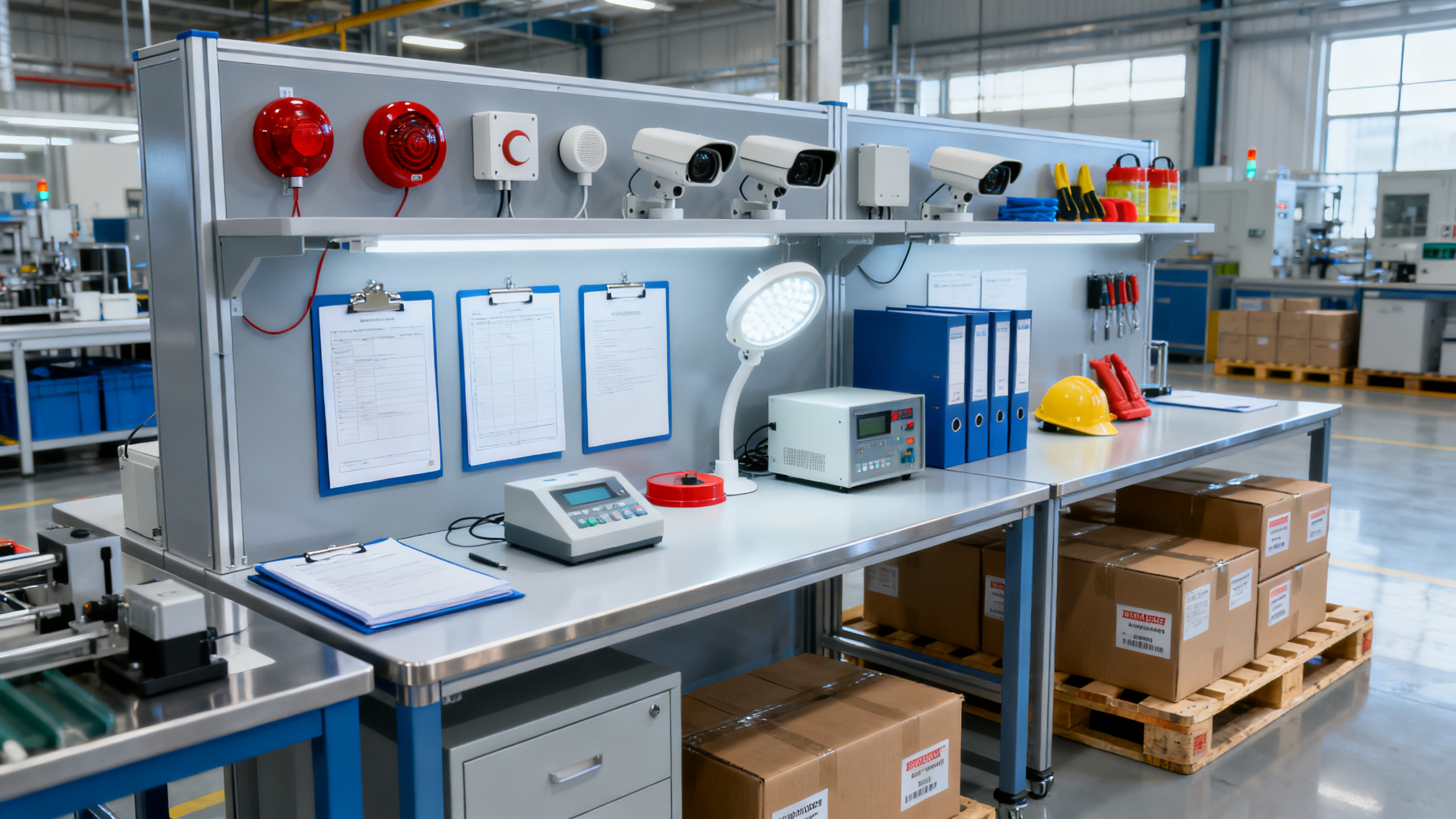
Choosing a reliable Security & Safety supplier is not just a purchasing decision—it is a direct investment in compliance, risk control, and operational continuity. For quality control teams and safety managers, the right partner should demonstrate certified standards, proven product performance, transparent testing records, and dependable supply capability before any contract is signed.
Core definition of a reliable Security & Safety supplier
A reliable Security & Safety supplier delivers more than products. It provides traceable compliance, stable quality, and technical confidence across the full supply lifecycle.
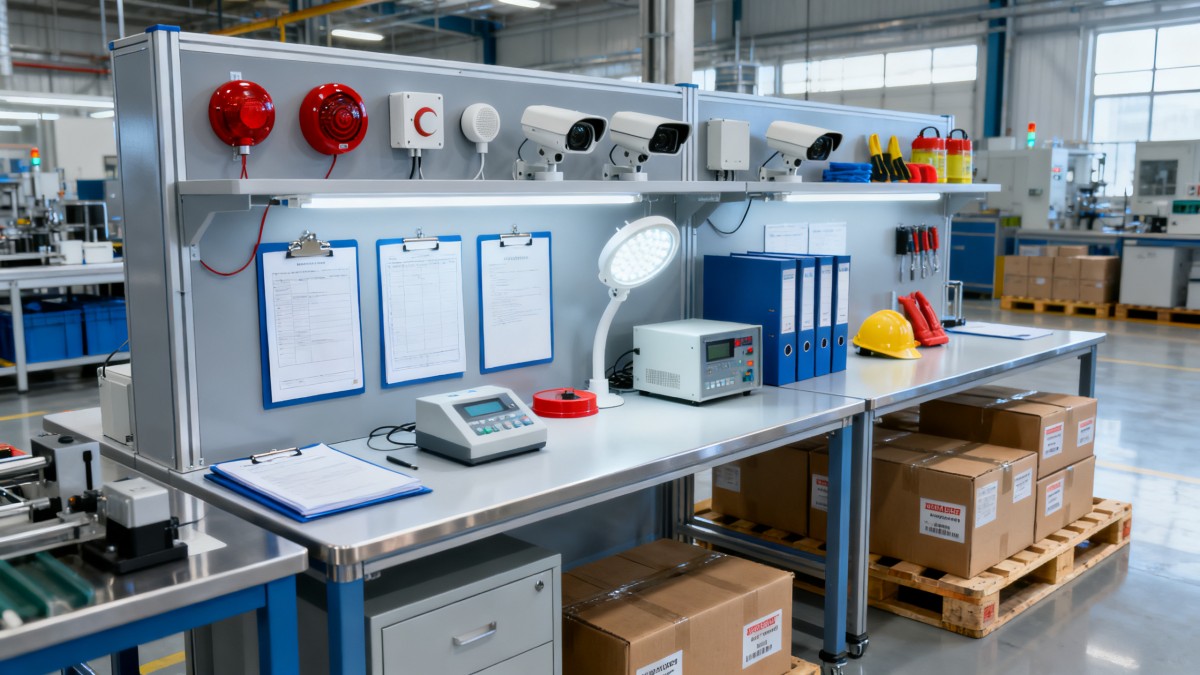
In industrial settings, failures in alarms, protective equipment, sensors, or emergency systems create legal, financial, and operational exposure.
That is why a Security & Safety supplier must prove baseline capabilities before price, lead time, or catalog breadth are even discussed.
At minimum, the supplier should show documented compliance, repeatable manufacturing controls, product consistency, and support for installation, maintenance, and replacement.
For global industrial projects, this proof becomes even more important because specifications often span multiple jurisdictions, standards, and site conditions.
What “proof” should actually mean
Proof should be objective, current, and verifiable. Marketing claims, generic brochures, or outdated certificates are not enough.
- Valid CE, UL, ISO, or equivalent certifications
- Third-party test reports with clear product references
- Batch traceability and material records
- Quality control procedures and inspection checkpoints
- After-sales response commitments and spare parts support
Industry background and current evaluation priorities
Security and safety systems now sit at the center of industrial resilience. Regulations are stricter, audits are deeper, and downtime costs are higher.
As a result, supplier evaluation has shifted from simple unit pricing toward lifecycle risk management and documented performance.
A dependable Security & Safety supplier should align with these market priorities.
These priorities apply across construction, utilities, oil and gas, warehousing, manufacturing, and public infrastructure.
The basics every Security & Safety supplier should prove
The strongest suppliers make fundamental requirements easy to inspect. Their systems are transparent because their controls are mature.
1. Recognized compliance and certification
A Security & Safety supplier should show product-specific compliance, not just a company-level quality statement.
Certificates should match the exact model, voltage, material, or protection level being quoted.
Where relevant, verify CE, UL, ISO 9001, ISO 14001, RoHS, REACH, or industry-specific fire and electrical safety standards.
2. Product testing with traceable records
Testing should include performance, endurance, environmental resistance, and safety function verification.
A reliable Security & Safety supplier can provide dated reports, test methods, pass criteria, and laboratory identities.
When products are used outdoors or in harsh plants, ingress protection, corrosion resistance, and temperature stability deserve special attention.
3. Controlled manufacturing and quality assurance
Consistency matters as much as one-time performance. A passed sample is not enough if production lots vary.
Ask how incoming materials are inspected, how in-process checks are recorded, and how nonconforming units are isolated.
The best Security & Safety supplier will explain corrective action workflows and supplier management controls without hesitation.
4. Full traceability and documentation discipline
Traceability supports audits, warranty claims, recalls, and root-cause analysis.
Each shipment should link to batch codes, inspection results, labeling rules, and revision-controlled documents.
This is especially critical when security and safety devices are integrated into regulated facilities.
5. Stable delivery and lifecycle support
A Security & Safety supplier should prove lead-time reliability, inventory discipline, and continuity planning.
It should also support spare parts, replacements, upgrades, and compatibility guidance over time.
Without lifecycle support, even compliant products can become operational liabilities.
Business value of choosing the right Security & Safety supplier
The right supplier reduces total risk, not only purchase cost. This distinction has major business consequences.
Reliable security and safety sourcing supports inspection readiness, predictable commissioning, and lower failure-related disruption.
- Fewer approval delays during project execution
- Lower chance of non-compliance penalties
- Reduced rework due to specification mismatch
- More stable maintenance scheduling
- Better resilience in high-risk operating environments
For multinational projects, a capable Security & Safety supplier also simplifies coordination between engineering, procurement, and site acceptance teams.
Typical scenarios and supply categories
Different applications require different proof points. Evaluation should reflect use conditions and consequence of failure.
The most reliable Security & Safety supplier adapts documentation and support to each category rather than offering one generic package.
Practical verification steps before approval
A structured review helps separate credible suppliers from those with only polished sales material.
- Request current certificates tied to exact product models.
- Check whether test reports come from recognized third parties.
- Review quality procedures for inspection, calibration, and corrective action.
- Confirm traceability from raw material to finished shipment.
- Validate lead times, stock strategy, and contingency planning.
- Assess technical documentation quality, including manuals and drawings.
- Test communication speed during quotation and technical clarification stages.
If a Security & Safety supplier cannot provide clear evidence quickly, that hesitation is itself a useful signal.
Common warning signs
- Certificates without model references
- Edited or incomplete test reports
- No batch coding or weak labeling control
- Unclear warranty boundaries
- Inconsistent answers on materials or specifications
A grounded next step for supplier selection
A reliable Security & Safety supplier should prove the basics before any long-term relationship begins.
Those basics are clear: certified compliance, transparent testing, controlled quality, traceable production, and dependable delivery support.
Using these checkpoints creates a stronger approval process and reduces avoidable risk across industrial operations.
For organizations building resilient supply chains, the practical next step is simple: compare every Security & Safety supplier against a documented evidence checklist, then advance only those that can verify each claim.
Technical Specifications
- How to Select Electronic Hotel Key Card Locks for Guest Rooms and Staff AreasAuthor :Safety Compliance Lead
- How to Select Lab Instruments for Reliable Chemical Analysis WorkflowsAuthor :Precision Metrology Expert
- How to Size a UPS for Server Rooms: Load, Runtime, and Redundancy FactorsAuthor :Grid Infrastructure Analyst
Expert Insights

Chief Security Architect
Dr. Thorne specializes in the intersection of structural engineering and digital resilience. He has advised three G7 governments on industrial infrastructure security.
Related Analysis
- Sep 17, 2026How to Select Electronic Hotel Key Card Locks for Guest Rooms and Staff AreasAuthor :Safety Compliance Lead
- Sep 16, 2026How to Select Lab Instruments for Reliable Chemical Analysis WorkflowsAuthor :Precision Metrology Expert
- Sep 15, 2026How to Size a UPS for Server Rooms: Load, Runtime, and Redundancy FactorsAuthor :Grid Infrastructure Analyst
Core Sector // 01
Security & Safety
- Can One Supplier Provide Both IEC- and ATEX-Certified Safety Equipment?Author :Safety Compliance Lead

- Are Dual IEC and NEC Safety Certifications Worth the Cost?Author :Safety Compliance Lead

- What Is the Difference Between Class I and Class II PPE?Author :Safety Compliance Lead

- Which Oil and Gas Safety Standards Should Contractors Meet Before Site Mobilization?Author :Safety Compliance Lead

- EU REACH Adds PFAS Cap for PPE WorkwearAuthor :Safety Compliance Lead

- How to Evaluate a Chemical Resistant Suit Supplier for Industrial Safety ProcurementAuthor :Safety Compliance Lead

- EU REACH Sets 50 ppb PFAS Cap for PPE WorkwearAuthor :Safety Compliance Lead

- EU Tightens PFOA Limit for PPE and Industrial Filter MediaAuthor :Safety Compliance Lead