ASTM F2100-26 Enforces Dual Requirements for PPE Fabrics in US Market
Author
Date Published
Reading Time

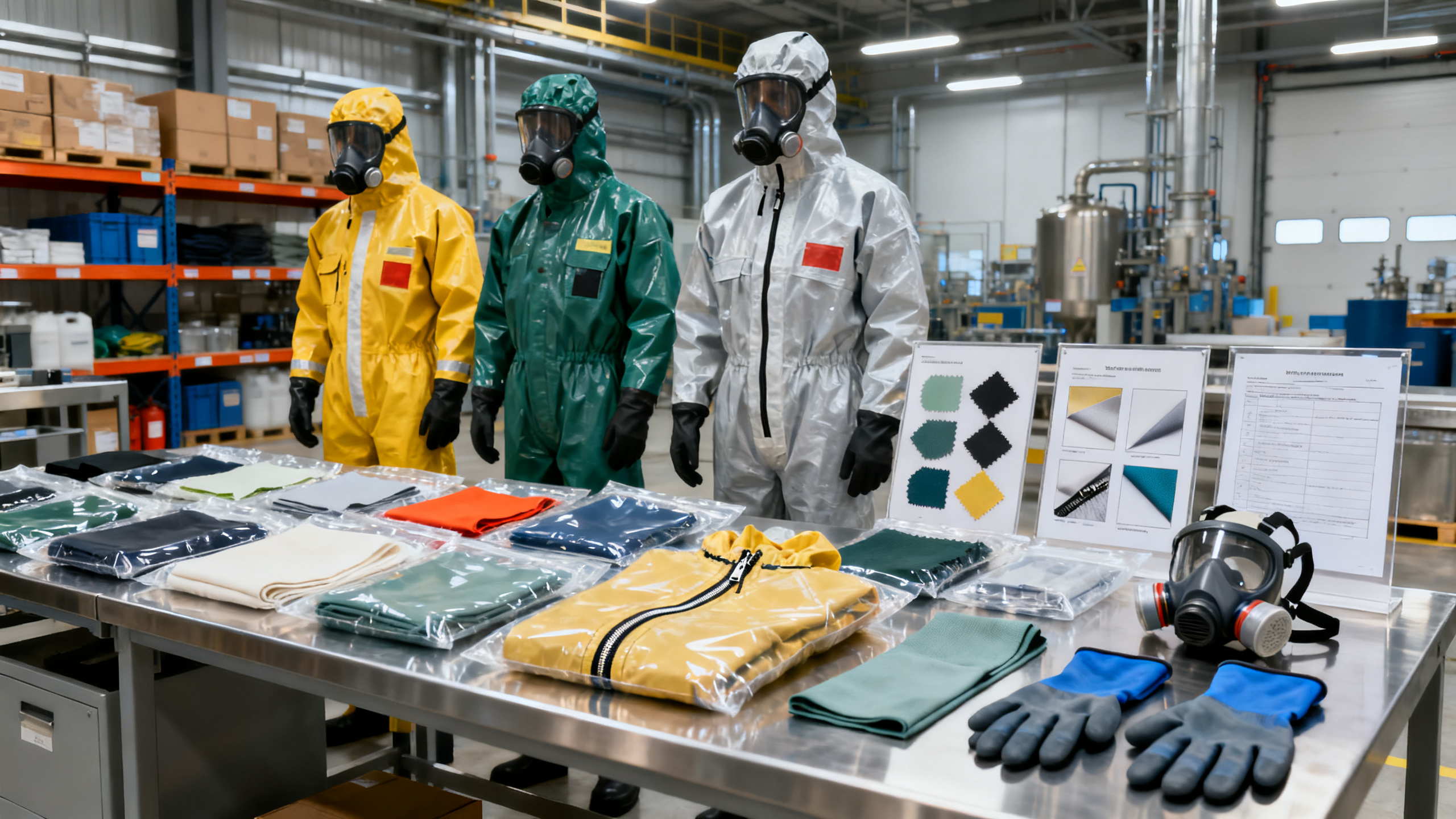
On May 1, 2026, the updated ASTM F2100-26 standard for medical protective clothing entered full mandatory effect in the United States, requiring all PPE garments—both medical and industrial—exported to the U.S. to meet dual performance criteria: flame resistance (retaining Level 1–4 classification) and synthetic blood penetration resistance per ASTM F1670/F1671. This shift directly impacts textile manufacturers, garment exporters, and supply chain stakeholders engaged in PPE production for the U.S. market—and signals a tightening of technical compliance thresholds for protective fabrics.
Event Overview
The American Society for Testing and Materials (ASTM) issued revision F2100-26, which became fully enforceable on May 1, 2026. Under this version, all PPE protective clothing fabrics intended for sale or import into the United States must satisfy both the existing flammability grading system (Level 1 through Level 4) and newly mandated synthetic blood penetration testing per ASTM F1670 (for blood splash) and ASTM F1671 (for blood-borne pathogens). The standard applies to finished garments and their constituent fabric layers. Publicly reported effects include extended lead times—averaging +15 days—for Chinese fabric suppliers, and certification gaps among some small- and medium-sized manufacturers.
Industries Affected by Segment
Direct Exporters of PPE Garments
Exporters supplying finished gowns, coveralls, or isolation suits to U.S. distributors or healthcare providers are now required to verify that every fabric layer passes both flammability and synthetic blood penetration tests. Non-compliant shipments risk rejection at U.S. customs or refusal by end-user procurement departments—especially in regulated hospital systems.
Fabric Manufacturers (Especially in China)
Textile mills producing base fabrics for PPE—including spunbond polypropylene, SMS laminates, and coated polyester—must now requalify materials under the dual-standard framework. The added test cycle increases validation time and may require reformulation or process adjustments. Reported average delivery delays of 15 days suggest capacity constraints in certified testing labs and internal quality reassessment workflows.
Raw Material Suppliers
Suppliers of polymer resins, nonwoven bonding agents, or antimicrobial finishes used in PPE fabrics face upstream scrutiny: formulations previously validated only for flame resistance may no longer support passing F1670/F1671 without modification. Downstream customers are increasingly requesting material-level test reports—not just final-garment certifications.
Supply Chain & Certification Service Providers
Third-party testing laboratories, certification bodies, and logistics intermediaries supporting PPE exports are observing higher demand for combined F2100-26/F1670/F1671 test packages. Some smaller certification agencies report limited bandwidth for expedited turnaround, contributing to the observed delay trend.
Key Focus Areas and Recommended Actions
Monitor official enforcement guidance from FDA and ASTM
The U.S. Food and Drug Administration (FDA) does not issue its own PPE standards but recognizes ASTM F2100 as a consensus standard for 510(k) submissions and enforcement discretion. Stakeholders should track any FDA communications referencing F2100-26 implementation timelines, especially regarding transitional allowances or documentation expectations for legacy inventory.
Prioritize verification for Level 3 and Level 4 garments
Higher protection levels carry stricter performance thresholds—and greater scrutiny from U.S. buyers. Fabric and garment suppliers should allocate testing resources first to Level 3 (moderate-risk procedures) and Level 4 (high-risk, surgery-related use) products, as these are most likely to trigger audit requests or pre-shipment verification.
Distinguish between regulatory requirement and buyer specification
While ASTM F2100-26 is now mandatory for market access, individual U.S. purchasers (e.g., GPOs, hospital systems) may impose additional requirements—such as viral penetration (F1671), hydrostatic pressure, or seam strength—beyond the standard’s minimums. Companies should map contractual obligations separately from baseline regulatory compliance.
Update internal documentation and supplier communication protocols
Manufacturers should revise technical data sheets, certificates of conformance, and lab test reports to explicitly reference both ASTM F2100-26 and the applicable F1670/F1671 test results. Internal QA checklists and supplier evaluation forms should reflect dual-criteria validation as a gatekeeping step before shipment.
Editorial Perspective / Industry Observation
Observably, ASTM F2100-26 represents more than a technical update—it reflects an institutional shift toward performance-based, multi-hazard validation for PPE textiles. Analysis shows the dual requirement elevates the evidentiary bar for fabric qualification, moving beyond single-property certification toward integrated barrier functionality. From an industry perspective, this is less a sudden disruption and more a formalized acceleration of an existing trend: U.S. procurement increasingly treats fluid resistance and flame resistance as co-dependent safety attributes—not optional add-ons. Current enforcement patterns suggest it functions primarily as a compliance signal rather than an immediate operational bottleneck—but sustained adherence will depend on scalable lab capacity and consistent material traceability across tiers.

Conclusion: ASTM F2100-26’s full enforcement marks a structural recalibration in how protective fabric performance is verified for the U.S. market. It does not introduce entirely new hazard categories, but consolidates two long-standing requirements into a single mandatory gate. For stakeholders, this is best understood not as a one-time certification event, but as a durable alignment point for product development, sourcing, and quality assurance workflows—where flame resistance and fluid barrier integrity are now evaluated in tandem, not sequence.
Source Attribution:
• ASTM International – Standard Specification F2100-26 (published 2026, effective May 1, 2026)
• Publicly reported lead-time and certification impact data cited in industry briefings from Q1 2026 (no named third-party sources confirmed)
Note: Ongoing observation is recommended for FDA enforcement notices, ASTM committee interpretations, and updates to harmonized standards referenced in U.S. import guidance.
Technical Specifications
- How to Select Electronic Hotel Key Card Locks for Guest Rooms and Staff AreasAuthor :Safety Compliance Lead
- How to Select Lab Instruments for Reliable Chemical Analysis WorkflowsAuthor :Precision Metrology Expert
- How to Size a UPS for Server Rooms: Load, Runtime, and Redundancy FactorsAuthor :Grid Infrastructure Analyst
Expert Insights

Chief Security Architect
Dr. Thorne specializes in the intersection of structural engineering and digital resilience. He has advised three G7 governments on industrial infrastructure security.
Related Analysis
- Sep 17, 2026How to Select Electronic Hotel Key Card Locks for Guest Rooms and Staff AreasAuthor :Safety Compliance Lead
- Sep 16, 2026How to Select Lab Instruments for Reliable Chemical Analysis WorkflowsAuthor :Precision Metrology Expert
- Sep 15, 2026How to Size a UPS for Server Rooms: Load, Runtime, and Redundancy FactorsAuthor :Grid Infrastructure Analyst
Core Sector // 01
Security & Safety
- Can One Supplier Provide Both IEC- and ATEX-Certified Safety Equipment?Author :Safety Compliance Lead

- Are Dual IEC and NEC Safety Certifications Worth the Cost?Author :Safety Compliance Lead

- What Is the Difference Between Class I and Class II PPE?Author :Safety Compliance Lead

- Which Oil and Gas Safety Standards Should Contractors Meet Before Site Mobilization?Author :Safety Compliance Lead

- EU REACH Adds PFAS Cap for PPE WorkwearAuthor :Safety Compliance Lead

- How to Evaluate a Chemical Resistant Suit Supplier for Industrial Safety ProcurementAuthor :Safety Compliance Lead

- EU REACH Sets 50 ppb PFAS Cap for PPE WorkwearAuthor :Safety Compliance Lead

- EU Tightens PFOA Limit for PPE and Industrial Filter MediaAuthor :Safety Compliance Lead