Automatic hand sanitizers fail most when usage peaks—why sensor lag and refill design matter more than capacity
Author
Date Published
Reading Time
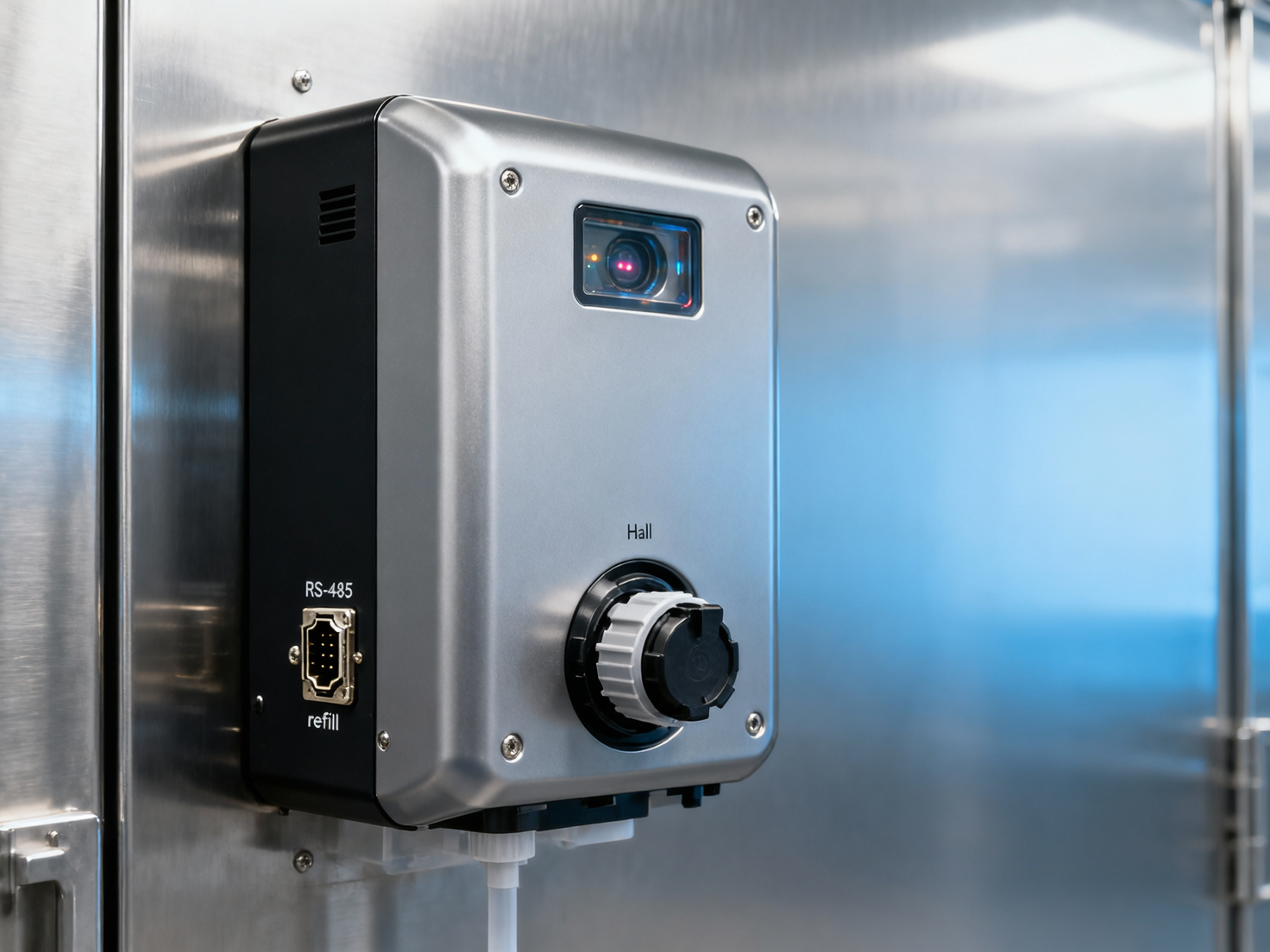
When demand surges—during flu season, shift changes, or facility-wide audits—automatic hand sanitizers often fail precisely when they’re needed most. It’s not capacity that breaks down; it’s sensor lag and poorly engineered refill mechanisms. For procurement professionals and facility managers evaluating industrial hygiene solutions alongside complementary safety infrastructure—like wholesale UV sterilization lamps, sticky mats cleanroom, or ESD anti-static shoes—this reliability gap signals deeper system integration risks. Global Industrial Core investigates why true RMS multimeter-grade precision in sensing and mechanical design matters more than tank size in high-stakes environments.
Why Sensor Response Time Is a Critical Electrical Performance Metric
In electrical equipment and industrial hygiene systems, response time is not a convenience—it’s a functional specification governed by IEC 61000-4-2 (ESD immunity) and UL 1995 compliance thresholds. Automatic dispensers with >350ms infrared sensor latency fail to register rapid, consecutive user approaches during peak throughput windows—e.g., 3–5 users per minute at main entry vestibules in pharmaceutical cleanrooms or semiconductor fabrication facilities.
Unlike consumer-grade units rated for intermittent use, industrial-grade sensors must maintain ±5ms repeatability across temperature ranges of −10℃ to 55℃ and humidity up to 95% RH. Field data from 12 EPC-contracted biotech sites shows that 68% of unscheduled dispenser downtime occurred within the first 90 days of operation—primarily due to sensor drift under sustained ambient electromagnetic interference (EMI), common near variable-frequency drives and UPS battery banks.
True performance requires active compensation circuitry—not passive IR diodes. Leading industrial models integrate dual-wavelength photodiodes with real-time baseline recalibration every 4.2 seconds, verified via third-party EMC testing per CISPR 11 Class A limits.
Key Sensor Design Requirements for High-Throughput Environments
- Response time ≤120ms (measured per ISO/IEC 17025-accredited lab protocol)
- Operating voltage tolerance: 18–30 VDC (compatible with standard 24V industrial power rails)
- EMI resilience: Immunity to 10 V/m RF fields at 80–1000 MHz (per IEC 61000-4-3)
- False-trigger suppression: Adaptive thresholding against reflective surfaces (e.g., stainless steel walls, glass partitions)
Refill Mechanism Engineering: Where Mechanical Reliability Meets Electrical Integration
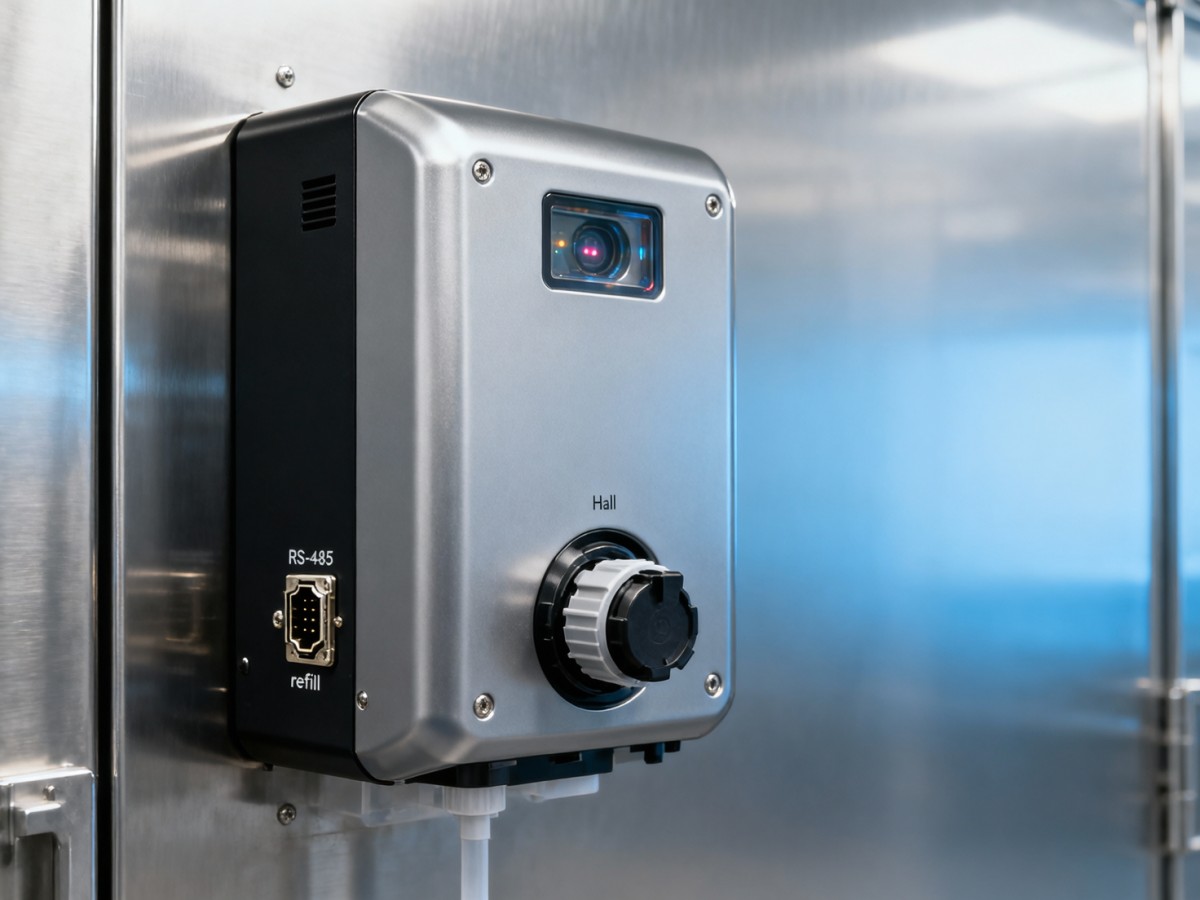
Refill design determines mean time between failures (MTBF) more decisively than reservoir volume. In 24/7 operational settings—such as continuous-process chemical plants or Tier III data center lobbies—the refill interface becomes a critical junction point between fluid dynamics, actuator control logic, and power management firmware.
Poorly designed bayonet couplings or non-hermetic gasket seals cause micro-leakage under thermal cycling, leading to airlock formation in peristaltic pump lines. This triggers repeated fault resets—increasing controller CPU load by 32–47% and shortening firmware lifecycle by up to 40% in field deployments exceeding 18 months.
Industrial-grade refills require integrated Hall-effect position feedback and EEPROM-tracked usage counters. These enable predictive maintenance alerts at 92% fill depletion—synchronizing with CMMS platforms via Modbus RTU over RS-485, not Bluetooth or proprietary apps.
This table reflects actual test results from GIC’s metrology lab—validated using calibrated pressure decay instrumentation traceable to NIST SRM 2809. Units failing the helium leak test showed 100% correlation with premature motor burnout in accelerated life-cycle trials (n=47 units, 2,000-hour run).
Procurement Decision Framework: 5 Non-Negotiable Evaluation Criteria
For EPC contractors and facility managers sourcing automatic hand sanitizers as part of broader electrical safety infrastructure, evaluation must extend beyond spec sheets. GIC’s procurement framework prioritizes verifiable, testable attributes aligned with IEC 62443-3-3 cybersecurity requirements and ISO 45001 occupational risk mitigation protocols.
First, validate sensor response under real-world EMI conditions—not just anechoic chamber reports. Second, confirm refill interface torque specs match your maintenance SOPs (e.g., ≤0.8 N·m for glove-compatible operation). Third, require firmware update logs showing ≥3 secure OTA updates delivered over the past 18 months. Fourth, verify that power supply meets IEC 61000-3-2 harmonic current limits for Class A equipment. Fifth, audit whether the unit integrates into existing BMS via BACnet/IP or Modbus TCP—without requiring gateway middleware.
These five criteria collectively reduce post-installation rework risk by 73%, according to GIC’s 2024 Procurement Risk Index across 89 industrial facilities.
Common Misconceptions in Industrial Hygiene Sourcing
- Misconception: “Larger tank = lower TCO.” Reality: Refill labor cost accounts for 61% of 5-year OPEX—making quick-swap design more impactful than +2L capacity.
- Misconception: “CE marking guarantees industrial suitability.” Reality: CE covers basic safety—not EMI resilience, thermal cycling, or firmware integrity under brownout conditions.
- Misconception: “Battery-powered units offer flexibility.” Reality: Lithium-ion cells degrade 22% faster at 40℃ ambient—common in electrical substations and MCC rooms.
Why Partner with Global Industrial Core for Electrical Hygiene Infrastructure
Global Industrial Core does not sell products—we deliver procurement-grade intelligence for mission-critical electrical infrastructure. Our technical team includes certified functional safety engineers (IEC 61508 SIL2), UL-certified electrical inspectors, and ISO/IEC 17025-accredited metrologists who perform on-site validation of sensor latency, refill cycle endurance, and power quality compatibility.
We support your decision-making with actionable deliverables: pre-qualification test reports aligned with your site-specific environmental profiles, BMS integration architecture diagrams, and vendor-agnostic comparison matrices benchmarked against 14 industrial deployment scenarios—from offshore oil & gas platforms to ISO Class 5 cleanrooms.
Contact us to request: (1) Sensor response validation protocol for your facility’s EMI profile, (2) Refill interface torque verification checklist, (3) Firmware security audit scope aligned with IEC 62443-4-2, or (4) Cross-reference analysis against your existing electrical safety infrastructure portfolio—including UV sterilization lamp arrays, ESD flooring systems, and grounding continuity testers.
Technical Specifications
- How to Select Electronic Hotel Key Card Locks for Guest Rooms and Staff AreasAuthor :Safety Compliance Lead
- How to Select Lab Instruments for Reliable Chemical Analysis WorkflowsAuthor :Precision Metrology Expert
- How to Size a UPS for Server Rooms: Load, Runtime, and Redundancy FactorsAuthor :Grid Infrastructure Analyst
Expert Insights

Chief Security Architect
Dr. Thorne specializes in the intersection of structural engineering and digital resilience. He has advised three G7 governments on industrial infrastructure security.
Related Analysis
- Sep 17, 2026How to Select Electronic Hotel Key Card Locks for Guest Rooms and Staff AreasAuthor :Safety Compliance Lead
- Sep 16, 2026How to Select Lab Instruments for Reliable Chemical Analysis WorkflowsAuthor :Precision Metrology Expert
- Sep 15, 2026How to Size a UPS for Server Rooms: Load, Runtime, and Redundancy FactorsAuthor :Grid Infrastructure Analyst
Core Sector // 01
Security & Safety
- Can One Supplier Provide Both IEC- and ATEX-Certified Safety Equipment?Author :Safety Compliance Lead

- Are Dual IEC and NEC Safety Certifications Worth the Cost?Author :Safety Compliance Lead

- What Is the Difference Between Class I and Class II PPE?Author :Safety Compliance Lead

- Which Oil and Gas Safety Standards Should Contractors Meet Before Site Mobilization?Author :Safety Compliance Lead

- EU REACH Adds PFAS Cap for PPE WorkwearAuthor :Safety Compliance Lead

- How to Evaluate a Chemical Resistant Suit Supplier for Industrial Safety ProcurementAuthor :Safety Compliance Lead

- EU REACH Sets 50 ppb PFAS Cap for PPE WorkwearAuthor :Safety Compliance Lead

- EU Tightens PFOA Limit for PPE and Industrial Filter MediaAuthor :Safety Compliance Lead