Electrical Safety Gear for Industrial Plants: NEC and PPE Requirements
Author
Date Published
Reading Time
Electrical Safety Gear for Industrial Plants: NEC and PPE Requirements
Electrical hazards in industrial plants demand more than a checklist. Safety managers and quality control professionals need a coordinated approach to equipment selection, installation, and worker protection. This guide examines the relationship between NEC-compliant electrical installations and the protective equipment used around them. It also clarifies which standards govern workplace practices and PPE, helping teams assess risks, verify specifications, and make informed procurement decisions.
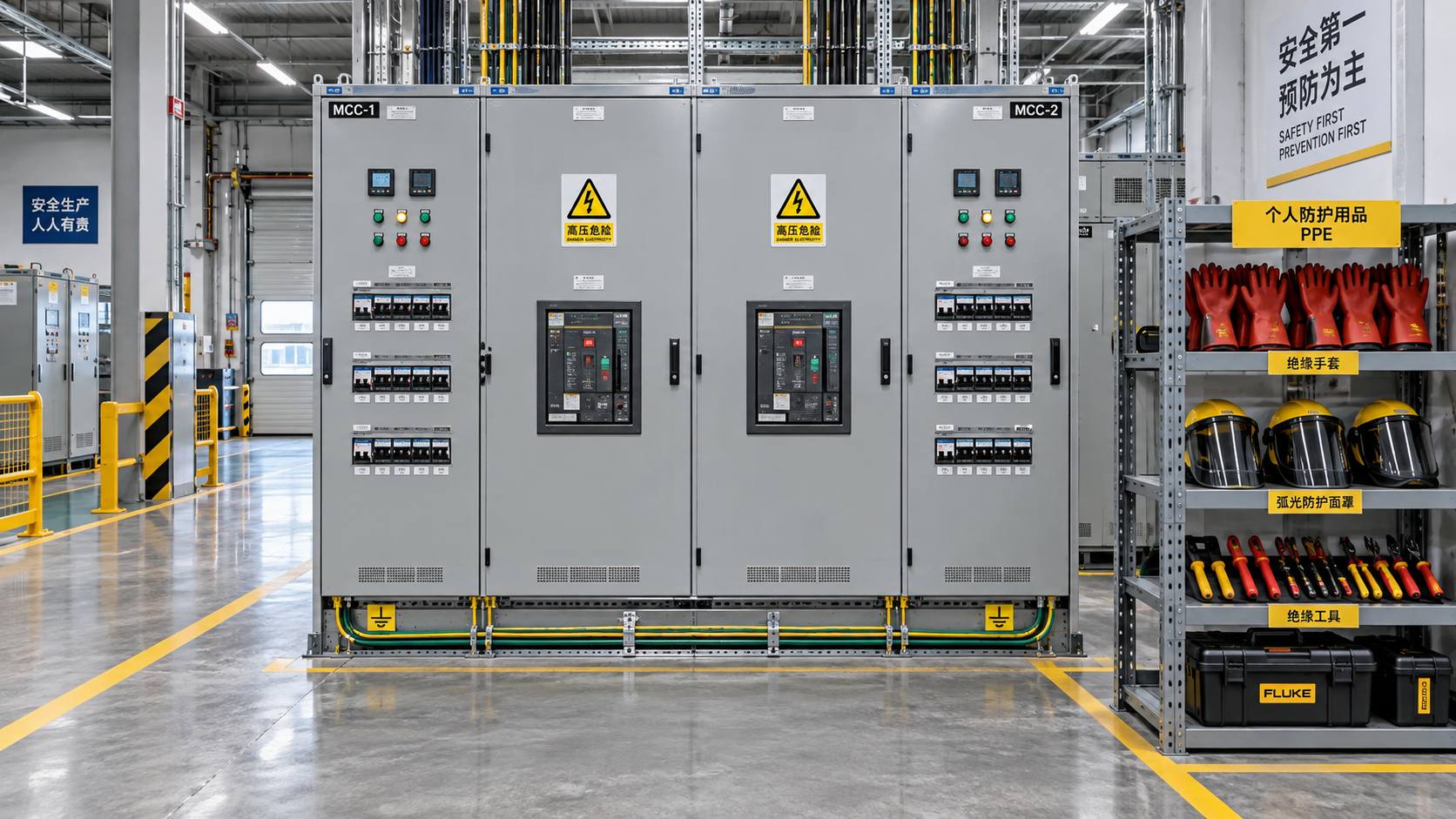
A motor control center may have properly installed protective devices and still expose a worker to serious danger when a compartment is opened. Conversely, an arc-rated suit cannot correct an equipment installation with inadequate fault-current protection. The installation, the task, and the person performing it must be assessed together.
What the NEC covers—and what it does not
The National Electrical Code, published as NFPA 70, primarily addresses the safe installation of electrical wiring and equipment. Depending on the installation, its provisions cover matters such as overcurrent protection, grounding and bonding, working space, equipment markings, and installations in hazardous locations.
The NEC is not a general certification standard for gloves, face shields, or arc-rated clothing. A request for “NEC compliant electrical safety gear” therefore needs to be separated into two questions: Does the installed electrical equipment meet applicable installation requirements? And does the worker’s PPE match the electrical hazards and relevant product standards?
In the United States, the answer also depends on the jurisdiction. States and local authorities may adopt different NEC editions, amendments, or enforcement practices. The authority having jurisdiction should be consulted when the applicable code or an installation detail is uncertain.
OSHA regulations address employer obligations for workplace electrical safety. For general industry, relevant provisions include 29 CFR 1910 Subpart S and the applicable PPE and control-of-hazardous-energy requirements. NFPA 70E provides a widely used framework for electrical safety in the workplace, including risk assessment and safe work practices. It is not itself an OSHA regulation, although it can help employers develop procedures; applicable legal obligations must still be identified separately.
For international projects, do not assume a U.S. code reference settles the matter. The destination country may use IEC-based installation rules, different conformity assessment procedures, or local workplace regulations. A CE marking, a U.S. product listing, and compliance with a particular installation code are not interchangeable claims.
Start with the task, not the PPE catalog
The safest selection process begins before anyone specifies a glove class or an arc rating. Identify the equipment, the work to be performed, the energy sources, and whether exposure to energized conductors or circuit parts is possible. Shock and arc flash are related but distinct hazards: voltage and approach distances drive important shock-protection decisions, while arc-flash exposure depends on factors including available fault current, protective-device clearing time, equipment configuration, and working distance.
De-energizing is the preferred approach. Establishing an electrically safe work condition is itself a task that can involve exposure before absence of voltage is verified. An appropriate procedure generally includes identifying sources, interrupting load current, opening disconnecting devices, applying lockout or tagout where required, checking for stored energy, and testing for absence of voltage with a suitable instrument. The sequence and details must follow the facility’s procedures and applicable requirements.
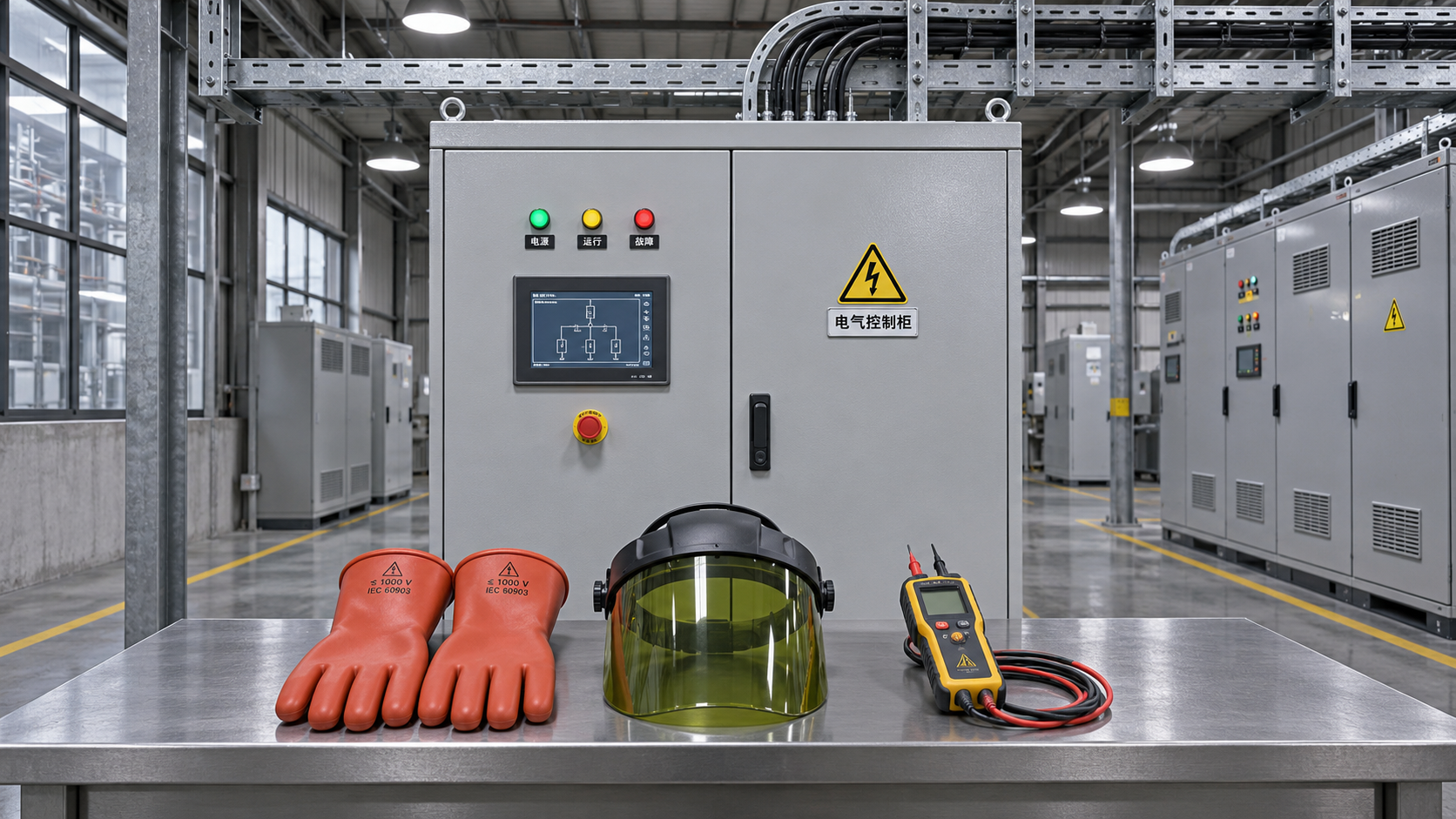
A voltage tester should be appropriate for the circuit voltage and measurement category, inspected before use, and verified on a known source before and after an absence-of-voltage test. Test leads and accessories matter as much as the meter: a higher-rated instrument does not make an unsuitable probe safe.
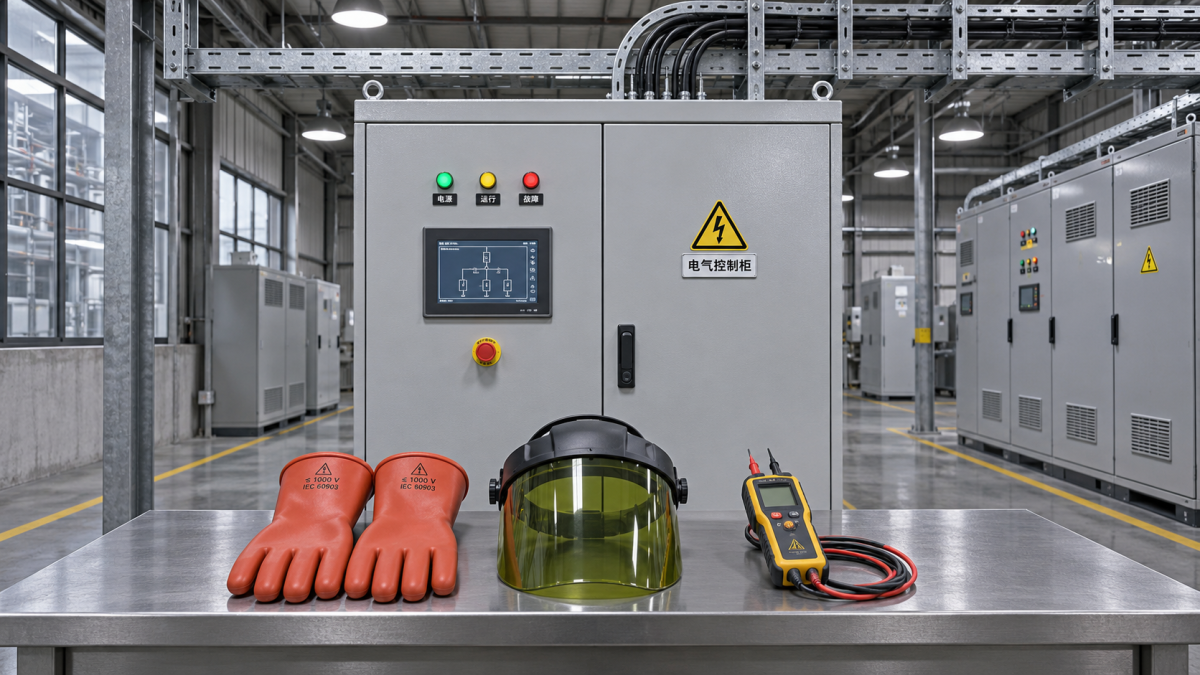
Consider troubleshooting a drive that has been switched off at its local control panel. The control may stop the motor without isolating all incoming power, and DC bus capacitors may retain energy after shutdown. The correct isolation points, discharge time, and verification method depend on the equipment documentation and the facility’s energy-control procedure. PPE cannot substitute for identifying those sources.
Translate the assessment into protective equipment
PPE selection should be documented against the actual task and assessment, not a generic plant-wide designation. A practical specification should distinguish the following equipment and its purpose.
Insulating gloves and protectors
Rubber insulating gloves provide shock protection when selected, used, and maintained correctly. The glove class must be suitable for the maximum use voltage and the type of voltage involved; do not select solely from a nominal equipment label without checking the applicable limits. ASTM D120 addresses manufacturing specifications for rubber insulating gloves, while ASTM F496 covers in-service care and testing practices.
OSHA’s electrical protective equipment requirements include inspection and periodic testing provisions. Gloves should be inspected before each day’s use and immediately after an incident suspected of causing damage; air testing is also required as part of glove inspection. Leather protectors are generally worn over insulating gloves, subject to applicable exceptions and use requirements. A torn protector or contaminated glove can undermine an otherwise correct specification.
Arc-rated clothing and face protection
Arc-rated clothing is selected for thermal exposure from an electric arc. Where an incident-energy analysis is used, the selected arc rating must be appropriate for the assessed exposure under the applicable work-practice standard. NFPA 70E also permits a task-based PPE category method where its conditions are met; the two methods should not be mixed for the same equipment assessment.
Check coverage as well as rating. A jacket alone may leave the neck, face, hands, or lower body exposed. Arc-rated face shields, hoods, and other components must be selected as a compatible protective system for the task. Ordinary safety glasses are not a substitute for arc-rated face protection, and an arc-rated face shield does not eliminate the need for eye protection where required.
ASTM F1506 is a commonly referenced specification for certain arc-rated textile materials used in apparel. The garment label and manufacturer documentation should identify the relevant rating and applicable standard. Flame-resistant clothing is not automatically suitable for a particular arc-flash exposure; verify its arc rating rather than relying on a general “FR” description.
Tools, barriers, and supporting protection
Insulated hand tools, insulating blankets, barriers, and warning signs can reduce exposure during suitable tasks, but they have different functions. Insulated tools are not a replacement for insulating gloves when gloves are required. Temporary barriers must be placed and maintained so they address the actual exposed hazard, rather than merely marking a broad work area.
Head, hearing, and foot protection should be assessed alongside electrical hazards and other site risks. For example, the choice of footwear must account for both the electrical task and conditions such as wet floors, chemicals, or mechanical impact. No single footwear marking should be treated as proof that a worker is protected against every electrical hazard.
Equipment labels are useful only when the underlying information is current
The NEC contains arc-flash warning marking requirements for specified types of electrical equipment likely to require examination, adjustment, servicing, or maintenance while energized. Separately, NFPA 70E addresses equipment labeling for applicable equipment and requires certain information to support safe work. The precise obligations depend on the applicable editions and circumstances; a warning label should not be confused with a complete engineering assessment.
A label based on an incident-energy study can become misleading after changes to a transformer, protective-device setting, feeder, or upstream supply. Maintenance condition matters too: an analysis may assume a protective device operates as intended, but poor maintenance can challenge that assumption. Establish a process for engineering review when the power system changes, and follow the review intervals required by the applicable standard.
For quality control, the question is not simply whether a label exists. Verify that the equipment identity matches the study, the relevant configuration is represented, and the information is legible and usable by the people planning the work. If the label and field conditions conflict, stop and resolve the discrepancy rather than guessing which value to use.
What to verify before accepting electrical safety equipment
A sound purchasing specification connects the standard to the intended use. For installed equipment, check the required voltage, current, interrupting rating or short-circuit current rating as applicable, enclosure suitability, and any listing or labeling required for the application. Environmental conditions deserve particular attention in plants with washdown, corrosive vapors, combustible dust, or outdoor exposure.
For PPE and test instruments, request documentation that can be matched to the delivered item, including the model, ratings, applicable standard, instructions, and any required test records. The acceptance review should answer practical questions:
- Does the glove class cover the assessed voltage, and is the test status acceptable for the intended issue date?
- Does each arc-rated garment or face-protection component provide the required rating and coverage for the selected method?
- Are the meter, leads, probes, and any accessories rated for the location and measurement being performed?
- Do storage, cleaning, inspection, and replacement instructions fit the facility’s maintenance system?
- Can the equipment be traced to the documentation reviewed during approval?
Certification marks need context. Confirm the issuing organization, the exact product covered, and the scope of the listing or certification where applicable. A supplier’s general statement that a product is “approved” is not enough to establish suitability for a particular installation or task.
Make the specification survive handover
The weakest point in an electrical safety program is often the handover between engineering, procurement, maintenance, and the people doing the work. An engineering study may identify a required rating, but the purchasing description may omit it. A replacement protective device may be physically compatible while changing the assumptions behind an existing arc-flash assessment.
Keep the connection visible: link equipment identifiers to drawings and assessments, record approved protective-device settings, retain PPE test and inspection records, and define who reviews substitutions. Qualified-person training and task authorization should also reflect the actual equipment and procedures; possession of PPE does not by itself qualify someone to perform energized work.
This is the kind of cross-disciplinary review that Global Industrial Core brings to industrial sourcing questions: safety requirements, electrical specifications, and product evidence need to be considered together. Before approving the next order or project handover, confirm the adopted code edition, the task-specific risk assessment, and the documentation needed to maintain the protective equipment throughout its service life.
Expert Insights

Chief Security Architect
Dr. Thorne specializes in the intersection of structural engineering and digital resilience. He has advised three G7 governments on industrial infrastructure security.
Related Analysis
- Nov 29, 2026Workplace Safety Standards Compliance Checklist: What to ReviewAuthor :Safety Compliance Lead
- Nov 28, 2026Vale Shares Rebound 4.69% as Chinese Steel Demand Remains WeakAuthor :
- Nov 28, 2026Saudi HVDC Corridor Project Includes $725 Million Equipment ContractAuthor :Grid Infrastructure Analyst
Core Sector // 01
Security & Safety
- Electrical Safety Gear for Industrial Plants: NEC and PPE RequirementsAuthor :Safety Compliance Lead

- Choosing a LOTO Device OEM: Quality Checks, Customization, and MOQsAuthor :Safety Compliance Lead

- Vetting a Fall Protection Harness Supplier: Test Reports and TraceabilityAuthor :Safety Compliance Lead

- How to Choose Heat-Resistant PPE for Desert ConstructionAuthor :Safety Compliance Lead

- What NEC Requirements Apply to Electrical Safety Gear in Plants?Author :Safety Compliance Lead

- Can One Supplier Provide Both IEC- and ATEX-Certified Safety Equipment?Author :Safety Compliance Lead

- Are Dual IEC and NEC Safety Certifications Worth the Cost?Author :Safety Compliance Lead

- What Is the Difference Between Class I and Class II PPE?Author :Safety Compliance Lead