UAE ESMA Sets Real-Time Monitoring Rule for Dust Systems
Author
Date Published
Reading Time
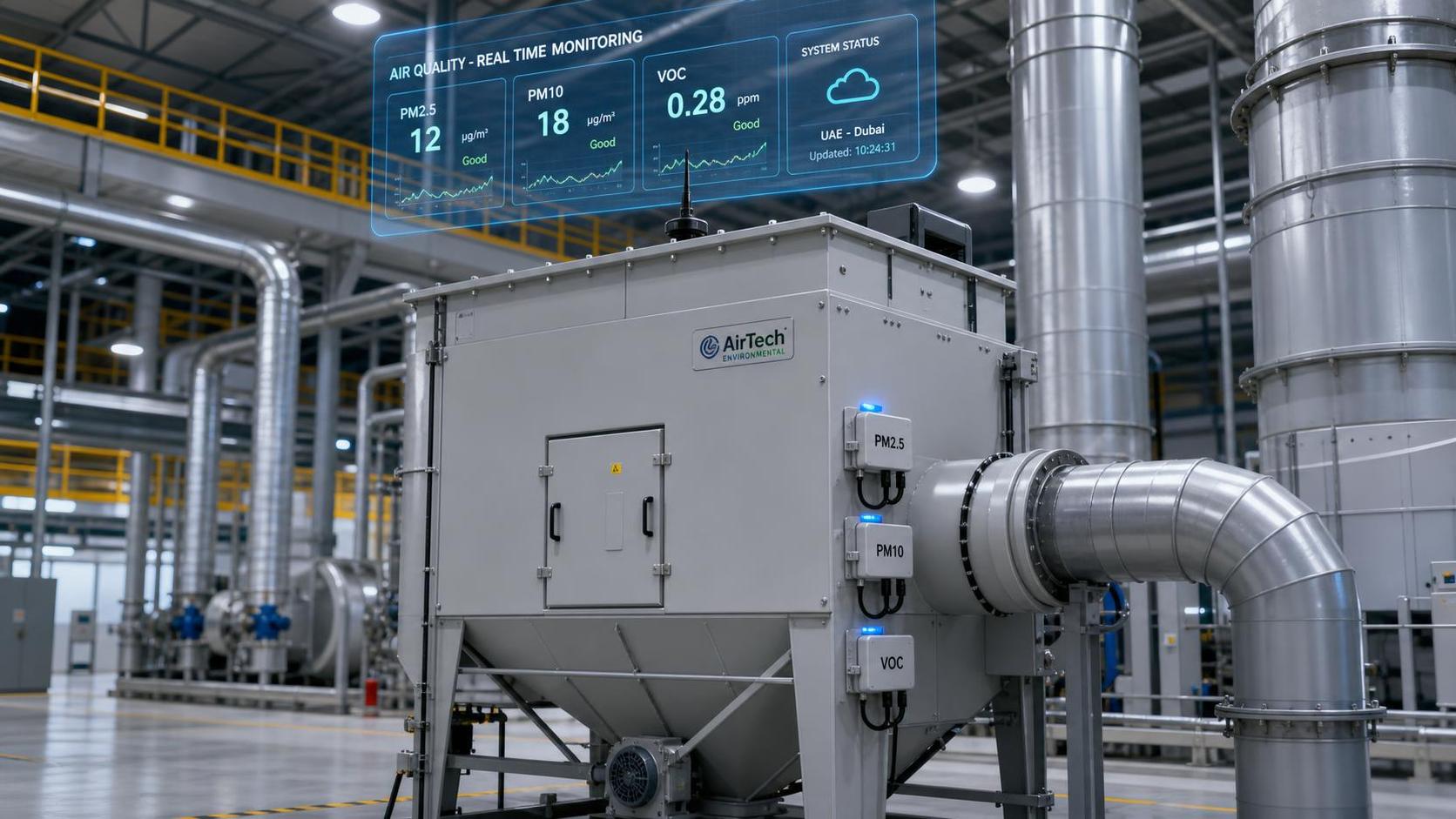
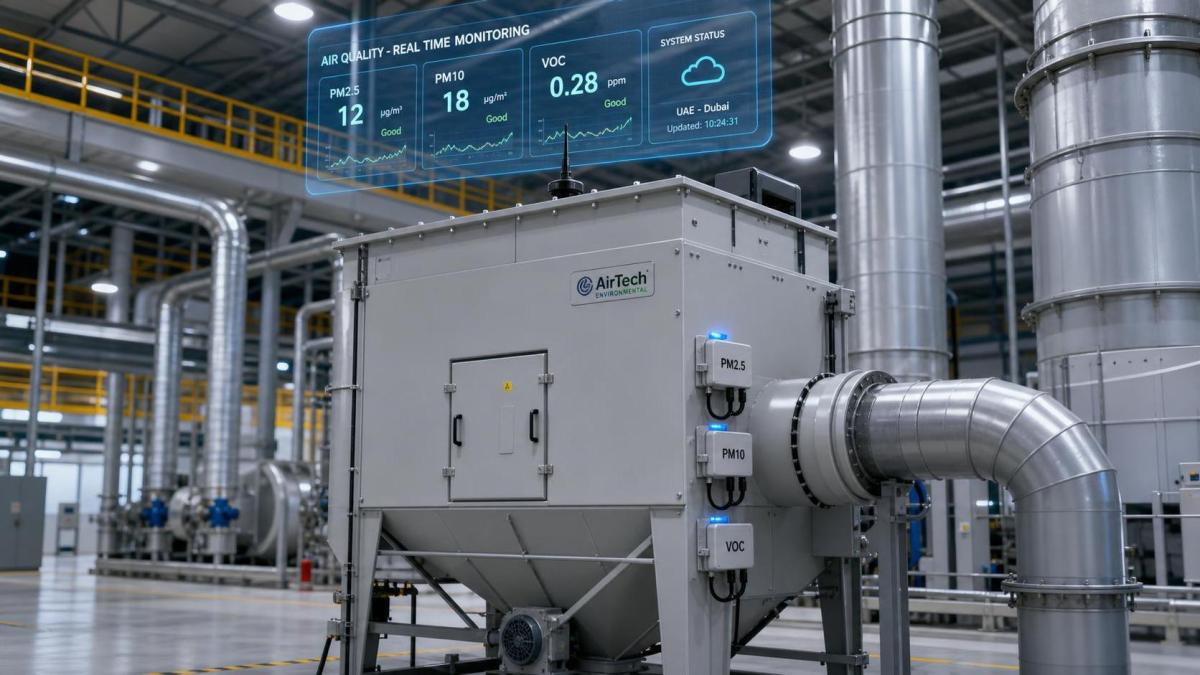
On July 3, 2026, the Emirates Authority for Standardization and Metrology (ESMA) issued Standard S 5002-2026, introducing a clear compliance requirement for industrial air purifiers and dust extraction systems sold in the UAE. The new rule requires these systems to include certified real-time PM2.5, PM10, and VOC sensors together with cloud-based reporting from January 1, 2027. For manufacturers, exporters, importers, procurement teams, and industrial end users, this is worth close attention because the requirement is tied not only to product configuration, but also to tender eligibility and customs release.
What the New UAE Standard Formally Requires
According to the information provided, ESMA issued Standard S 5002-2026 on July 3, 2026. The standard applies to industrial air purifiers and dust extraction systems sold in the UAE.
The requirement states that covered products must integrate certified real-time sensors for PM2.5, PM10, and VOC monitoring. The same products must also support cloud-based reporting.
The effective date is January 1, 2027. Based on the event summary, non-certified units will be excluded from tender participation and will also be barred from customs release.
Where the Immediate Business Impact May Appear
Product suppliers face a compliance threshold, not just a feature upgrade
From an industry perspective, manufacturers and exporters are likely to feel the first direct effect because the requirement is attached to products sold in the UAE. The likely impact is not limited to equipment design; it also touches certification readiness, configuration planning, and documentation prepared for market entry.
What deserves closer attention is whether existing product lines already include certified real-time PM2.5, PM10, and VOC monitoring with cloud reporting, or whether UAE-bound models will need separate compliance treatment.
Import and channel operations may see pressure at the point of entry
Importers, distributors, and channel operators may be affected in the customs and delivery stage. Analysis shows that when customs release is linked to certification status, inventory planning, shipment timing, and document completeness can become practical risk points.
For these businesses, the key change to watch is the transition from standard product movement to compliance-dependent market access for the affected categories.
Procurement teams may need to revise qualification criteria
Buyers involved in tenders, especially those purchasing industrial air purifiers or dust extraction systems for projects or facilities in the UAE, may need to reassess supplier screening. The stated consequence for non-certified units means procurement decisions may increasingly depend on whether suppliers can demonstrate conformity before bid submission or delivery.
The business impact here is likely to appear in pre-qualification review, technical specifications, and supplier communication rather than only at final purchase approval.
Industrial end users and service providers may need to verify deployment readiness
End users and service providers linked to installation, commissioning, or system support may also be affected if delivered equipment does not meet the new requirement. Observably, cloud-based reporting introduces an operational dimension beyond hardware supply alone, which may change how product readiness is checked before deployment.
What matters in practice is whether the supplied system can be accepted, cleared, and used within the customer's project timeline under the new rule.
What Companies Should Watch Before the 2027 Effective Date
Track how compliance language is applied in practice
Analysis shows that the current information establishes the standard, the sensor and cloud reporting requirement, the effective date, and the stated market consequences for non-certified units. What companies should now watch is how this wording is reflected in procurement documents, customs processes, and product qualification expectations as implementation approaches.
Review UAE-bound product scope early
Companies with industrial air purifiers or dust extraction systems in their export or sales portfolio should identify which models are intended for the UAE market and whether those units align with the certified real-time monitoring requirement. This is a practical distinction because the issue is no longer only product performance, but market admissibility.
Prepare certification and supporting documents in parallel
Because the event summary explicitly links non-certification to both tender participation and customs release, businesses should pay close attention to certification status, supporting technical records, and shipment-facing documentation. The operational issue is likely to involve timing as much as technical readiness.
Communicate carefully with customers and supply partners
For sales teams, procurement coordinators, and supply chain partners, there is a difference between a standard being announced and a product being demonstrably compliant. Observably, the practical task is to align product claims, quotation language, and delivery commitments with what can actually be supported under the new UAE requirement.
Why This Looks Like More Than a Short-Term Notice
This section is analysis rather than confirmed fact. Based on the information provided, the development is more appropriate to understand as a concrete regulatory signal with near-term commercial consequences, not merely as a routine technical update. The reason is straightforward: the rule sets a defined effective date and connects compliance status to two high-impact access points, tenders and customs release.
At the same time, it would be premature to extend the conclusion beyond the stated facts. The available information confirms the requirement and its stated enforcement consequences, but further practical interpretation may still depend on subsequent official wording, implementation detail, or market-side responses. That is why the development should be treated as actionable now, while still remaining under continued observation.
How the Market May Best Read This Development
In summary, the July 3, 2026 release of UAE ESMA Standard S 5002-2026 signals that real-time monitored and reportable air-quality functionality is becoming part of market access expectations for covered industrial air purifiers and dust extraction systems in the UAE. The immediate significance lies less in broad industry narrative and more in the direct effect on product compliance, shipment readiness, procurement qualification, and delivery planning.
It is more appropriate to understand this development as an announced compliance threshold with a fixed implementation date, rather than as a distant policy direction. The market impact should therefore be assessed through concrete business exposure: which products are affected, which transactions depend on certification, and which customer or customs stages could be disrupted if readiness is incomplete.
Basis of This Article and What Still Needs Verification
This article is based on the user-provided news title, event date, and event summary concerning UAE ESMA Standard S 5002-2026. The analysis has been written within that information boundary only.
For this type of industry update, relevant source categories would typically include official notices, standards organization documents, government or regulatory announcements, company compliance statements, industry association updates, and reporting by authoritative trade media. A specific official source link was not provided in the input, so the exact official publication path still needs ongoing verification.
Further follow-up should focus on any additional official wording related to certification application, documentation expectations, and how the requirement is reflected in tender and customs procedures ahead of January 1, 2027.
Technical Specifications
- Air Handling Unit Supplier Checklist: Performance Data, Lead Times, and SupportAuthor :Environmental Engineering Director
- Buying Fiberglass Water Tanks Wholesale: Compare Quotes and Delivery CostsAuthor :Environmental Engineering Director
- Choosing an XLPE Power Cable Supplier: Test Reports, Traceability, and Lead TimesAuthor :Grid Infrastructure Analyst
Expert Insights

Chief Security Architect
Dr. Thorne specializes in the intersection of structural engineering and digital resilience. He has advised three G7 governments on industrial infrastructure security.
Related Analysis
- Oct 19, 2026Air Handling Unit Supplier Checklist: Performance Data, Lead Times, and SupportAuthor :Environmental Engineering Director
- Oct 18, 2026Buying Fiberglass Water Tanks Wholesale: Compare Quotes and Delivery CostsAuthor :Environmental Engineering Director
- Oct 17, 2026Choosing an XLPE Power Cable Supplier: Test Reports, Traceability, and Lead TimesAuthor :Grid Infrastructure Analyst
Core Sector // 01
Security & Safety
- Air Handling Unit Supplier Checklist: Performance Data, Lead Times, and SupportAuthor :Environmental Engineering Director

- How to Select Industrial Emission Control Systems for High-Dust Manufacturing LinesAuthor :Environmental Engineering Director

- Environmental Technologies for Heavy Industry: Choosing Cleaner Production SolutionsAuthor :Environmental Engineering Director

- Selecting Air Compliance Equipment for Dust, Fumes, and VOC ControlAuthor :Environmental Engineering Director

- EU Rule Tightens EN 1822-2 for Industrial Air PurifiersAuthor :Environmental Engineering Director

- EU Eco-Design Rules Tighten for Air PurifiersAuthor :Environmental Engineering Director

- Low-Maintenance Dust and Fume Control Systems: Best Options for Welding ShopsAuthor :Environmental Engineering Director

- EPA Sets VOC Labeling Rule for Air PurifiersAuthor :Environmental Engineering Director