Buying Wholesale Fire Alarm Panels: Pricing, Compatibility and Supplier Checks
Author
Date Published
Reading Time
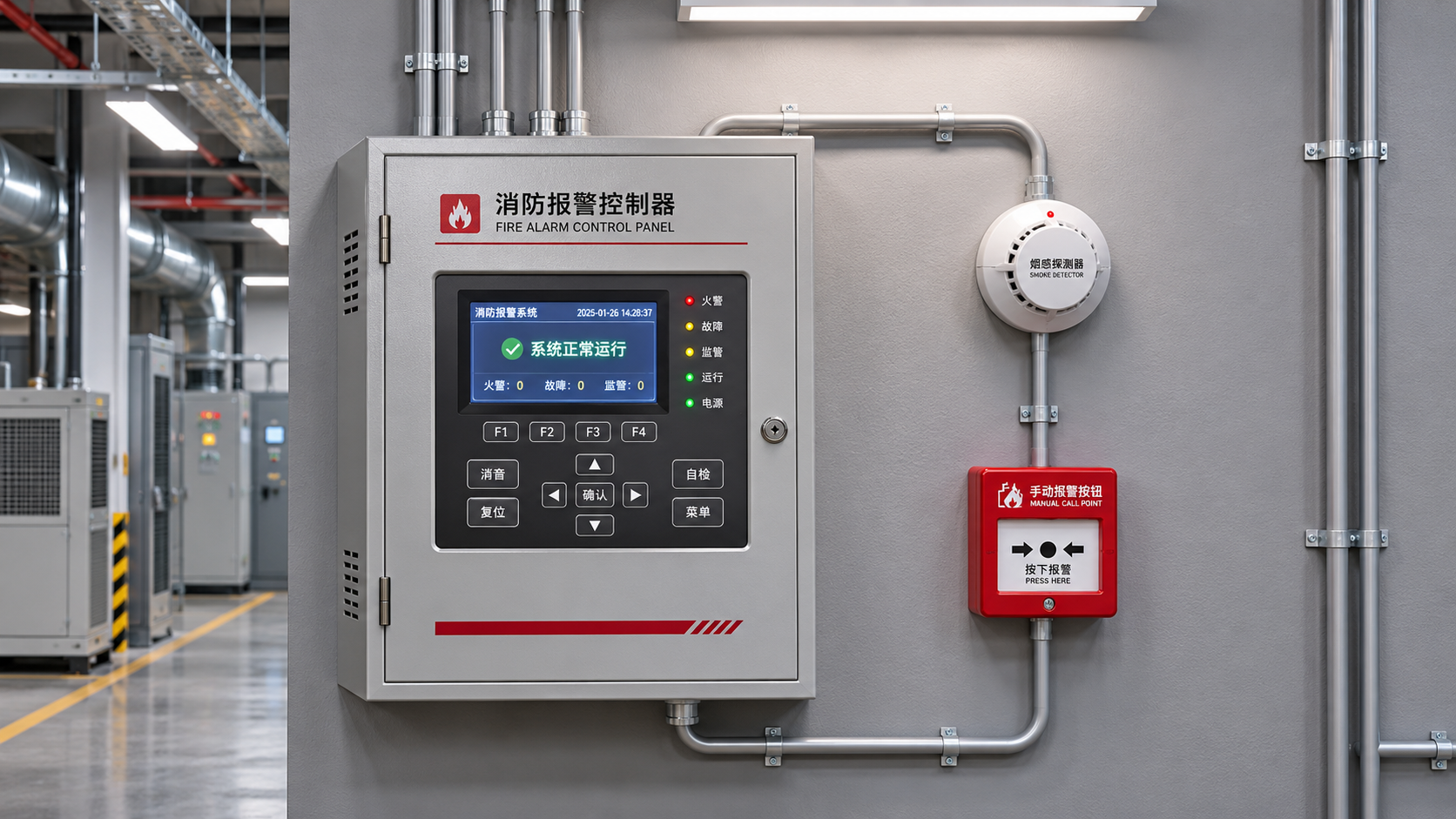
Buying wholesale fire alarm panels involves more than comparing unit prices. A low-priced control panel can become the most expensive option in the package if it requires replacement detectors, proprietary programming tools, additional interface modules or an unplanned redesign. For procurement teams, the useful question is not simply “What does the panel cost?” but “What will it take to deliver a compliant, functioning system that can be supported after handover?”
The answer depends heavily on whether the purchase supports a new installation, a phased refurbishment or a direct replacement. Before requesting volume pricing, establish the project’s technical boundaries and the authority responsible for accepting the installation. That groundwork makes supplier quotations easier to compare and gives the engineering team a chance to identify incompatibilities before a purchase order is placed.
What drives the price of a fire alarm panel package?
Panel prices vary with system architecture, capacity, configuration and the market in which the equipment will be installed. A conventional panel serving a small installation is not a meaningful price benchmark for an addressable network supporting multiple buildings. Even within the same product family, the base enclosure may not include everything shown on the project drawings.
For a useful comparison, ask suppliers to separate the panel’s base price from expansion cards, network interfaces, power supplies, batteries, annunciators, software licences and programming equipment. Confirm whether the quotation includes the required enclosure, charger and any site-specific language or display options. Some items may be supplied by the installing contractor rather than the panel vendor; they still belong in the project cost comparison.
Volume discounts deserve scrutiny too. A discount tied to a single delivery may look attractive until the project schedule requires equipment in several phases. Ask about minimum order quantities, staged deliveries, price validity, cancellation terms and the cost of holding stock. Where several sites are involved, check whether the quoted configuration is actually suitable for each one rather than assuming every panel can be standardised.
For imported equipment, include freight, insurance, duties where applicable, local taxes and currency exposure. Compare offers on the same delivery basis and identify who handles customs clearance. A supplier’s short factory lead time is less useful if export documentation, shipping or local approvals remain unresolved.
Compatibility is a system question, not a connector question
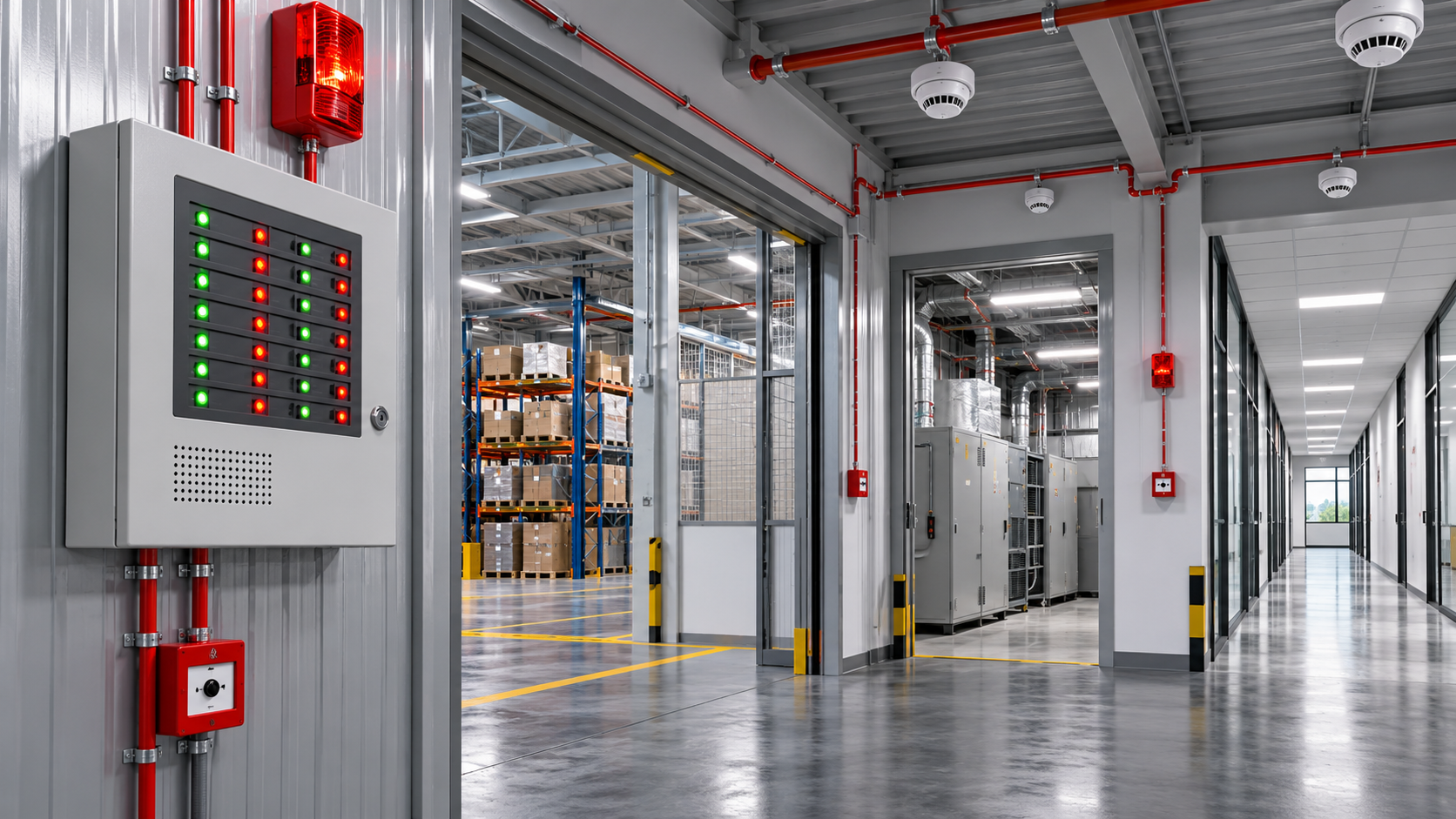
A detector may physically connect to a panel without being approved or supported as part of that system. Addressable devices in particular depend on the panel’s communication protocol and supported device list. Conventional initiating and notification circuits also have electrical and compatibility requirements that need checking against the manufacturer’s documentation.
Request the compatibility documentation for the exact panel model, firmware version and field-device models proposed. That includes smoke and heat detectors, manual call points, sounders, strobes, input/output modules and remote annunciators where relevant. Do not rely on a generic statement that devices are “compatible with major brands.” If the supplier proposes an alternative to a specified device, ask who will approve the substitution and whether it affects listing, configuration or warranty.
Capacity needs a similar check. A panel’s advertised maximum number of addresses or zones is only a starting point. The designer must also assess loop loading, notification appliance circuit loading, cable length and type, voltage drop, power supply capacity and standby battery calculations. Future expansion should be stated in the design brief; buying exactly enough capacity for the initial device count can make a later extension unnecessarily disruptive.
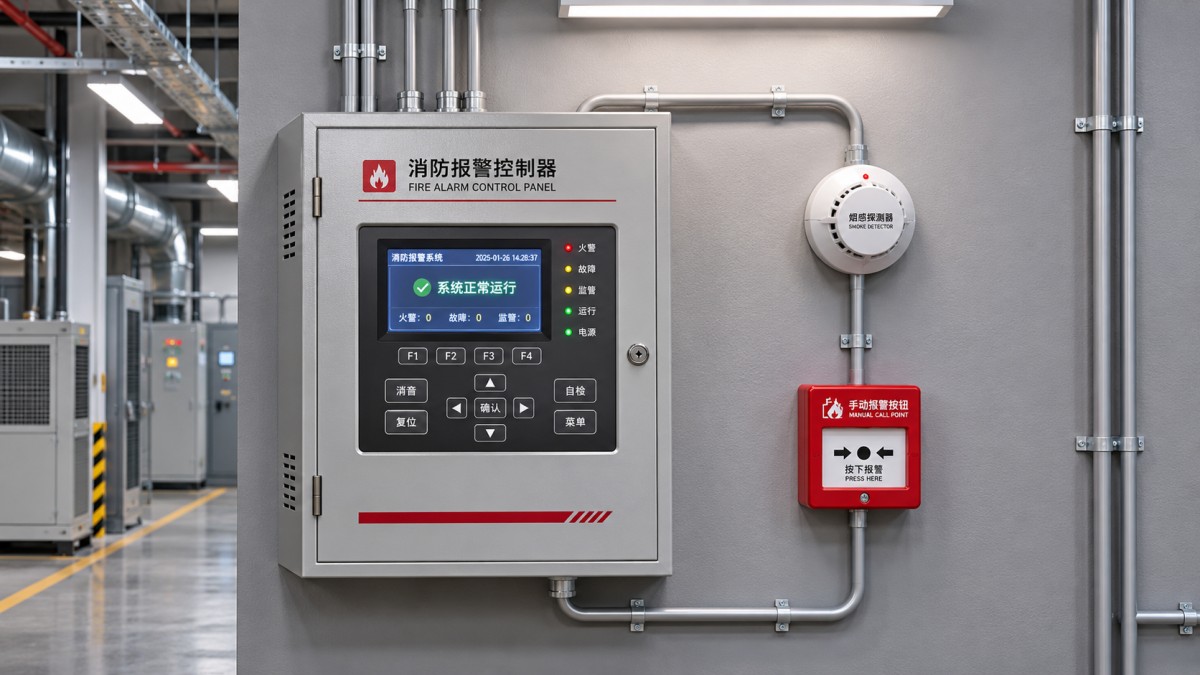
Interfaces are a frequent source of missed costs. A facility may need the fire alarm system to signal a building management system, release doors, control dampers, recall lifts or communicate with a monitoring provider. The required interface hardware, programming, wiring and sequence of operation should be agreed with the responsible designers and contractors. A supplier’s claim that a panel has “integration capability” does not establish that the complete arrangement will satisfy the project specification.
New installation or retrofit? The buying decision changes
On a new build, the design team can usually specify the panel and field devices as a coordinated package. Procurement has more room to compare manufacturers, provided alternatives are submitted early enough for technical review. The practical risk is buying hardware before the final cause-and-effect matrix, device schedule and interfaces have been resolved.
A retrofit is less forgiving. Existing cable routes, devices and interfaces may appear reusable, but their condition and compatibility need verification. Even when a manufacturer offers a migration path, the project team should confirm which existing components can remain, which must be replaced and whether the resulting configuration is supported and acceptable locally.
For an occupied facility, installation sequencing can matter as much as hardware cost. Ask the installer how the changeover will be managed, what temporary fire safety measures may be needed and who must approve any impairment of the existing system. Procurement should not promise a panel delivery date as a commissioning date: access, programming, testing and acceptance all require coordination.
Check approvals for the product and the destination
Fire alarm requirements are jurisdiction- and project-specific. The relevant standard, edition and approval route depend on the installation location, system design and requirements imposed by the authority having jurisdiction, insurer or project specification. In the United States, projects commonly involve requirements associated with NFPA 72 and product listings appropriate to the application. In markets using European standards, buyers may encounter the EN 54 series and applicable product documentation. These are starting points for verification, not interchangeable certificates of universal acceptance.
Ask for the actual listing or certification documents and verify that they cover the exact model and configuration being offered. Check the issuing body’s directory where available, as well as the document’s scope and status. A CE marking alone should not be treated as proof that a complete fire alarm installation meets every local requirement. Similarly, a manufacturer’s ISO management-system certification is not a substitute for a product approval.
This is particularly important for cross-border wholesale purchases. A genuine panel made for one market may not be the approved configuration, voltage variant or supported product for another. Resolve those questions before goods are shipped, not when the commissioning contractor asks for the approval file.
Supplier checks that can prevent a stalled handover
An attractive quotation does not establish that the seller can supply current, traceable equipment or support it locally. Ask whether the supplier is the manufacturer or an authorised channel partner, and verify that status through the manufacturer when it matters to warranty or technical support. Establish where the equipment will ship from and whether it is new, refurbished or surplus stock.
The following questions usually expose gaps before they become site problems:
- Traceability: Will model numbers, serial numbers and applicable approval documents be available for the units delivered?
- Stock and lifecycle: Is the quoted equipment available, and has the manufacturer announced a discontinuation or replacement?
- Configuration: Who supplies the site-specific programming, configuration files and passwords, and what will the owner receive at handover?
- Support: Who can commission, service and troubleshoot the system in the destination market? Are training or manufacturer authorisation required?
- Warranty: When does coverage start, what exclusions apply, and who pays freight or labour for a replacement?
- Continuity: How are spare parts, firmware updates and replacement devices obtained after the initial order?
Programming access deserves particular attention. Some systems are serviced through controlled tools or authorised networks. That may be workable, but the owner should understand the implications before purchase: available service providers, ongoing software costs, response arrangements and access to configuration records. A cheaper panel can create a costly dependency if only one remote party can make routine changes.
Build a comparable landed-and-installed cost
Use the same scope for every supplier evaluation. Start with the panel and required components, then add logistics, duties and local taxes as applicable, engineering review, programming, installation, commissioning and acceptance testing. Include initial training, documentation, recommended spares and any known recurring licence or service charges. Where costs are uncertain, show them as allowances rather than hiding them inside a unit price.
Keep exclusions visible. One supplier may quote a complete configured package while another supplies only unprogrammed hardware; the lower number is not necessarily the lower-cost offer. Equally, a higher initial price may not be justified if its additional capacity or features have no use in the approved design. Ask engineering and operations to review the comparison before commercial negotiations narrow the choices.
Global Industrial Core’s broader sourcing perspective is relevant here: safety equipment is bought as part of an operational infrastructure, not as an isolated commodity. For the next tender, issue a device schedule, required approvals, interface list, delivery locations and commissioning responsibilities with the request for quotation. Then hold the order until the proposed configuration and its support arrangements have been checked against the actual project.
Expert Insights

Chief Security Architect
Dr. Thorne specializes in the intersection of structural engineering and digital resilience. He has advised three G7 governments on industrial infrastructure security.
Related Analysis
- Nov 22, 2026McKinsey: India Needs Up to $400 Billion to Meet Steel Capacity Growth GoalAuthor :
- Nov 22, 2026Choosing Geotextile Fabric for Landfill Drainage and Liner ProtectionAuthor :Environmental Engineering Director
- Nov 21, 2026Japan's Steel Exports Could Fall to Lowest Level Since 1999 in 2026Author :
Core Sector // 01
Security & Safety
- Buying Wholesale Fire Alarm Panels: Pricing, Compatibility and Supplier ChecksAuthor :Safety Compliance Lead

- How to Vet a Wholesale CO2 Extinguisher Supplier for Certified Bulk OrdersAuthor :Safety Compliance Lead

- How to Select a Conventional Fire Alarm Panel by Zone Capacity and Building RiskAuthor :Safety Compliance Lead

- Steel Rescue Tripods Wholesale: Key Load Ratings, Standards, and Buying MistakesAuthor :Safety Compliance Lead

- India Lifts Duty on Fire Rescue Imports to 22%Author :Safety Compliance Lead

- IEC 62061 Amendment 2 Targets Fire & Rescue ControllersAuthor :Safety Compliance Lead

- IEC 62819-2:2026 Sets New Cybersecurity CheckpointAuthor :Safety Compliance Lead

- When to Use a Quick Deployment Oil Boom for Spill Control in Ports and Inland WatersAuthor :Safety Compliance Lead