What makes a reliable Security & Safety supplier today
Author
Date Published
Reading Time
Choosing a reliable Security & Safety supplier today is no longer just about price or product range. For enterprise decision-makers, it means securing compliant, durable, and performance-proven solutions that protect people, assets, and operations under real industrial conditions. This article explores the core qualities that define a trustworthy supplier in a market where safety failures carry operational, financial, and reputational risk.
For most buyers, the core search intent behind this topic is practical evaluation. They want to know how to identify a supplier that can deliver certified products, dependable support, and consistent performance across complex industrial environments.
Enterprise decision-makers are usually less interested in marketing claims than in supplier credibility, operational fit, lifecycle cost, and risk reduction. The real question is not who sells safety products, but who can support safe and uninterrupted operations at scale.
The most useful way to assess a supplier is through a business lens. Compliance, quality assurance, technical support, lead-time reliability, documentation, and after-sales responsiveness matter far more than broad catalogs or aggressive pricing alone.
Why reliability now means more than product availability
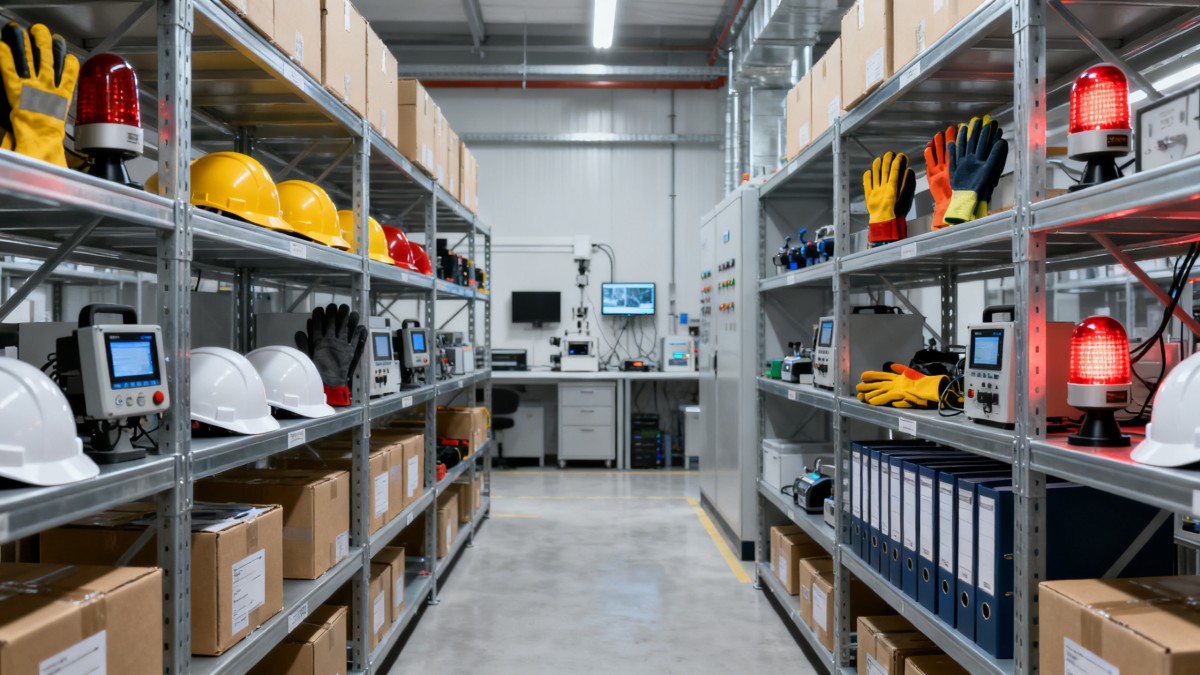
A reliable Security & Safety supplier today must do more than ship equipment on time. They must help customers manage regulatory exposure, operational continuity, workforce protection, and asset resilience in increasingly demanding industrial settings.
Industrial procurement has changed. Buyers now face stricter audits, tighter ESG expectations, higher insurance scrutiny, and more complex cross-border compliance obligations. In this context, supplier reliability becomes a strategic issue rather than a transactional one.
If a safety component fails, the consequence may extend far beyond replacement cost. A single weak link can trigger injury, downtime, non-compliance penalties, reputational damage, or project delays that affect multiple contractors and stakeholders.
That is why experienced buyers look beyond brochures. They assess whether a supplier can consistently perform under pressure, document compliance clearly, and support deployment in the real environments where risk is highest.
What enterprise buyers are really looking for
When decision-makers search for a dependable Security & Safety supplier, they are usually evaluating risk. They want confidence that the supplier can reduce uncertainty across sourcing, installation, inspection, maintenance, and long-term system performance.
The first concern is compliance. Buyers need assurance that products meet applicable standards such as CE, UL, ISO, ATEX, NFPA, or other market-specific requirements relevant to facilities, equipment classes, and operating conditions.
The second concern is durability in actual use. A product may meet a laboratory specification yet fail in corrosive, high-vibration, high-temperature, or high-dust environments. Reliable suppliers understand these realities and specify accordingly.
The third concern is support quality. Enterprise customers value suppliers who can provide technical documentation, product traceability, installation guidance, spare parts planning, and responsive problem resolution without creating internal procurement bottlenecks.
The fourth concern is supply continuity. A capable supplier should be able to maintain stable inventory planning, communicate lead times accurately, and offer alternatives when disruptions affect production, logistics, or component availability.
Compliance is the first filter, not the final proof
Compliance credentials are essential, but they should be treated as an entry requirement rather than the sole indicator of trustworthiness. A supplier that cannot prove compliance is immediately high risk, but certification alone does not guarantee performance.
Buyers should ask whether certifications are current, product-specific, and issued by recognized bodies. Generic claims such as “international quality” or “tested to standards” are not enough for serious procurement decisions.
Documentation quality is often one of the clearest signals of supplier maturity. Reliable suppliers can provide test reports, declarations of conformity, material data, calibration records where relevant, and clear revision control across technical files.
Just as important is change management. If a supplier modifies materials, production sites, or component sources, enterprise buyers need timely disclosure. Unannounced changes can create audit issues and compromise approved engineering specifications.
A strong supplier also understands regional compliance differences. Products suitable for one market may require additional approvals or labeling for another. This capability matters especially for global EPC contractors and multinational facility operators.
Operational reliability matters more than a wide catalog
Many suppliers promote the breadth of their product range, but enterprise buyers often gain more value from operational consistency than from catalog size. A narrower specialist with stronger execution may be a safer long-term partner.
Operational reliability includes manufacturing discipline, batch consistency, packaging standards, inspection routines, and the ability to deliver the same performance level across repeated orders. These factors directly affect installation efficiency and field confidence.
It also includes communication reliability. A trustworthy supplier answers technical questions clearly, flags limitations honestly, and does not overpromise delivery schedules simply to win purchase orders.
For decision-makers, predictability has financial value. Stable performance reduces emergency buying, minimizes rework, and lowers the hidden costs associated with project delays, internal escalation, and corrective actions after deployment.
In safety-critical environments, consistency is often more valuable than novelty. Buyers should prioritize suppliers whose operating discipline supports repeatable outcomes over those whose main strength is promotional visibility.
Technical competence separates sellers from strategic suppliers
A dependable Security & Safety supplier should be able to engage beyond the product list. They should understand application conditions, relevant hazards, performance tolerances, installation constraints, and maintenance realities within industrial operations.
This technical competence shows up in how they ask questions. Good suppliers want to know the use case, environmental exposure, regulatory framework, expected duty cycle, and integration requirements before recommending a solution.
They should also be able to explain trade-offs. For example, a lower-cost option may meet minimum standards but offer shorter service life, lower ingress protection, weaker chemical resistance, or limited compatibility with existing systems.
Suppliers with real engineering depth can help prevent specification mistakes early. That support can reduce lifecycle cost more effectively than a lower initial unit price, especially in complex facilities where replacement or downtime is expensive.
For enterprise procurement teams, this matters because internal stakeholders often include EHS leaders, operations managers, project engineers, and maintenance teams. A capable supplier can communicate credibly with all of them.
How to evaluate supplier reliability before committing
Enterprise buyers should use a structured evaluation process. The goal is not just to compare quotes, but to validate whether a supplier can perform across compliance, execution, support, and long-term partnership requirements.
Start with certification and documentation review. Verify standards, test reports, and quality management credentials. Confirm that documents match the specific products and production configurations being quoted, not just the general product family.
Next, examine manufacturing and quality controls. Ask about incoming inspection, traceability, non-conformance handling, batch testing, and corrective action processes. A reliable supplier should answer these questions with clarity and evidence.
Then assess delivery performance. Review historic lead-time accuracy, inventory strategy, logistics capability, and contingency planning. In critical infrastructure projects, supplier responsiveness during disruption is often more important than baseline pricing.
Technical support should be tested before award, not after. Evaluate how quickly the supplier responds, whether their answers are specific, and whether they can provide meaningful guidance on installation, compatibility, and service intervals.
References and case evidence are also valuable. Ask for comparable industrial applications, especially in environments similar to yours. A supplier with proven field performance in demanding operations carries lower implementation risk.
Red flags that decision-makers should not ignore
Some warning signs appear early if buyers know where to look. One major red flag is inconsistent documentation. If specifications, certificates, and sales claims do not align, the supplier may lack control or transparency.
Another concern is vague technical language. Suppliers who cannot explain performance limits, environmental suitability, or maintenance requirements may be resellers with limited product understanding rather than accountable long-term partners.
Unrealistic lead times and unusually low pricing should also prompt caution. These can signal unstable sourcing, quality compromises, or poor forecasting discipline that may become visible only after the order is placed.
Frequent staff changes, slow engineering feedback, or reluctance to discuss failure history are additional concerns. Reliable suppliers do not need to claim perfection, but they should be open about process controls and continuous improvement.
Finally, be cautious when a supplier treats safety procurement like a commodity sale. In high-stakes environments, the absence of consultative engagement often indicates that support will also be weak when issues arise.
Total value is measured across the lifecycle
For enterprise decision-makers, the best supplier is not always the one with the lowest quote. The smarter benchmark is lifecycle value, which includes uptime protection, maintenance predictability, compliance readiness, and reduced incident exposure.
A slightly higher upfront price may deliver better service life, lower inspection burden, faster installation, and fewer replacement events. Over time, these advantages can significantly outperform a low-cost purchase that creates repeated operational friction.
This is especially important in industrial safety, where failure costs are nonlinear. The downside of one non-compliant or underperforming component can be disproportionate to the original procurement savings.
Reliable suppliers help organizations move from reactive buying to risk-aware sourcing. They contribute to smoother audits, better site safety outcomes, stronger operational confidence, and more resilient asset management over the long term.
What a modern trustworthy supplier relationship should look like
Today, the strongest supplier relationships are collaborative rather than purely transactional. Enterprise buyers increasingly value partners who share risk awareness, support standardization, and help improve procurement decisions over time.
This includes regular updates on product changes, transparent communication on availability, and proactive suggestions when standards evolve or better-fit solutions become available. That level of engagement indicates maturity and accountability.
A modern supplier should also support internal alignment. Decision-makers often need technical justification for finance teams, compliance proof for auditors, and performance confidence for operations leaders. Good suppliers make that process easier, not harder.
In global industrial environments, trust is built through evidence, consistency, and responsiveness. The supplier that helps your team make defensible decisions is usually more valuable than the one that simply offers the broadest selection.
Conclusion: reliability is proven through risk reduction
What makes a reliable Security & Safety supplier today is not a single feature, but a pattern of dependable performance. The strongest suppliers combine verified compliance, technical competence, operational consistency, and responsive long-term support.
For enterprise decision-makers, the right evaluation question is simple: does this supplier reduce risk across the full lifecycle of procurement, installation, operation, and audit? If the answer is clearly yes, the supplier is likely worth serious consideration.
In a market where failures can impact people, assets, and reputation, reliability should be judged by evidence and execution. A trustworthy supplier is one that helps your organization stay safe, compliant, efficient, and prepared under real conditions.
Technical Specifications
- How to Select Electronic Hotel Key Card Locks for Guest Rooms and Staff AreasAuthor :Safety Compliance Lead
- How to Select Lab Instruments for Reliable Chemical Analysis WorkflowsAuthor :Precision Metrology Expert
- How to Size a UPS for Server Rooms: Load, Runtime, and Redundancy FactorsAuthor :Grid Infrastructure Analyst
Expert Insights

Chief Security Architect
Dr. Thorne specializes in the intersection of structural engineering and digital resilience. He has advised three G7 governments on industrial infrastructure security.
Related Analysis
- Sep 17, 2026How to Select Electronic Hotel Key Card Locks for Guest Rooms and Staff AreasAuthor :Safety Compliance Lead
- Sep 16, 2026How to Select Lab Instruments for Reliable Chemical Analysis WorkflowsAuthor :Precision Metrology Expert
- Sep 15, 2026How to Size a UPS for Server Rooms: Load, Runtime, and Redundancy FactorsAuthor :Grid Infrastructure Analyst
Core Sector // 01
Security & Safety
- How to Select Electronic Hotel Key Card Locks for Guest Rooms and Staff AreasAuthor :Safety Compliance Lead

- How to Evaluate a Hotel Key Card Lock Supplier for Multi-Property RolloutsAuthor :Safety Compliance Lead

- Pre-Contract Audit Checklist for Verified Production Safety and Environmental ComplianceAuthor :Safety Compliance Lead

- How Can Distributors Build Procurement-Oriented Industrial Content That Drives RFQs?Author :Safety Compliance Lead

- EU Mandates EN 50131-1:2026 for Security SystemsAuthor :Safety Compliance Lead

- EU EN 50131-1:2026 Takes Effect on CCTV ComplianceAuthor :Safety Compliance Lead

- IEC Issues CCTV Interoperability Test StandardAuthor :Safety Compliance Lead

- EN 50131-4:2026 Raises EU Security Compliance BarAuthor :Safety Compliance Lead