What makes a Security & Safety supplier easy to trust
Author
Date Published
Reading Time
Choosing a Security & Safety supplier is not just about price—it is about confidence in compliance, product consistency, and long-term support. For distributors, agents, and channel partners, trust grows when a supplier can prove certifications, deliver reliable technical documentation, and respond quickly to market demands. This article explores the signals that make a supplier easier to trust in today’s global industrial landscape.
Why does trust matter so much when evaluating a Security & Safety supplier?
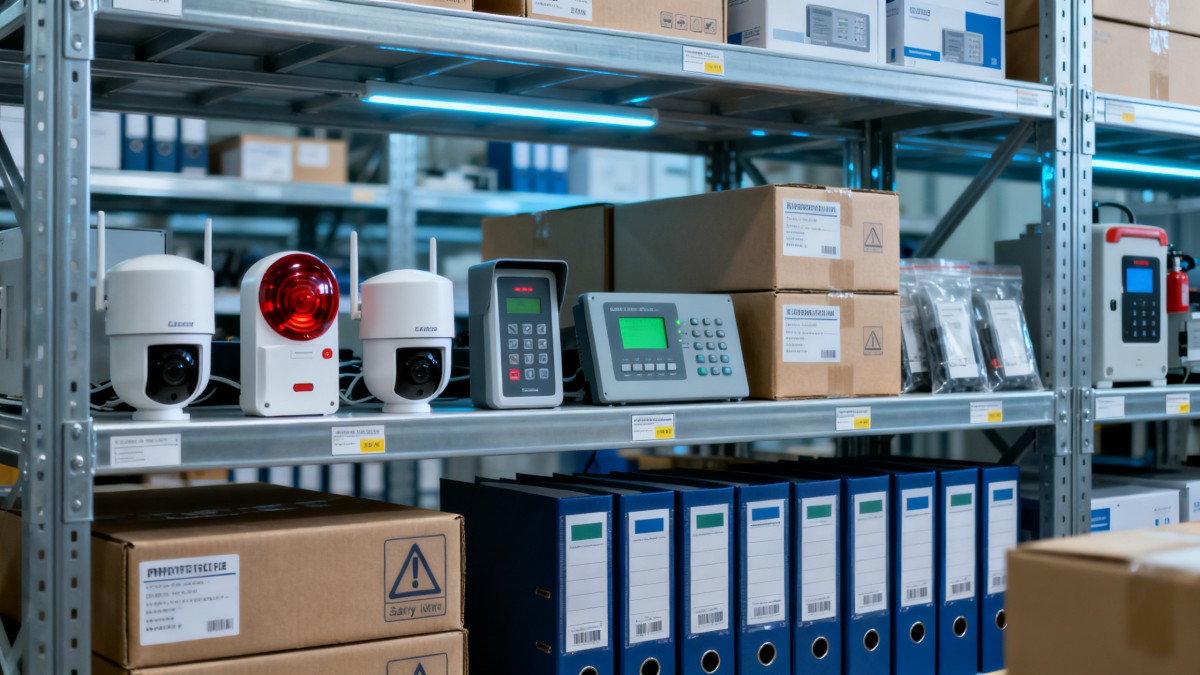
For distributors and agents, the real risk is rarely the first order. The bigger risk appears later: delayed approvals, inconsistent batches, missing compliance files, installation complaints, or slow warranty handling. In the Security & Safety segment, those failures can damage both revenue and channel credibility.
A trusted Security & Safety supplier helps channel partners reduce uncertainty across procurement, technical review, and after-sales execution. That matters even more in industrial projects where safety devices, access control components, alarms, protective systems, and site protection products may be tied to strict operating procedures and tender specifications.
In broad industrial markets, buying decisions often involve EPC firms, plant operators, maintenance teams, and procurement managers at the same time. Each stakeholder asks a different question. Procurement asks about price and lead time. Engineers ask about standards and integration. End users ask whether the product will keep performing in demanding environments.
That is why trust cannot be reduced to brand image alone. It must be visible in documents, response speed, traceability, and technical consistency. A supplier becomes easier to trust when it lowers the validation workload for the entire channel.
- Clear compliance evidence shortens distributor approval cycles and reduces hesitation from downstream buyers.
- Stable specifications reduce returns caused by mismatch between catalog data and delivered goods.
- Responsive technical support protects channel relationships when installation or tender questions arise.
What trust signals should distributors check first?
When screening a Security & Safety supplier, channel partners need a practical checklist rather than vague promises. The most useful trust signals are the ones that can be verified before scale-up. The table below organizes the first-stage review points that distributors can use during supplier comparison.
A dependable Security & Safety supplier will usually provide these materials without hesitation. If documentation arrives late, changes frequently, or lacks detail, distributors should treat that as a warning sign. Good products with weak documentation still create commercial friction.
The fastest way to spot reliability gaps
Ask the supplier for one complete file package for a real item, not a marketing brochure. Request a datasheet, compliance document, packing specification, and lead-time statement together. If the supplier cannot assemble that basic package quickly, scaling the relationship may become difficult.
How do compliance and certification shape trust?
In Security & Safety procurement, compliance is not a secondary issue. It directly influences project acceptance, customs handling, site installation, and liability exposure. For channel partners, a supplier that handles compliance well saves time at every stage of distribution.
The important point is not simply whether a supplier mentions CE, UL, or ISO. What matters is whether the claim is supported by product-specific records, consistent markings, and documentation that matches the current version of the item being sold.
Common compliance areas distributors should review
- Electrical safety and installation suitability for devices connected to power or control systems.
- Material and environmental declarations when local market rules require restricted substance or disposal information.
- Ingress protection, operating temperature, and enclosure performance where site conditions are harsh.
- Documentation version control so that tenders, labels, manuals, and delivered products remain aligned.
Global Industrial Core supports this decision process by organizing technical and compliance intelligence in a way that industrial buyers can use. For distributors dealing with multiple categories across infrastructure and plant operations, this type of structured review is valuable because it reduces the chance of overlooking a specification gap.
The table below highlights how certification discipline affects channel performance when working with a Security & Safety supplier.
A strong compliance posture does more than satisfy auditors. It also makes quoting easier, shortens pre-sale technical clarification, and protects reseller reputation in regulated or high-risk sectors.
What operational behaviors make a Security & Safety supplier easier to trust?
Trust is built through routines. Distributors often discover this after comparing two suppliers with similar pricing. One keeps changing delivery estimates, sends partial answers, and leaves technical questions unresolved. The other follows a stable process. Over time, the second supplier becomes the safer commercial choice.
Operational indicators worth watching
- Response discipline. Does the supplier reply with usable answers, not generic statements, within an agreed timeframe?
- Change control. Are specification updates announced before shipment, with revised files and commercial impact explained?
- Packaging consistency. Are product labels, carton markings, and quantity details predictable enough for warehouse handling?
- After-sales process. Is there a defined path for troubleshooting, replacement review, and warranty communication?
In industrial distribution, these details affect profitability. A low-priced Security & Safety supplier can become expensive if support delays force rework, site revisits, or urgent substitute purchases. Easy trust usually comes from visible process maturity.
Why technical context matters in cross-category industrial sourcing
Security and safety products do not operate in isolation. They interact with instruments, power systems, environmental controls, and mechanical infrastructure. GIC’s cross-pillar perspective is useful here because channel partners often need to assess whether a supplier understands the broader operating environment, not just a single item code.
For example, a site protection device may need enclosure compatibility, power quality tolerance, installation space planning, and maintenance access. A trustworthy supplier can discuss these adjacent issues early, which reduces downstream surprises for the distributor and end user.
How should distributors compare suppliers beyond price?
Price still matters, especially in competitive tenders. However, channel partners should compare total transaction risk, not unit cost alone. A Security & Safety supplier with slightly higher pricing may still offer a stronger commercial outcome if documentation, lead time, and technical support are more reliable.
A practical comparison model
Use weighted scoring across compliance, support, delivery, and product consistency. This approach helps teams avoid overvaluing the visible cost line while ignoring hidden operational cost.
This kind of comparison is especially important for distributors serving infrastructure, manufacturing, utilities, or process industries. In those markets, one failed product line can consume more time and margin than a modest price difference ever saves.
Which mistakes make a supplier look difficult to trust?
Some warning signs are obvious, but others appear normal until a project becomes urgent. Channel partners should watch for patterns rather than one-off issues. A Security & Safety supplier becomes difficult to trust when uncertainty keeps reappearing in critical points of the buying process.
- The supplier offers certificates but cannot link them clearly to the quoted product version.
- Datasheets omit key values such as electrical ratings, environmental limits, or installation requirements.
- Samples differ from mass production labeling, packaging, or configuration without explanation.
- Commercial teams promise delivery dates before confirming factory capacity or material availability.
- Support becomes slow once the first order is placed, leaving distributors exposed during deployment.
These issues are not minor. For agents and distributors, they affect repeat business, channel confidence, and the ability to win larger accounts. Trust grows when the supplier removes friction, not when the distributor has to investigate every claim independently.
FAQ: what do buyers often ask about a Security & Safety supplier?
How can I check whether a Security & Safety supplier is suitable for regulated projects?
Start with product-specific compliance files, not broad company statements. Review whether the item code, revision, label, and documentation are aligned. Then confirm operating limits, installation conditions, and any market-specific approval needs with the supplier before quoting.
What matters more: price, certification, or lead time?
For most channel partners, the right answer is balance. If certification is weak, the sale may fail before installation. If lead time is unstable, the project may miss schedule. If price is uncompetitive, the quote may not convert. A reliable Security & Safety supplier should be evaluated on total commercial fit, not one metric.
Are samples enough to build trust?
Samples help, but they are only one checkpoint. Distributors should also examine repeatability, packing consistency, document quality, and change control. Many supply problems appear only after the first production order, not during sample review.
What documentation should I request before onboarding a new supplier?
Request a datasheet, installation or user guide, compliance declaration where applicable, packaging details, product identification method, and standard lead-time statement. If possible, ask how nonconformity cases are handled. That gives a clearer picture of operational maturity.
Why work with a technical sourcing intelligence partner?
In industrial channels, trust is easier to build when evaluation is backed by structured technical review. Global Industrial Core helps distributors, agents, and industrial buyers navigate complex sourcing questions across security, measurement, power, environmental, and mechanical systems. That broader view is valuable when a Security & Safety supplier must fit into a larger operational environment.
Instead of relying on surface-level claims, channel partners can use a more disciplined approach to compare compliance evidence, technical detail, application fit, and supply reliability. This is especially useful for global projects where documentation quality and cross-functional coordination directly affect order conversion and project continuity.
Why choose us for supplier evaluation and sourcing support?
If you are screening a Security & Safety supplier for distribution, project supply, or regional agency development, GIC can support the decision with practical, technical, and sourcing-focused guidance. We help industrial channel partners reduce uncertainty before volume commitment.
- Parameter confirmation for products that must meet specific operating, installation, or environmental requirements.
- Product selection support when multiple configurations or alternative solutions need to be compared.
- Lead-time and delivery discussion for urgent tenders, replenishment planning, or phased project schedules.
- Certification and compliance review for channel partners facing import checks, tender documentation needs, or customer audits.
- Sample support and quotation communication to help validate fit before broader commercial rollout.
- Custom sourcing discussion when the required solution must align with wider infrastructure, instrumentation, or power-system conditions.
If your team needs help comparing suppliers, clarifying specifications, reviewing certification readiness, or planning a safer sourcing path, contact us with your target application, required standards, expected order volume, and delivery timeline. That information makes the evaluation faster and more commercially useful.
Technical Specifications
- How to Select Electronic Hotel Key Card Locks for Guest Rooms and Staff AreasAuthor :Safety Compliance Lead
- How to Select Lab Instruments for Reliable Chemical Analysis WorkflowsAuthor :Precision Metrology Expert
- How to Size a UPS for Server Rooms: Load, Runtime, and Redundancy FactorsAuthor :Grid Infrastructure Analyst
Expert Insights

Chief Security Architect
Dr. Thorne specializes in the intersection of structural engineering and digital resilience. He has advised three G7 governments on industrial infrastructure security.
Related Analysis
- Sep 17, 2026How to Select Electronic Hotel Key Card Locks for Guest Rooms and Staff AreasAuthor :Safety Compliance Lead
- Sep 16, 2026How to Select Lab Instruments for Reliable Chemical Analysis WorkflowsAuthor :Precision Metrology Expert
- Sep 15, 2026How to Size a UPS for Server Rooms: Load, Runtime, and Redundancy FactorsAuthor :Grid Infrastructure Analyst
Core Sector // 01
Security & Safety
- How to Select Electronic Hotel Key Card Locks for Guest Rooms and Staff AreasAuthor :Safety Compliance Lead

- How to Evaluate a Hotel Key Card Lock Supplier for Multi-Property RolloutsAuthor :Safety Compliance Lead

- Pre-Contract Audit Checklist for Verified Production Safety and Environmental ComplianceAuthor :Safety Compliance Lead

- How Can Distributors Build Procurement-Oriented Industrial Content That Drives RFQs?Author :Safety Compliance Lead

- EU Mandates EN 50131-1:2026 for Security SystemsAuthor :Safety Compliance Lead

- EU EN 50131-1:2026 Takes Effect on CCTV ComplianceAuthor :Safety Compliance Lead

- IEC Issues CCTV Interoperability Test StandardAuthor :Safety Compliance Lead

- EN 50131-4:2026 Raises EU Security Compliance BarAuthor :Safety Compliance Lead