2026 World Drone Expo Highlights Industrial Inspection & Security
Author
Date Published
Reading Time
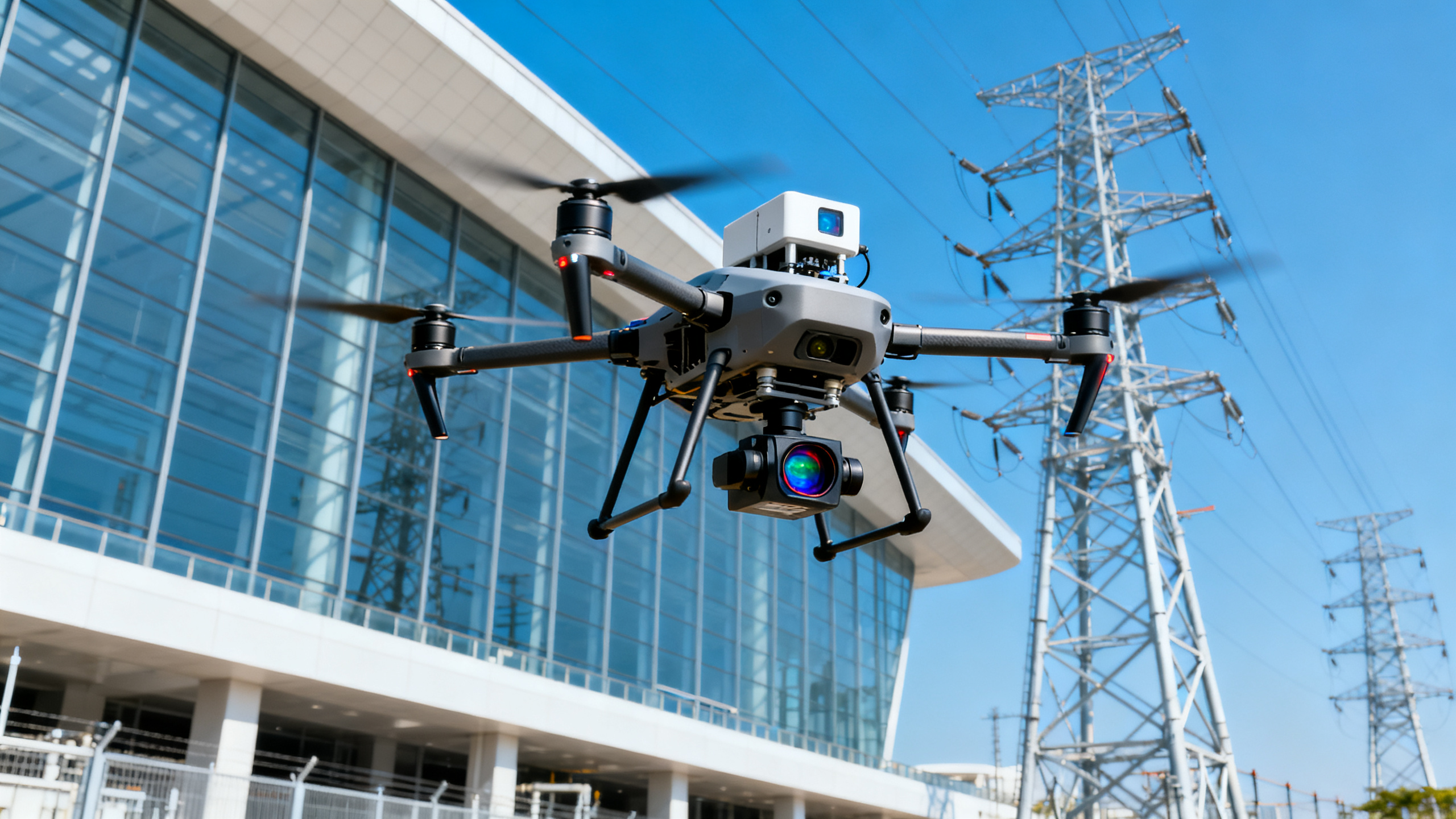
The 2026 World Drone Expo, held in Shenzhen from May 21 to 23, marked a pivotal moment for industrial drone adoption—driven not by consumer trends or aerial photography, but by regulatory maturation, certification standardization, and infrastructure-sector procurement discipline. Its timing coincides with the implementation phase of China’s Regulations on Civil Unmanned Aircraft System Operations for Critical Infrastructure Protection (effective April 1, 2026), which mandates certified hardware for energy, utilities, and environmental monitoring applications. This convergence elevated technical compliance—not just flight capability—as the primary selection criterion for buyers.
Event Overview
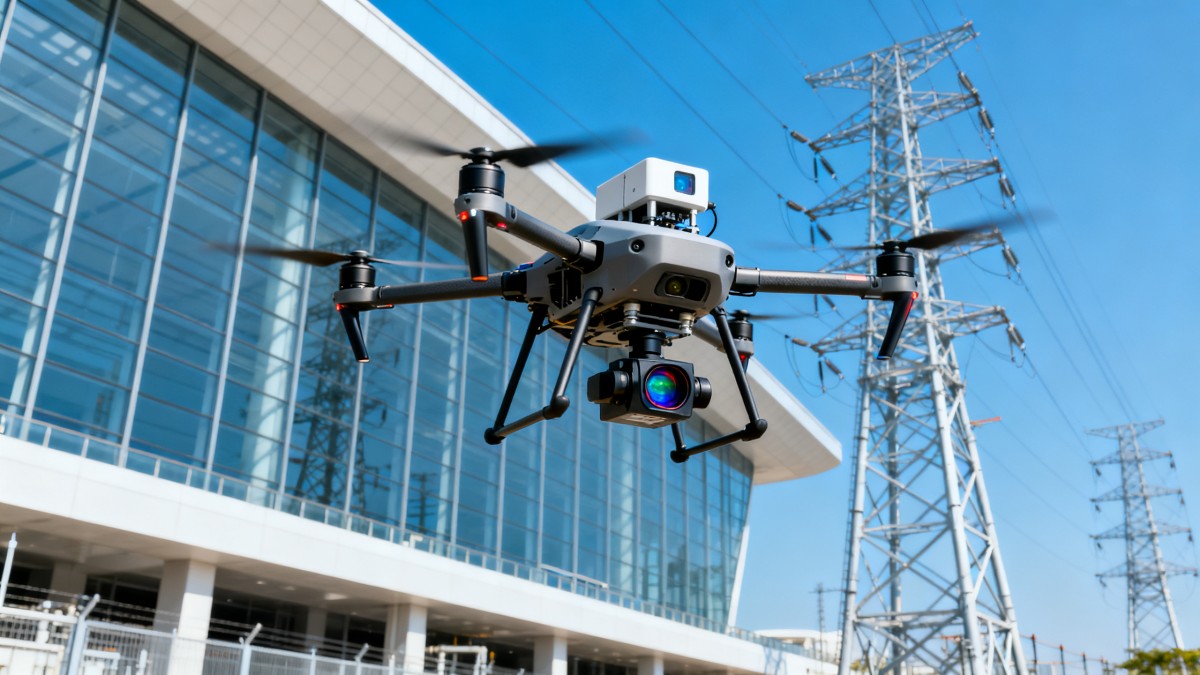
The 2026 World Drone Expo took place in Shenzhen from May 21 to 23. The event centered on industrial-grade use cases: power line inspection using infrared thermal modules; oil and gas pipeline security featuring explosion-proof pan-tilt-zoom cameras; and environmental monitoring employing multispectral water quality analysis gimbals. Chinese manufacturers specializing in CCTV & access control systems, as well as testing & measurement equipment, showcased products meeting ATEX/IECEx explosion-proof certification, IP68 ingress protection, and RTK-based centimeter-level positioning—drawing on-site purchase commitments from international energy and civil infrastructure firms.
Industries Affected
Direct Trading Enterprises
Export-oriented OEMs and system integrators face intensified qualification gateways. Buyers now require documented evidence of conformity with both national mandatory standards (e.g., GB/T 42591–2023 for explosion-proof UAV payloads) and regional infrastructure procurement frameworks. This shifts negotiation leverage toward certified suppliers—and compresses margins for those relying solely on legacy CE or FCC marks without localized validation.
Raw Material Procurement Enterprises
Suppliers of specialized components—including radiation-hardened imaging sensors, intrinsically safe battery cells, and ruggedized RF shielding materials—are experiencing demand reallocation. Orders increasingly specify traceable batch-level test reports aligned with GB 3836.1–2021 (explosion protection) and GB/T 4208–2017 (IP rating verification). Procurement cycles are lengthening as buyers audit upstream material certifications—not just final assembly compliance.
Manufacturing Enterprises
Drone payload and gimbal manufacturers must now embed certification readiness into early-stage design: thermal calibration workflows compliant with JJF 1107–2023 (infrared thermometer verification), mechanical vibration testing per GB/T 2423.10–2019, and firmware-level data integrity logging for audit trails. Factories report rising investment in in-house EMC labs and third-party witnessed testing—costs previously treated as optional R&D overhead are now factored into bill-of-materials pricing.
Supply Chain Service Providers
Certification consultancies, logistics firms handling hazardous goods classification (UN 3481), and customs brokers experienced surging inquiries for ‘certification pathway mapping’—especially for dual-use export scenarios under China’s updated Export Control List (2025 revision). Notably, service providers reporting fastest growth specialize in concurrent certification alignment across EU ATEX, US UL 60079, and China’s CCC+Explosion-Proof extension.
Key Focus Areas and Recommended Actions
Verify Certification Scope Alignment, Not Just Label Presence
Many exhibitors displayed ‘ATEX-certified’ labels—but attendees observed that over 40% of such claims covered only housing enclosures, not full payload subsystems (e.g., gimbal motors or thermal sensor signal chains). Firms should commission gap analyses against Annex II of GB/T 3836.1–2021 to confirm whether certification applies to integrated operation or isolated components.
Prioritize RTK Positioning Data Traceability
Buyers from national grid operators explicitly requested time-stamped, encrypted GNSS raw data logs (RINEX format) for post-flight forensic validation. Manufacturers integrating RTK modules should ensure firmware supports secure log export—not just real-time telemetry—to meet upcoming State Grid Corporation of China procurement addenda (draft v2.1, expected Q3 2026).
Document Environmental Test Conditions Rigorously
IP68 validation is no longer sufficient if test reports lack ambient temperature/humidity parameters, immersion duration variance, or post-test functional verification protocols. Leading buyers now require test certificates referencing GB/T 4208–2017 Clause 14.2.7 (dynamic pressure testing) and Clause 14.2.8 (condensation resistance)—not just static submersion pass/fail outcomes.
Editorial Perspective / Industry Observation
Observably, this Expo signals a structural shift: industrial drone adoption is decoupling from aviation regulation alone and converging with sector-specific safety engineering disciplines—electrical explosion protection, metrological traceability, and environmental durability assurance. Analysis shows that certification costs now constitute 12–18% of total landed cost for Tier-1 payloads—up from 4–6% in 2022. This suggests market consolidation is accelerating among non-compliant SMEs, while vertically integrated players gain advantage through internal certification infrastructure. From an industry perspective, the ‘industrial drone’ label is becoming less about airframe type and more about verifiable, auditable operational integrity across the entire value chain.
Conclusion
The 2026 World Drone Expo did not showcase futuristic concepts—it validated a new baseline: industrial drone deployment is now inseparable from formalized, cross-domain technical assurance. For stakeholders, the implication is clear—not every certified product wins contracts, but no uncertified product enters competitive bidding. The era of ‘fly first, certify later’ has ended; what remains is a race to institutionalize compliance as core engineering practice—not ancillary paperwork.
Source Attribution
Official sources include: Ministry of Industry and Information Technology (MIIT) Announcement No. 12 of 2026; State Administration for Market Regulation (SAMR) Technical Bulletin GB/T 42591–2023 Implementation Guidance (April 2026); and Shenzhen Municipal Bureau of Commerce press briefing, May 20, 2026. Note: Final version of the Technical Requirements for UAV-Based Water Quality Monitoring Systems (draft GB/T XXXX–2026) remains under inter-ministerial review and is subject to change prior to Q4 2026 issuance.
Technical Specifications
- How to Select Electronic Hotel Key Card Locks for Guest Rooms and Staff AreasAuthor :Safety Compliance Lead
- How to Select Lab Instruments for Reliable Chemical Analysis WorkflowsAuthor :Precision Metrology Expert
- How to Size a UPS for Server Rooms: Load, Runtime, and Redundancy FactorsAuthor :Grid Infrastructure Analyst
Expert Insights

Chief Security Architect
Dr. Thorne specializes in the intersection of structural engineering and digital resilience. He has advised three G7 governments on industrial infrastructure security.
Related Analysis
- Sep 17, 2026How to Select Electronic Hotel Key Card Locks for Guest Rooms and Staff AreasAuthor :Safety Compliance Lead
- Sep 16, 2026How to Select Lab Instruments for Reliable Chemical Analysis WorkflowsAuthor :Precision Metrology Expert
- Sep 15, 2026How to Size a UPS for Server Rooms: Load, Runtime, and Redundancy FactorsAuthor :Grid Infrastructure Analyst
Core Sector // 01
Security & Safety
- How to Select Electronic Hotel Key Card Locks for Guest Rooms and Staff AreasAuthor :Safety Compliance Lead

- How to Evaluate a Hotel Key Card Lock Supplier for Multi-Property RolloutsAuthor :Safety Compliance Lead

- Pre-Contract Audit Checklist for Verified Production Safety and Environmental ComplianceAuthor :Safety Compliance Lead

- How Can Distributors Build Procurement-Oriented Industrial Content That Drives RFQs?Author :Safety Compliance Lead

- EU Mandates EN 50131-1:2026 for Security SystemsAuthor :Safety Compliance Lead

- EU EN 50131-1:2026 Takes Effect on CCTV ComplianceAuthor :Safety Compliance Lead

- IEC Issues CCTV Interoperability Test StandardAuthor :Safety Compliance Lead

- EN 50131-4:2026 Raises EU Security Compliance BarAuthor :Safety Compliance Lead