Security & Safety Standards Explained: What to Check for Compliance and Risk Control
Author
Date Published
Reading Time

Security & Safety standards shape how industrial sites prevent failure before it happens. In environments where downtime, injury, contamination, or fire can trigger wider operational losses, compliance is not a paperwork exercise. It is a control system that connects design, sourcing, testing, installation, and daily operation.
That is why Security & Safety standards matter across sectors, not only in one product category. From electrical enclosures and gas detection to valves, barriers, alarms, cables, and protective systems, each decision affects risk exposure, legal accountability, and asset resilience.
For organizations working with critical infrastructure, the real question is not whether a product claims compliance. The useful question is what to verify, what evidence supports the claim, and whether the installed solution still matches the operating conditions on site.
Why compliance review now demands closer attention
Industrial risk has become more interconnected. A weakness in one component can affect people, process continuity, environmental performance, and insurance exposure at the same time.

Security & Safety standards also evolve with new materials, digital monitoring, and cross-border trade requirements. A certificate that was acceptable years ago may not satisfy current market access rules, project specifications, or end-user audit expectations.
Global Industrial Core (GIC) addresses this reality by treating compliance as part of industrial decision intelligence. In heavy industry, procurement and safety review cannot be separated from performance data, certification traceability, and field reliability.
This wider view is especially important in EPC projects, retrofit programs, utilities, process plants, warehouses, transport hubs, and high-load manufacturing lines. In each case, compliance must align with the real use environment, not only catalog language.
What Security & Safety standards actually cover
The term includes more than one regulation or logo. It refers to the technical and procedural frameworks used to confirm that equipment, systems, and processes meet defined requirements for safe use.
Some standards focus on electrical safety. Others address fire behavior, explosion protection, machine guarding, pressure containment, access control, emergency response, or functional safety integrity.
In practical terms, Security & Safety standards help answer five questions. Is the product designed for the hazard? Was it tested correctly? Is the certification valid? Can it be traced? Will it remain compliant after installation and maintenance?
Common reference points in industrial review
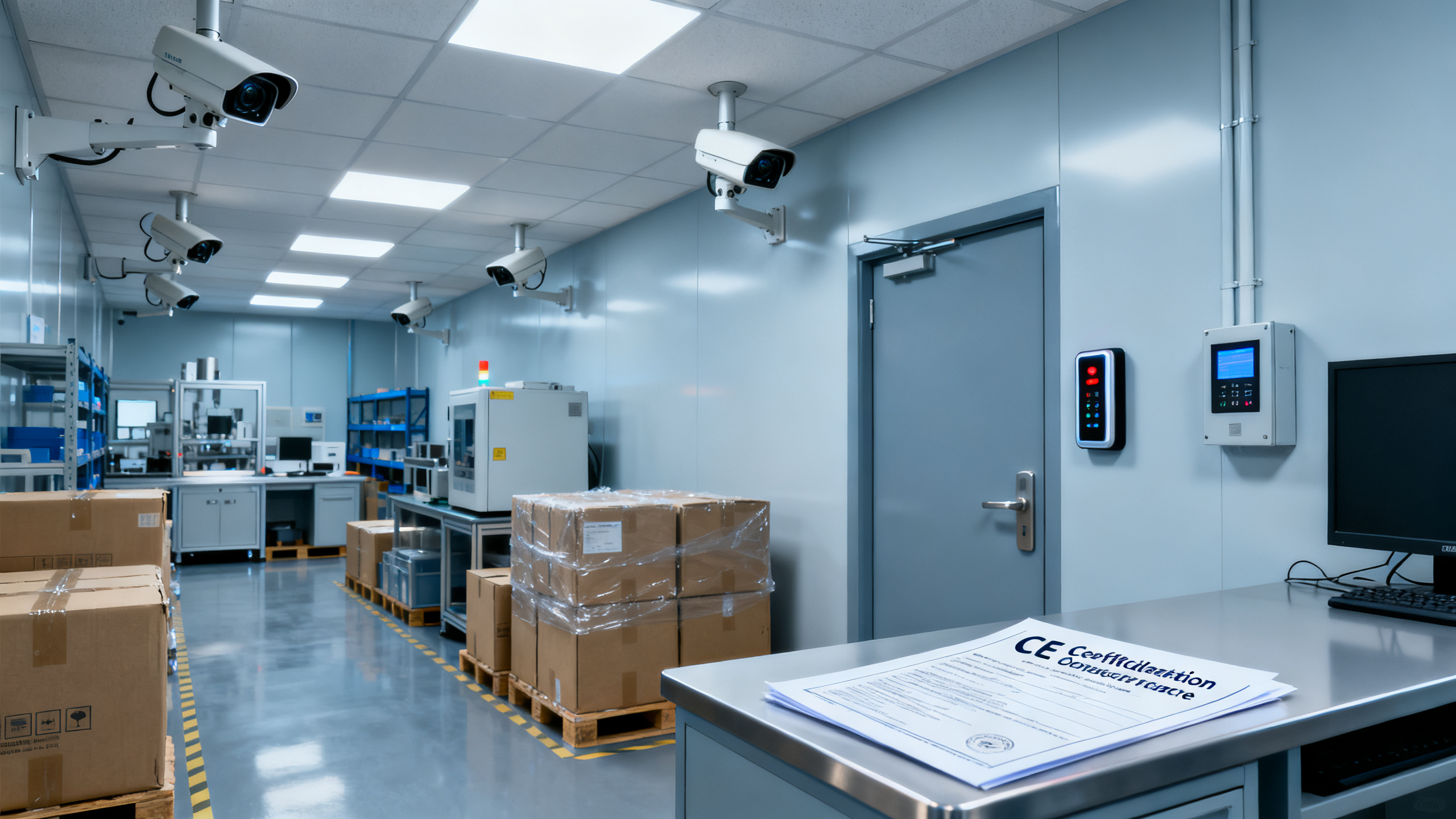
- CE marking for applicable European directives and conformity obligations
- UL or equivalent listing for electrical and fire-related safety evaluation
- ISO systems for quality management, risk control, and process consistency
- ATEX or IECEx where explosive atmospheres create additional operating risk
- Site, sector, or customer-specific specifications beyond general certification
A product can be strong in one area and weak in another. For example, an enclosure may meet ingress protection targets but still fail local fire, wiring, or hazardous area requirements.
What to verify before accepting a compliance claim
A label alone is never enough. Good review starts with document consistency and ends with application fit.
Certification validity
Check whether the certificate is current, issued by a recognized body, and tied to the exact model, revision, and configuration being supplied. Small changes in materials or components can invalidate prior approvals.
Test scope and method
Review what was tested, under which standard, and with what acceptance criteria. Laboratory conditions may not reflect vibration, dust, chemical exposure, load cycling, or temperature extremes found in service.
Technical file completeness
Supporting records should include declarations of conformity, datasheets, material details, installation instructions, maintenance limits, serial traceability, and revision history. Missing documents usually signal weak control upstream.
Supplier process discipline
Security & Safety standards depend on manufacturing consistency. Review change control, incoming inspection, calibration records, batch identification, and nonconformance handling, not just finished-product claims.
Where risk control often breaks down
Most compliance failures do not begin with dramatic incidents. They begin with assumptions.
One common issue is certificate substitution. A supplier shares approval documents for a similar product, while the delivered configuration differs in cable entry, sealing material, software version, or power rating.
Another failure point appears during site modification. A component may be compliant when shipped, then become noncompliant after rewiring, enclosure drilling, field repair, or unapproved spare-part replacement.
Security & Safety standards also break down when documentation lives in separate systems. If procurement records, test reports, maintenance logs, and incident findings are disconnected, early warning signs stay hidden.
High-risk signals worth escalating
- Certificates without issuer verification links or clear scope statements
- Datasheets that use broad wording but avoid exact ratings
- Testing reports issued long before the current product revision
- Missing installation restrictions for harsh or hazardous environments
- Frequent supplier changes without documented requalification
How standards apply across different industrial settings
Security & Safety standards are not used in the same way everywhere. The required depth of review depends on consequence, exposure, and system criticality.
In process industries, ignition control, containment, alarm response, and shutdown reliability often dominate the review. In logistics or warehousing, fire detection, battery charging safety, and access control may carry more weight.
Utilities and grid assets usually add weather exposure, arc risk, cybersecurity interfaces, and service continuity concerns. Mechanical systems may shift the focus toward pressure integrity, fatigue performance, and safe maintenance access.
This is where a broader intelligence model becomes useful. GIC’s cross-disciplinary lens helps connect safety compliance with measurement integrity, electrical reliability, environmental obligations, and material behavior.
A practical review framework for daily decisions
A useful framework is simple enough to repeat and strict enough to catch weak evidence.
Start with intended use
Define the actual duty, not the general product category. Include environment, operating hours, energy source, cleaning regime, failure consequence, and nearby hazards.
Map the required standards
List mandatory regulations, voluntary standards referenced by contracts, and internal control requirements. This prevents overreliance on one familiar certificate.
Review evidence in layers
Use a layered check: certification, test report, manufacturing control, installation condition, and maintenance instruction. Security & Safety standards hold up better when every layer supports the next.
Recheck after change
Any change in supplier, component source, firmware, material, enclosure, or operating environment should trigger a documented compliance review. Stable labels can hide unstable reality.
What stronger compliance control makes possible
Better control of Security & Safety standards reduces more than incident risk. It improves commissioning confidence, supports smoother audits, shortens technical clarification cycles, and strengthens dispute resolution when failures occur.
It also improves sourcing quality. When compliance criteria are defined early, low-visibility substitutions become easier to detect, and supplier comparisons become more objective.
In high-stakes operations, that discipline protects continuity. It helps keep protective systems aligned with real hazards instead of assumed ones.
The next sensible step is to audit one active category in detail. Compare required standards, supplier evidence, site conditions, and change records. Gaps found there often reveal where broader risk control should be tightened next.
Technical Specifications
- How to Select Electronic Hotel Key Card Locks for Guest Rooms and Staff AreasAuthor :Safety Compliance Lead
- How to Select Lab Instruments for Reliable Chemical Analysis WorkflowsAuthor :Precision Metrology Expert
- How to Size a UPS for Server Rooms: Load, Runtime, and Redundancy FactorsAuthor :Grid Infrastructure Analyst
Expert Insights

Chief Security Architect
Dr. Thorne specializes in the intersection of structural engineering and digital resilience. He has advised three G7 governments on industrial infrastructure security.
Related Analysis
- Sep 17, 2026How to Select Electronic Hotel Key Card Locks for Guest Rooms and Staff AreasAuthor :Safety Compliance Lead
- Sep 16, 2026How to Select Lab Instruments for Reliable Chemical Analysis WorkflowsAuthor :Precision Metrology Expert
- Sep 15, 2026How to Size a UPS for Server Rooms: Load, Runtime, and Redundancy FactorsAuthor :Grid Infrastructure Analyst
Core Sector // 01
Security & Safety
- How to Select Electronic Hotel Key Card Locks for Guest Rooms and Staff AreasAuthor :Safety Compliance Lead

- How to Evaluate a Hotel Key Card Lock Supplier for Multi-Property RolloutsAuthor :Safety Compliance Lead

- Pre-Contract Audit Checklist for Verified Production Safety and Environmental ComplianceAuthor :Safety Compliance Lead

- How Can Distributors Build Procurement-Oriented Industrial Content That Drives RFQs?Author :Safety Compliance Lead

- EU Mandates EN 50131-1:2026 for Security SystemsAuthor :Safety Compliance Lead

- EU EN 50131-1:2026 Takes Effect on CCTV ComplianceAuthor :Safety Compliance Lead

- IEC Issues CCTV Interoperability Test StandardAuthor :Safety Compliance Lead

- EN 50131-4:2026 Raises EU Security Compliance BarAuthor :Safety Compliance Lead