EU Steel Tariff Rises to 50% on July 1
Author
Date Published
Reading Time
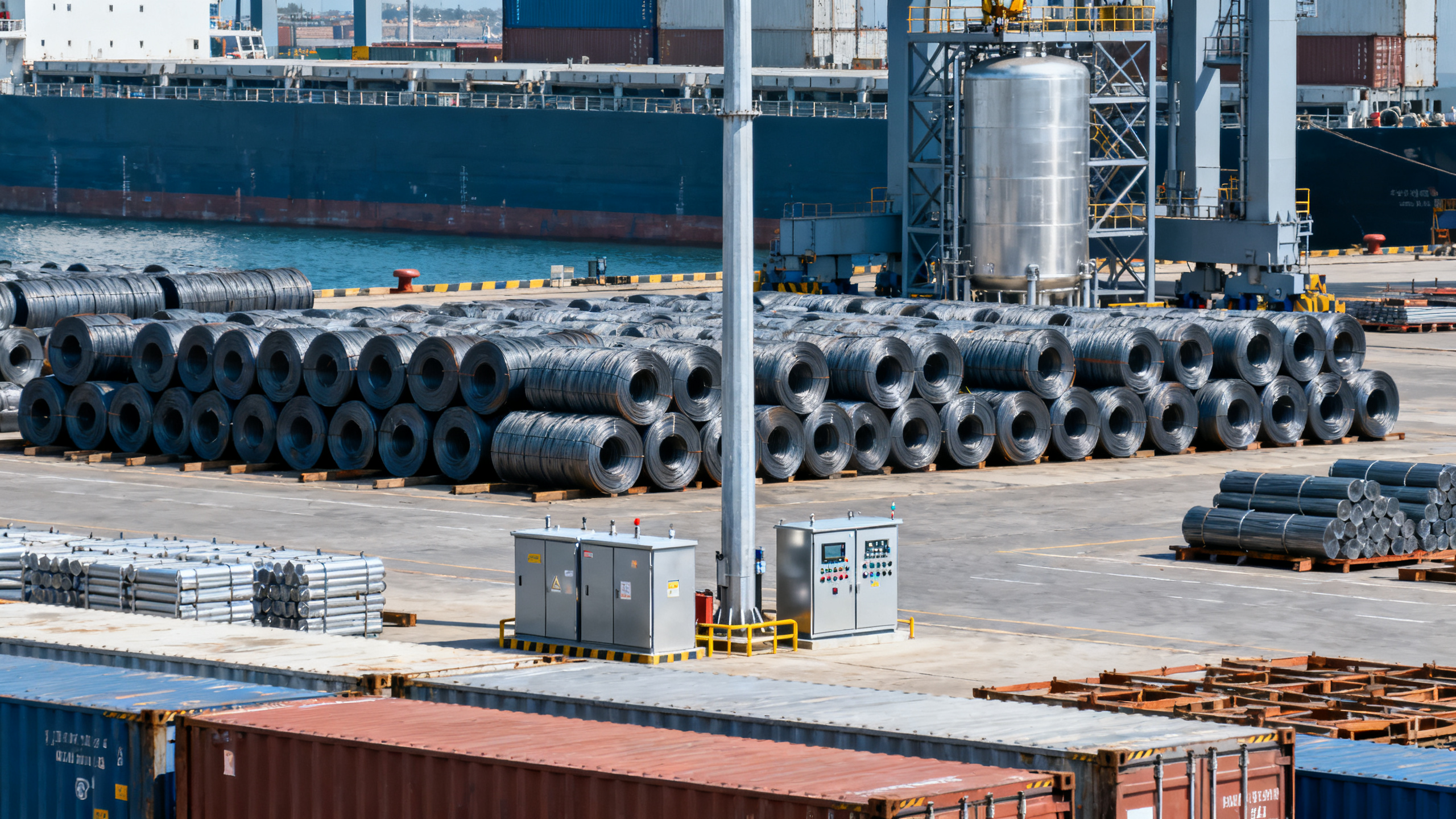
On July 1, 2026, the EU’s updated steel safeguard measures are set to take effect, raising the tariff on steel imports above quota to 50% while cutting duty-free quota availability by nearly half. For exporters and buyers involved in steel-based security and industrial components, this is not just a raw material issue but a direct cost and compliance issue for finished products such as CCTV poles, access control cabinets, fire equipment brackets, and steel structures used in industrial water treatment systems.
What the new EU measure confirms
The confirmed change is that the EU will formally implement new steel safeguard measures on July 1, 2026. Under these rules, the tariff on steel imports that exceed quota will increase to 50%, and the volume of duty-free quota will be reduced by nearly half. Although the policy does not explicitly name China, it is described as a response to what it calls global overcapacity. The products directly exposed include finished exports that rely on Chinese steel inputs, including CCTV poles, access control enclosures, fire protection equipment supports, and industrial water treatment steel structures.
Where pressure may appear across the supply chain
Finished goods exporters face a sharper landed-cost challenge
From an industry perspective, companies exporting steel-based security and industrial structural products to Europe may face immediate pricing pressure because the tariff change affects cost calculations once quota limits are exceeded. The impact is likely to be felt in quotation strategy, contract negotiation, and margin management.
Overseas buyers need to revisit sourcing assumptions
Analysis shows that buyers in the EU and other overseas markets connected to EU delivery may need to reassess whether existing sourcing models remain workable. The issue is not only the headline tariff level but also the smaller duty-free quota window, which can affect procurement timing, supplier selection, and the total delivered cost of steel-dependent assemblies.
Manufacturing and assembly decisions may move closer to compliance review
For manufacturers and project suppliers, the policy also brings attention to compliance pathways. Products such as access control cabinets or industrial steel structures are not traded only as steel in practice; they move through certification, documentation, and installation requirements as finished goods. What deserves closer attention is whether current export structures, product declarations, and possible local assembly arrangements remain commercially practical under the new tariff conditions.
What businesses should watch now
Track any further official wording and rule details
Companies should closely watch how the measure is described and applied in official updates, especially where quota scope, affected categories, and implementation details influence actual shipment costs. The policy signal is clear, but business impact depends on how those rules are applied in day-to-day trade.
Review exposure by product category and destination market
Businesses shipping CCTV poles, access control cabinets, fire equipment brackets, and industrial water treatment steel structures should map which product lines are most exposed to steel-content cost increases. This is especially relevant for firms serving EU-linked customers or projects where landed cost sensitivity is high.
Recheck certification and documentation paths
Observably, tariff pressure can quickly turn into a broader compliance issue if buyers begin asking whether product origin, technical files, or assembly arrangements need adjustment. Exporters, manufacturers, and service partners should review whether current documentation and certification paths still support smooth delivery under the new trade conditions.
Prepare procurement and customer communication scenarios
What deserves closer attention is the gap between a policy announcement and operational execution. Companies may need internal scenarios covering procurement cost shifts, delivery planning, supplier coordination, and customer communication, particularly where projects were priced before the July 1 implementation date.
Why this looks bigger than a short-term price issue
Analysis shows that this development is not only about a higher tariff line. It points to a tighter trade environment for finished goods that depend on Chinese steel inputs, even when the measure is framed more broadly around global overcapacity. It is more appropriate to understand this as both an immediate cost event and a longer-term policy signal that may influence sourcing, compliance review, and localization discussions. At the same time, the full commercial effect still requires continued observation because actual impact will depend on implementation details and buyer responses.
How the market may best read this stage
At this stage, the most balanced reading is that the EU measure creates a confirmed near-term cost increase for steel-dependent exports above quota, while also signaling wider pressure on how such products are sourced and assembled for the European market. The development should not be overstated as a final reshaping of the sector, but it clearly deserves attention from exporters, buyers, and supply chain partners managing steel-based security and industrial structure products.
Basis of this article and what still needs verification
This article is generated based on the user-provided news title, event date, and event summary. For this type of industry development, commonly relevant source categories may include official announcements, company notices, industry association updates, authoritative media reports, and standards-related documents. A specific official source link was not provided in the input, so the exact wording and implementation details should continue to be verified. Follow-up attention should focus on any further official clarification, category-level application, and practical effects on procurement, compliance, and localized assembly decisions.
Technical Specifications
- How to Select Electronic Hotel Key Card Locks for Guest Rooms and Staff AreasAuthor :Safety Compliance Lead
- How to Select Lab Instruments for Reliable Chemical Analysis WorkflowsAuthor :Precision Metrology Expert
- How to Size a UPS for Server Rooms: Load, Runtime, and Redundancy FactorsAuthor :Grid Infrastructure Analyst
Expert Insights

Chief Security Architect
Dr. Thorne specializes in the intersection of structural engineering and digital resilience. He has advised three G7 governments on industrial infrastructure security.
Related Analysis
- Sep 17, 2026How to Select Electronic Hotel Key Card Locks for Guest Rooms and Staff AreasAuthor :Safety Compliance Lead
- Sep 16, 2026How to Select Lab Instruments for Reliable Chemical Analysis WorkflowsAuthor :Precision Metrology Expert
- Sep 15, 2026How to Size a UPS for Server Rooms: Load, Runtime, and Redundancy FactorsAuthor :Grid Infrastructure Analyst
Core Sector // 01
Security & Safety
- How to Select Electronic Hotel Key Card Locks for Guest Rooms and Staff AreasAuthor :Safety Compliance Lead

- How to Evaluate a Hotel Key Card Lock Supplier for Multi-Property RolloutsAuthor :Safety Compliance Lead

- Pre-Contract Audit Checklist for Verified Production Safety and Environmental ComplianceAuthor :Safety Compliance Lead

- How Can Distributors Build Procurement-Oriented Industrial Content That Drives RFQs?Author :Safety Compliance Lead

- EU Mandates EN 50131-1:2026 for Security SystemsAuthor :Safety Compliance Lead

- EU EN 50131-1:2026 Takes Effect on CCTV ComplianceAuthor :Safety Compliance Lead

- IEC Issues CCTV Interoperability Test StandardAuthor :Safety Compliance Lead

- EN 50131-4:2026 Raises EU Security Compliance BarAuthor :Safety Compliance Lead