Pre-Contract Audit Checklist for Verified Production Safety and Environmental Compliance
Author
Date Published
Reading Time
Pre-Contract Audit Checklist for Verified Production Safety and Environmental Compliance
A long-term supply agreement should not be released on the strength of a certificate file, a quotation, or a successful sample alone. The relevant question is whether the production site can repeatedly make the specified item under controlled conditions while monitoring safety hazards, managing environmental obligations, and preserving traceable evidence. This is especially important where supplied materials enter pressure systems, electrical assemblies, structural supports, process equipment, protective devices, measurement chains, or pollution-control installations.
A pre-contract audit should therefore test the operating system behind the documents. It should establish whether records match the physical site, whether controls remain effective between audits, and whether deviations are detected before nonconforming product or unsafe conditions leave the facility. Verified production systems ensuring safety monitoring and compliance with environmental regulations before signing a long-term vendor contract require evidence from the shop floor, maintenance records, laboratories, waste areas, and management review processes, not only policy statements.
Start With the Contractual Technical Baseline
Audit work becomes unfocused when the required product and process conditions have not been defined. Before visiting the site or reviewing a remote evidence package, translate the intended supply scope into an auditable baseline. This baseline may include drawings, material grades, permitted substitutions, dimensional tolerances, surface-condition requirements, inspection points, packaging limits, expected storage conditions, transport restraints, and applicable statutory or project requirements.
For machined metal components, the baseline may identify heat or batch traceability, machining datum controls, calibration requirements for critical dimensions, coating compatibility, and preservation against corrosion. For electrical products, it may include conductor size, insulation class, ingress-protection requirements, dielectric or continuity testing, terminal torque control, and identification marking. Chemical, environmental, or treatment equipment may require defined media, concentration range, temperature, pressure, emissions interfaces, and compatibility of seals, linings, and wetted materials.
Distinguish mandatory requirements from preferred practices. A quality plan can show many inspection activities while failing to prove control of a single safety-critical characteristic. The contract should state which characteristics require witnessed testing, independent laboratory reports, retained samples, serialized records, or formal approval before a change is implemented. Where a cited standard has multiple editions or regional versions, identify the exact edition and the intended jurisdictional application rather than relying on a standard name alone.
Certification Must Connect to the Actual Scope
Certificates are useful entry points, but their scope, issuer, validity, site address, and exclusions require review. A management-system certificate does not automatically cover every workshop, process, product family, subcontracted operation, or storage location involved in the proposed supply. A product certificate may apply only to a stated configuration, rating, material option, or manufacturing location. The audit record should show the connection between each document and the proposed contract line item.
Review the control of certificate expiry, surveillance activity, corrective actions, and changes in legal status. If a certificate is presented in a language different from the contract language, confirm that the translated technical claims have not expanded the original scope. For declarations related to safety or environmental performance, trace the declaration back to test reports, material declarations, risk assessments, and the actual bill of materials where practical.
Calibration certificates deserve similar scrutiny. The question is not simply whether measuring equipment carries labels. Confirm the asset identification, calibration interval, accepted accuracy, traceability route, out-of-tolerance response, and restrictions on use. A micrometer with an overdue label or a pressure gauge calibrated outside its working range can invalidate an otherwise polished inspection record. Software used to capture test values or calculate acceptance results should have controlled access, revision identification, and protection against unrecorded alteration.
Observe Process Control Where the Product Is Made
Document review should be followed by a walk-through that traces the product route from incoming material to dispatch. Compare work instructions at the point of use with the latest approved drawings and process specifications. Superseded documents, handwritten parameter changes, unmarked rework, or mixed-status material in a staging area are direct signs that document control may not be functioning as described.
The route should be clear enough to follow a representative lot. Incoming material identification needs to survive cutting, blasting, forming, welding, heat treatment, machining, assembly, testing, and packing. When identity is transferred from a parent plate, coil, casting, cable drum, or chemical container, the method must preserve the relationship to the original certificate or batch. A traceability system that ends when material is cut into smaller pieces is insufficient for items with material-specific performance requirements.
Process parameters should be defined where variation can affect safety, compliance, or fit. Examples include welding procedure and welder qualification status; heat-treatment temperature and time records; torque values for bolted joints; curing conditions for coatings and resins; test pressure, hold duration, and medium; electrical test voltage; and controlled clean-room or contamination conditions where applicable. Parameter ranges should be technically justified, not copied from an old traveler without reference to the current product design.
Pay close attention to temporary controls. A facility may maintain a robust procedure for routine production while relying on verbal instructions during equipment failure, engineering changes, urgent orders, or rework. Ask to see a recently completed non-routine job packet. It can reveal whether deviations were assessed, authorized, inspected, and communicated through the same traceability system as normal work.
Safety Monitoring Needs Evidence of Closed-Loop Control
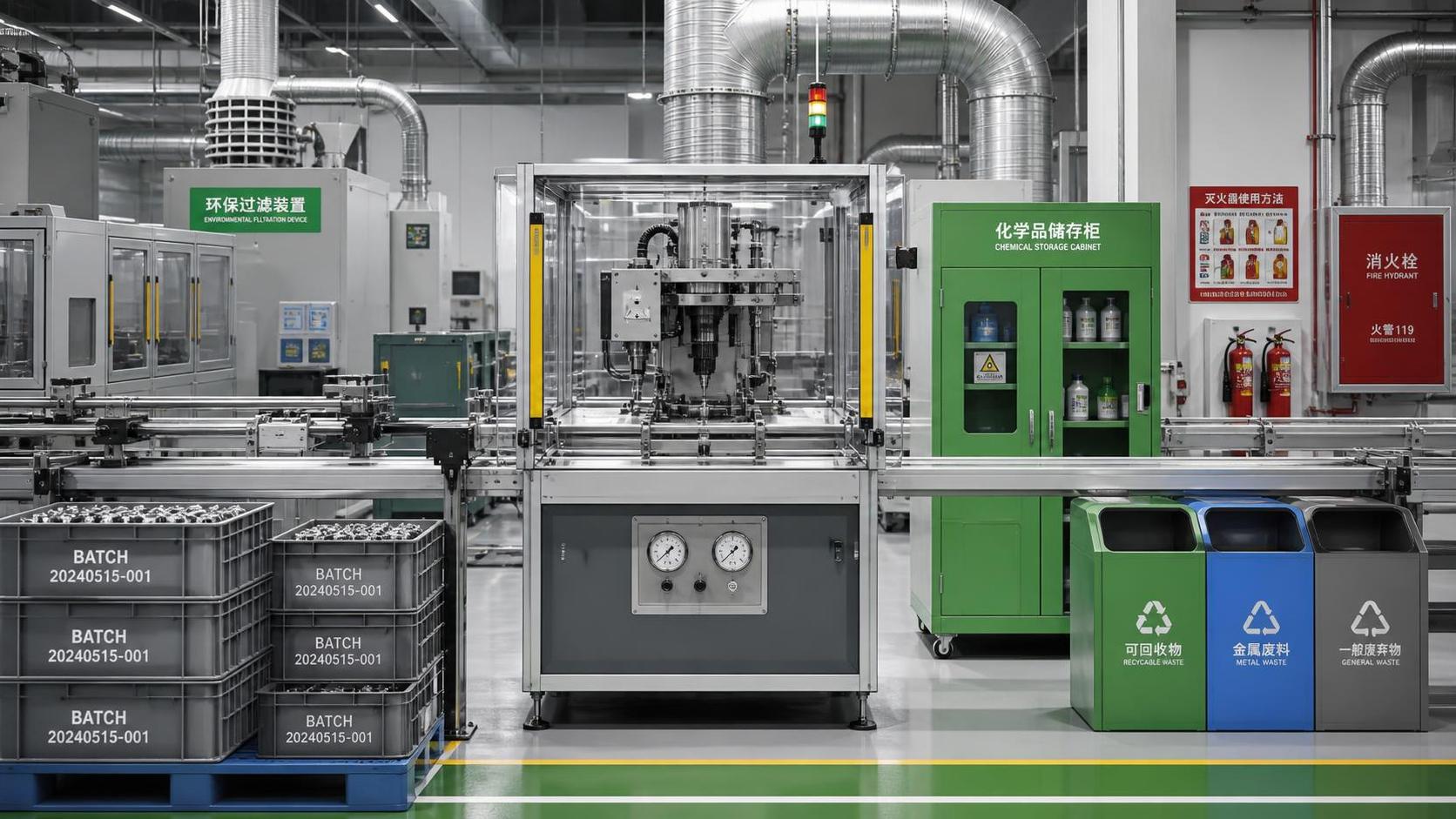
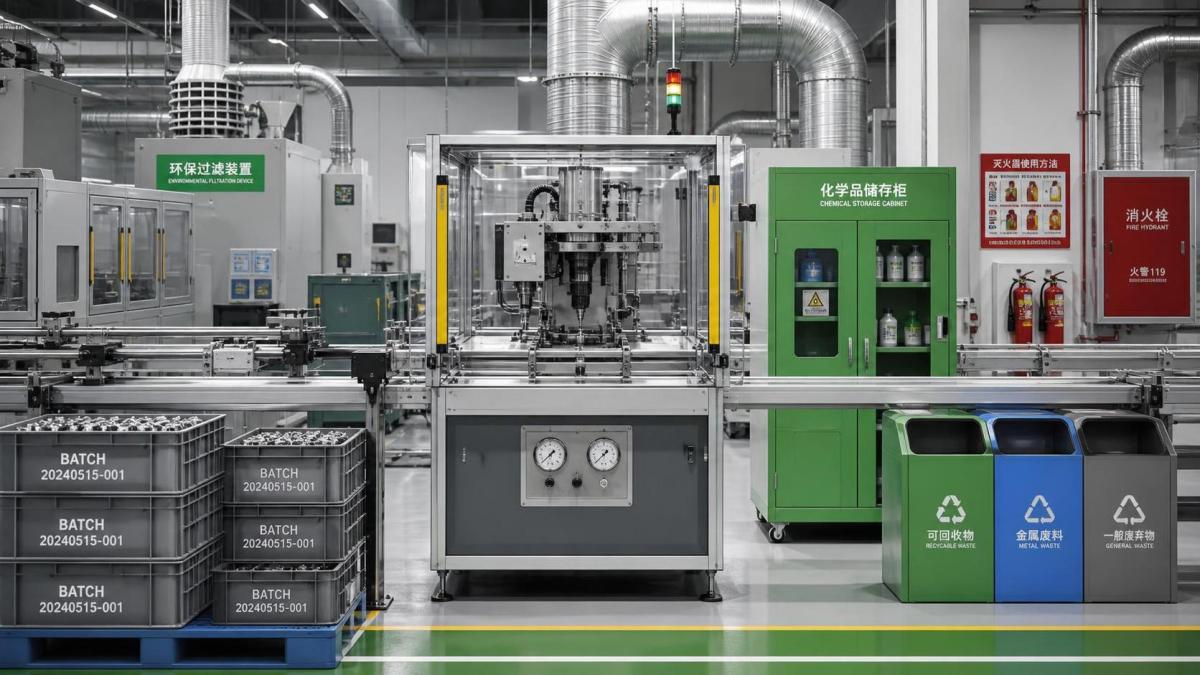
Production safety verification should cover both preventive arrangements and the response when controls fail. Site rules, induction records, hazard assessments, and personal protective equipment registers are basic evidence, but they do not demonstrate that controls operate consistently. Observe machine guarding, lockout and isolation practices, lifting accessories, access around electrical panels, emergency routes, chemical labeling, compressed-gas storage, ventilation, and housekeeping in the areas connected to the proposed scope.
For production processes involving welding fumes, solvents, dust, acids, alkalis, noise, elevated temperatures, rotating equipment, or stored energy, confirm that exposure and hazard controls are based on the actual process. Extraction systems should have identifiable inspection and maintenance records. Safety interlocks should not be bypassed without controlled authorization. Emergency equipment should be accessible, inspected, and appropriate for the identified hazards. A risk assessment that lists generic hazards but omits the actual chemicals, machinery, or process changes has limited audit value.
Incident, near-miss, and corrective-action records provide a useful test of maturity. Review how events are classified, investigated, assigned, verified for completion, and analyzed for recurrence. The objective is not to demand an incident-free history, which may conceal under-reporting. The useful evidence is an honest reporting route, proportionate root-cause analysis, and proof that lessons were incorporated into training, maintenance, work instructions, or engineering controls.
Maintenance must be considered part of safety control. Inspect preventive-maintenance planning for production equipment, safety devices, lifting equipment, ventilation, fire systems, and environmental-control assets. Repeated breakdowns, deferred critical maintenance, or unavailable spare parts can create pressure to bypass controls. Where a critical machine is a single point of failure, the contract risk assessment may need to address backup capacity, qualified repair arrangements, or lead-time exposure.
Environmental Compliance Is Visible in Material Flows
Environmental review should follow materials into the site and waste out of it. Start with the inventory of raw materials, consumables, fuels, process chemicals, lubricants, coatings, cleaning agents, and packaging. Current safety data sheets, approved chemical lists, container labels, storage segregation, secondary containment, and spill response provisions should correspond to the substances actually observed.
Trace waste streams created by the proposed production route. Metal swarf, abrasive media, spent solvent, contaminated rags, wastewater sludge, rejected electronic parts, used filters, and empty chemical containers may require different handling paths. The audit should verify clear segregation, container identification, accumulation controls, handover records, and documentation for authorized downstream treatment where required. A general waste procedure is not enough when hazardous and non-hazardous streams can be mixed at the source.
Where production creates air emissions, wastewater, noise, or significant energy use, examine the applicable permits, monitoring approach, operating limits, sampling points, and response to excursions. Environmental monitoring equipment must be maintained and suitable for its purpose. Readings without a known sampling method, instrument status, or review route cannot reliably demonstrate compliance. For outsourced treatment, plating, painting, galvanizing, disposal, or laboratory analysis, preserve the same evidence chain through the external facility.
Environmental changes can arise from small substitutions. A new degreaser, coating thinner, refrigerant, alloy additive, adhesive, or packaging material may alter waste classification, worker exposure, transport restrictions, emissions, or declarations made downstream. The change-control process should require environmental and safety review before approval, including the effect on technical conformity and customer-specific restricted-substance obligations.
Test Traceability, Nonconformance, and Release Discipline
Select a completed production lot and reconstruct its history. The file should connect the order, revision-controlled specification, incoming material evidence, process records, in-process inspections, final test results, deviations, rework records, release authorization, and shipping identification. Gaps should be treated according to risk. A missing secondary cosmetic inspection record differs from an absent pressure-test chart for a pressure-retaining assembly.
Nonconforming material controls deserve direct observation. Physically separated quarantine areas, clear status labels, controlled access, and documented disposition prevent rejected material from returning to production by accident. Review whether rework instructions are approved, whether repaired items undergo the necessary repeat tests, and whether use-as-is concessions have a defined authority. A concession should never silently replace a design change or override a statutory requirement.
Final release should be independent enough to challenge production pressure. Confirm that release records identify the exact lot, serial number, or shipment quantity and that any conditional acceptance, open deviation, or special storage instruction is visible to the receiving party. Packaging and loading are part of the release process when damage, moisture, electrostatic discharge, contamination, orientation, or shock can affect the delivered condition. Inspect the practical controls used to prevent mix-ups between similar components, revisions, or destination requirements.
Turn Findings Into Contract Controls
An audit report should separate confirmed conformity, observations, material nonconformities, and unresolved evidence requests. Vague language such as “system appears adequate” is weak because it cannot be tied to a contract action. Each finding should identify the requirement, evidence reviewed, risk created by the gap, responsible action, acceptance evidence, and closure timing.
- Critical safety, legal, or traceability gaps should be closed and verified before contract release or before production authorization for the affected scope.
- Conditions that can be controlled through the agreement may include notification periods for process changes, approval of alternate materials, access to records, retention duration, witness points, and rights to repeat audits after significant events.
- Where external processing is necessary, require disclosure of the relevant subcontracted steps and define the evidence expected from those facilities.
- A recurring scorecard can track late corrective actions, repeat defects, missed test records, reportable safety events, and environmental deviations without converting isolated events into unsupported performance claims.
Contract language should also define escalation for events that could affect delivered product or lawful operation: a major process change, loss of required approval, serious incident, environmental enforcement action, extended outage of critical test equipment, or a traceability-system failure. Timely notification permits technical review before affected material is incorporated into a larger assembly or installed in service.
The most reliable pre-contract audit leaves a usable evidence trail rather than a one-time impression of the facility. When technical requirements, production controls, safety monitoring, environmental records, and release discipline are linked to the actual supply scope, the resulting agreement can state measurable obligations and credible verification points from the first production lot onward.
Technical Specifications
- Air Handling Unit Supplier Checklist: Performance Data, Lead Times, and SupportAuthor :Environmental Engineering Director
- Buying Fiberglass Water Tanks Wholesale: Compare Quotes and Delivery CostsAuthor :Environmental Engineering Director
- Choosing an XLPE Power Cable Supplier: Test Reports, Traceability, and Lead TimesAuthor :Grid Infrastructure Analyst
Expert Insights

Chief Security Architect
Dr. Thorne specializes in the intersection of structural engineering and digital resilience. He has advised three G7 governments on industrial infrastructure security.
Related Analysis
- Oct 19, 2026Air Handling Unit Supplier Checklist: Performance Data, Lead Times, and SupportAuthor :Environmental Engineering Director
- Oct 18, 2026Buying Fiberglass Water Tanks Wholesale: Compare Quotes and Delivery CostsAuthor :Environmental Engineering Director
- Oct 17, 2026Choosing an XLPE Power Cable Supplier: Test Reports, Traceability, and Lead TimesAuthor :Grid Infrastructure Analyst
Core Sector // 01
Security & Safety
- How to Build an Equipment Budget for EPC Projects Without Underestimating Lifecycle CostsAuthor :Safety Compliance Lead

- Selecting EPC Procurement Support Tools to Reduce Vendor and Delivery DelaysAuthor :Safety Compliance Lead

- How to Select an Access Control Management System for Multi-Site FacilitiesAuthor :Safety Compliance Lead

- How to Select Electronic Hotel Key Card Locks for Guest Rooms and Staff AreasAuthor :Safety Compliance Lead

- How to Evaluate a Hotel Key Card Lock Supplier for Multi-Property RolloutsAuthor :Safety Compliance Lead

- Pre-Contract Audit Checklist for Verified Production Safety and Environmental ComplianceAuthor :Safety Compliance Lead

- How Can Distributors Build Procurement-Oriented Industrial Content That Drives RFQs?Author :Safety Compliance Lead

- EU Mandates EN 50131-1:2026 for Security SystemsAuthor :Safety Compliance Lead