Hainan Introduces 18 Measures for Travel-Based Elder Care
Author
Date Published
Reading Time
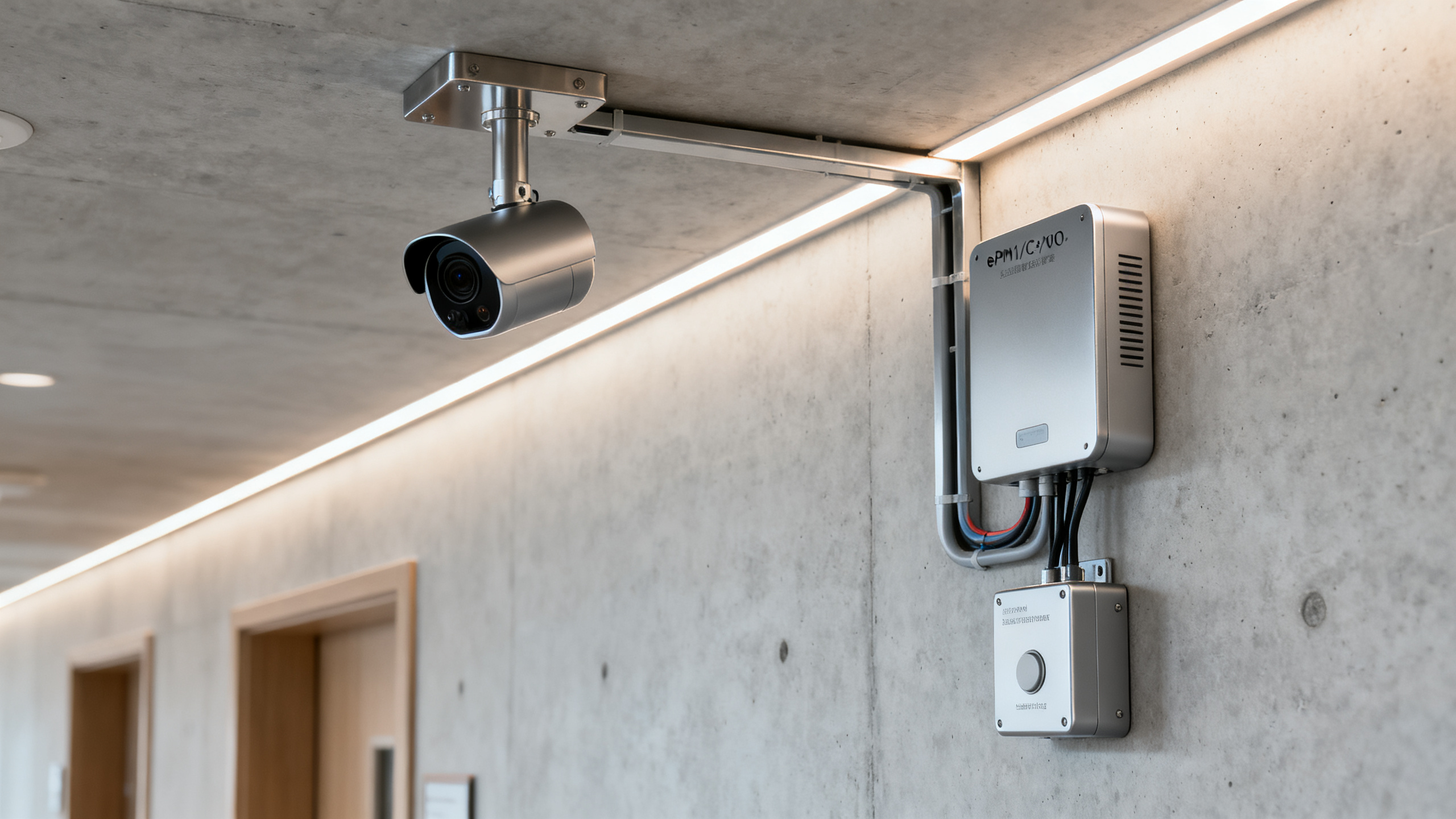
On May 13, the Hainan Provincial Government issued the Several Measures to Promote High-Quality Development of Travel-Based Elder Care, mandating AI-powered fall-detection CCTV systems, real-time indoor air quality monitoring terminals (ePM1/CO₂/VOC), and contactless water/electricity leakage alarms in senior living communities. This local policy signals emerging certification opportunities for exporters of PPE & workwear, CCTV & access control systems, and air purifiers & dust control equipment—particularly those targeting aging-society markets such as Japan, South Korea, and Singapore.
Event Overview
On May 13, the Hainan Provincial Government officially released the Several Measures to Promote High-Quality Development of Travel-Based Elder Care. The document specifies mandatory installation of three types of technical equipment in licensed travel-based elder care communities: (1) AI-enabled CCTV systems with fall detection capability; (2) indoor air quality monitoring terminals measuring ePM1, CO₂, and VOC levels; and (3) non-intrusive water and electricity leakage alarm devices. It further states that this local standard is undergoing acceleration toward adoption as a Ministry of Housing and Urban-Rural Development (MOHURD) industry-recommended standard.
Industries Affected
Direct Exporters of PPE & Workwear
These enterprises may face revised conformity expectations when supplying protective or adaptive gear to certified elder-care facilities in Hainan. While the current measures do not explicitly list PPE requirements, the linkage to ‘silver economy’ scenario-based certification implies future alignment with geriatric safety standards—including slip-resistant apparel, emergency alert wearables, and low-visibility lighting-integrated garments—especially for export to Japan and Singapore where regulatory harmonization is advanced.
Manufacturers and Exporters of CCTV & Access Control Systems
The mandate for AI-powered fall-detection CCTV directly impacts hardware design, algorithm validation, and certification pathways. Exporters must now assess whether their existing products meet functional thresholds defined under Hainan’s implementation guidelines—such as detection accuracy under varied lighting, occlusion tolerance, and integration readiness with centralized facility management platforms. As the standard advances toward MOHURD endorsement, pre-compliance testing against draft technical annexes becomes operationally relevant.
Exporters of Air Purifiers & Dust Control Equipment
The requirement for real-time ePM1/CO₂/VOC monitoring introduces a new application context beyond general residential or commercial HVAC use. Affected firms include manufacturers of wall-mounted IAQ terminals, modular sensor nodes, and cloud-connected purifier systems. The emphasis on ‘real-time’ and ‘indoor’ metrics suggests calibration traceability, data logging compliance, and interoperability with building management systems will be scrutinized during certification—particularly for shipments destined for regulated elderly care operators in Northeast Asia.
What Enterprises and Practitioners Should Monitor and Act On
Track official updates on MOHURD’s standardization timeline
Analysis shows the progression from provincial measure to MOHURD-recommended standard remains at an early stage. Enterprises should monitor official announcements from MOHURD and provincial market supervision departments for draft technical specifications, public consultation periods, and pilot implementation schedules—especially any references to conformity assessment frameworks or third-party certification bodies designated for verification.
Focus on equipment categories tied to three mandated functions—not broad ‘smart home’ or ‘IoT’ labels
Observably, the policy targets highly specific functionalities: (1) AI-based human posture anomaly recognition in video streams; (2) multi-parameter indoor air quality sensing with defined measurement ranges; and (3) passive, non-contact utility flow anomaly detection. Exporters should prioritize product documentation, test reports, and labeling aligned precisely to these use cases—rather than relying on generic IoT certifications or consumer-grade smart device credentials.
Distinguish between policy intent and near-term procurement reality
From the industry perspective, the measures establish a framework—not an immediate procurement mandate. Implementation timelines, funding mechanisms, and enforcement protocols for existing facilities remain unspecified. Companies should avoid premature capacity expansion or inventory buildup, but instead prepare technical dossiers, engage local certification intermediaries familiar with Hainan’s pilot zones, and align internal R&D roadmaps with the stated functional benchmarks.
Prepare for cross-border certification coordination, especially for Japan and Singapore
Current more suitable understanding is that Hainan’s initiative serves as a domestic testbed whose technical criteria may inform bilateral or ASEAN+3 regulatory dialogues. Exporters serving Japanese or Singaporean elder-care providers should proactively map equivalencies between Hainan’s ePM1/CO₂/VOC thresholds and JIS B 9929, SG Mark IAQ requirements, or PANDA (Pneumonia and Aging Data Alliance) reference values—enabling faster adaptation if formal mutual recognition arrangements emerge.
Editorial Perspective / Industry Observation
This policy is best understood as a signal—not yet an operational standard. Analysis shows it reflects a growing institutional focus on embedding technical safeguards into age-in-place infrastructure, rather than merely expanding service capacity. Observably, its significance lies less in immediate compliance obligations and more in establishing a replicable, export-ready template for ‘scenario-specific’ certification in aging societies. From the industry angle, the convergence of provincial policy drafting, national standardization momentum, and Northeast Asian market receptivity suggests a narrow but high-potential window for vendors who can translate localized functional mandates into internationally credible conformity evidence.
Conclusion: The Hainan measures do not create immediate export demand, but they formalize a new category of ‘gerontechnology’ certification—one anchored in verifiable performance outcomes (fall detection, air quality fidelity, leak sensitivity) rather than generic safety or interoperability claims. For affected exporters, the priority is not reactive compliance, but strategic alignment: interpreting provincial technical mandates as forward-looking proxies for regional regulatory evolution in mature aging markets.
Source: Hainan Provincial Government, Several Measures to Promote High-Quality Development of Travel-Based Elder Care, issued May 13. Note: MOHURD’s formal adoption status and supporting technical annexes remain pending official release and are subject to ongoing observation.
Technical Specifications
- Air Handling Unit Supplier Checklist: Performance Data, Lead Times, and SupportAuthor :Environmental Engineering Director
- Buying Fiberglass Water Tanks Wholesale: Compare Quotes and Delivery CostsAuthor :Environmental Engineering Director
- Choosing an XLPE Power Cable Supplier: Test Reports, Traceability, and Lead TimesAuthor :Grid Infrastructure Analyst
Expert Insights

Chief Security Architect
Dr. Thorne specializes in the intersection of structural engineering and digital resilience. He has advised three G7 governments on industrial infrastructure security.
Related Analysis
- Oct 19, 2026Air Handling Unit Supplier Checklist: Performance Data, Lead Times, and SupportAuthor :Environmental Engineering Director
- Oct 18, 2026Buying Fiberglass Water Tanks Wholesale: Compare Quotes and Delivery CostsAuthor :Environmental Engineering Director
- Oct 17, 2026Choosing an XLPE Power Cable Supplier: Test Reports, Traceability, and Lead TimesAuthor :Grid Infrastructure Analyst
Core Sector // 01
Security & Safety
- How to Build an Equipment Budget for EPC Projects Without Underestimating Lifecycle CostsAuthor :Safety Compliance Lead

- Selecting EPC Procurement Support Tools to Reduce Vendor and Delivery DelaysAuthor :Safety Compliance Lead

- How to Select an Access Control Management System for Multi-Site FacilitiesAuthor :Safety Compliance Lead

- How to Select Electronic Hotel Key Card Locks for Guest Rooms and Staff AreasAuthor :Safety Compliance Lead

- How to Evaluate a Hotel Key Card Lock Supplier for Multi-Property RolloutsAuthor :Safety Compliance Lead

- Pre-Contract Audit Checklist for Verified Production Safety and Environmental ComplianceAuthor :Safety Compliance Lead

- How Can Distributors Build Procurement-Oriented Industrial Content That Drives RFQs?Author :Safety Compliance Lead

- EU Mandates EN 50131-1:2026 for Security SystemsAuthor :Safety Compliance Lead