EN 50131-4:2026 Enforces AI Behavior Recognition Anti-Interference Certification for CCTV and Access Control Systems
Author
Date Published
Reading Time
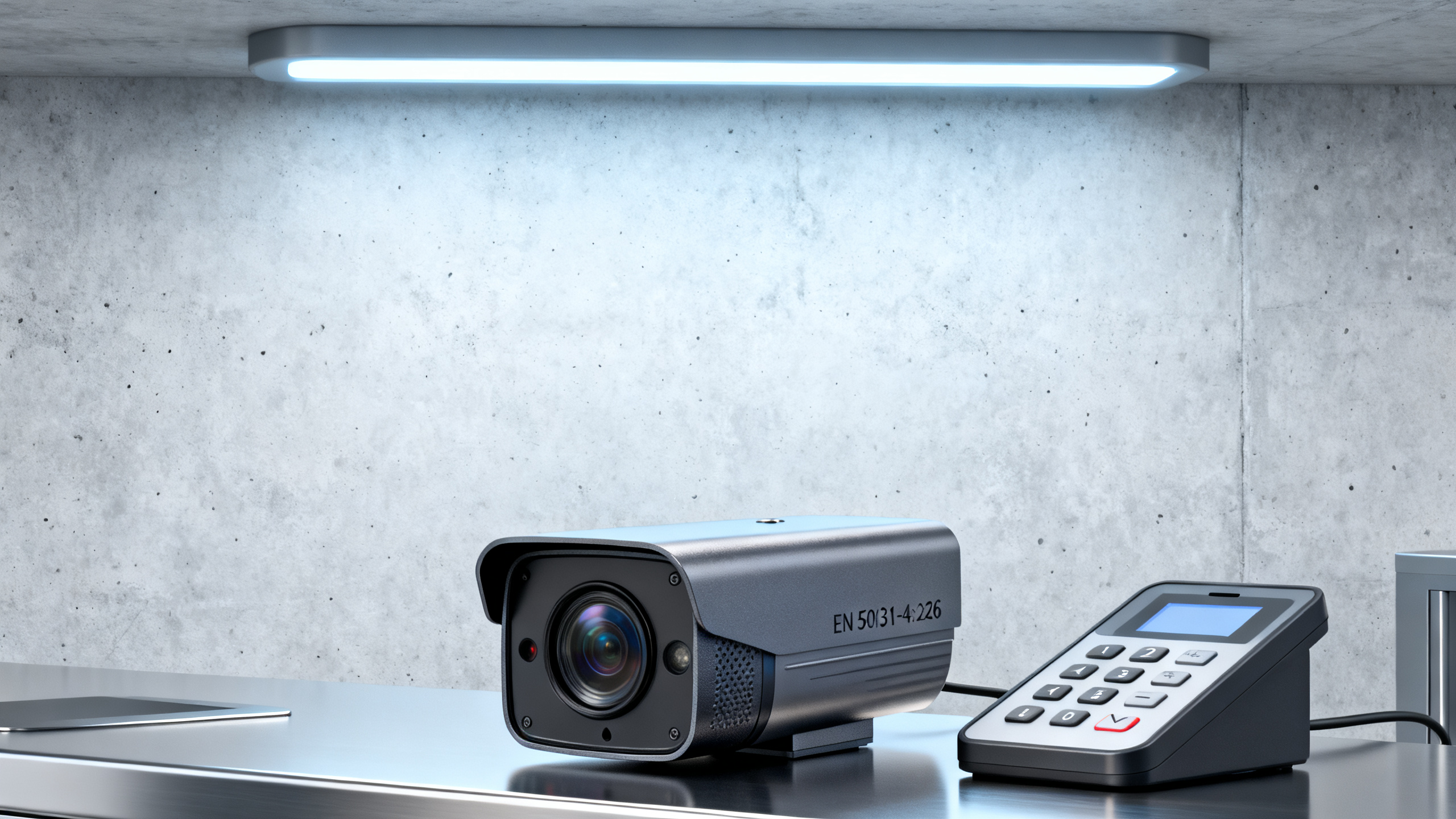
On 9 May 2026, the European Union formally implemented the revised standard EN 50131-4:2026 for intruder alarm systems, mandating AI-powered behavioral recognition resilience against adversarial interference—including occlusion, lighting perturbations, and digital overlays—for CCTV and access control systems deployed in public areas. This requirement directly affects Chinese exporters supplying to EU EPC projects, smart city system integrators, and distribution channels.
Event Overview
The European Committee for Electrotechnical Standardization (CENELEC) published EN 50131-4:2026, which entered into force on 9 May 2026. The revision introduces a mandatory requirement: CCTV and access control systems intended for public-area deployment must demonstrate resistance to AI-targeted adversarial attacks. Compliance verification requires third-party penetration testing reports. No transitional period or grandfathering provisions have been publicly announced.
Industries Affected by Segment
Direct Exporters (China-based)
These companies face immediate eligibility risk when bidding for or delivering to EU-based EPC contractors, municipal smart city tenders, or regional distributors. Non-compliant products may be rejected at customs clearance, certification review, or project acceptance stages—especially where CE marking is tied to EN 50131-4 conformity.
System Integrators & Solution Providers (EU-based)
Integrators sourcing hardware from non-EU manufacturers—including those embedded with AI analytics modules—must now verify certified anti-interference performance before system commissioning. Failure to validate may invalidate liability coverage under EN 50131-1 and compromise contractual compliance with end clients such as municipalities or transport authorities.
Component Suppliers & AI Software Developers
Vendors providing AI inference engines, video analytics SDKs, or edge-processing firmware used in certified devices must ensure their outputs remain robust under standardized adversarial test conditions. Integration into certified end products requires traceable validation evidence—not just internal testing—aligned with the new annexes of EN 50131-4:2026.
Distribution & Channel Partners (EU & China)
Distributors handling CCTV or access control portfolios must update technical documentation, revise pre-sales support protocols, and confirm supplier-provided test reports meet the scope defined in Clause 7.3 of EN 50131-4:2026. Stock rotation and warranty terms may require re-evaluation for legacy SKUs without updated certification.
Key Focus Areas and Practical Response Steps
Monitor official CENELEC and Notified Body updates
Confirm whether harmonized status has been granted under the Construction Products Regulation (CPR) or Radio Equipment Directive (RED), as this determines whether EN 50131-4:2026 triggers mandatory CE marking obligations beyond voluntary conformity. Track announcements from Notified Bodies authorized for EN 50131 series testing.
Identify high-risk product categories and deployment contexts
Prioritize assessment for systems marketed for ‘public area’ use—e.g., urban surveillance nodes, transit station entry gates, university campus access points—as these fall squarely within the scope. Indoor-only or private-residential deployments are not covered per Clause 4.1 of the standard.
Distinguish between policy signal and operational enforcement
While the standard is effective as of 9 May 2026, enforcement timelines may vary across Member States. Market surveillance authorities (e.g., Germany’s ZLS, France’s DGCCRF) have not yet published inspection protocols specific to AI adversarial resilience. Treat initial audits as capability-validation exercises—not penalty-driven checks—until formal guidance emerges.
Initiate technical documentation and test report alignment
Review existing third-party test reports for alignment with Annex D (Adversarial Test Methodology) of EN 50131-4:2026. Where gaps exist, engage accredited labs early—lead times for adversarial penetration testing currently average 8–12 weeks—and retain full audit trails of input perturbation parameters, model versions, and environmental controls used during evaluation.
Editorial Observation / Industry Perspective
Observably, EN 50131-4:2026 represents a structural shift—not merely a technical update—from functional safety toward AI behavior assurance in physical security infrastructure. Analysis shows it functions primarily as a regulatory signal: it codifies emerging expectations around trustworthy AI in critical infrastructure but does not yet prescribe uniform test automation tools or benchmark datasets. From an industry perspective, its significance lies less in immediate enforcement volume and more in setting precedent for future revisions of EN 50131-1 (system requirements) and EN 62676 (video surveillance standards). Continued attention is warranted as EU Member States begin incorporating this requirement into national procurement templates and conformity assessment roadmaps.
In summary, EN 50131-4:2026 marks the first binding EU standard requiring demonstrable resilience of AI-driven security systems against adversarial manipulation. Its practical impact is currently concentrated in market access gatekeeping—not broad product recall or retroactive compliance—but signals growing regulatory scrutiny of AI integrity in safety-critical physical environments. It is more accurately understood as a foundational benchmark than a fully matured enforcement regime; readiness hinges on documentation rigor and test traceability, not wholesale system redesign—at least in the near term.
Source: CENELEC EN 50131-4:2026 (published April 2026, effective 9 May 2026).
Note: Enforcement timelines, national transposition status, and Notified Body accreditation scope remain subject to ongoing observation.
Technical Specifications
- Air Handling Unit Supplier Checklist: Performance Data, Lead Times, and SupportAuthor :Environmental Engineering Director
- Buying Fiberglass Water Tanks Wholesale: Compare Quotes and Delivery CostsAuthor :Environmental Engineering Director
- Choosing an XLPE Power Cable Supplier: Test Reports, Traceability, and Lead TimesAuthor :Grid Infrastructure Analyst
Expert Insights

Chief Security Architect
Dr. Thorne specializes in the intersection of structural engineering and digital resilience. He has advised three G7 governments on industrial infrastructure security.
Related Analysis
- Oct 19, 2026Air Handling Unit Supplier Checklist: Performance Data, Lead Times, and SupportAuthor :Environmental Engineering Director
- Oct 18, 2026Buying Fiberglass Water Tanks Wholesale: Compare Quotes and Delivery CostsAuthor :Environmental Engineering Director
- Oct 17, 2026Choosing an XLPE Power Cable Supplier: Test Reports, Traceability, and Lead TimesAuthor :Grid Infrastructure Analyst
Core Sector // 01
Security & Safety
- How to Build an Equipment Budget for EPC Projects Without Underestimating Lifecycle CostsAuthor :Safety Compliance Lead

- Selecting EPC Procurement Support Tools to Reduce Vendor and Delivery DelaysAuthor :Safety Compliance Lead

- How to Select an Access Control Management System for Multi-Site FacilitiesAuthor :Safety Compliance Lead

- How to Select Electronic Hotel Key Card Locks for Guest Rooms and Staff AreasAuthor :Safety Compliance Lead

- How to Evaluate a Hotel Key Card Lock Supplier for Multi-Property RolloutsAuthor :Safety Compliance Lead

- Pre-Contract Audit Checklist for Verified Production Safety and Environmental ComplianceAuthor :Safety Compliance Lead

- How Can Distributors Build Procurement-Oriented Industrial Content That Drives RFQs?Author :Safety Compliance Lead

- EU Mandates EN 50131-1:2026 for Security SystemsAuthor :Safety Compliance Lead